
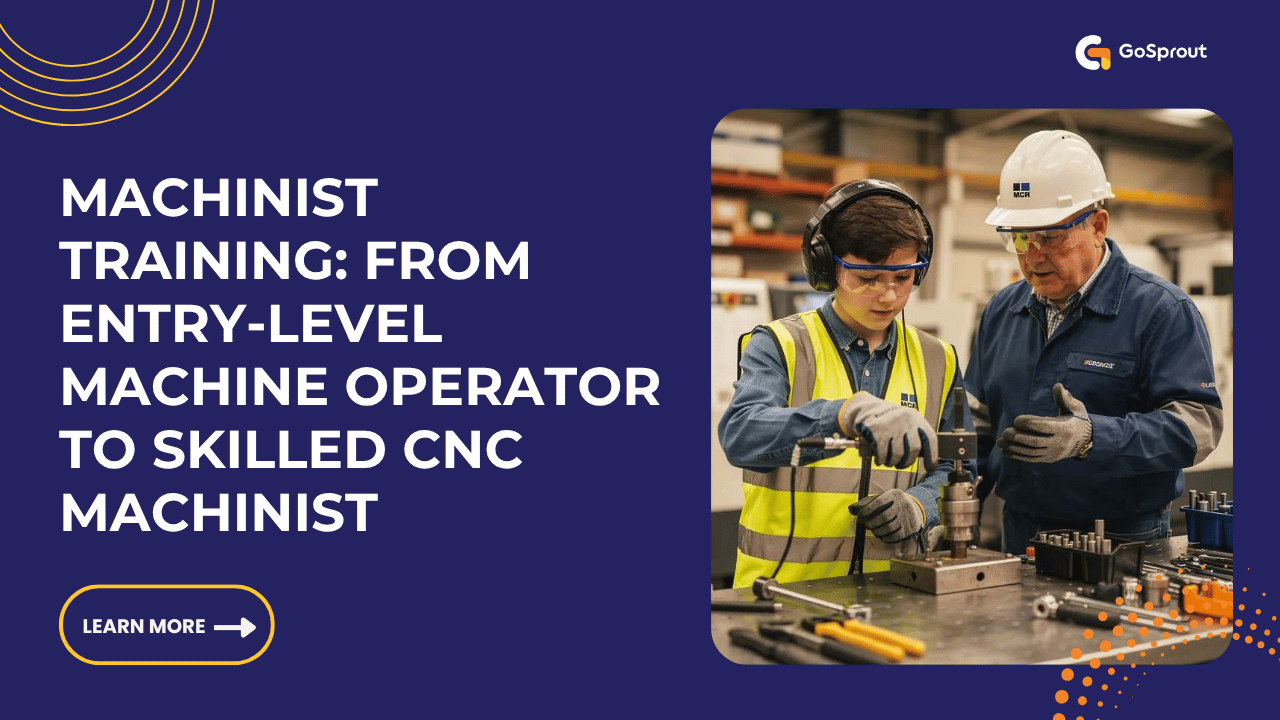
If you’re exploring machinist training in 2026, you’re entering a field that looks nothing like it did a decade ago. Machinist training programs cover blueprint reading and CNC programming, but they now also incorporate additive manufacturing, robotics, and Industry 4.0 principles including digital twin technology. Enrollment in machinist classes has steadily increased in recent years, and specialized training meets the increasing demand for skilled machining professionals across aerospace, medical, automotive, and energy sectors.
This guide breaks down exactly what modern training involves, how long it takes, what you’ll learn, and how employers and schools can manage programs effectively.
Table of Contents
- What Machinist Training Actually Looks Like Today
- Core Skills Every Modern Machinist Must Learn
- Types of Machinist Training Programs (School, Employer, Apprenticeship)
- CNC Machining vs Manual Machining: What You’ll Train On
- Inside a Typical Machinist Training Curriculum
- Pathways: From Machine Operator to CNC Programmer
- How Long Machinist Training Takes (With Real Timelines)
- How to Choose the Right Machinist Training Program
- What Employers and Schools Should Know About Managing Training
- Why Choose Our Platform to Run Machinist Training
- Next Steps: How to Launch or Enroll in a Machinist Training Program
- FAQs About Machinist Training and CNC Careers
What Machinist Training Actually Looks Like Today
Between 2015 and 2026, machinist training shifted from purely manual machining toward a blend of CNC machining, automation, and digital skills. The traditional manufacturing definition – running engine lathes and manual mills by hand – still forms the base. But the advanced manufacturing definition now includes computer numerical control, CAD/CAM software, robotics interaction, and data-driven process improvement techniques. Training programs cover these advanced manufacturing topics alongside foundational metal cutting skills.
Modern programs train people for differentiated roles. A machine operator loads parts and follows routines. A CNC operator runs established programs on CNC machines. A CNC machinist handles setups, offsets, and code edits. A CNC programmer creates and optimizes toolpaths using CAM software. CNC machinist training prepares learners for whichever role matches their goals, with course structure adjusted accordingly.
Programs now combine classroom RTI (Related Technical Instruction) with OJT (On-the-Job Training) in active machine shops. Students work on real CNC machines – not just simulators – programming actual parts, inspecting results, and adjusting. Employers, schools, and workforce development boards coordinate together through registered apprenticeships and structured work-based learning to close the skills gap in the manufacturing industry.
Industries relying on skilled machinists today include aerospace (turbine blades, tight-tolerance structural parts), medical device manufacturing (implants, biocompatible materials), automotive and EV components, energy sector tooling, and precision tooling and dies. Employment of machinists is projected to grow slightly from 2025 to 2035, while thousands of openings across machining and related roles are expected each year as experienced workers retire or move into other occupations.
Core Skills Every Modern Machinist Must Learn
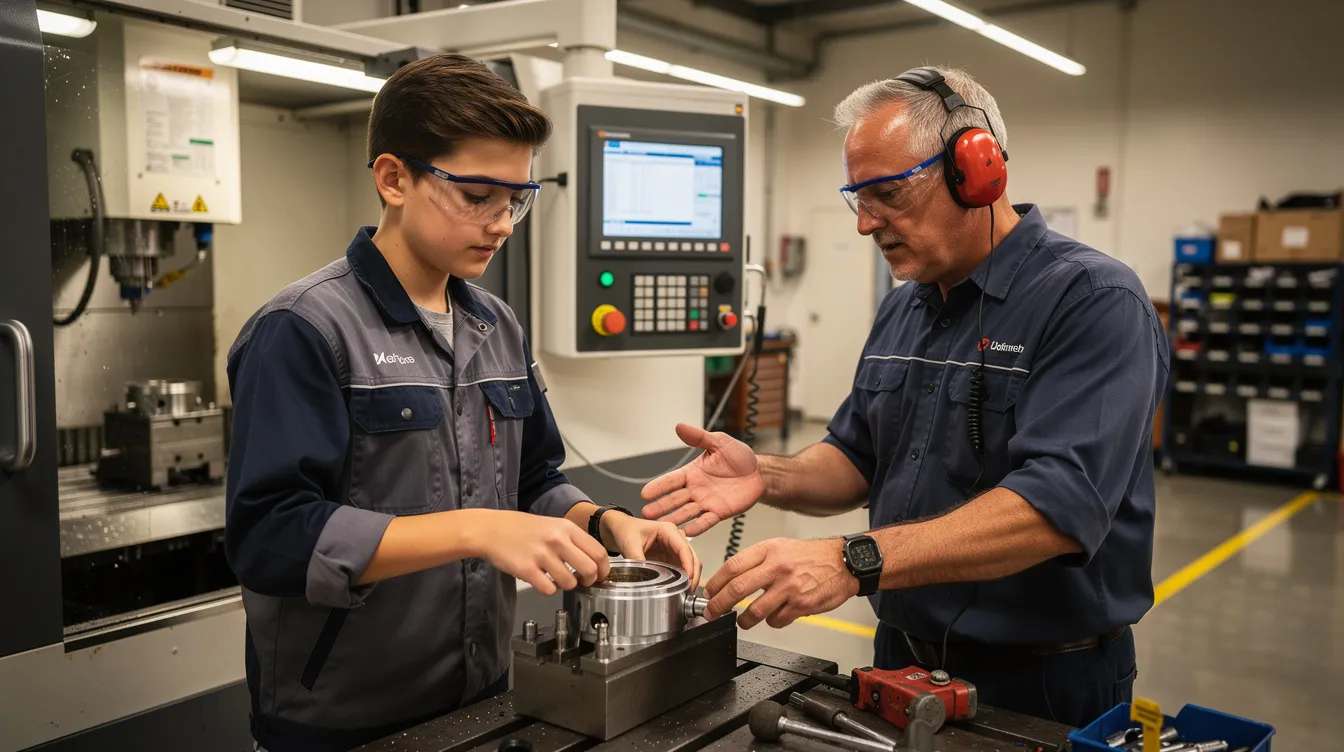
By 2026, any serious machinist training program should build these essential skills and knowledge:
- Blueprint and schematic reading: Blueprint reading includes interpreting geometric dimensioning and tolerancing (GD&T), assembly drawings, and material specifications. Trainees learn to decode engineering views, symbols, and tolerances so they can build and inspect parts against specs.
- Applied shop mathematics: Applied shop mathematics includes practical math covering fractions, decimals, algebra, geometry, and trigonometry. You’ll calculate feeds and speeds, angular cuts, and unit conversions daily.
- Precision measurement: Precision measurement involves hands-on use of tools like micrometer calipers and vernier calipers, plus height gauges, dial indicators, and coordinate measuring machines (CMM). Quality control methods include using CMMs for final inspection against print dimensions.
- Material properties and metallurgy: Understanding metallurgy includes learning about the properties of carbon steels, aluminum, and stainless steel. Knowing how hardness, thermal conductivity, and heat treatment affect cutting parameters and tool life is critical for programming metallurgy machining decisions.
- Metal cutting theory: This covers feeds, speeds, chip load, tool geometry, and metal cutting fluids selection. Cutting tools selection involves using the right inserts and drills along with proper workpiece clamping methods to achieve target surface finishes.
- CNC fundamentals: Computer Numerical Control (CNC) fundamentals include G-code and M-code programming basics. Even before full CNC programming training, learners should understand machine axes, work offsets, tool offsets, and the control panel overview on machines with a classic control panel or newer interfaces. Computer-Aided Design (CAD) is used to create digital models for CNC machining workflows.
- Safety: Fundamental safety protocols are essential in machinist training. OSHA compliance includes training on safety protocols and hazard recognition in machining environments, covering lockout/tagout, PPE, coolant and chip handling, manufacturing fire safety, and safe operation of milling machines, lathes, and grinders.
- Lean manufacturing and quality: Lean manufacturing principles include frameworks like 5S, Six Sigma, and Total Productive Maintenance (TPM). Trainees also learn sustainable manufacturing practices and process improvement techniques.
- Soft skills: Problem-solving, documenting setups, direct communication with engineers and quality inspectors, and following standardized work instructions round out the profile employers expect.
A CNC Precision Machining Program typically covers programming, tooling, and precision techniques across most of these areas. More advanced manufacturing courses add grinding processes inspection methods, advanced grinding techniques (surface and cylindrical grinding expertise from programs like the Advanced Grinding Techniques Program), and specific advanced manufacturing skills such as multi-axis work.
Types of Machinist Training Programs (School, Employer, Apprenticeship)
There is no single path into machining. Machinist training pathways include formal apprenticeships, certificate programs, and online or in-person courses. Here’s how each model works:
- Community and technical college programs offer 1-year certificates and 2-year Associate of Applied Science degrees. For example, Heartland Community College runs a 16-credit CNC machining certificate covering CNC lathe and mill operations, safety, and OSHA training. Hawkeye Community College offers certificates in 4-month and 9-month formats plus a full AAS degree. A comprehensive machinist training program combines foundational classroom theory with hands-on shop floor practice. Many machinist classes now include modules on CNC programming alongside manual machining labs. Top-rated machinist training programs include institutions like the Machinist Training Institute and similar accredited schools.
- Employer-based training labs hire entry-level CNC machine operators or machine operators and upskill them internally over 6–18 months. Companies provide mentorship, stretch assignments on their own machine tools (including Mazak lathe, Mazak mill, and other production equipment), and cross-training. This model is flexible but requires dedicated equipment time and strong mentors for hours career training program tracking.
- Registered apprenticeship programs typically last 3–4 years. Apprenticeships typically involve 1 to 4 years of paid on-the-job training with technical instruction – averaging roughly 5,191 OJT hours and 537 RTI hours for CNC machinist roles. Apprentices earn wages while building competencies, with progression tied to demonstrated skills.
- Online and hybrid options: Online machinist training programs are becoming increasingly popular for theory modules. An online CNC machinist course can cover math, blueprint reading, and CAM basics. Hybrid programs combine online coursework with in-person lab sessions for manual machining, CNC setup, and machine operation. Self paced courses accommodate various learning preferences, letting learners move at their own pace.
CNC Machining vs Manual Machining: What You’ll Train On
Even in 2026, machinist training still includes both manual machining and CNC machining because manual proficiency builds intuition that no simulation replaces.
- Manual equipment training covers the engine lathe for turning and facing, the manual mill (knee mill) for flat surfaces and slots, and surface grinders for finishing. Trainees develop feel for cutting forces, handwheel control, basic fixturing, and layout work. This is the traditional manufacturing foundation.
- CNC machining training teaches learners to perform CNC machining on CNC lathes and vertical machining centers. Content includes loading workholding, setting tools, touching off, running a CNC turning program, and monitoring tool wear. Hands-on training with modern equipment is essential in machinist programs, and machinist training programs provide hands-on training with modern equipment like 3-axis machining centers and 2-axis CNC lathes. CNC machine operation involves setting up and running computer-controlled mills and lathes, including program storage and program execution workflows.
- Role distinctions matter: A CNC operator or CNC lathe operator runs existing programs, loads parts, checks quality. A CNC machinist or CNC mill operator sets up jobs, adjusts offsets, edits code. A CNC programmer creates and optimizes CNC programming using CAM software, plans machining strategies, and manages G code programming for production. Understanding this cnc relation between roles helps you target the right training level.
Inside a Typical Machinist Training Curriculum
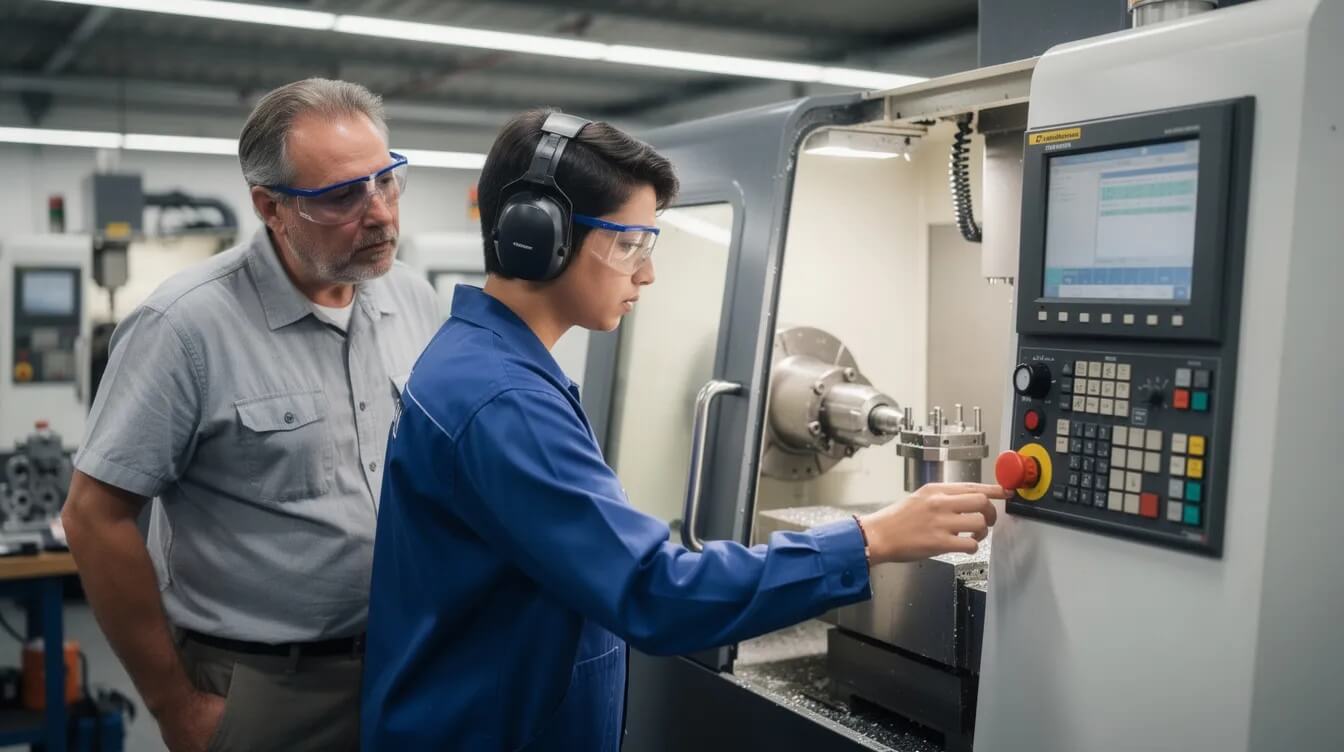
Here’s what a 12–24 month machinist training plan looks like chronologically.
- Foundation phase (months 1–6): Safety protocols, precision measurement tools, blueprint reading, shop math, and manual lathe and mill operations. Daily activities include manual hands-on labs, safety drills including electrical work awareness, reading engineering drawings, and producing simple parts like bushings and brackets. Training programs should include ongoing assessment of practical skills and theoretical knowledge from the start. The job syllabus covers abrasives, basic fixturing, and hand tools.
- Intermediate phase (months 6–12): Trainees transition to CNC machines. They learn control panel operation, run simple pre-written programs, set work and tool offsets, handle tool changes, and inspect parts using gauges. Machinist training programs cover CNC programming and precision measurement at this stage. Competency-based assessments require students to demonstrate practical skills in setting up equipment and producing parts before advancing.
- Advanced phase (months 12–24): Focus shifts to CNC programming – writing G-code manually, using CAM software, editing toolpaths, and optimizing for cycle time. Multi-part setups, complex fixturing, and GD&T interpretation on production prints become routine. Advanced manufacturing training at this stage may include advanced manufacturing courses in multi-axis machining or specialized CNC milling techniques. Hands-on shop experience is critical for mastering practical skills in machining during this phase.
- Integrated capstone projects: Learners produce a complete assembly – such as a small vise, engine component, or tooling fixture – from blueprint to final inspection. They document setup sheets, program paths, tool lists, and inspection reports, mirroring real shop workflows. Successful completion of these projects demonstrates readiness for the job market.
Pathways: From Machine Operator to CNC Programmer
Machinist careers are stackable. Most people start at an entry level and build upward over several years:
- Months 0–12 (Machine Operator): Loading and unloading parts, deburring, basic cleaning, inspecting simple parts, following existing routines. Focus is on following instructions and learning machine maintenance basics.
- Years 1–3 (CNC Operator / Setup Machinist): Setting up jobs, selecting tooling, adjusting offsets, workholding, monitoring runs, minor code edits. More responsibility for minimizing scrap and downtime. A CNC machinist training course at this stage deepens setup and troubleshooting skills.
- Years 3–7 (CNC Programmer / Process Lead): Writing CNC programs via CAM, optimizing toolpaths, fixture design, and collaborating with engineering. Specialized machinist training focuses on advanced techniques like CNC milling, 5-axis machining, or Swiss turning. Graduates of specialized programs command higher salaries in competitive job markets.
Continuing education fits naturally here – advanced CNC programming courses, vendor-specific certifications that focus on particular equipment or software used in the machining industry, and workshops on automation keep skills current.
How Long Machinist Training Takes (With Real Timelines)
Consider program duration and curriculum when choosing machinist training. Here are realistic benchmarks:
- 6–12 months for entry-level CNC operator competence through an intensive overview certificate. Some colleges offer NIMS Level 1 CNC milling or turning certificates in as few as 15 weeks.
- 9–12 months for a fuller certificate combining manual and CNC skills with a suitable completion date for most full-time learners.
- 2 years for an Associate degree covering general education, manual and CNC machining, CAD/CAM, and inspection.
- 3–4 years for a registered apprenticeship with 5,000–8,000 OJT hours plus hundreds of RTI hours, blending evening classes with full-time employment.
- Prior experience in welding, automotive, or metalworking can shorten timelines. Total beginners may need extra support in math and blueprint reading before locating program entry points.
How to Choose the Right Machinist Training Program
Whether you’re an individual picking a school or an organization selecting a training partner, evaluate these factors:
- Equipment: Does the lab have modern CNC machines with current controls (Haas, Fanuc, Siemens)? Are manual machining stations available? Look for precision machining labs with adequate student-to-machine ratios.
- Curriculum depth: Confirm coverage of blueprint reading, GD&T, shop math, CNC programming, inspection, and safety. Look for advanced manufacturing courses and whether the course structure aligns with your target role.
- Credentials: NIMS (National Institute for Metalworking Skills) offers tiered credentials based on theoretical exams and hands-on evaluations. The National Institute for Metalworking Skills (NIMS) is a significant credentialing system in the machining industry. Ensure the program offers recognized certifications.
- Instructor quality: Instructors should be former machinists or CNC programmers with real shop experience. A student advising team that provides tutoring for math and blueprint reading adds significant value.
- Work-based learning: Programs with internships, co-ops, or registered apprenticeship pathways give you real experience. Ask how they track OJT hours and competencies.
- Support and funding: Ask about financial assistance options, federal aid eligibility, and vocational rehab referrals for qualified students. Research program reputation and seek student feedback before enrolling.
- Outcomes: Request graduate employment rates, typical first job titles (CNC operator, machine operator), and median starting wages. Contact during regular business hours to speak with admissions directly.
What Employers and Schools Should Know About Managing Training
If you’re a training manager, HR leader, or educator responsible for scaling machinist training, here’s what matters operationally:
- Scheduling and equipment: Balancing CNC machine availability between production needs and training time is an ongoing challenge. Skilled machinists serving as mentors need protected time for teaching, not just production quotas.
- Compliance: Registered apprenticeship programs require meticulous documentation of OJT and RTI hours by occupation. Reports resembling RAPIDS, WIPS, or PIRL submissions must be generated accurately. Missing documentation risks audit failures.
- Centralized tracking: Platforms that let employers, instructors, and apprentices log competencies, CNC machine tasks, and course completions in real time – via web and mobile – dramatically reduce administrative overhead and streamline business operations.
- Data-driven improvement: Dashboards showing completion rates, job placements, and wage growth help sponsors iterate curriculum, add more advanced manufacturing training modules, and justify funding to regulators. Tracking data on program execution quality lets you adjust before problems compound.
Why Choose Our Platform to Run Machinist Training
GoSprout is built specifically for work-based learning management in machinist, CNC machining, and advanced manufacturing programs.
- Competency libraries pre-built for CNC operator, CNC machinist, and machine operator roles let you track OJT hours for manual machining versus CNC machining tasks separately, with progress dashboards for each apprentice.
- Compliance reporting is streamlined with automated RAPIDS-style data exports and WIPS/PIRL-ready reports, reducing hours of manual paperwork to minutes.
- Mobile shop floor access lets apprentices log CNC machine setups, completed parts, and training hours directly from the floor. Mentors verify work in real time. This direct platform support feature eliminates paper logs and data entry backlogs.
- Collaboration across stakeholders: Employers, schools, and workforce partners all work in one system, aligning classroom CNC programming courses with actual shop work. This visibility into skill development helps everyone make better decisions faster.
Want to Learn More About Your Registered Apprenticeship Opportunities?
BOOK A FREE CONSULTATION
Next Steps: How to Launch or Enroll in a Machinist Training Program
The mid-2020s are a strong time to enter precision machining. Demand for CNC machinists and CNC programmers continues while retirements thin the ranks of experienced talent.
For individuals:
- Assess your current skills and knowledge in math, measurement, and any shop experience.
- Research local machinist and CNC machining programs – certificates, associate degrees, and apprenticeships.
- Talk to employers about apprenticeship openings or internships.
- Commit to a start date within the next 3–6 months.
For organizations:
- Map out machinist roles and competencies for your operation.
- Decide which OJT tasks will be done on CNC machines versus manual machines.
- Select a platform to manage training, hours, and compliance without spreadsheet chaos.
Ready to launch a machinist apprenticeship, organize CNC operator upskilling, or bring structure to your existing training? Reach out to GoSprout to schedule a walkthrough and see how the platform fits your program – whether you’re training two apprentices or two hundred.
FAQs About Machinist Training and CNC Careers
These are common questions from prospective machinists, employers, and schools.
How long does it take to become a CNC machinist?
Motivated learners can reach CNC operator level in 6–12 months through focused training. Achieving full CNC machinist responsibilities – setups, offsets, minor programming edits – typically takes 2–4 years of combined training and on-the-job experience.
Do I need previous experience to start machinist training?
Most entry-level machinist and machine operator programs accept beginners who can pass basic math and reading assessments. Prior hands-on experience with tools, shop classes, or automotive work is helpful but not required. An online CNC machinist program can help you build foundational knowledge before entering a lab.
What is the difference between a CNC operator and a CNC programmer?
A CNC operator runs existing programs on CNC machines, loads parts, checks quality, and adjusts offsets. A CNC programmer creates and optimizes CNC programming in CAM software, chooses tools, and plans machining strategies across operations.
Will machinist training cover both manual and CNC machining?
Strong programs include manual machining for foundational skills plus dedicated modules on CNC lathes and machining centers, giving learners a complete view of metal cutting from hand-cranked machines to automated CNC equipment.
Is machinist training worth it with automation and robots on the rise?
Even as automation grows, skilled machinists and CNC programmers are needed to set up, program, and maintain CNC machines and robotic cells. Employment of machinists is projected to be steady from 2022 to 2032, with tens of thousands of annual openings. The job market for precision machining remains strong.
Can machinist training be combined with a registered apprenticeship?
Many regions now align technical college coursework and employer training into formal machinist or CNC machinist apprenticeship programs. Apprentices earn wages while meeting defined OJT and RTI hour requirements for a nationally recognized credential.