
Table of Contents
- Introduction: From Single CNC Machine to Scalable Machinist Training
- Core Concepts: What Is Machinist Training Management?
- Defining Roles: CNC Operator, CNC Machinist, CNC Programmer, and Machine Operator
- Designing a Modern CNC Machinist Training Program
- Structuring Curriculum Around Real Machining Processes
- Blending Learning Formats: Classroom, On-the-Job, and Digital
- Tracking Hours, Competencies, and Compliance in Machinist Training
- Common Challenges and Mistakes in Machinist Training Management
- Data-Driven Improvement: Using Metrics to Refine Training
- Partnering with Schools, Sponsors, and Workforce Programs
- What to Know Before Choosing or Building a Machinist Training Management System
- Why Choose a Dedicated Platform for Machinist Training Management
- Taking Action: Next Steps to Improve Your Machinist Training Management
- FAQs About Machinist Training Management
Introduction: From Single CNC Machine to Scalable Machinist Training
Picture a mid-size manufacturer in 2026 running eight CNC machines across two shifts. Three of those machines are CNC mills, two are CNC lathes, and the rest include a Mazak turning center, a 5-axis machining center, and an engine lathe kept for toolroom work. Five machinists carry most of the tribal knowledge. Two are approaching retirement. New hires arrive with varying backgrounds, and nobody can say with certainty which skills each trainee has proven versus merely observed.
This is where machinist training management enters the picture. It is the end-to-end process of designing, delivering, tracking, and improving training for CNC operators, CNC machinists, and CNC programmers. It covers everything from curriculum design and RTI (Related Technical Instruction) delivery to OJT (On-the-Job Training) hour tracking, competency sign-offs, and compliance reporting for apprenticeship partners.
The pressure to formalize this process is growing. Replacement needs remain significant: BLS projects about 30,400 openings for machinists and tool and die makers each year through 2035, largely as existing workers change occupations or leave the workforce. Add to that the rapid adoption of computer numerical control technology, and audit requirements from state and federal apprenticeship programs, shops need to move beyond informal, word-of-mouth training. This article walks through how to structure a CNC machinist training program, manage machining processes training, track progress, avoid common mistakes, and use software to scale.
Core Concepts: What Is Machinist Training Management?
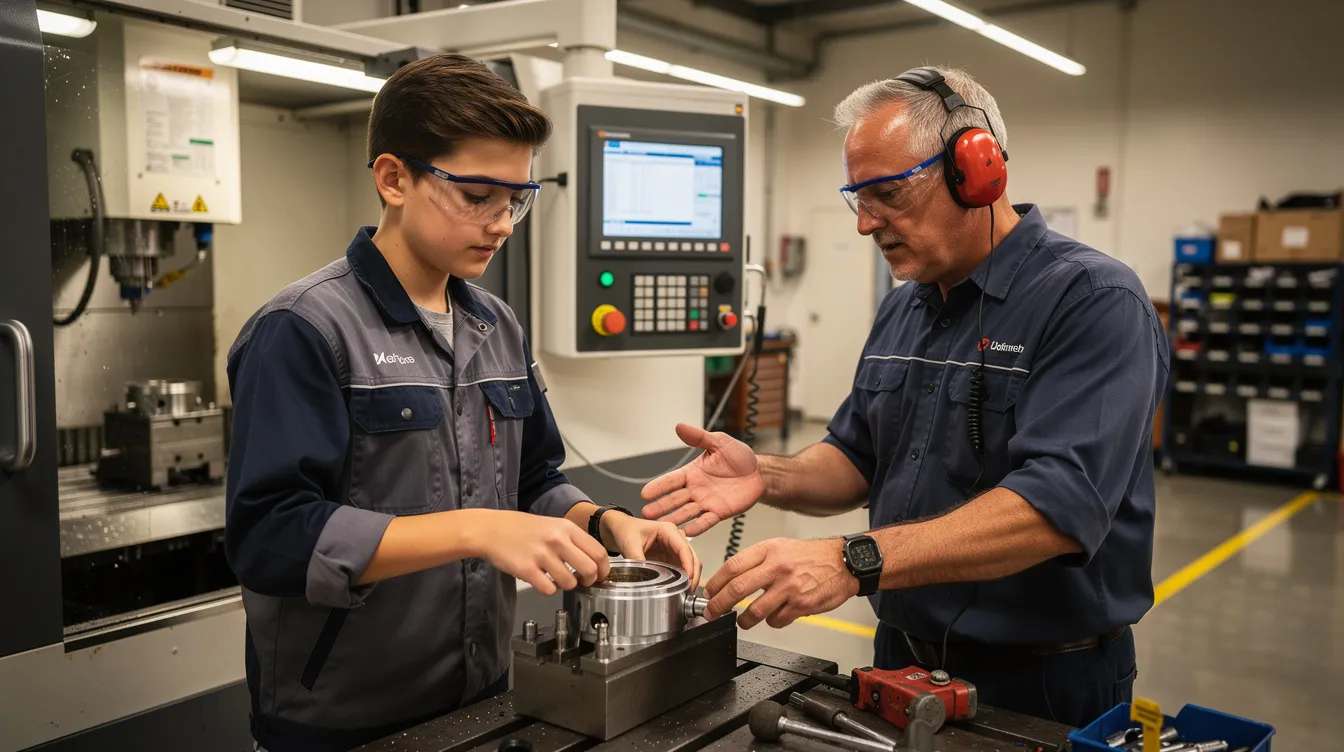
Machinist training, at its core, covers blueprint reading, precision measurement, shop math, machine setup, CNC machining operation, basic CNC programming, and safety protocols across mills, lathes, and machining centers. Machining integrates traditional craftsmanship with advanced CNC automation; a trainee who understands only one side will hit limits quickly.
“Training” refers to the content and instruction. “Training management” is the layer above: planning who learns what, scheduling instruction and machine time, tracking hours and competencies, reporting results to sponsors or regulators, and revising curricula when machines or processes change. Incorporating manufacturing technology concepts into every stage of this process keeps a program relevant as the manufacturing industry evolves.
CNC machinist training programs vary in depth and focus. CNC training programs vary in depth from operator-level basics to advanced machinist certifications covering multi-axis work, fixture design, and process improvement techniques. Effective machinist training management ties competencies directly to specific machines (e.g., a Haas VF-2, a Mazak mill, or a manual mill), machining processes (milling, turning, drilling, grinding processes inspection methods), and job roles. It spans shop-floor OJT, classroom RTI, and online microlearning modules.
Defining Roles: CNC Operator, CNC Machinist, CNC Programmer, and Machine Operator
A 2026 shop typically has four distinct roles in its job hierarchy, each requiring different training depth:
| Role | Core Responsibilities | Training Focus |
|---|---|---|
| CNC Operator | Load parts, run pre-written programs, monitor cycle, basic tool changes | CNC machine operation, control panel overview, classic control panel navigation, safety |
| CNC Machinist | Setup, tool offsets, troubleshooting, interpret blueprints, in-process inspection | Manual machining, CNC lathe operation, CNC mill operation, GD&T, precision measurement |
| CNC Programmer | Write CAM toolpaths, optimize feeds/speeds, collision simulation, macro programming | G code programming, CAD/CAM, programming metallurgy machining, post-processing |
| Machine Operator | Operates manual or semi-automatic equipment, basic tasks | Engine lathe, manual mill, grinding, safety fundamentals |
CNC operator training is the shortest and most beginner-friendly path. CNC operators run machines using pre-written programs. CNC machinist training includes manual machining and troubleshooting skills; CNC machinists have broader setup and measurement knowledge. CNC programmer training covers G-code and CAD/CAM toolpaths, and CNC programmers typically command higher wages than operators. Graduates of structured programs may qualify for CNC operator or machinist roles depending on program length and depth.
Training management must map learning paths to each role instead of treating all trainees as generic machinists. A role-based training matrix shows which competencies (G code basics, GD&T interpretation, tool offsets, fixture design) belong to which role and level: entry, intermediate, or advanced. Without this mapping, a CNC lathe operator might spend weeks on CAM software they will never use, while a future CNC programmer gets no exposure to toolpath simulation.
Designing a Modern CNC Machinist Training Program
A well-designed CNC machinist training program breaks into modules: fundamentals (safety, shop math, machining mathematics), manual machining (manual mill, engine lathe), CNC machining (3-axis mills, 2-axis lathes, 5-axis centers), measurement and inspection (precision measurement, metrology), and advanced topics like CAD/CAM and process improvement techniques. CNC machinist training covers blueprint reading and machining mathematics. Students learn CAD/CAM concepts in CNC machinist training. Effective machinist training programs emphasize the importance of a structured progression plan and standardized training materials.
Program length varies considerably. For example, MT Training Center’s CNC Machinist program includes 1,070 clock hours of classroom and hands-on training covering CNC mills and lathes, blueprint reading, machining math, programming, and CAD/CAM concepts. An intensive overview for new hires in the first 4 to 6 weeks can cover computer numerical control CNC fundamentals, safe machine setup, and basic CNC machine operation before trainees progress to deeper role-specific modules over 6 to 18 months.
Both RTI (classroom/theory) and OJT (documented hours on specific machines and parts) should align with national or state apprenticeship standards where applicable. The typical apprenticeship split is roughly 20% RTI and 80% OJT.
Total costs should include lab fees, tools, and supplies. CNC training costs range from $1,250 to $16,795 depending on the institution and program scope:
| Institution | Approximate Cost | Notes |
|---|---|---|
| Eastern Florida State College | ~$1,250 plus lab fees | Entry-level certificate |
| College of Lake County | ~$1,400 | CNC-focused certificate |
| Midlands Technical College | ~$4,908 | Full estimated cost |
| NTMA trade school program | $16,795 total | Comprehensive, multi-module |
Whether a shop builds its own hours career training program or partners with schools, the same principle applies: structure the content around real job requirements, not just textbook chapters.
Structuring Curriculum Around Real Machining Processes
Curriculum should follow the machining processes used on the shop floor: roughing, finishing, drilling, tapping, boring, threading, and inspection cycles. Organizing modules by process family (turning operations on CNC lathes, multi-axis milling on a CNC mill, fixture setup, probing cycles) connects learning to daily work.
CNC machinist programs often include blueprint reading and metrology integrated into every project, not siloed into a single week. Quality control training including metrology is critical because a machinist who can cut a part but cannot verify it against a print is not production-ready. Check for blueprint reading and metrology content when evaluating any CNC machinist training course or online CNC machinist course.
Part-based projects anchor theory to reality. A trainee might produce a simple 6061-aluminum bracket in week 3, then a tight-tolerance shaft by week 8, then a multi-feature housing with GD&T callouts by week 12. Using real production problems as learning opportunities, such as diagnosing chatter on a CNC turning program or optimizing metal cutting fluids for a difficult alloy, builds the practical skills that separate capable machinists from classroom graduates. Inspection and documentation belong in every project so machinists learn to complete production-ready work, not just cut metal.
Blending Learning Formats: Classroom, On-the-Job, and Digital
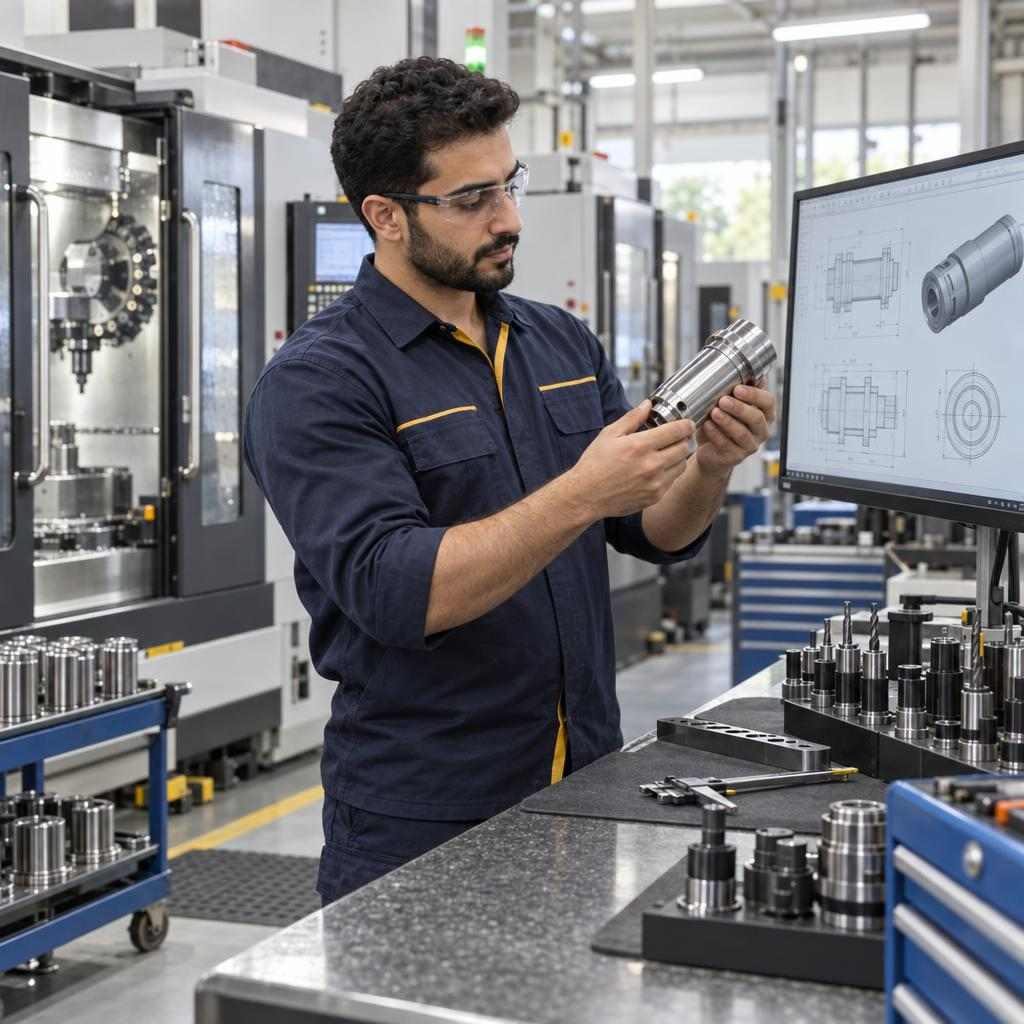
Machinist training programs require a hybrid approach of safety protocols and technical competencies. Safety training is essential before trainees operate any machinery in a machinist training program. Classroom sessions deliver computer numerical control CNC fundamentals, GD&T, machining math, and manufacturing fire safety before a trainee touches a machine.
Implementing digital training tools such as CNC simulation software minimizes risk and improves learning outcomes. Short videos, interactive simulations, and quizzes on CNC codes can prepare trainees before they step onto the floor. Desktop trainers (such as the Tormach PCNC-1100, priced at $4,500 to $12,000) allow button-pushing and feed/speed experimentation without risking a $150,000 machining center. These tools accommodate various learning preferences and let students move at their own pace.
Real machine access is essential for full machinist readiness. Hands-on training builds decision-making and muscle memory for CNC work. On the shop floor, checklists and skill sign-offs ensure supervisors consistently evaluate CNC machinist progress. Each competency should have a defined delivery mode (in-person, virtual, OJT) and a responsible person (trainer, lead machinist, instructor). Without this structure, machine operation training drifts into unstructured shadowing.
Tracking Hours, Competencies, and Compliance in Machinist Training
Tracking both time (OJT/RTI hours) and demonstrated competency is what separates machinist training management from running a one-off class. Documentation of training processes supports compliance and accountability in apprenticeship programs. An apprentice who logs 4,000 OJT hours but cannot independently set up a CNC machining center has a documentation problem and a skills problem.
Data to capture for each competency sign-off:
- Machine type (e.g., Haas VF-2, Mazak lathe, CNC mill)
- Part number and material
- Tolerances held
- Supervision level
- Date and supervisor signature
Competency-based progression is preferred over strict time-based milestones in machinist training. Many Registered Apprenticeship programs require structured hour categories (setup, operation, inspection, machine maintenance) and official reporting through systems like RAPIDS, PIRL, or WIPS. Missing metadata on OJT logs is one of the most common causes of audit failures.
Centralized training management software automates dashboards, flags overdue competencies, and generates reports for sponsors, schools, or workforce development boards. Without it, coordinators spend hours each week on spreadsheets that remain out of date by the time they are shared.
Common Challenges and Mistakes in Machinist Training Management
The most frequent issues in machinist training management are structural, not technical:
- Unstructured shadowing replaces formal OJT. A trainee watches a senior machinist for weeks without documented hands-on time, specific tasks, or sign-offs. This is neither traceable nor effective.
- No differentiation between roles. Shops treat all trainees as generic machinists, leaving CNC operators frustrated by irrelevant CAM training and future CNC programmers under-exposed to toolpath strategies.
- Inconsistent evaluations. Day shift supervisors sign off a competency that night shift supervisors would not. Without standardized rubrics tied to specific parts, tools, and tolerances, evaluations vary.
- Overreliance on a few expert machinists. Structured mentorship pairing with experienced machinists enhances training effectiveness, but those experts need train-the-trainer preparation and protected time. Dumping all instruction onto the busiest machinist guarantees inconsistency.
- Outdated curriculum. When a shop moves from 3-axis to 5-axis work, or adopts a new CAM version, the training content must follow. Crash damage on 5-axis centers runs $12,000 to $18,000 per event; outdated training increases that risk.
Fixes start simple: build competency frameworks, train the trainers, version-control curricula, and schedule protected training time so production does not constantly interrupt program execution.
Data-Driven Improvement: Using Metrics to Refine Training
Tracking training effectiveness through performance metrics is essential in machinist training programs. Best practices for managing machinist training programs include structured hands-on practice and regular evaluations tied to measurable outcomes.
Key metrics to track:
- Scrap/rework rate by trainee cohort, machine, and part
- Time-to-independence on each CNC machine type (e.g., hours until a trainee can run a CNC lathe unsupervised)
- Training completion rates and attrition by module
- Safety incidents by trainee and machine, including crash cost
- Setup time reduction after training modules complete
When a CNC machinist training cohort reduces average setup time by 15 minutes per shift across three machines, the payback on training investment arrives within two quarters. That is the kind of data that justifies scaling a program.
Continuous improvement should be integrated into machinist training programs to adapt to evolving technologies and processes. Quarterly reviews with production leads, HR, and compliance officers help decide which modules need strengthening or re-sequencing. Capture feedback from apprentices, CNC operators, and trainers to improve content, pacing, and delivery methods. Direct communication between all stakeholders keeps the program responsive.

Partnering with Schools, Sponsors, and Workforce Programs
Partnerships with technical schools and local programs enhance alignment with industry standards in machinist training. Manufacturers can collaborate with local high schools, technical colleges, and workforce development boards to co-design CNC machinist training pathways. A student advising team at a community college might funnel pre-apprenticeship graduates into shop-floor OJT; the shop provides machine time and mentors.
Aligning in-house machinist training with external curricula ensures credits, certificates (such as NIMS Level 1 credentials), and apprenticeship standards match real shop needs. Programs at community colleges offer short courses (precision measuring fundamentals, shop math, inspection) at $150 to $209 per module, suitable for locating program gaps and supplementing internal training.
Coordinated programs can offer an intensive overview for students (6 to 12 week pre-apprenticeships) before they enter full machinist roles, reducing onboarding time. Shared access to training plans, progress data, and competencies across employers, schools, and sponsors through a training management platform makes this coordination possible. Financial assistance and vocational rehab funding channels can offset costs for qualifying participants.
What to Know Before Choosing or Building a Machinist Training Management System
Before selecting or building a system, ask these questions:
- Can it track OJT and RTI separately, with distinct hour categories?
- Can it map competencies to specific CNC machines and job roles?
- Does it support mobile entries from the shop floor during regular business hours and off-shifts?
- Can it produce apprenticeship reports (RAPIDS, PIRL, WIPS) and maintain an audit trail with dates, signatures, and supervision data?
- Does it integrate with HR, LMS, or scheduling systems?
- Is it usable enough that busy machinists and trainers will actually log data without leaving the production area?
Verify hands-on lab hours before enrolling trainees in any external CNC machinist training course, and confirm whether external program data can feed into your internal system.
A direct platform support feature for multiple stakeholders (employer, school, sponsor, apprentice) reduces the administrative overhead that kills many training programs. Pilot with one department or cohort (e.g., 8 to 12 CNC machinist apprentices), set a suitable completion date, measure improvements in scrap, time-to-independence, and compliance accuracy, then scale.
Why Choose a Dedicated Platform for Machinist Training Management

Generic spreadsheets and basic LMS tools break down when training management requires OJT/RTI separation, machine-specific competency tracking, multi-stakeholder collaboration, and compliance reporting. A dedicated work-based learning platform built for this purpose handles all of these without custom workarounds.
GoSprout, for example, provides real-time dashboards, automated alerts for overdue competencies, centralized documentation, course development tools, and the ability to share progress data across employers, schools, and apprenticeship sponsors. Mobile access means a supervisor can sign off a competency on the shop floor without walking to a desktop. Automated RAPIDS, WIPS, and PIRL reporting eliminates the manual data entry that consumes hours each week.
The result: less administrative overhead for HR, training coordinators, and supervisors, and greater transparency for apprentices and machinists who want to see where they stand. A direct platform support feature for control panel navigation, program storage, and course structure management streamlines business operations that would otherwise require multiple disconnected tools.
Taking Action: Next Steps to Improve Your Machinist Training Management
Start by auditing your current state. List every CNC machine, every role, and every undocumented skill gap. That list becomes your roadmap.
Key actions:
- Clarify job roles (CNC operator, CNC machinist, CNC programmer, machine operator) and define competencies for each.
- Map curriculum to your actual machining processes, not just textbook chapters.
- Formalize OJT and RTI tracking with metadata: machine, part, tolerance, supervisor, date.
- Establish quarterly review cycles where training data meets production KPIs.
- Partner with local schools and workforce development boards to align external advanced manufacturing courses with internal needs.
Pilot with one shift or one apprenticeship cohort. Measure scrap rate, time-to-independence, and compliance accuracy before rolling out plant-wide. Programs typically last from a few weeks to 9 months for initial certification; management of those programs is ongoing.
Machinist training is not an informal add-on. It is a measurable, strategic process that determines whether your shop can staff its machines, hold its tolerances, and pass its audits. Evaluate a platform like GoSprout, engage internal leaders and external partners, and commit to building the training infrastructure your CNC machines and your people deserve.
FAQs About Machinist Training Management
These FAQs address common operational and strategic questions from manufacturers, schools, and sponsors running or planning machinist training programs.
How is machinist training management different from just running a CNC machinist training program?
A training program is the curriculum, classes, and instruction. Training management covers planning, scheduling, tracking, reporting, and improving that program over time. It ensures consistency across shifts, locations, and cohorts. It keeps training aligned with changing machines, processes, and the job market. Without management, a program might produce good results for one cohort and then drift as personnel or equipment change.
How many hours of machinist training should a new CNC operator complete before running production parts?
Entry-level CNC operator training typically requires 80 to 200 documented hours depending on part complexity and prior experience. A simple two-axis CNC lathe operation running repeat parts might require fewer supervised hours than a complex CNC machining cell with tight tolerances. The decision should rest on demonstrated competencies, not just time served. Robust tracking through a training management system helps leaders make that call based on evidence rather than guesswork.
Can machinist training management support both manual and CNC machining skills?
A capable system tracks manual machining (manual mill, engine lathe, grinders) alongside CNC machines within the same competency framework. Including manual machining processes improves troubleshooting skills because machinists who understand what a cutting tool does mechanically can diagnose CNC anomalies faster. Many advanced manufacturing training programs treat manual skills as foundational rather than optional.
What’s the best way to document competencies for CNC programmers versus CNC machinists?
Use separate, role-specific competency lists. CNC programmers should be evaluated on CAM workflows, post processors, toolpath strategies, G code programming, and simulation. CNC machinists should be evaluated on machine setup, offsets, probing, in-process inspection, and troubleshooting. Practical performance tasks (e.g., an online CNC machinist course final project where the trainee programs and proves out a 3-axis part from blueprint to finish) work better as sign-off evidence than written tests alone.
How often should machinist training content be updated?
Review curricula at least annually. Update immediately when new CNC machines are added, when cutting tools or CAD/CAM versions change, or when new machining processes enter the shop. Capture shop-floor lessons learned (such as new best practices for difficult materials or sustainable manufacturing practices) and fold them into the next revision cycle. A traditional manufacturing definition of “set it and forget it” does not work for training content in advanced manufacturing.
Is machinist training management worth the effort for small shops with only a few CNC machines?
Even shops with 3 to 5 CNC machines benefit from structured training management. Each new hire has an outsized impact on quality and throughput. One poorly trained CNC machine operator can generate tens of thousands of dollars in scrap and downtime. Small operations can start with spreadsheets and checklists, then migrate to more robust platforms as the team grows. The core discipline of defining competencies, tracking progress, and reviewing outcomes scales down without losing value. More advanced manufacturing courses and specific advanced manufacturing skills can be layered on as the shop expands.


