CNC programming training equips individuals to write and edit instructions for automated machines, bridging the gap between an engineering drawing and a finished part. Whether you are a CNC operator ready to move up, a career changer exploring advanced manufacturing, or a student weighing education options, understanding what this training actually involves, and what it costs in time and money, can save you months of guesswork. This guide walks through every angle: skills, formats, curriculum, timelines, pay, apprenticeships, and the mistakes that slow people down.
Table of Contents
- What Is CNC Programming Training and Who Is It For? (CNC Machinist Focus)
- Core Skills You’ll Learn in CNC Programming Training
- Typical CNC Programming Training Paths (Online, In-Person, and Hybrid)
- Inside a CNC Programming Curriculum: What You Actually Study About CNC Machines
- How Long Does CNC Programming Training Take?
- CNC Programming Careers in the Manufacturing Industry: Roles, Pay, and Job Outlook
- Work-Based CNC Programming Training and Apprenticeships
- What to Look For in a Quality CNC Programming Training Program
- Common CNC Programming Training Mistakes to Avoid
- How Modern Tools and Technology Shape CNC Programming Training
- Why Choose a Structured, Work-Based CNC Programming Training Path
- Next Steps: How to Get Started With CNC Programming Training
- FAQs About CNC Programming Training
What Is CNC Programming Training and Who Is It For? (CNC Machinist Focus)
CNC stands for computer numerical control. CNC programming training teaches you how to design, write, and validate the G-code and M-code that drives automated machine tools—mills, lathes, and multi-axis machining centers. It goes well beyond pressing a start button. You learn to interpret blueprints, select tooling, plan machining sequences, account for material behavior, and optimize feeds and speeds for production efficiency.
A typical day for a CNC programmer includes reading CAD files or engineering drawings, translating geometry into G code programming instructions (or setting up CAM software to do so), simulating tool paths, performing test cuts, inspecting output with precision measurement instruments, and making corrections. CNC programming combines machining knowledge, computer programming, and hands-on experience into a single discipline.
Training is designed for several groups: CNC operators wanting to move beyond running someone else’s programs, experienced machinists looking to write code themselves, high-school or community college students in technical tracks, and career changers responding to CNC operator shortages across the manufacturing industry. A high school diploma is required to become a CNC operator, and most programming programs build on that foundation. The roles break down like this:
| Role | Primary Focus | Programming Depth |
|---|---|---|
| CNC Operator | Load parts, run existing programs, basic troubleshooting | Minimal-follows instructions |
| CNC Machinist | Broader machining tasks, tooling selection, quality checks | Light edits, simple programs |
| CNC Programmer | Create and optimize full programs, multi-axis operations, CAM workflows | Deep-writes and owns the code |
Common CNC machines covered include CNC milling centers (3- to 5-axis), CNC lathes for turning operations, and multi-axis mill-turn combinations with live tooling.
Core Skills You’ll Learn in CNC Programming Training
Solid CNC programming training blends theory with hands-on metal cutting practice. You cannot learn to program CNC machines from a textbook alone, and you cannot skip the theory and expect to survive in a production shop.
Foundational topics include Cartesian coordinate systems (X, Y, Z axes plus rotational axes on multi-axis machines), the difference between machine zero and work zero, work offsets (G54, G55, etc.), tool offsets, and calculating feeds and speeds based on material properties. Safety fundamentals—machine guards, coolant handling, chip removal, PPE—are covered from day one.
G-code programming fundamentals form the core: rapid positioning (G00), linear interpolation (G01), circular interpolation (G02/G03), canned cycles for drilling, tapping, and boring, tool changes via T-codes, and M-code commands for spindle and coolant control. Learning G code and M code helps troubleshoot machine errors and optimize programs, which is why even shops heavy on CAM software still expect programmers to read and write code manually. Students learn to program CNC machines for both CNC milling and CNC turning operations, understanding how tool paths, workholding, and operations differ between mills and lathes.
Blueprint reading and GD&T basics teach you to interpret tolerances, true position callouts, and surface finish requirements—essential skills that feed directly into accurate programming and quality control. Additional skills include using digital calipers, micrometers, and height gauges for precision measurement, selecting cutting tools and inserts, and understanding basic lean manufacturing concepts like setup reduction and scrap minimization in a CNC cell.
Typical CNC Programming Training Paths (Online, In-Person, and Hybrid)
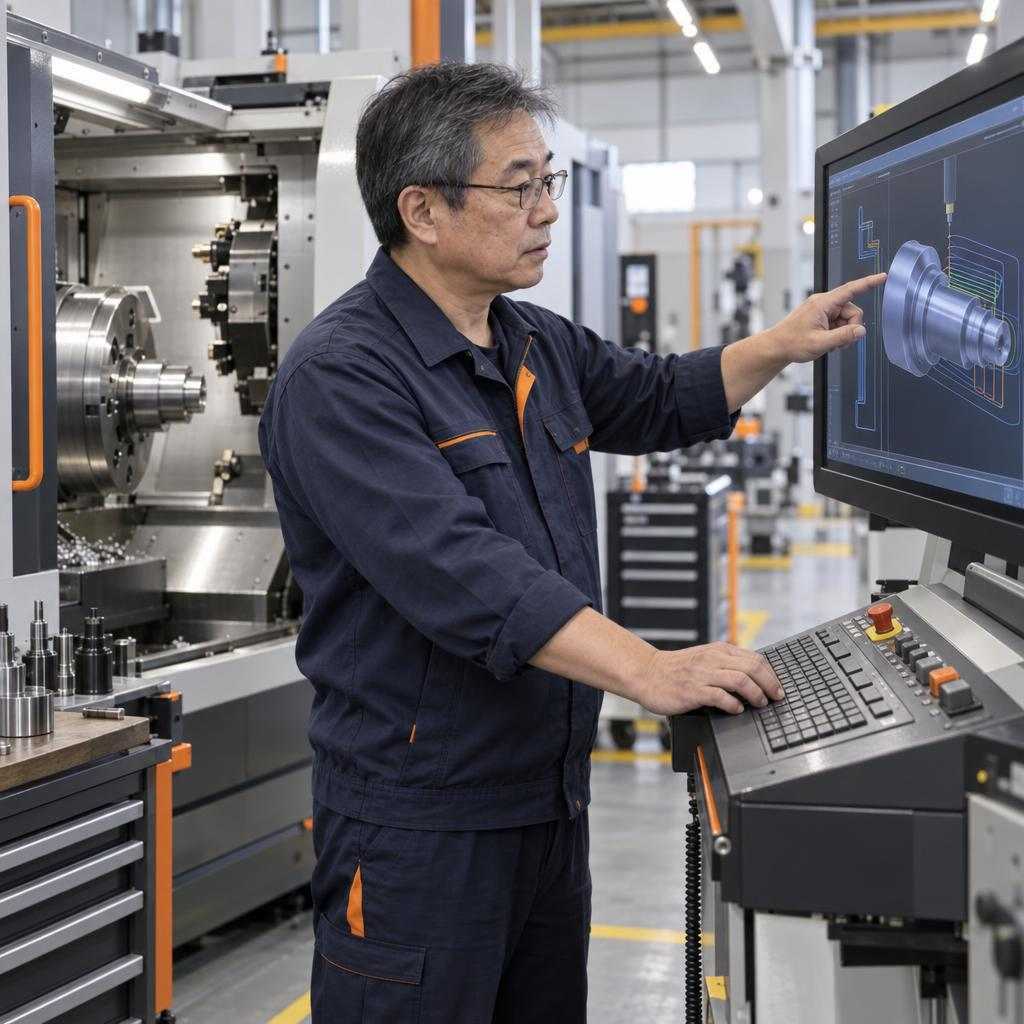
By 2026, learners can choose from three main formats, each with trade-offs in cost, convenience, and depth.
Online CNC programming courses cover blueprint reading, CAD basics, G code theory, and CAM software workflows through self paced courses with video lessons, interactive G code simulators, downloadable workbooks, quizzes, and projects. Free online resources provide cost-effective ways to learn CAD/CAM software and programming logic, and many paid platforms let you move at your own pace. Some learners supplement with a YouTube channel focused on machining to see real-world cuts. Free courses and self paced options work well for building foundational knowledge, though they rarely include actual metal cutting.
In-person options at vocational schools and community colleges deliver classroom theory plus access to real CNC machines. Programs like Cincinnati State’s CNC Machine Tool Programmer certificate pack 180 contact hours across blueprint reading, CAD (SolidWorks), CAM (Mastercam), tooling, and programming fundamentals at roughly $5,985.
Hybrid and work-based models combine online G-code theory with scheduled lab time or employer shop access. For example, a learner might enroll in an online course for G-code and blueprint reading over three to four months, then attend evening labs at a local technical college for machining practice. Structured training is increasingly tied to apprenticeships and formal credentials that employers recognize, making hybrid the fastest-growing format.
Inside a CNC Programming Curriculum: What You Actually Study About CNC Machines
A typical beginner-to-intermediate CNC programming syllabus unfolds in modules that build on each other.
Foundational modules cover shop safety (OSHA standards, hazard recognition), machine components (spindles, tool changers, beds), coordinate systems, tool types (end mills, drills, taps, inserts), and material properties for metal cutting—how steel, aluminum, stainless, and plastics each affect tool wear and cutting forces. Training programs cover technical drawing interpretation, G-code and M-code programming, CAD/CAM software use, and shop safety.
G-code programming modules cover G and M codes for programming, then move through G00/G01 moves, drilling and tapping canned cycles, tool radius and length compensation (G41/G42), subprograms, loops, and basic macro concepts. CNC programming courses cover G and M codes for machine operations in both milling and turning contexts. For turning, students learn facing, threading, grooving, and workholding in chucks and collets. For CNC milling, this part of the module focuses on contouring, pocketing, slotting, and multi-axis strategies.
Metrology and inspection content teaches using gauges, measuring surface finish, verifying tolerances, and applying basic GD&T callouts to ensure parts meet quality specifications.
CAD/CAM integration introduces CAD fundamentals—essential for CNC programmers’ training—using tools like SolidWorks, Fusion 360, or Mastercam. Proficiency in CAD/CAM transforms 3D models into accurate tool paths. Strong programs ensure manual G code skills come first so students understand what the CAM software is actually generating.
Programs also cover job planning, setup sheets, basic preventive maintenance, and lean manufacturing ideas such as reducing setup time. The CNC/Precision Machine Tool Technology program includes 400 hours of theory classes and a 5-week internship totaling 200 hours, giving students real production exposure before completion.
How Long Does CNC Programming Training Take?
Timelines vary by starting skill level, training format, and career goals.
- Online, part-time (self paced): 3–6 months to reach entry-level proficiency in G code programming, blueprint reading, and simulation. CNC operator training typically takes less than 12 months to complete.
- Intensive in-person: accelerated programs like a 16-week, 640-hour course pack foundational and intermediate content into under four months.
- Technical certificates and diplomas: 9–12 months part-time at a community college; associate degree programs run 1–2 years and include advanced CNC machines, multi-axis machining theory, and applied math.
- Full apprenticeships: roughly 3 years. CNC programmer apprentices complete 6,000 hours of training combining on-the-job work with related technical instruction.
- Post-training production learning: even after completing a program, most programmers need 1–3 years in a production environment to build confidence with complex setups, unusual materials, or tight tolerances.
For hobbyists learning enough to program a personal CNC machine, a few weeks to a couple of months of focused study can be sufficient.
CNC Programming Careers in the Manufacturing Industry: Roles, Pay, and Job Outlook
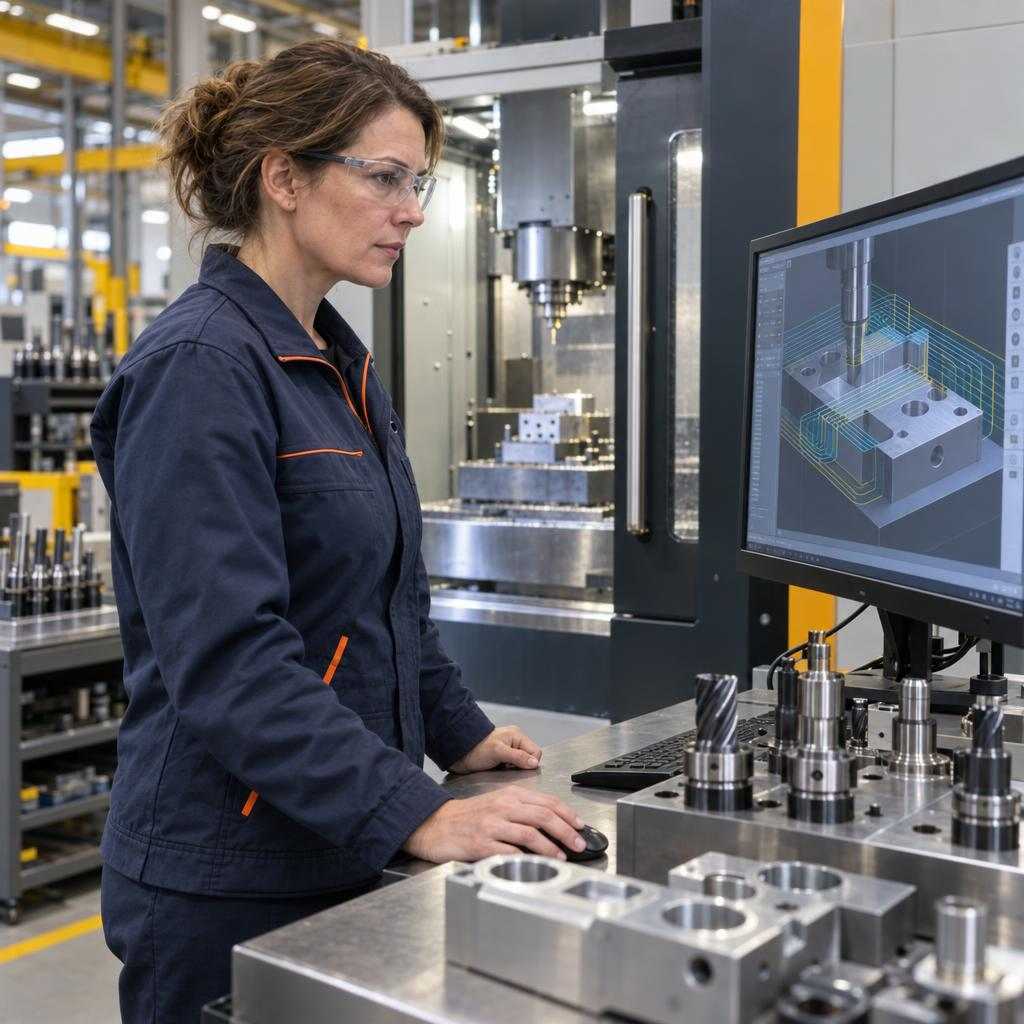
Training connects directly to concrete CNC career paths in 2026. Common roles include CNC operator, setup technician, CNC machinist, CNC programmer, and production engineer.
CNC operators earn an average salary of $52,900 per year and typically work a full-time schedule of at least 40 hours per week. CNC programmers earn considerably more, averaging around $33 per hour (roughly $74,000 annually), with experienced programmers in aerospace or medical devices pushing past $87,000. An entry level role as an operator is often the first step; adding CNC programming skills on top of machining and operation work experience typically boosts earning potential and job stability.
High-demand sectors include aerospace, medical devices, automotive (especially EV and battery manufacturing), energy, defense, and precision job shops relying heavily on CNC machines. The CNC/Precision Machine Tool Technology program addresses CNC operator shortages across these sectors.
Continual upskilling in multi-axis machining, automation, and lean manufacturing keeps you competitive. Programmers who can also analyze machine data, reduce cycle times, design fixturing solutions, and integrate CAD/CAM workflows play a vital role in modern manufacturing operations.
Work-Based CNC Programming Training and Apprenticeships
Structured, work-based learning has become a key route into CNC programming because it solves the catch-22 of needing work experience to get a job.
A CNC programmer apprenticeship typically includes thousands of hours of supervised on-the-job training plus related technical instruction. CNC programmer apprentices complete 6,000 hours of training and take 6 college-level classes covering blueprint reading, GD&T, CAM fundamentals, and macro programming. Apprenticeship programs provide supervised real-world training in CNC operations, and apprenticeship programs typically include hands-on training with real employers.
Apprentices split time between programming tasks, machine setup, and actual metal cutting on production work. Employers use apprenticeships to grow internal CNC programmers from their best CNC operators or machinists, aligning skills to specific machines, controls, and tolerances. CNC apprentices can earn an average of $40.43 per hour during training—a strong incentive compared to paying tuition out of pocket.
Benefits for learners are clear: earn paid experience while you learn, follow a clear progression from CNC operator to CNC programmer, and leave with skills gained through structured training and nationally recognized credentials. Effective training programs track on-the-job hours, RTI coursework, and competency milestones in a structured way, often through digital platforms that keep apprentices, employers, and sponsors aligned.
What to Look For in a Quality CNC Programming Training Program
Think of this as your buyer’s guide when comparing options.
- Current CNC machines and controls: the program should cover modern multi-axis mills and lathes, not just legacy 3-axis equipment.
- Relevant curriculum: look for current G code standards, CNC milling and turning content, CAM software instruction, and blueprint reading with GD&T.
- Small lab sizes: a teacher-to-student ratio of 6:1 or better means meaningful machine time. Larger class sizes dilute hands-on learning.
- Instructors with recent industry experience: someone who has run multi-axis mills, implemented lean manufacturing in CNC cells, or managed production processes brings knowledge that textbooks cannot.
- Real projects: programming parts from drawings, proving out programs on real CNC machines, and inspecting finished components with precision measurement tools.
- Credentials: graduates earn NIMS credentials recognized across the industry, signaling verified competency to any employer.
- Integration with apprenticeships or employer partnerships that lead to actual CNC operator or CNC programmer job opportunities.
Ask how programs track skills, document competencies, and help students build a portfolio of CNC programs and parts.
Common CNC Programming Training Mistakes to Avoid
Avoiding these pitfalls can save you months and thousands of dollars.
Relying only on simulation. Simulators are valuable, but never touching a real CNC machine or performing actual metal cutting leaves critical gaps. Hands-on experience in a machine shop teaches critical intuition regarding physical machining constraints—tool deflection, thermal expansion, chip behavior—that no screen can replicate.
Skipping fundamentals. Jumping straight into advanced CAM software without solid math, blueprint reading, and feeds and speeds knowledge creates a programmer who can click buttons but cannot diagnose why a part is out of tolerance.
Learning only one machine or control. Various types of CNC controls exist across the industry. Assuming skills transfer 1:1 from one brand to every CNC machine leads to frustration when you change companies or shops.
Underestimating soft skills. Communication with engineers, documenting setups on clear setup sheets, and collaborating with CNC operators on the shop floor are essential skills that separate a good programmer from a great one.
Treating training as one and done. CNC technology evolves—multi-axis machining, automation, digital twins, smarter controls. Plan for ongoing education as new tools and processes appear.
How Modern Tools and Technology Shape CNC Programming Training
Technology trends from 2024 to 2026 are reshaping how CNC programming is taught and practiced.
Advanced simulators let students test G-code and visualize tool paths before running on a real CNC machine, catching collisions and errors without wasting material. CAM software, digital twins, and cloud-based systems teach efficient programming for CNC milling and turning by mirroring actual machine behavior in a virtual environment.
Data from CNC machines—cycle times, tool life, scrap rates—can be incorporated into training to teach lean manufacturing and process improvement. Students analyze real machining data, adjust program parameters, and measure results, building the analytical skills employers value.
Mobile apps and online platforms help track coursework, on-the-job hours, and competency checklists for apprentices and trainees. These support tools ensure nothing falls through the cracks during multi-year apprenticeship programs, keeping learners, employers, and sponsors on the same page.
Want to Learn More About Your Registered Apprenticeship Opportunities?
BOOK A FREE CONSULTATION
Why Choose a Structured, Work-Based CNC Programming Training Path
Ad-hoc learning—watching a YouTube channel here, reading a forum thread there—can introduce concepts, but it rarely produces a production-ready CNC programmer. A structured, work-based path gives you clear progression from beginner to CNC programmer, consistent exposure to CNC machines, and regular feedback from mentors who have already made the mistakes you are trying to avoid.
Structured programs align with industry standards, apprenticeship requirements, and employer expectations. They typically include centralized tracking of OJT hours, related technical instruction, and skill sign-offs that create a portable record of your competency. This matters for compliance, credential recognition, and career mobility if you ever change employers or regions.
Look for training partners that coordinate employers, schools, and sponsors so you do not have to manage schedules, paperwork, and compliance reporting on your own. Platforms built for this purpose reduce administrative overhead and let you focus on what matters: learning to program CNC machines and produce quality parts.
Next Steps: How to Get Started With CNC Programming Training
Start by assessing your current skills honestly. Do you need to enroll in a basic CNC operator course first, or, if programming is your goal, choose one that includes foundational instruction on mill and lathe work before moving on? Define your career goal—CNC operator, CNC machinist, or CNC programmer—and shortlist local and online programs that match your schedule and degree of hands-on access.
Contact training providers or apprenticeship sponsors to ask about start dates, prerequisites, and how much actual CNC machine time is included. Explore work-based and apprenticeship-style options that let you earn while you learn CNC programming, building real work experience from day one.
Take the first step now. Within a few months, you could be writing G-code, cutting metal, and inspecting finished parts, not just reading about it.
FAQs About CNC Programming Training
These FAQs cover practical questions learners ask before they enroll in a CNC programming program.
How much math do I need for CNC programming training?
You need solid basic arithmetic, comfort with fractions and decimals, and right-angle trigonometry for calculating angles and tool path geometry. Measurement conversions between inches and millimeters come up constantly. Most programs teach or refresh needed math alongside G code programming and layout work, so you do not need to be an expert before starting.
Can I start CNC programming training with no machining experience?
Yes. Many programs are built for beginners with no prior machining background. Training should include both CNC machine operation and programming, not just theory. A practical path is to begin with an introductory CNC operator or CNC machinist course, then layer in programming as fundamentals become comfortable. Understanding manual G code allows effective troubleshooting and process improvement even early in your career.
Do I have to learn manual G code if shops use CAM software?
Absolutely. Even when CAM generates most programs, understanding G-code programming is critical for troubleshooting, editing on the fly, optimizing cycle times, and handling simple jobs without CAM. Strong CNC programmers can read and write code confidently regardless of what software the company uses.
Is online CNC programming training enough to get a job?
Online courses are a strong start for theory and simulation, but employers look for proven hands-on experience with real CNC machines. Combine online study with labs, maker spaces, internships, or apprenticeships where you can cut actual metal and prove programs. That combination helps prepare you for a real entry level role.
How do CNC programming credentials and certificates help my career?
Recognized credentials signal verified skills in CNC machine setup, programming, and inspection to any employer. Graduates earn NIMS credentials recognized across the industry, and certificates plus documented hours and a portfolio of programs and parts can help you move from CNC operator roles into CNC programmer positions with higher pay and more responsibility.
What materials will I practice machining during training?
Common training materials include aluminum (forgiving and affordable), mild steel, stainless steel, and sometimes plastics. Each material teaches different metal cutting behaviors—how speeds, feeds, and tool selection change based on hardness, thermal conductivity, and chip formation. Exposure to multiple materials builds the knowledge needed for real-world CNC machining across various types of manufacturing jobs.


