
Founder Story

Talent is everywhere.Opportunity isn't.

I grew up in the South Bronx, became the first in my immediate family to attend college, earned a computer science degree, taught fifth grade, and spent much of my career helping people build pathways into the professional world.

Across all of those experiences, I kept encountering different versions of the same problem:

Having talent and developing skills doesn't always mean having access to opportunity.

GoSprout grew from a career spent trying to understand, and eventually help close, that gap.

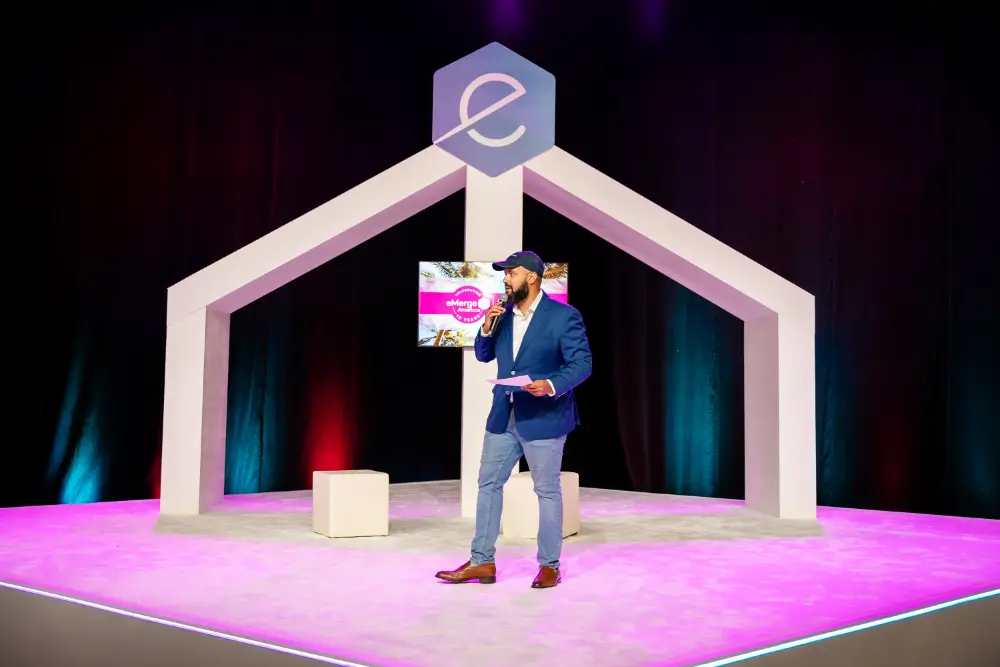
Carlos Vazquez: Current founder portrait, natural light
IMAGE PLACEHOLDERCarlos VazquezCurrent founder portrait, natural lightPORTRAIT • 4:5
  1. South Bronx
  2. Educator
  3. Workforce Builder
  4. Founder
EXPLORE THE STORY

01 / Origin

Opportunity was always close.Access was something else.

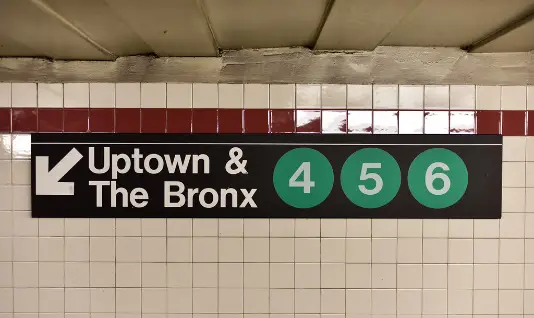
South Bronx, New York

I grew up in the projects of the South Bronx, only about 10 to 15 minutes from Manhattan but, in many ways, a world away.

My mother was a teenager when she had me. My grandmother played a huge role in helping raise me, and my mom worked hard to protect me and keep me focused on school during a time when drugs and gangs were taking a real toll on our neighborhood.

We didn't have many professional role models around us. But I had teachers.

Teachers were some of the first people who helped me imagine possibilities beyond what I could see every day.

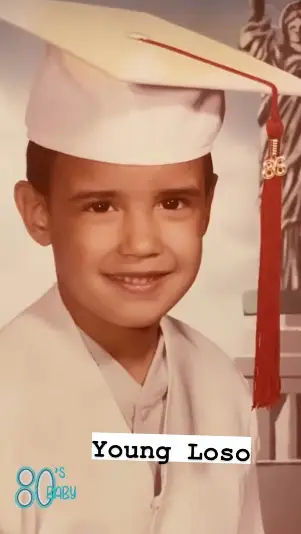
Young Carlos: South Bronx childhood
IMAGE PLACEHOLDERYoung CarlosSouth Bronx childhoodPORTRAIT • 4:5
The neighborhood: South Bronx / Patterson Houses
IMAGE PLACEHOLDERThe neighborhoodSouth Bronx / Patterson HousesLANDSCAPE • 3:2

My third-grade teacher inspired me to want to be an oceanographer, even though I had only been to the beach once or twice.

That stayed with me.

Sometimes exposure to a possibility is the first step toward believing that possibility can belong to you.

First in my immediate family to attend college

Fordham University

B.S. Computer Science

2003
College-era Carlos: Fordham University, graduation or campus
IMAGE PLACEHOLDERCollege-era CarlosFordham University, graduation or campusLANDSCAPE • 3:2

02 / The Gap

I did what I was supposed to do.

  • Earn the degree.Done.
  • Study computer science.Done.
  • Work hard.Done.
  • Launch a career in technology.Not achieved.

College wasn't easy.

I worked different jobs to support myself, including graveyard shifts as a porter in New York City. I eventually graduated from Fordham with a degree in computer science and expected that degree to open the door to a career in technology.

It didn't happen that way.

I didn't have a professional network that could introduce me to companies or help me understand how to navigate the application and interview process. And because I was paying my own bills, I couldn't spend months waiting for the perfect opportunity.

So I took one of the first jobs I could get.

I became a Sales Coordinator at a building supply and sheet-metal company back in the South Bronx.

It wasn't the technology career I had pictured. But something important happened there.

I started creating opportunities to use what I knew.

  1. 01

    I redesigned the company's website.

  2. 02

    I upgraded its network infrastructure.

  3. 03

    I implemented a CRM and other technology into the business.

I was learning a lesson that would follow me throughout my career:

Skills matter.

Education matters.

But neither automatically creates access.

03 / The Work

I stopped trying to find the bridge.I started building it.

Eventually, I found my way to the intersection of technology, education and workforce development.

And that's where my career started to make sense.

The Classroom

NYC Teaching Fellows5th Grade Teacher, The Bronx

I returned to the Bronx as a fifth-grade teacher through the New York City Teaching Fellows and earned my master's degree in education from the City College of New York.

For the first time, I was on the other side of the relationship that had mattered so much to me growing up.

I was the teacher.

And I saw firsthand how much an educator can influence what a young person believes is possible.
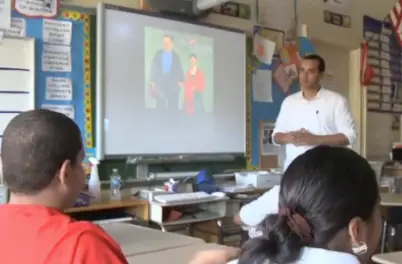
Teaching-era Carlos: Fifth-grade classroom, the Bronx
IMAGE PLACEHOLDERTeaching-era CarlosFifth-grade classroom, the BronxPORTRAIT • 4:5

Education can change what someone believes they can become.
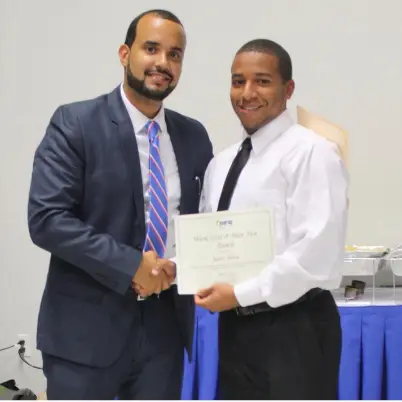
The Professional World

Year UpSan Francisco

My next chapter took me to San Francisco and Year Up, where young adults were developing technical skills, building professional networks and gaining experience through corporate internships.

I watched talented young people who might otherwise have been overlooked enter professional environments and thrive.

The difference wasn't simply training.

They were getting something I hadn't had when I graduated from college:

Year Up era: Carlos with young adults in workforce training
IMAGE PLACEHOLDERYear Up eraCarlos with young adults in workforce trainingPORTRAIT • 4:5

A bridge into the professional world.

Miami

Year Up MiamiMiami Dade College

In 2012, I moved to Miami to help launch Year Up's work at Miami Dade College.

Miami quickly became home.

And as I got to know communities across the city, I saw many of the same challenges I had experienced growing up in the Bronx.

There was talent everywhere.

The question was how to connect that talent to education, employers, experience and economic opportunity.

Apprenticeship

My work eventually exposed me more deeply to apprenticeship.

The idea was powerful because it challenged a model I had seen throughout my life:

Learn first. Find opportunity later.

Apprenticeship connected the two.

People could develop skills, gain real experience, build professional relationships and earn money at the same time.

Building Locally

Miami EdTechFounded 2017

I founded Miami EdTech to bring many of these ideas together in the community I now called home.

What started around education and technology grew into teacher training, K-12 STEAM, workforce development, pre-apprenticeships and registered apprenticeships.

Different programs. Different populations. Different employers.

But I kept seeing the same underlying challenge.

Miami EdTech: Students and programming in Miami
IMAGE PLACEHOLDERMiami EdTechStudents and programming in MiamiPORTRAIT • 4:5

How do we build better bridges between talent and opportunity?

Different roles.

Different cities.

The same recurring problem.

04 / The Question

“We don't have the bandwidth.”

Those words stuck with me.

While leading Miami EdTech, I was at an event with technology and startup leaders and started talking with the founder of a well-funded company.

I suggested that his company bring on interns and create opportunities for emerging talent.

His response was essentially:

We don't have the bandwidth.

The company had resources.

There were talented people looking for opportunities.

But from the employer's perspective, hiring someone experienced was easier than building the structure required to develop someone.

I kept thinking about that conversation.

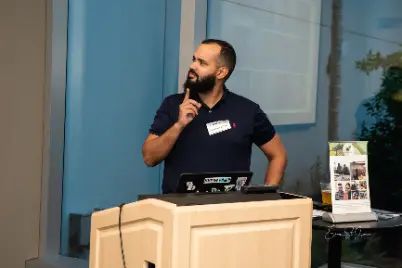
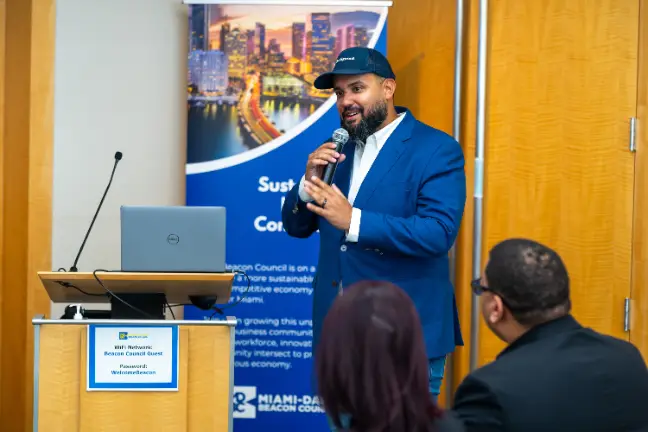
Carlos with employers: Speaking at an event or meeting with industry leaders
IMAGE PLACEHOLDERCarlos with employersSpeaking at an event or meeting with industry leadersLANDSCAPE • 3:2

Because maybe the problem wasn't that employers didn't care.

Maybe we were asking them to manage too much complexity.

  1. 01The talent existed.
  2. 02The employer had resources.
  3. 03The opportunity could have existed.
  4. 04The infrastructure to make it practical didn't.

That changed the question for me.

Instead of asking:
How do we convince more organizations to create these opportunities?

I started asking:

How do we make it easier for them to actually do it?

05 / Building the Solution

Before GoSprout,there was Project ARM.

EARLY CONCEPT

Project ARM

  1. AApprenticeship
  2. RRelationship
  3. MManagement
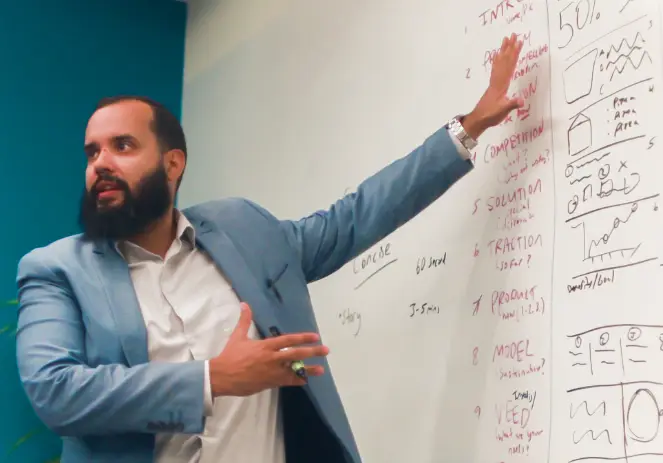
Project ARM artifact: Original sketch, wireframe, or early prototype
IMAGE PLACEHOLDERProject ARM artifactOriginal sketch, wireframe, or early prototypePORTRAIT • 4:5

The first idea was straightforward: use technology to make it easier for organizations to intentionally develop emerging talent.

As I learned more about registered apprenticeship, the infrastructure problem became even clearer.

Employers, schools, training providers, sponsors, mentors and apprentices all needed to coordinate.

Programs had training requirements to manage.

Hours and competencies needed to be documented.

Progress had to be tracked.

Compliance had to be maintained.

And too much of it was happening through:

  • Spreadsheets.
  • Emails.
  • Paper forms.
  • Disconnected systems.

The model was powerful.

The infrastructure supporting it wasn't.

Project ARM eventually became:

GoSprout

Infrastructure for learning through work.

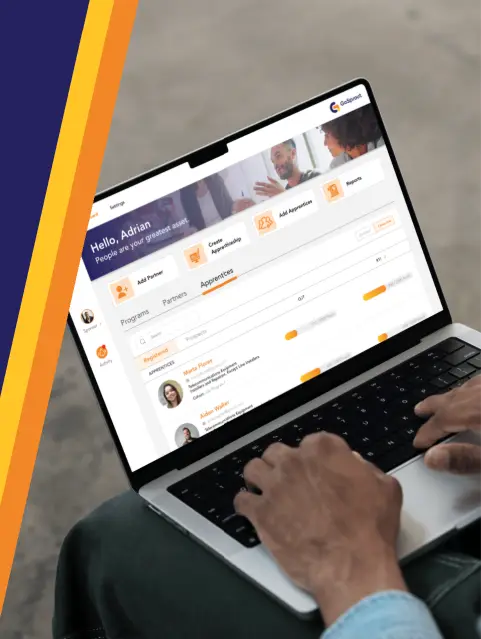
GoSprout platform: Product screenshot: apprentice progress, hours, and compliance in one place
IMAGE PLACEHOLDERGoSprout platformProduct screenshot: apprentice progress, hours, and compliance in one placeWIDE • 16:9

GoSprout started with apprenticeship, but the problem is bigger than apprenticeship.

Internships, pre-apprenticeships, registered apprenticeships, on-the-job training and other forms of work-based learning all depend on organizations being able to intentionally develop people through real work.

Our job is to make that easier.

Because the less energy organizations have to spend managing the infrastructure, the more energy they can spend on what actually matters:

Developing people.

One career.One recurring problem.

  1. SOUTH BRONX

    Talent without access.

  2. FORDHAM

    Education without a professional network.

  3. THE CLASSROOM

    Students who needed exposure and opportunity.

  4. YEAR UP

    Skills connected to employers and professional networks.

  5. APPRENTICESHIP

    Learning connected directly to work.

  6. GoSprout

    Infrastructure that helps organizations build those pathways at scale.

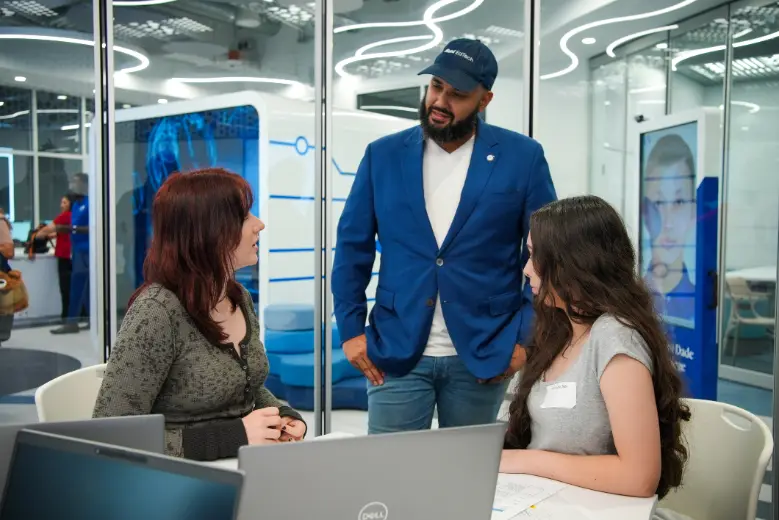
Carlos with apprentices: Candid moment with students or apprentices at work
IMAGE PLACEHOLDERCarlos with apprenticesCandid moment with students or apprentices at workFULL BLEED • 21:9

Building the bridge I once needed.

GoSprout didn't begin with an idea for a software company.

It grew from decades spent as a student, teacher, technologist, workforce leader, nonprofit founder and employer partner, seeing the same challenge from different sides.

There are talented people everywhere.

There are employers that need talent.

There are schools, workforce organizations and community partners trying to connect the two.

We believe work-based learning can be one of those bridges.

The technology is the infrastructure.

Opportunity is the point.

Carlos VazquezFounder & CEO, GoSprout