Table of Contents
- Introduction: Why Machinist Training Matters in 2026
- What a Modern Machinist Really Does
- Core Skills You Learn in Machinist Training
- Types of Machinist Training Programs
- Apprenticeships and On-the-Job Machinist Training
- CNC Machining and CNC Programming Pathways
- How to Choose the Right Machinist Training Program
- What to Expect Day-to-Day in Machinist Training
- Career Paths and Salaries for Machinists
- Future Trends in Machinist Training and Advanced Manufacturing
- Why Choose Our Work-Based Learning Platform to Power Machinist Training
- Get Started with Machinist Training Today
- FAQs About Machinist Training
Introduction: Why Machinist Training Matters in 2026
Since roughly 2020, manufacturers in aerospace, automotive, medical devices, and semiconductor tooling have reported growing difficulty hiring machinists who can hold tight tolerances on both manual and CNC equipment. In 2025, 74 percent of manufacturers worldwide reported an acute shortage of skilled workers, and the U.S. Bureau of Labor Statistics projects about 30,400 openings per year for machinists and tool-and-die makers from 2025 to 2035. Structured machinist training is no longer optional; it is the pipeline that keeps production lines running.
Machinist training blends technical education, safety protocols, and hands-on machine operation. Programs cover everything from engine lathe turning and manual mill work to CNC machining on multi-axis machining centers, CNC lathes, and CNC milling stations used in production plants. Whether you call the role CNC operator, CNC machinist, or manual machinist, the foundation is the same: metal cutting skill built through deliberate practice.
This article is for prospective students weighing a machining career, employers building apprenticeship programs, and schools or workforce development boards designing training pathways. You will get an intensive overview of machining skills and knowledge, program formats, CNC programming options, and how to structure and track training for compliance and measurable results.
What a Modern Machinist Really Does
Skilled machinists produce precision parts found in EV drivetrains, aircraft turbine assemblies, medical implants, robotics arms, and semiconductor tooling. In 2026, the role spans a wide range of tasks depending on experience level.
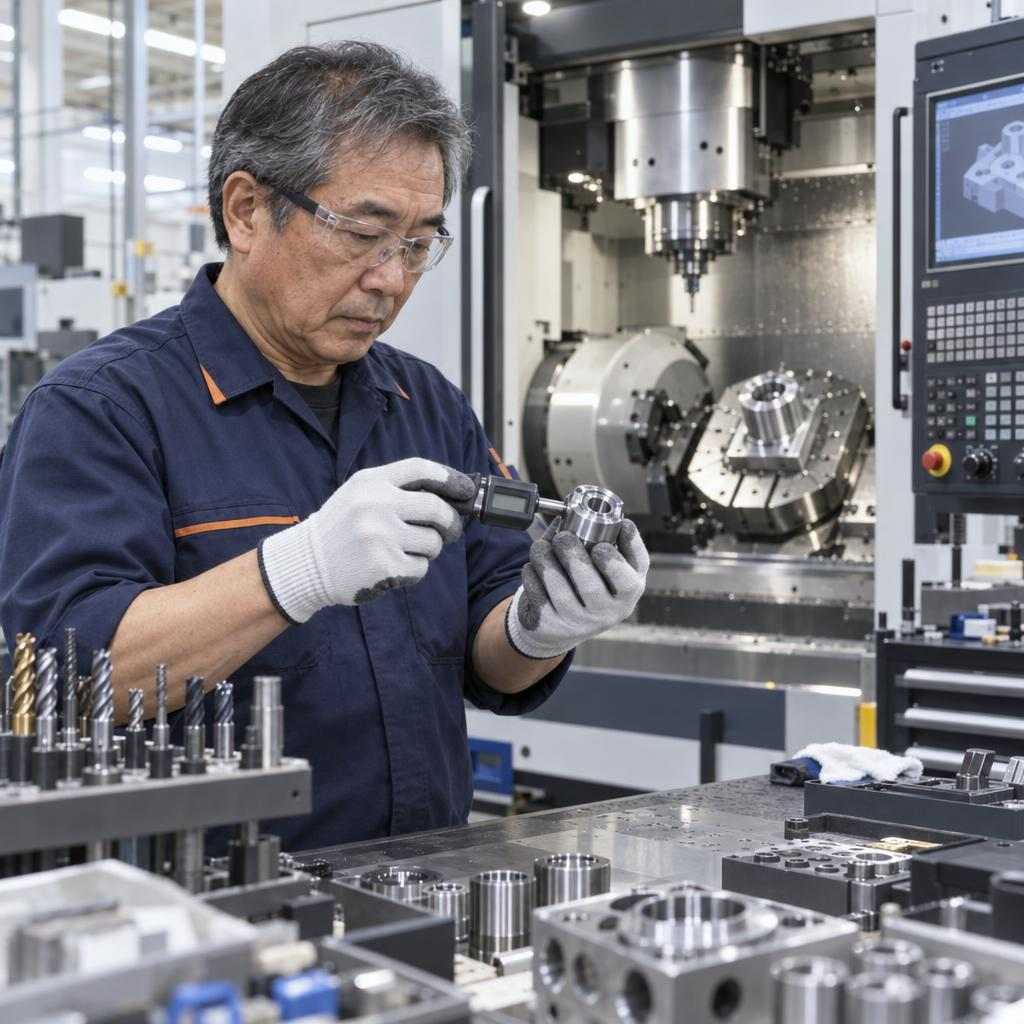
- Entry-level machine operator tasks: Loading raw material, monitoring machine tools during production runs, deburring finished parts, and inspecting dimensions with micrometers and calipers. A CNC machine operator at this stage runs pre-written programs and performs basic tool changes.
- CNC machinist responsibilities: Setting up vises and fixtures, establishing work coordinate systems, adjusting tool wear offsets, troubleshooting chatter or dimensional drift, and reading complex blueprints. A CNC machinist handles small-batch jobs and first-article inspections.
- CNC programmer scope: Creating toolpaths from 3D CAD models using CAM software, writing G code programming sequences, and verifying programs through simulation before cutting metal. A CNC programmer spends more time at a computer than at the control panel.
- Typical parts: 4140 steel shafts for hydraulic cylinders, aluminum aerospace brackets, stainless steel surgical instruments, and tight-tolerance bushings for automation systems.
- Safety and quality: Every machinist follows lockout/tagout procedures, handles metal cutting fluids properly, removes chips safely, and documents inspection results. Foundational skills for machinists include mechanical aptitude, spatial reasoning, and attention to detail. Shop safety is emphasized in machinist training programs to prevent workplace accidents.
Core Skills You Learn in Machinist Training
Strong machinist training combines classroom theory with real machine time. Hands-on experience with machining tools is essential for skill development, and machinist training programs cover CNC programming and precision measurement alongside manual methods. Quality control is a key component, focusing on inspection and tolerance verification.
- Blueprint reading and GD&T: Interpreting orthographic views, surface finish symbols, tolerance zones, and geometric dimensioning and tolerancing per ASME Y14.5. Every production drawing in 2026 uses these conventions.
- Precision measurement: Using micrometers, dial indicators, bore gauges, height gauges, and introductory coordinate measuring machine (CMM) operation. Precision measurement skills are critical for ensuring parts meet specifications; typical tolerances run ±0.001 in (0.025 mm) and tighter for aerospace or medical work.
- Metal cutting fundamentals: Feeds and speeds, tool wear patterns, coolant application, chip evacuation, and the differences in machining aluminum, mild steel, tool steel, titanium, and plastics. Understanding heat treatment effects on machinability matters for material selection.
- Manual machining: Operating an engine lathe, knee mill (manual mill), surface grinder, drill press, and tapping heads. Manual skills still matter because setup errors on CNC machines often trace back to misaligned manual work. Grinding processes inspection methods are part of many curricula.
- CNC machining basics: Understanding computer numerical control axes, work offsets, tool length offsets, and running basic CNC lathe and CNC milling jobs. Students learn classic control panel overview and navigation on common controls like FANUC and Haas.
- Shop math: Fractions to decimals, metric/imperial conversion, trigonometry for right triangles, and calculations used daily in CNC programming and setup. Competency in high school-level math is essential for machinists.
Types of Machinist Training Programs
Machinist training programs range from one-year certificates to four-year apprenticeships, and enrollment in machinist classes has steadily increased in recent years. Machinist training includes both formal education and practical application across all program types. Here are the main formats available in 2026.
- High school and dual-credit CTE programs: 1- to 2-year pathways where students learn manual machining and introductory CNC operation, often earning NIMS-style credentials before graduation. These programs give qualified students a head start before community college or an apprenticeship.
- Community college certificates: Community colleges offer multi-year certificate and associate degree programs in machining. Certificate tracks typically run 9 to 18 months full time and cover CNC machining, CNC programming, precision measurement, materials, and blueprint reading. Machinist training programs provide hands-on training with modern equipment in lab settings.
- Associate degree in precision machining: Two-year programs that combine machining, CAD, CAM, and general education. These prepare graduates for broader manufacturing industry roles and often align with more advanced manufacturing courses.
- Short bootcamps: 8- to 16-week hours career training program formats focus on fast entry into CNC operator roles. These are often funded by workforce grants or vocational rehab agencies. Focus: HOPE’s Machinist Training Institute, for example, includes over 600 hours of practical tool setup and operations. Top-rated programs include the Machinist Training Institute, Precision Machining Academy, and CNC Mastery Program.
- Employer-run training centers: Medium and large manufacturers operate internal labs using their own Mazak lathe, Mazak mill, or other production CNC equipment, tailoring training to their specific parts and quality standards. Online CNC machinist training programs are becoming increasingly popular for supplementing theory modules, and hybrid programs combine online coursework with in-person lab sessions. Self paced courses work well for the theory portions, accommodating various learning preferences.
Apprenticeships and On-the-Job Machinist Training
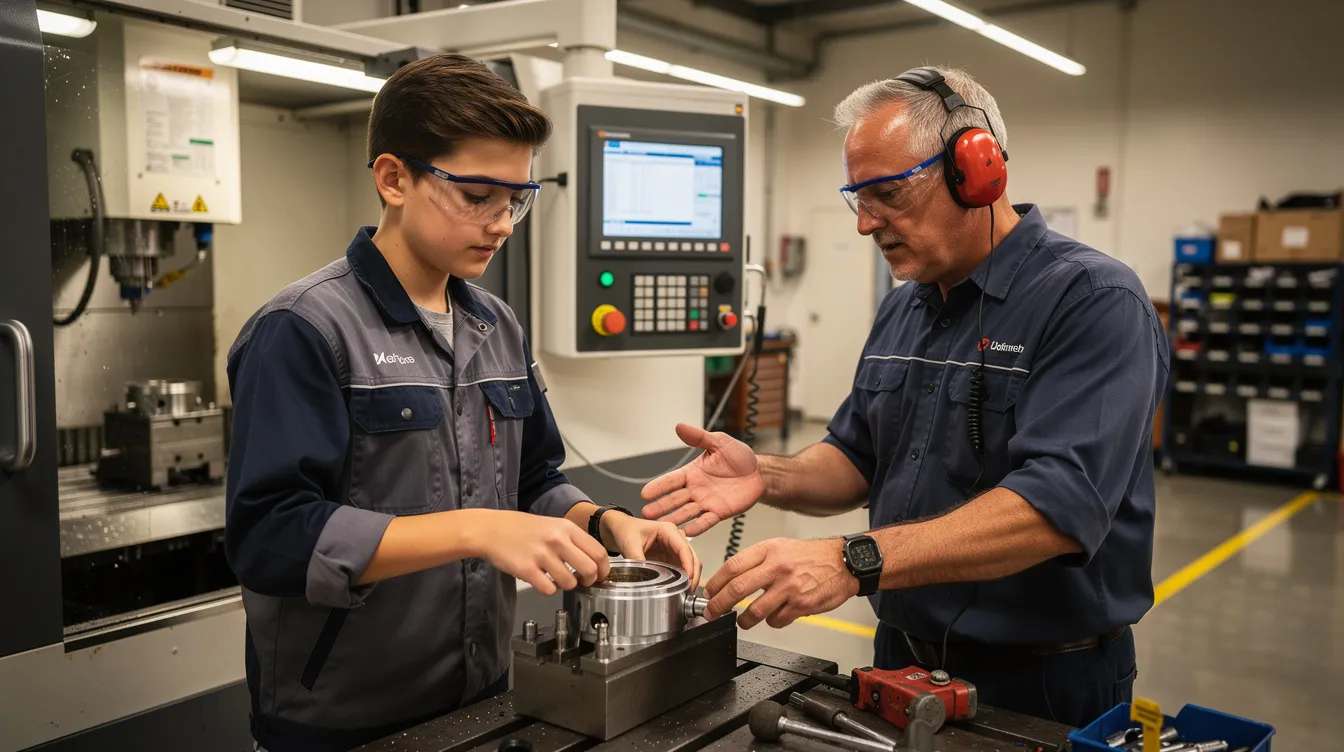
Apprenticeships combine paid on-the-job training with classroom instruction, giving learners a way to earn while learning and gain crucial real-world experience. Machining apprenticeships typically last between 2 to 5 years and require strict adherence to industry standards. The most common model runs four years with roughly 8,000 OJT hours and 576 to 900 RTI hours. Boeing’s IAM-sponsored machinist apprenticeship in Washington follows this structure: 8,000 paid OJT hours plus at least 144 hours per year of related technical instruction delivered through a community college. Wisconsin’s standard calls for 7,888 OJT hours plus 432 hours of classroom time.
- Progression through competencies: Apprentices start with basic tasks like deburring, simple setups, and operating a CNC lathe operator role. By year three or four, they perform CNC machining center setups, programming edits, tooling selection, and first-article inspections.
- Tracked OJT tasks: Competencies are logged against a defined list: operating CNC lathes and mills, performing setups, running first articles, using presetters, and documenting inspection results. Program execution depends on consistent tracking.
- Mentor supervision: Journey-level machinists sign off on each competency. This direct communication between mentor and apprentice is the backbone of skill transfer, especially for tacit knowledge like fixture design and manual machining technique.
- Compliance and reporting: Sponsors must log hours and RTI completion for state or federal apprenticeship agencies. Modern digital platforms automate this tracking and produce compliance reports, replacing spreadsheets and manual paperwork. A suitable completion date is determined by when the apprentice meets all competency and hour requirements.
CNC Machining and CNC Programming Pathways
CNC machining has become central to machinist training, and many machinist classes now include modules on CNC programming. CNC-focused training covers topics such as CNC operation, programming, and multi-axis machining. Programs often offer explicit tracks for CNC operator, CNC machinist, and CNC programmer roles. CNC operation and programming involve setting up and troubleshooting CNC machinery at every level.
- CNC operator training: Running production using existing CNC programs, basic control panel navigation on FANUC or Haas controllers, loading tools, and using work offset pages. A CNC mill operator at this level performs CNC machining on parts with established toolpaths.
- CNC machinist training course: Learning to set up vises and fixtures, establish work coordinate systems, adjust tool wear offsets, and troubleshoot chatter, poor finish, or dimensional issues. CNC machinist training prepares learners for small-batch and prototype work. A CNC turning program on a CNC lathe is a common first project.
- CNC programming training: Teaching G-code and M-code, canned cycles (G81 for drilling, G83 for peck drilling), and CAM software workflows from 3D CAD models to posted toolpaths. An example: programming metallurgy machining of a stepped shaft on a CNC lathe, selecting feeds and speeds based on material grade. Specialized machinist training focuses on advanced techniques like CNC milling and multi-axis work. The CNC Precision Machining Program covers programming, tooling, and precision techniques.
- Simulation and verification: Virtual proving of CNC programs to avoid crashes, using digital twins or offline programming. This reduces scrap, protects expensive machine tools, and accelerates learning.
- Stackable credentials: Starting as a CNC operator, then progressing to CNC machinist and CNC programmer over several years. Each step builds on the previous one, and an online CNC machinist course can supplement in-person lab work for theory topics. Specialized training meets the increasing demand for skilled machining professionals. The Advanced Grinding Techniques Program offers expertise in surface and cylindrical grinding for those pursuing niche roles.
How to Choose the Right Machinist Training Program
Choosing a program means matching depth and format to your career goals, existing experience, and local job market. Consider program duration, curriculum, and instructor qualifications when evaluating options. A student advising team at the school can help with locating program options and financial assistance, including federal aid.
- Curriculum depth: Check for coverage of manual machining, CNC machining, CNC programming, blueprint reading, precision measurement, and manufacturing fire safety rather than just one narrow topic. Look for advanced manufacturing topics and process improvement techniques in upper-level courses.
- Equipment and facilities: Look for 3-axis and 4-axis machining centers, CNC lathes with live tooling, well-maintained engine lathes, manual mills, and milling machines alongside metrology equipment. Hands-on training with modern equipment is essential for machinist programs.
- Instructor experience: Verify that instructors have real-world machining backgrounds in job shops or production environments, not just classroom credentials. Ask about their CNC relation to current industry practices.
- Work-based learning component: Prioritize programs with apprenticeships, co-ops, or internships where students complete supervised OJT hours in real shops. This is where essential skills are built.
- Scheduling and format: Compare full-time, evening, weekend, and hybrid options. Hands-on machining must be in-person, but RTI like safety, shop math, and theory can move online. Students can work at their own pace on theory while keeping a consistent lab schedule during regular business hours.
- Placement and outcomes: Ask for recent placement rates, typical starting wages for CNC machinist graduates, and employer partners. The course structure should produce measurable outcomes, not vague promises. Successful completion should align with industry-recognized credentials.
Want to Learn More About Your Registered Apprenticeship Opportunities?
BOOK A FREE CONSULTATION
What to Expect Day-to-Day in Machinist Training
A typical first-year training day starts in a classroom and ends at the inspection bench. The room smells like coolant. The sound of chip guards closing and spindles spinning up fills the lab. Here is what the schedule looks like.
- Morning theory: Short lectures on metal cutting theory, shop math, or reading a new blueprint, followed by quick quizzes or group problem-solving. Advanced manufacturing courses might cover lean manufacturing principles, sustainable manufacturing practices, or traditional manufacturing definition versus advanced manufacturing definition.
- Shop lab time: Students rotate between manual lathes, mills, and CNC machines. Assigned projects include step shafts, simple fixtures, and plate parts with hole patterns. A job syllabus abrasives section might cover surface finishing. Machine maintenance basics are taught alongside operation.
- Inspection and quality: Every project ends at the inspection bench. Students fill out inspection reports, compare dimensions to tolerances, and learn to document nonconformances. This is where precision machining habits form.
- Safety routines: PPE checks, machine pre-use inspections, emergency stop drills, and near-miss reporting. Programs must keep safety records and train to OSHA-aligned practices. Electrical work lockout procedures are part of standard training.
- Progress tracking: Competencies are signed off by instructors or supervisors. Hours are logged for apprenticeships. Digital platforms or mobile apps let learners see which machining skills they have completed and what remains, turning program storage of records into a real-time dashboard. Direct platform support feature access helps resolve questions during training.
Career Paths and Salaries for Machinists
Machinist training opens a range of roles. Employment of machinists is projected to be steady from 2022 to 2032, with replacement demand keeping the job market active. The BLS reports a median wage of $58,750 per year for machinists as of May 2025. CNC machinists earn a median of $67,899 per year according to Salary.com data from September 2026.
| Role | Typical Hourly Wage (2026) | Key Responsibilities |
|---|---|---|
| Machine operator (entry) | $17–$22 | Monitor machines, deburr, basic measurements |
| CNC machinist (mid-career) | $25–$35 | Setups, small-batch jobs, troubleshooting |
| Toolmaker / mold maker | $30–$40+ | High-precision tooling, fixtures, molds |
| CNC programmer | $35–$45+ | CAM programming, process optimization |
- Toolmaker and mold maker: This specialized, high-precision work creating tooling, fixtures, and molds often requires several additional years beyond basic machinist training. Graduates of specialized programs command higher salaries in competitive job markets.
- CNC programmer and manufacturing engineer: Experience plus extra training in CAD/CAM, process planning, and lean manufacturing leads to salaried roles. Specific advanced manufacturing skills in areas like multi-axis programming or micromachining carry a wage premium.
- Advancement and leadership: Lead machinist, shop supervisor, or training coordinator roles suit those who enjoy mentoring apprentices. These positions can streamline business operations across a shop by improving training structure and reducing scrap rates. Advanced manufacturing training in areas like statistical process control supports this transition.
Future Trends in Machinist Training and Advanced Manufacturing
Machinist training in 2026 increasingly includes Industry 4.0 topics, automation, and digital skills alongside core metal cutting expertise. The traditional manufacturing definition is expanding.
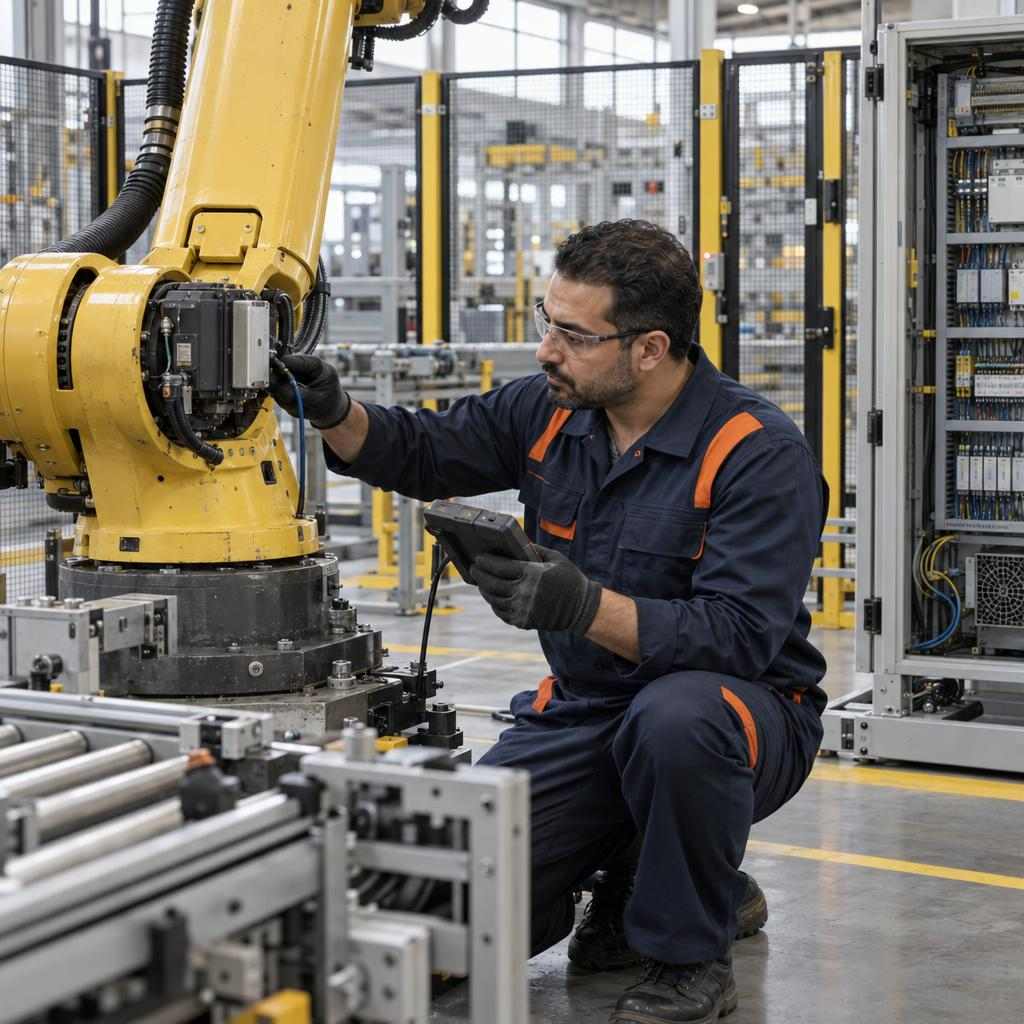
- Robotics and automation: Machinists now learn to work with robotic part loaders, pallet systems, and lights-out machining cells. Machinist training now includes additive manufacturing and robotics as part of standard curricula.
- Additive and hybrid manufacturing: Some programs introduce 3D metal printing followed by CNC finishing. Hybrid machining, where additive parts are finish-machined on CNC equipment, is entering more advanced manufacturing courses.
- Data and digital tools: Machine monitoring systems, basic SPC, and using tablets to access work instructions, drawings, and quality checks on the shop floor are replacing paper travelers. Training programs cover Industry 4.0 principles and digital twin technology.
- Online and hybrid RTI: Safety, theory, and math modules move online. Hands-on machining stays in-person. This benefits working adults who need flexible scheduling. Online machinist training programs are becoming increasingly popular for theory content.
- Competency-based models: A shift from purely time-based to competency-based machinist training lets learners advance when they demonstrate skills, not just when a clock runs out. Federal apprenticeship regulations now permit these hybrid approaches.
Why Choose Our Work-Based Learning Platform to Power Machinist Training
Employers, schools, and apprenticeship sponsors often struggle to coordinate machinist training across multiple sites: tracking OJT hours, RTI classes, competencies, and compliance reporting in disconnected spreadsheets.
- Centralized tracking: The platform lets sponsors and employers track machinist OJT tasks (CNC lathe setup, CNC machining center operation, metal cutting projects) and RTI completion in one place with real-time dashboards.
- Compliance and reporting: The system automates reporting to state and federal apprenticeship systems (RAPIDS, WIPS, PIRL-style reports), replacing manual data entry and reducing audit risk.
- Competency-based machinist training: Define machining competencies (manual machining, CNC programming basics, blueprint reading) and tie them to hours, evaluations, and digital sign-offs. Track which apprentices are on pace and which need additional support.
- Collaboration for all stakeholders: Employers, schools, workforce development boards, and apprentices share training plans, communicate about progress, and document shop and classroom performance in real time through direct communication channels.
- Mobile-friendly experience: Apprentices log hours, view assignments, and see which machining skills they still need to complete using a mobile app, even from the shop floor. This direct platform support feature keeps everyone aligned without paper logs.
Get Started with Machinist Training Today
The manufacturing industry needs skilled machinists, and the numbers back it up: 30,400 projected openings per year, an aging workforce heading into retirement, and reshoring initiatives creating new demand. Whether you are a prospective student, an employer, or a training provider, the window to act is open.
- If you are considering a machining career, visit local community colleges, training centers, or apprenticeship sponsors. Bring the checklist from the “How to Choose” section above, and ask pointed questions about equipment, placement rates, and instructor backgrounds.
- If you are an employer, school, or workforce organization, modernize your machinist training and apprenticeship programs by using a dedicated work-based learning platform to design curricula, track OJT and RTI, and automate compliance reporting.
- Ready to launch, scale, or improve your machinist training program? Request a demo or schedule a consultation to see how your CNC machinist apprenticeship can run with less administrative overhead and better outcomes for every learner.
Building a resilient, well-trained machining workforce is a decade-long project. The programs that start tracking, measuring, and improving now will be the ones producing journey-level machinists when the industry needs them most.
FAQs About Machinist Training
These questions come up frequently from prospective students, parents, and employers planning machinist pathways.
How long does machinist training usually take?
Short CNC operator bootcamps run 8 to 16 weeks. Certificate programs at community colleges take 9 to 18 months. Associate degrees require two years. Full apprenticeships run four years with roughly 8,000 OJT hours. The right format depends on your starting point and career goal.
Do I need experience before starting a machinist training program?
Most entry-level machinist training and CNC machining programs assume no prior experience. A high school diploma or GED is the baseline requirement for machinist training. Comfort with basic algebra, using hand tools, and reading a ruler helps. Competency in high school-level math is essential.
What’s the difference between a machinist and a CNC programmer?
A machinist focuses on setups, running CNC machines, solving metal cutting issues on the floor, and performing CNC machining on production parts. A CNC programmer spends more time at a computer creating toolpaths using CAM software and writing G-code. Many experienced machinists eventually move into programming roles.
Can machinist training be completed online?
Theory, safety, and CNC programming content can be studied through an online CNC machinist course. Actual machining and metal cutting skills require in-person labs or on-the-job training with real machines. Hybrid programs that combine online coursework with in-person lab sessions offer the best of both approaches.
Is machinist training worth it if automation is growing?
CNC machinists and machine operators who understand both machining and automation are in high demand to run, program, and maintain advanced systems. Training now includes robotics, Industry 4.0 topics, and digital monitoring. Automation creates new machinist roles; it does not eliminate the need for people who understand what happens at the cutting edge.
What certifications can I earn through machinist training?
NIMS certifications validate specific competencies to employers in machining. Common certifications for machinists include NIMS credentials in multiple machining areas, from manual turning and milling to CNC 5-axis programming. OSHA safety cards (OSHA-10 or OSHA-30) and CAD software certifications complement core machining credentials. These are portable across states and recognized by employers nationwide.


