
Table of Contents
- What Is Automation Technician Training Management?
- Defining the Modern Automation Technician Role
- Core Domains in Industrial Automation Training
- Designing an Automation Technician Curriculum
- Key Competencies and Learning Outcomes to Track
- Training Delivery Models: Classroom, Lab, and On-the-Job
- Choosing Tools, Platforms, and Learning Technologies
- Tracking OJT, RTI, and Compliance Requirements
- Assessing Skills and Closing Training Gaps
- Building Effective Partnerships: Employers, Schools, and Sponsors
- Scaling and Improving Your Automation Technician Program Over Time
- Why Choose a Dedicated Work-Based Learning Platform for Automation Technician Programs
- Next Steps: Turn Your Automation Technician Training Plan Into Action
- Frequently Asked Questions About Automation Technician Training Management
What Is Automation Technician Training Management?
Automation technician training management is the structured system of planning, delivering, tracking, assessing, and continuously improving training programs for technicians who maintain, program, and troubleshoot industrial automation systems. It covers everything from control systems and process control to SCADA systems, robot programming, and programmable logic controllers (PLCs), preparing technicians for real-world industrial applications.
This discipline matters more in 2026 than ever. U.S. industrial robot installations rose 11% year-over-year in 2025, reaching roughly 38,000 units, while the food and beverage sector alone saw a 30% surge in adoption. At the same time, much of the existing maintenance workforce is nearing retirement, creating institutional knowledge gaps that unstructured training cannot fill. Proper alignment of training with business goals improves productivity and reduces downtime, making managed programs a strategic priority rather than a nice-to-have.
This guide is written for employers, schools, apprenticeship sponsors, and workforce development boards who run pre-apprenticeship, registered apprenticeship, or incumbent worker programs. Employers can receive tax credits for participating in apprenticeship programs, adding a financial incentive to get this right. If you manage people who work on industrial automation equipment, this article will help you build or modernize that pipeline.
Defining the Modern Automation Technician Role
Clear role definitions drive effective training management. If you cannot describe what an automation technician does on a Tuesday morning, your curriculum will wander.
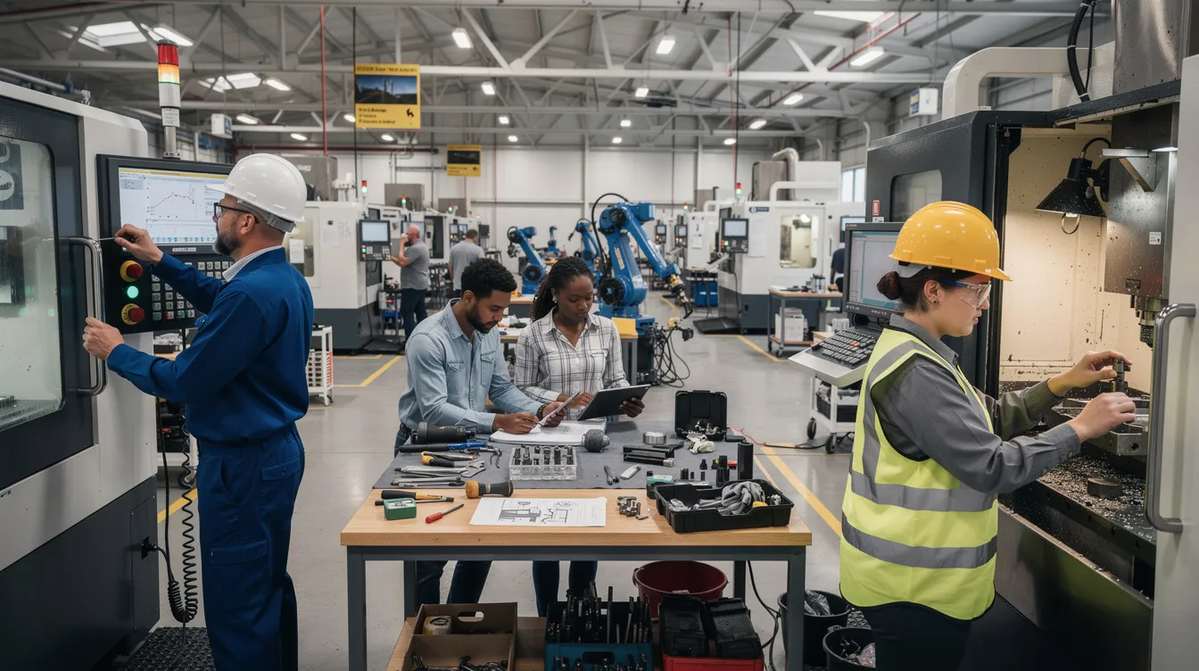
Core responsibilities include maintaining industrial automation equipment such as PLCs, variable frequency drives, and sensors. Technicians troubleshoot control systems, support process control loops, calibrate instrumentation, and integrate new robots and end effectors into production lines. They also configure HMI screens, set up alarm management strategies, and enforce safety interlocks.
It helps to differentiate related roles:
- Automation technician: focused on controls, PLC systems, instrumentation, and integration of subsystems.
- Mechatronics technician: broader scope spanning mechanical, electrical, fluid power, and digital and industrial electronics.
- Electrical technician: emphasis on wiring, electrical motor controls, power distribution, and speed control.
- Production technician: more about running and optimizing manufacturing processes than building or programming devices.
These roles operate across food and beverage plants, automotive assembly, logistics and warehousing, and pharmaceutical manufacturing. In 2026, trends like collaborative robotics with higher payloads, data-driven maintenance using IIoT sensors, and remote diagnostics are reshaping required skills. Technicians increasingly need knowledge of OT/IT convergence, cybersecurity basics, and no-code robot programming interfaces, especially in small and mid-size operations.
Core Domains in Industrial Automation Training
A complete curriculum must span several technical domains. Teaching only PLC basics leaves technicians unprepared for the cross-functional reality of the job. Effective training programs bridge traditional concepts with advanced digital systems, covering both legacy equipment and modern platforms.
Key domains to cover:
- Industrial automation fundamentals: systems thinking, signal types (discrete and analog), feedback loops, sensors, and instrumentation.
- Electrical and motor control: motors (AC, DC, servo), drives, starters, three-phase electrical systems, pneumatic systems, and motor protection.
- PLCs and ladder logic: programming techniques including ladder logic programs, structured text, and function blocks. I/O mapping, communications protocols like Ethernet/IP and Profinet.
- SCADA systems and HMIs: data acquisition, alarm management, visualization, trends, and tag database configuration.
- Motion control and robotics: industrial robotics, collaborative robots, end effectors, motion profiles, axes coordination, and teach pendants.
- Safety standards: lockout/tagout, machine guarding, robotic safety, ISO risk assessment, and OSHA compliance.
These domains map directly to real tasks. Commissioning a new control panel involves electrical motor controls, PLC wiring, and HMI setup. Modifying a robot program to adjust an end effector requires robotics systems knowledge plus programming plus mechanical fitting. Tuning a process control loop on a packaging line demands automation fundamentals, instrumentation, and SCADA monitoring.
Students learn about PLCs, robotics, and electro-mechanical systems across these domains. Courses also cover three-phase electrical systems and pneumatic systems as foundational components. You can organize domains into tracks by experience level: an “Understand” track for fundamental concepts, a “Maintain/Troubleshoot” track for diagnostics and preventive tasks, and a “Program/Design” track for advanced PLC applications and robotics systems integration.
Designing an Automation Technician Curriculum
Moving from ad hoc classes to a structured, multi-year learning path is the single most impactful change most organizations can make. Training programs should include structured, competency-based pathways that align to specific job roles and employer needs, not a grab bag of one-off workshops.
Training should focus on addressing gap points between job reality and theoretical knowledge. Break the curriculum into stackable modules or courses: Mechatronics Technician, Electrical Technician, Mechanical Technician, Collaborative Robotics Technician, and PLC Troubleshooting. One reference model uses eighteen interactive training modules with an average completion time of thirty-two weeks part-time, demonstrating that well-structured programs can move efficiently without sacrificing depth.
Sequence courses logically:
- Introduction to industrial automation
- Basic electrical and control systems
- PLCs and ladder logic
- Robotics and end effectors
- Advanced process control and SCADA systems
- Networking and cybersecurity fundamentals
Each course should include both Related Technical Instruction (RTI) hours and On-the-Job Training (OJT) tasks mapped clearly in your written training plan. Federal regulation sets a minimum of 144 RTI hours per year and typically 2,000 OJT hours across the program for Registered Apprenticeship Programs. Manufacturing programs average roughly 537 RTI hours and 5,191 OJT hours overall.
Update content at least annually. When major controller platforms release new software versions, when safety codes change, or when your advisory committee flags a gap, revise accordingly. Various types of control platforms evolve rapidly, and stale curriculum erodes technician readiness.
Key Competencies and Learning Outcomes to Track
Clearly defined learning outcomes are essential for program quality and regulatory reporting. Without them, you cannot demonstrate that your training produces job-ready employees, and you risk noncompliance with state and federal apprenticeship standards.
Concrete technical competencies to track:
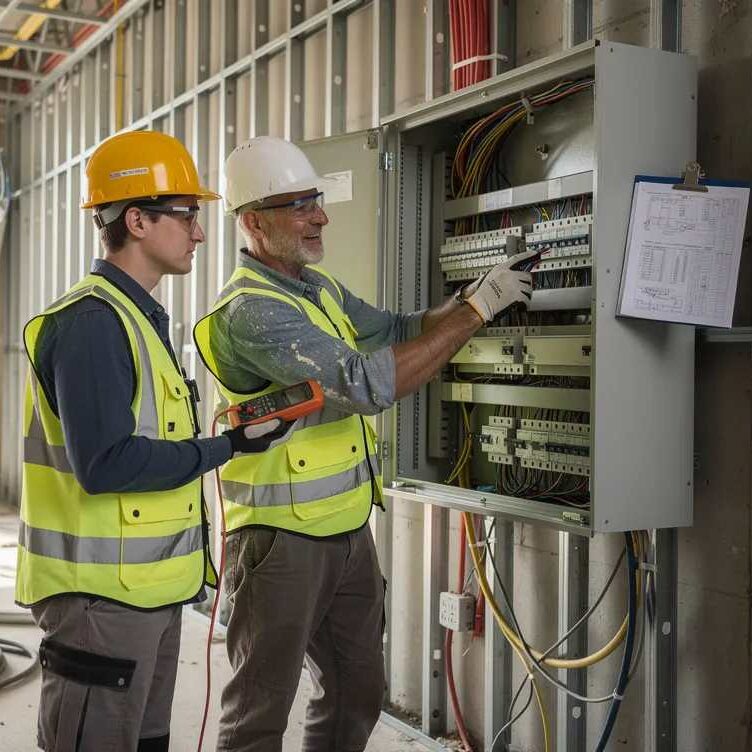
- Interpreting electrical schematics and wiring diagrams
- Writing and debugging ladder logic and structured text
- Configuring a SCADA tag database and setting up HMI screens
- Programming basic robot paths and end effectors
- Diagnosing field device failures across sensors, actuators, and motors
- Understanding communication protocols including Ethernet/IP, Profinet, and OPC UA
- Performing preventive maintenance and calibration on various types of industrial electronics
Non-technical competencies matter equally: communication with production operators, documenting changes to control systems, following lockout/tagout and safety procedures, and problem solving under pressure.
Write measurable learning outcomes using “can do” statements. For example, “Apprentice can commission an Ethernet/IP PLC and HMI cell within defined safety parameters” is actionable. “Understands PLCs” is not. Competency-based training improves technician effectiveness and job performance because it ties evaluation to demonstrated ability, not seat time.
These outcomes should connect directly to competency checklists, digital logs, and evaluation rubrics that supervisors and instructors use consistently. Industry-recognized certifications validate technical mastery for automation technicians. Training prepares students for credentials like the SACA Certified Industry 4.0 Associate certification. Registered Apprenticeship Programs are recognized nationally and can lead to industry certifications that boost career opportunities.
Training Delivery Models: Classroom, Lab, and On-the-Job
Most automation technician programs now blend classroom instruction, hands-on lab work, and structured OJT. Each delivery method serves a different function, and skipping any one of them leaves gaps.
Classroom and online RTI covers theory: process control basics, control systems architecture, SCADA systems, basic operation of electronics and devices, and safety standards. Short lectures, simulations, quizzes, and online modules let learners absorb foundational knowledge before touching equipment.
Lab-based instruction is where theory meets practice. Hands-on training is critical for industrial automation technicians. Hands-on labs should mimic actual factory-floor hardware for effective learning. Use PLC and HMI trainers, small collaborative robots with interchangeable end effectors, and kits for motor controls, sensors, and pneumatic subsystems. Utilizing real equipment and scenarios in training ensures better skill transfer to the job. Set up safe failure scenarios: intentionally cause a sensor fault, a miswiring condition, or a motor misalignment so students practice troubleshooting under controlled conditions. Laboratory experiments like these build confidence before technicians face real production pressure.
Structured OJT ties jobsite tasks to specific learning outcomes with supervisor sign-off. Tasks include troubleshooting a conveyor, updating ladder logic, checking sensor calibration, or performing basic operation checks on motors and drives. Safety protocols must be integrated into training programs at every stage of OJT. Registered Apprenticeship Programs combine on-the-job training with classroom instruction by design. One example: the Hershey IMT apprenticeship delivered 216 RTI hours over approximately five weeks, followed by 3,000 hours of OJT over roughly 18 months.
Flexible options, including evenings, weekends, and hybrid formats, work for incumbent workers and employees on multi-shift operations. Online theory components paired with in-person lab sessions keep the program accessible without compromising practical applications.
Choosing Tools, Platforms, and Learning Technologies
Balancing vendor-specific training with transferable concepts is a real tension. Foundational knowledge of ladder logic, I/O mapping, and process control applies across platforms, but technicians also need hands-on experience with the specific PLC systems, SCADA software products, and robot brands employed at their facilities.
Key criteria for selecting hardware and software:
- Relevance: Match what local employers actually have installed. If most plants run Allen-Bradley Studio 5000, train on that. If they use Siemens TIA Portal, adjust accordingly.
- Protocol support: Ensure devices support modern networking (Ethernet/IP, Profinet, OPC UA).
- Simulator availability: Lab simulation software and educational licenses reduce cost and risk. LogixSim software is used for simulation in training programs, and training should utilize simulated environments for troubleshooting practice before technicians work on live production equipment. Some programs also highlight features CircuitLogix offers for 2D and 3D electronic circuit simulation to support practice with PLCs, robotics, and control systems.
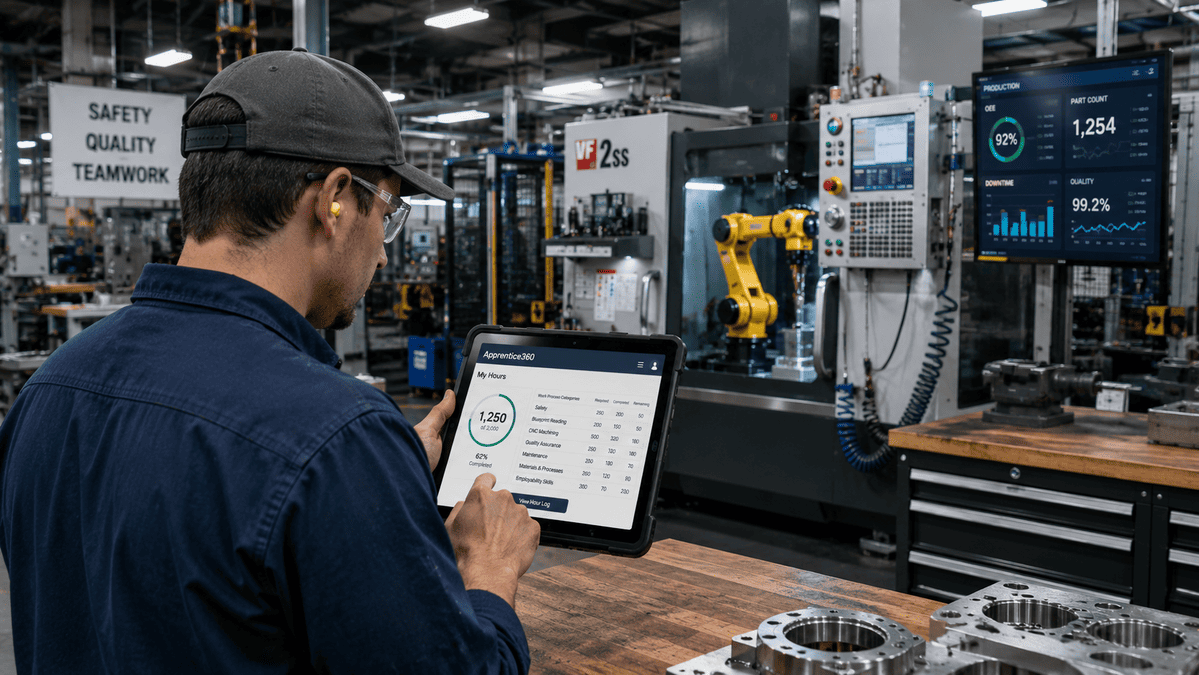
A centralized training management platform handles scheduling, content delivery, logging OJT and RTI hours, and tracking learning outcomes across employers, schools, and sponsors. Mobile apps enhance apprentice engagement and training management. A Mobile Apprentice App supports real-time tracking of training progress, letting apprentices review procedures, check off OJT tasks, and access course materials from the plant floor. Mobile-friendly access is not optional in 2026; it is expected.
Features like integration with existing HR or ERP systems, role-based dashboards, and automated compliance alerts distinguish purpose-built platforms from generic LMS tools. The main features to look for include OJT and RTI tracking modules, competency sign-off workflows, and reporting that aligns with federal schemas.
Tracking OJT, RTI, and Compliance Requirements
The compliance landscape for registered apprenticeships and funded workforce programs in the U.S. continues to tighten in 2026. If your program receives federal or state funding, or if you operate a Registered Apprenticeship, you must report data to systems like RAPIDS, WIPS, and PIRL.
What must be tracked:
- RTI hours by topic (e.g., PLCs, robotics, process control, electronics)
- OJT hours by task, completed under supervision
- Mentor and supervisor assignments
- Competency completion dates
- Apprentice demographics for RAPIDS submission
- Wage progression milestones
Compliance reporting includes RAPIDS, WIPS, and PIRL standards. Compliance reporting helps track OJT and RTI hours effectively across all participants. OJT tracking ensures compliance with federal apprenticeship standards, while RTI tracking helps improve apprentice engagement and learning outcomes by providing visibility into what is and is not working.
Centralized digital tracking simplifies this reporting and reduces error-prone spreadsheets and paper logs. Automated reporting tools streamline compliance for apprenticeship programs. Automated reporting simplifies OJT and RTI tracking processes, and OJT tracking can reduce administrative overhead for training providers significantly. Mobile applications streamline compliance reporting for apprenticeships, allowing supervisors to approve hours and sign off on competencies from anywhere.
Build automated alerts for underperforming apprentices, overdue evaluations, or missing documentation. Data security matters: use role-based permissions so employers, schools, and sponsors can access what they need without exposing sensitive HR information.
Assessing Skills and Closing Training Gaps
Tracking hours is necessary but insufficient. The real question is whether your technicians can perform the job. Ongoing assessment of training outcomes is crucial for program enhancement.
Baseline assessments at entry should cover math, reading schematics, basic computer use, and any prior experience with digital and industrial electronics. Use diagnostic results to place learners into the right starting point and avoid wasting time repeating content they already know.
Formative assessments happen throughout the program:
- Lab checklists: wiring a three-phase motor starter, configuring a PID loop, debugging a PLC routine
- Short PLC ladder logic challenges and SCADA alarm configuration exercises using features like CircuitLogix or similar lab simulation software
- Observation during OJT tasks with structured supervisor feedback
Summative assessments prove readiness. Capstone projects like designing a small automated cell with a PLC, HMI, sensors, and a simple robot, including safety and documentation requirements, validate that learning has transferred. Goal-oriented training approaches quantify improvements in operational metrics like MTTR (mean time to repair), giving employers data they can act on.
Performance data from OJT, such as the number of successful troubleshooting calls or the speed of diagnosing field device failures, feeds back into individual learning plans and targeted coaching. This closes the loop between assessment and improvement.
Building Effective Partnerships: Employers, Schools, and Sponsors
Most strong automation technician pipelines are built through collaboration, not in isolation. No single organization typically has the instructors, equipment, and administrative infrastructure to do it all.
Employers provide real-world industrial automation equipment, control systems, and site access for OJT. They also supply mentors who guide apprentices through practical applications on the job. Schools contribute instructors, labs, curriculum design expertise, and credentialing.
Apprenticeship sponsors and workforce development boards align training with regional labor market needs and handle administrative tasks like RAPIDS registration and compliance reporting. They help connect tuition assistance, grants, and funding streams that make programs financially viable.
Create an advisory committee that includes plant engineers, controls specialists, and maintenance leaders. This group should review curriculum, learning outcomes, and equipment needs at least once per year. For example, Quinsigamond Community College developed its ARMTech certificate program by using a DACUM process with employer surveys to prioritize knowledge, skills, and abilities, resulting in a curriculum validated by the people who actually hire technicians.
In regions with many small manufacturers, a shared training program where multiple employers co-fund a lab or share a platform keeps costs manageable and ensures consistency across sites.
Scaling and Improving Your Automation Technician Program Over Time
Scaling is harder than launching. More sites, more apprentices, more instructors, and increasing reporting requirements create complexity that ad hoc management cannot sustain. Continuous upskilling is essential in automation training as technologies evolve and manufacturing processes change.
Use standardized competency frameworks and course templates so that a Mechatronics Technician Level 1 module means the same thing across plants and cohorts. The Manufacturing USA Advanced Manufacturing Occupation and Competency Framework maps knowledge, skills, and abilities across technology areas and serves as a useful reference.
Dashboards should monitor enrollment, progression, completion rates, and job placement metrics. Identify bottlenecks: too few seats in a robot programming lab, not enough qualified instructors for a PLC troubleshooting course, or a particular cohort struggling with industrial electronics theory.
Implement a yearly program review cycle using quantitative data plus qualitative input from apprentices, mentors, and supervisors. Structured feedback loops enhance training program sustainability by surfacing issues before they become systemic. Training programs need to adapt to evolving technology and skill requirements, so document all changes and version your training standards whenever equipment, control platforms, or safety regulations change.
Why Choose a Dedicated Work-Based Learning Platform for Automation Technician Programs
Managing automation technician training management across multiple employers, schools, mentors, and apprentices is complex. Generic LMS tools were not designed for the realities of registered apprenticeships: OJT hour tracking, RTI scheduling, competency sign-offs, wage progression, and compliance reporting to federal systems.
A dedicated work-based learning platform reduces administrative load by automating OJT and RTI tracking, attendance, evaluations, and compliance reporting across industrial automation programs. Shared dashboards support training services for employers, schools, sponsors, and apprentices while giving them transparent access to learning outcomes, progress data, and upcoming tasks.
For scaling, purpose-built platforms let you clone programs for new sites, standardize control systems curricula across locations, and monitor performance across multiple cohorts. When your program grows from one plant to five, you need consistency in how competencies are defined, evaluated, and reported. Platforms built specifically for registered apprenticeships and internships are better aligned to federal and state reporting requirements and day-to-day operational realities than tools designed primarily for corporate e-learning or academic coursework.
Next Steps: Turn Your Automation Technician Training Plan Into Action
The gap between where your workforce is and where industrial automation demands it to be will not close on its own. Define the roles clearly, design a structured curriculum, specify measurable learning outcomes, blend the right delivery models, and use data to manage and improve the program continuously.
Want to Learn More About Your Registered Apprenticeship Opportunities?
BOOK A FREE CONSULTATION
A practical action roadmap:
- Inventory your current skills, equipment, and training resources
- Define target competencies aligned to the control systems and robotics systems your facilities actually use
- Map OJT tasks and RTI modules to those competencies
- Select tools, partners, and a training management platform that handles compliance and collaboration
- Pilot with a small cohort, gather feedback, and refine before scaling
Review your existing training and identify gaps, especially around PLC troubleshooting, SCADA systems, robot programming, and process control. If you are still managing apprentice hours in spreadsheets, still guessing at which competencies your technicians have mastered, or still running disconnected programs across sites, it is time to modernize.
Explore a work-based learning management platform purpose-built for apprenticeships and workforce development. Schedule a demo, bring your training plan, and see how the right technology turns complexity into a manageable, scalable system. Your automation technicians, and the operations that depend on them, deserve that focus.
Frequently Asked Questions About Automation Technician Training Management
How long does it take to train an automation technician?
A structured Registered Apprenticeship typically runs 12 to 24 months, though these programs can last from one to five years depending on the occupation and complexity of control systems used. Upskilling existing electricians or mechanical technicians can be shorter if prior experience is recognized. Manufacturing apprenticeships average roughly 5,191 OJT hours and 537 RTI hours over a multi-year term.
How should I balance classroom training and OJT?
Federal minimum is 144 hours of related technical instruction per year, combined with roughly 2,000 hours of paid OJT. The Hershey IMT apprenticeship, for instance, used 216 RTI hours followed by 3,000 OJT hours over 18 months. The critical point is aligning both with the same learning outcomes so classroom theory directly supports what happens on the job.
Do I need vendor-specific training for programmable logic controllers (PLCs) and robots?
Foundational concepts like ladder logic, I/O mapping, and process control are transferable across brands. But technicians also need exposure to the specific programmable logic controllers PLCs, SCADA systems, and robot brands installed at their facilities. If your plants run Allen-Bradley, train on Studio 5000. If they use Siemens, use TIA Portal. Match your tools to your installed base.
How do I track progress across multiple plants or school partners?
Use a centralized digital platform where all OJT tasks, RTI attendance, and competency sign-offs are logged consistently. Role-based access lets employers, instructors, and sponsors see what they need. Systems that integrate with RAPIDS and WIPS schemas simplify compliance at scale.
What if apprentices come in with different skill levels?
Use diagnostic assessments and recognition of prior learning to place experienced workers into advanced modules. Competency-based approaches let a licensed copy of a technician’s prior credentials program receive credit for what they already know, so they skip foundational content and move to higher tracks where they actually need development.
How often should I update my automation training curriculum?
At minimum, annually. Trigger interim updates when major changes occur: new plant equipment, new controller software releases, updated safety codes, or changes in regulatory standards for apprenticeship programs. Your advisory committee should monitor the landscape and flag updates proactively.