Table of Contents
- Introduction: Why Industrial Automation Technicians Are in High Demand
- What Does an Industrial Automation Technician Do in Automation Systems?
- Key Skills and Tools for Modern Automation Technicians in Control Systems
- Industrial Automation Technician Salary and Job Outlook in 2026
- Education, Training & Apprenticeships for Automation Technicians
- Daily Work Environment, Shifts, and Safety Considerations
- Career Paths and Advancement in Industrial Automation
- How Registered Apprenticeships Support Industrial Automation Careers
- What to Know Before You Choose This Career
- Why Choose Our Platform to Support Industrial Automation Technician Programs
- Next Steps: How to Start or Support an Industrial Automation Technician Journey
- Frequently Asked Questions About Industrial Automation Technicians
Introduction: Why Industrial Automation Technicians Are in High Demand
Since 2020, U.S. manufacturing has accelerated its investment in automation systems, robotics, and industrial internet of things (IIoT) technology. Supply-chain disruptions, reshoring initiatives, and a retiring skilled trades workforce have pushed companies to automate faster, and that creates a gap: someone has to install, program, maintain, and repair all of this new equipment. U.S. manufacturing could need as many as 3.8 million new workers by 2033, and a large share of those openings require technicians who can bridge mechanical, electrical, and computer systems within automated environments.
An industrial automation technician is the person who keeps factory automation running. Related titles include automation technician, PLC technician, robotics technician, and mechatronics technician. Whether you are a high school student exploring trades, a career changer from general maintenance, or an employer building a workforce pipeline, this guide covers what the job involves, what it pays, how training and apprenticeship programs work, and where the career can take you.
What Does an Industrial Automation Technician Do in Automation Systems?
Industrial automation technicians ensure automated manufacturing systems run safely and efficiently. Their primary responsibilities include installing, maintaining, and troubleshooting automated systems across production floors, warehouses, and processing plants.
A typical day might involve diagnosing a faulty proximity sensor on a packaging line, updating a PLC program to adjust cycle times, or calibrating a variable frequency drive on a conveyor motor.
The systems they touch span PLC-based control systems, industrial robots and robotic devices, sensors and actuators, HMIs (human-machine interfaces), and SCADA platforms used for supervisory monitoring. Troubleshooting includes addressing mechanical, electrical, hydraulic, and programming issues; a single breakdown can require reading schematics, testing circuits, and reviewing control logic before the root cause surfaces.
Typical work settings include automotive plants, food and beverage production lines, logistics warehouses, energy generation facilities, pharmaceutical manufacturing, and building automation systems in large industrial and commercial facilities. Technicians work closely with automation engineers, maintenance technicians, and production supervisors, acting as the hands-on link between engineering design and daily operations. The role blends electrical, mechanical, and computer skills, which is why many programs and employers refer to it as a mechatronics position.
Key Skills and Tools for Modern Automation Technicians in Control Systems
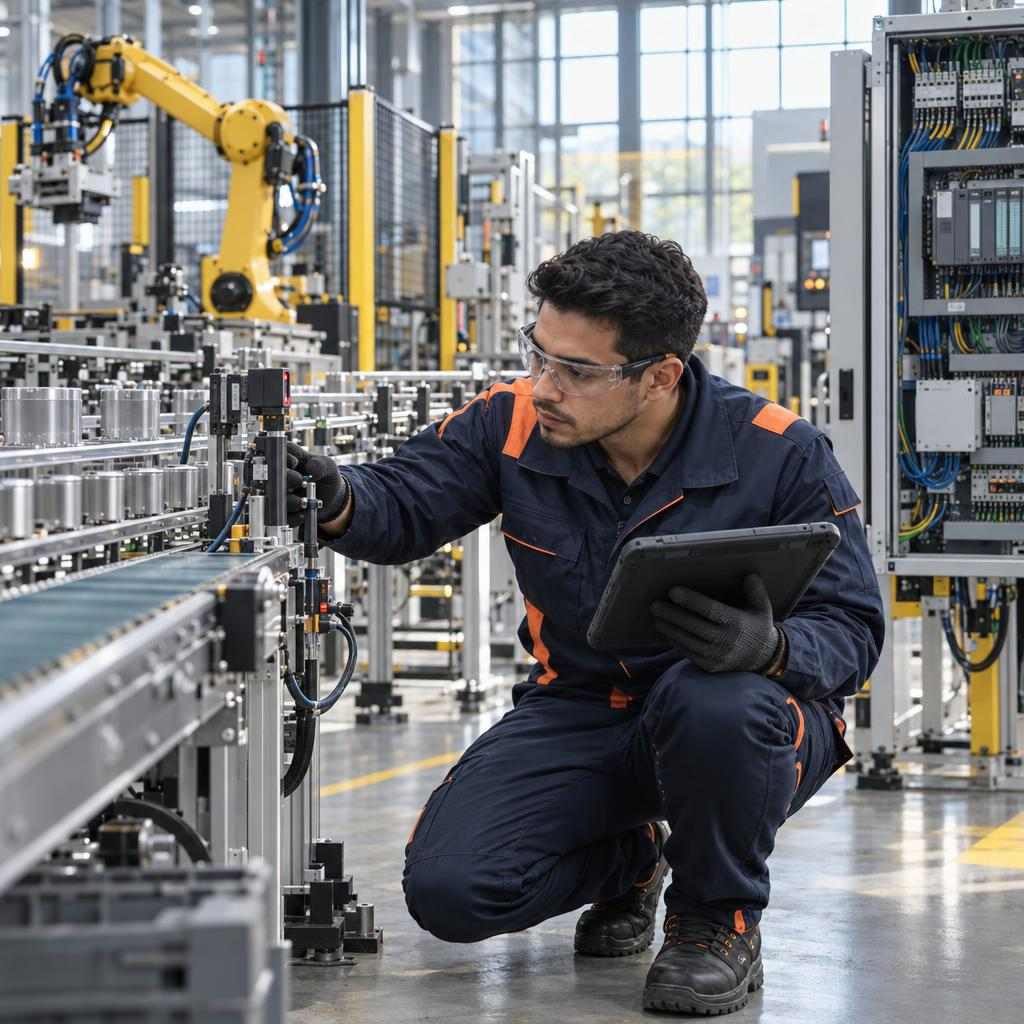
An automation technician needs both hands-on technical ability and the analytical thinking to isolate faults under time pressure. Strong problem-solving skills are essential for diagnosing equipment failures, especially when a production line is down and every minute of lost output costs the company money.
Key skills for automation technicians include PLC programming, troubleshooting, and mechanical knowledge. Reading electrical schematics, understanding sensors, working with industrial networking protocols like Ethernet/IP and PROFINET, and performing basic robotics maintenance round out the core technical profile. Technicians use tools like multimeters, oscilloscopes, and calibration equipment for diagnostics, along with signal analyzers for verifying communication between controllers and field devices. On the software side, PLC programming environments such as RSLogix (Allen-Bradley) or TIA Portal (Siemens) are standard, and familiarity with SCADA systems like Ignition or FactoryTalk adds value.
Soft skills matter just as much. Technicians also need to perform their work independently and as part of a team. Documenting work accurately, communicating findings to non-technical supervisors, and collaborating with automation engineers on system changes all factor into daily performance. These abilities develop through structured OJT hours paired with RTI (Related Technical Instruction) in an apprenticeship or technical program, not just from textbook study.
Industrial Automation Technician Salary and Job Outlook in 2026
National pay for an industrial automation technician averages about $57,843 per year, or roughly $28 per hour. Entry-level positions (10th percentile) start around $43,953, while the 25th-to-75th percentile range falls between $50,500 and $64,300. For the broader category of electro-mechanical and mechatronics technologists and technicians, the BLS reports a median wage of $73,900 annually, with top earners (90th percentile and above) exceeding $109,890.
Specialization drives higher pay. Technicians who master robotics, advanced PLC programming, or predictive maintenance diagnostics move toward the upper pay brackets. Location also matters: industrial hubs in the Midwest, Southeast, Texas, and Great Lakes regions tend to offer more openings and competitive wages. In niche sectors like semiconductor or scientific R&D, median wages for related technician roles reach approximately $101,580 per year.
Job growth for automation technicians is projected at 3% over 10 years. Job opportunities are strong in manufacturing, logistics, and utilities sectors with automated systems. The TechForce Foundation’s 2026 Supply & Demand Report found that graduates fill only about 42% of annual technician openings across industrial machinery and related fields, which means qualified candidates face minimal competition for positions.
Education, Training & Apprenticeships for Automation Technicians
Most industrial automation technicians qualify through one of three paths: an associate degree in mechatronics or industrial automation, a registered apprenticeship, or a combination of short-term certificates plus structured OJT. Typical education for technicians includes associate degrees in industrial automation or related fields, though employers prefer applicants with an automation technician certificate or degree of any kind over candidates with no formal credentials.
Automation technician programs integrate mechanics, electronics, and programming into a single curriculum. Coursework treats hydraulics and pneumatics as core components of the training alongside electrical circuits, PLC programming, robotics basics, industrial safety, and introductory control systems theory. Automation technicians can complete training in-class or online, though hands-on lab access remains critical for developing wiring, testing, and repair skills. Many modern programs use simulation software and virtual PLC labs so learners can practice control logic before working on live machines.
Registered apprenticeship programs combine paid on-the-job training with classroom instruction. Registered apprenticeships typically require 2,000 hours of training, often spread across 18 to 36 months. Federal regulations mandate at least 144 hours of RTI per year, though many states require more; Washington State, for example, specifies 600 hours of supplemental instruction for industrial automation apprenticeships. Registered apprenticeships pay you from day one of training, and youth apprentices work 10-20 hours per week during school while earning 15 tuition-free college credits.

For career changers coming from a general maintenance technician or electrician background, structured upskilling through an apprenticeship or evening certificate program is the most direct route. Employers and schools looking to launch a program should align coursework with industry-recognized competencies and plan for hands-on lab time from the start.
Certifications and Credentials That Boost Your Career
Certifications can enhance job prospects in industrial automation by validating specific skills that employers recognize. Vendor-specific PLC credentials (Allen-Bradley, Siemens), industrial robotics certificates, and safety certifications such as OSHA 10/30 or NFPA 70E electrical safety all carry weight during hiring and promotion reviews.
These credentials stack on top of an apprenticeship or associate degree. A technician might earn a basic PLC credential during their first year, add a robotics certificate in year two, and pursue an industrial networking credential later. Employers and training providers who align their programs with these certifications give apprentices tangible milestones to hit as they progress through OJT and classroom instruction.
Daily Work Environment, Shifts, and Safety Considerations
Industrial automation technicians work on site in production facilities, distribution centers, and large industrial and commercial facilities that often run 24/7, where they maintain automated systems to reduce human intervention in busy operations. Shift work is common: many technicians rotate through nights and weekends so maintenance and upgrades happen during periods of lower production demand. On-call rotations for unplanned breakdowns are standard in plants where downtime costs thousands of dollars per hour.
The physical demands include working around moving machines, climbing to access control panels and sensors, and spending extended periods in hot, cold, or noisy environments. Some technicians work in cleanroom settings (semiconductor, biotech), which add strict contamination controls to the daily routine.
Compliance with safety standards such as OSHA and lockout/tagout procedures is crucial in automation. Following OSHA and lockout/tagout procedures helps technicians perform work safely around energized or moving equipment. Technicians follow electrical safety standards (NFPA 70E), use PPE including gloves, eye protection, and hearing protection, and coordinate with safety teams to maintain compliant automation systems. Apprenticeship and training programs that weave safety instruction throughout every OJT rotation and RTI module produce technicians with safer habits and lower incident rates from the start.
Career Paths and Advancement in Industrial Automation
A new automation technician typically starts with basic maintenance tasks: replacing sensors, performing preventive maintenance rounds, and shadowing senior technicians during PLC troubleshooting. Over three to five years, responsibilities expand to include independent diagnostics, control panel wiring, and programming modifications on live automation systems.
Career advancement may require mastering specific skills in areas like robotics or advanced PLC programming. From there, a clear path opens toward roles such as senior automation technician, robotics technician, PLC specialist, or maintenance supervisor. Some technicians collaborate closely with automation engineers on system design and commissioning, effectively bridging the gap between engineering and the shop floor. The automation technician career path can progress from apprentice roles to engineering or management positions over time.
Options outside hands-on technical work also exist. Experienced technicians move into technical sales, applications support, training and consulting, or start small businesses focused on control systems integration and specialized repair. Each of these directions draws on deep knowledge of automation systems and adds requirements in business development and customer relations. Continuous learning, including new platforms, updated safety codes, and emerging industrial networking technologies, keeps long-term career growth on track.
How Registered Apprenticeships Support Industrial Automation Careers

Registered apprenticeship programs formalize the combination of OJT and RTI that industrial automation technicians need. Apprentices log hours across specific competencies (PLC basics, robotics maintenance, preventive maintenance on automation projects, electrical troubleshooting) while completing structured classroom or online courses delivered by community colleges, high schools, or dedicated training centers. Apprenticeships integrate classroom instruction with on-the-job training so that learning and earning happen in parallel.
Sponsors, employers, and schools coordinate schedules so apprentices can start as early as 11th or 12th grade or enter as adult learners transitioning from other trades. Amazon’s RME Mechatronics & Robotics Apprenticeship, for example, pairs 12 weeks of classroom instruction with 2,000 hours of OJT and roughly 40 competency benchmarks. Micron’s registered apprenticeship program reports 80% retention in the first three years, with entry-level technician wages of $29 to $32 per hour after completion.
For organizations, apprenticeship is a strategic way to build a pipeline of automation technicians, reduce turnover, and document competencies for audits and workforce planning. Tracking OJT hours ensures compliance with apprenticeship standards at state and federal levels. OJT tracking improves apprentice engagement and skill development by making progress visible to mentors, instructors, and the apprentices themselves. Accurate, timely reporting to systems like RAPIDS, WIPS, and PIRL protects funding eligibility and keeps programs in good standing.
What to Know Before You Choose This Career
Before committing, consider whether you enjoy hands-on technical work, learning new technology regularly, and solving problems under time pressure. Comfort with math, basic physics, and following safety protocols precisely matters daily. The ability to communicate clearly with both technicians and managers matters, and the job suits people who can perform under pressure and work well with a team of technicians and managers.
Realistic challenges include shift work, urgent breakdown calls, and working around heavy equipment. Automation systems evolve fast; duties require knowledge that updates year over year as platforms, sensors, and networking standards change. To test drive the field, job-shadow a working automation technician, enroll in an introductory mechatronics or electronics course at a local community college, or talk with employers about what their apprenticeship programs involve.
If you are evaluating a program, ask about OJT structure, RTI content and delivery format, mentorship availability, program length, and what additional duties or responsibilities you can expect as you progress. These questions help you compare options and find the right fit.
Why Choose Our Platform to Support Industrial Automation Technician Programs
GoSprout gives employers, schools, and apprenticeship sponsors a single platform to design, launch, and scale industrial automation technician training pathways. The platform centralizes OJT and RTI tracking for apprentices building competencies in PLCs, robotics, control systems, and safety, so nothing falls through the cracks.
Real-time dashboards let sponsors and employers see exactly where each apprentice stands. Automated compliance reporting feeds data to systems like RAPIDS, WIPS, and PIRL without manual spreadsheet work. Collaborative tools keep mentors, instructors, and apprentices aligned on milestones, schedules, and competency sign-offs. OJT tracking through the platform improves apprentice engagement and skill development by making progress transparent to every stakeholder.
For employers, this means a predictable talent pipeline with documented skills. For schools, it means clear, auditable learning outcomes. For workforce organizations managing multiple automation and technician programs, it means reduced administrative overhead and stronger regulatory compliance. The result: more learners access high-quality industrial automation training with a clear, trackable path from apprentice to skilled technician.
Next Steps: How to Start or Support an Industrial Automation Technician Journey
If you are an individual, research local mechatronics or industrial automation programs at community colleges, talk with employers about apprenticeship openings, and explore whether your state offers youth apprenticeship pathways where high school juniors and seniors can work toward a high school diploma while earning tuition-free college credits. If you are a school, review your current CTE or technical curricula and evaluate whether your resources support hands-on lab instruction in PLCs, motors, and robotics. If you are an employer, assess your workforce planning needs and consider whether a registered apprenticeship model can reduce your hiring costs while building skilled technicians who maximize efficiency on your production floor.
Organizations considering a new or expanded industrial automation technician apprenticeship should explore work-based learning management tools that simplify program setup, hour tracking, and compliance reporting. Reach out to GoSprout to learn how our platform can help you structure OJT and RTI, manage competency milestones, and scale compliant apprenticeship or internship programs without the administrative burden.
Investing in industrial automation technicians now strengthens local manufacturing, improves the reliability of automation systems across every industry, and creates long-term career opportunities for the next generation of skilled workers.
Want to Learn More About Your Registered Apprenticeship Opportunities?
BOOK A FREE CONSULTATION
Frequently Asked Questions About Industrial Automation Technicians
How long does it take to become an industrial automation technician?
Most people reach entry-level readiness in two to four years. Automation technician programs typically require 2,000 hours of training, whether through a registered apprenticeship or an associate degree with structured OJT. Many apprentices begin earning wages within months while still completing coursework and building foundational skills.
Do I need a four-year engineering degree to work as an automation technician?
No. A four-year degree is not required. Most technicians qualify with an associate degree, apprenticeship completion, or targeted technical training. Technician roles focus on hands-on installation, maintenance, troubleshooting, and repair of the components in computer controlled systems, while automation engineers handle system design and complex analysis.
What is the difference between an automation technician and a PLC technician?
An automation technician typically has a broader scope, working on multiple automation systems including robots, sensors, drives, and networks. A PLC technician focuses more deeply on programming and maintaining PLC-based control systems. In smaller facilities, one person often performs both roles. Larger plants may separate them into specialized positions.
Is this a good career for someone transitioning from general maintenance or electrical work?
Yes. Prior experience as a maintenance technician, electrician, or mechanic provides a strong foundation for learning PLCs, robotics, and advanced control systems. Structured upskilling through apprenticeships or employer-sponsored training adds automation-specific skills on top of existing trade knowledge. Hand tools and electrical troubleshooting experience transfer directly.
What industries hire industrial automation technicians?
Industries employing automation technicians include automotive, food processing, and energy sectors, along with pharmaceuticals, chemicals, warehousing and logistics, and large commercial facilities with sophisticated building automation systems. E-commerce fulfillment centers and advanced materials manufacturing are growing sectors as well.
Can automation technicians work remotely, or is it always on-site?
Most work is on site because technicians must physically access equipment for tasks like sensor replacement, wiring, and safety checks. Some facilities with secure industrial networks allow remote monitoring, basic troubleshooting, and minor program changes. Even in those plants, technicians are needed on the floor for hands-on repair and testing tasks.


