

Table of Contents
- Introduction: Why Maintenance Technician Training Management Matters Now
- Defining the Modern Maintenance Technician Role
- What Knowledge and Skills Maintenance Technicians Need in 2026
- Designing a Structured Maintenance Technician Training Program
- Choosing Training Formats: Blending OJT, Classroom, and Online
- Building a Maintenance Technician Training Curriculum and Pathways
- Managing Training Operations: Scheduling, Coordination, and Communication
- Tracking Progress, Competencies, and Compliance
- Measuring Business Impact of Maintenance Technician Training
- Common Mistakes in Maintenance Technician Training Management (and How to Avoid Them)
- Leveraging Apprenticeships and Work-Based Learning for Maintenance Technicians
- How a Dedicated Training Management Platform Supports Maintenance Teams
- Why Choose a Specialized Work-Based Learning Platform for Maintenance Technician Training
- Next Steps: Turning Your Maintenance Technician Training Plan into Action
- FAQs About Maintenance Technician Training Management
Introduction: Why Maintenance Technician Training Management Matters Now
As facilities become more automated and technically complex, the demand for skilled maintenance professionals continues to grow. The Bureau of Labor Statistics projects employment of industrial machinery mechanics, machinery maintenance workers, and millwrights to grow 14% from 2025 to 2035, with about 51,900 openings expected each year. These are not abstract projections. They are operational risks sitting on every maintenance manager’s desk right now.
At the same time, automation systems are expanding across plants and buildings, NFPA 70B transitioned from a recommendation to a mandatory standard in 2023, and OSHA enforcement around electrical safety and process safety management is tightening. The gap between what maintenance technicians need to know and what most organizations actually teach them is widening fast.
“Maintenance technician training management” does not mean buying a stack of online courses. It means having a repeatable system to plan, deliver, track, and continuously improve how you develop your technical workforce. This applies across facility maintenance, building maintenance, industrial maintenance, and mixed-use campuses where manufacturing, offices, and labs share the same roof.
This article is written for maintenance managers, facility managers, HR and training leaders, and apprenticeship sponsors who need more than ad-hoc classes. You will learn how to map skills, blend training formats, structure apprenticeships, track competencies, measure business impact, and avoid the most common mistakes that derail training programs.
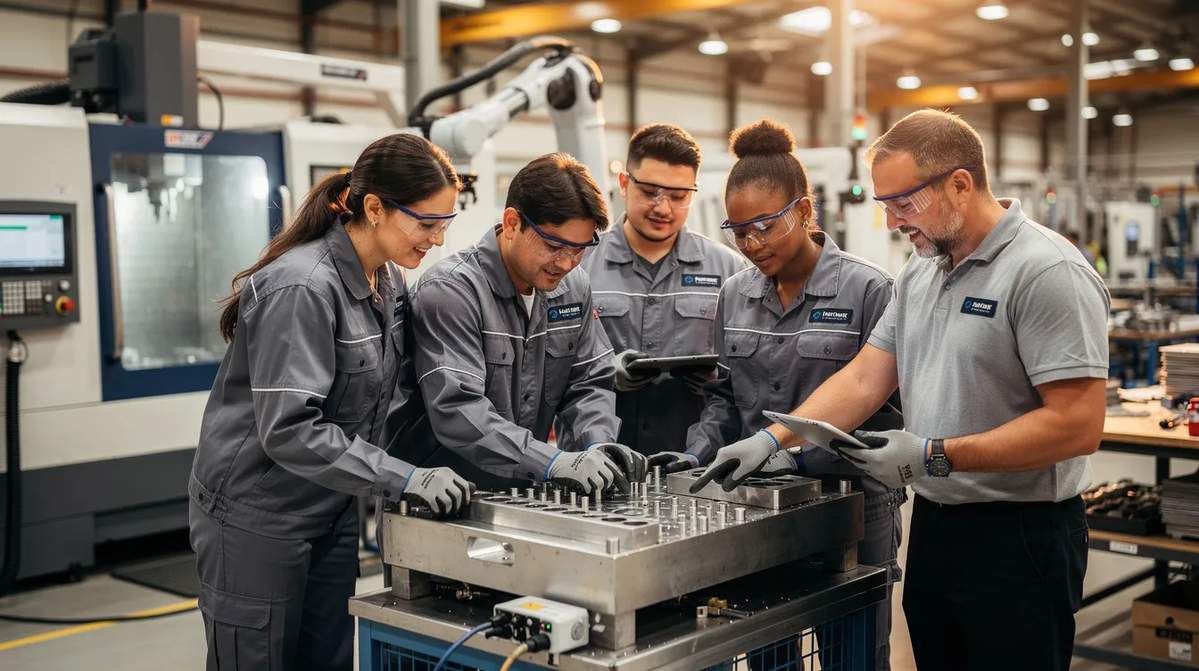
Defining the Modern Maintenance Technician Role
Ten years ago, a maintenance technician primarily focused on wrenches, motors, and scheduled filter changes. In 2026, the role demands fluency in digital controls, networked sensors, and data-driven maintenance strategies alongside traditional mechanical and electrical work.
Common types of maintenance technicians include:
- Electrical maintenance technicians – high voltage, motor controls, switchgear, power distribution panels
- Mechanical maintenance technicians – rotating equipment, hydraulic systems, pneumatics, pumps, alignments
- HVAC specialists – climate control, refrigeration, thermal systems, air quality
- Automation and controls technicians – PLCs, sensors, robotics, HMI interfaces, data logging
- Multi-craft and building maintenance technicians – plumbing, carpentry, fire and life safety, general facility operations
Core responsibilities span inspections, preventive maintenance, troubleshooting, documentation, vendor coordination, and ensuring the safe and efficient operation of critical assets. Maintenance technicians need knowledge of electrical systems, and technicians must understand mechanical systems for effective maintenance. The growing influence of building controls and various automation systems means every technician needs at least foundational digital literacy.
Role clarity is step one. You cannot manage training paths if job expectations are vague or outdated. Clear role profiles for entry level maintenance technician, intermediate, and lead maintenance technician positions form the backbone of every structured program.
What Knowledge and Skills Maintenance Technicians Need in 2026
Before building a single course, you need to define what knowledge and skills your technicians actually require. Here are the core competency areas:
- Technical foundations – Mechanical systems (bearings, belts, mechanical fasteners testing, hydraulics, pneumatics), electrical systems (AC/DC, motor controls, panels), and basic electronics for sensors and control circuits.
- Industrial and facility systems – HVAC systems, boilers and chillers, conveyors, packaging lines, fire and life safety (including manufacturing fire safety), lifts and hoists, and building automation systems.
- Digital and automation skills – PLC basics, variable frequency drives, simple robotics (including fluid systems robot maintenance), sensors and I/O, reading HMI screens, and using maintenance software. Advanced manufacturing requires technicians to be comfortable with highly automated systems and digital interfaces. This area requires basic computer skills across the board.
- Safety and compliance – Training must prioritize OSHA and NFPA 70E electrical safety standards as foundational modules. Knowledge of safety protocols is essential for maintenance technicians, covering lockout/tagout, arc-flash, confined space, fall protection, and chemical handling. Safety practices ability to apply standards in real-world situations matters more than passing a quiz.
- Soft skills and documentation – Communication with operations and tenants, documenting work orders, shift handoffs, problem-solving, and reading technical manuals and digital schematics. Maintenance training includes troubleshooting and handling tools, but also the documentation that makes troubleshooting repeatable.
- Emerging specializations – Technicians support predictive maintenance using sensors, vibration analysis, and infrared imaging. Advanced manufacturing skills taught in forward-looking programs include condition monitoring, energy management, and sustainable manufacturing practices.
- Maintenance project management – Technicians should be trained in project management skills for coordinating shutdowns, upgrades, and cross-functional initiatives.
A well-structured maintenance technician training management plan maps each of these skill areas to specific courses, OJT tasks, and competency checklists so nothing falls through the cracks.
Want to Learn More About Your Registered Apprenticeship Opportunities?
BOOK A FREE CONSULTATION
Designing a Structured Maintenance Technician Training Program
Here is the blueprint:
- Job and role analysis – Define separate profiles for each level and craft. Use preventive maintenance data, failure logs, and work order history to identify what technicians actually do, not what outdated job descriptions assume. Conduct thorough baseline assessments for each technician before building a curriculum.
- Skills gap analysis – A skills gap analysis is necessary to assess current team proficiencies against operational needs. Compare each technician’s current capabilities against the role profile to identify where training investment will have the highest return.
- Competency matrix – Use a competency matrix to track individual proficiencies and match technicians to appropriate work orders. Define levels like awareness, basic, independent, and expert for each technical and safety domain. This matrix becomes the backbone of progression tracking.
- Maintenance technician training course sequence – Convert the matrix into a curriculum: onboarding modules for safety and basic tools, core technical blocks for electrical systems and mechanical systems, and electives for specialization such as advanced electrical, building automation, or industrial robotics. Create personalized learning paths to accelerate growth and regularly reassess for skill improvements.
- Apprenticeship alignment – Where applicable, align OJT hours, related technical instruction (RTI), and progression milestones with registered apprenticeship standards.
- Module design – Include short microlearning elements (30 to 60 minutes for software updates or code changes) alongside longer project-based modules tied to real equipment in the plant or building. A comprehensive training plan includes safety and compliance training woven into every technical module rather than treated as a separate event.
Choosing Training Formats: Blending OJT, Classroom, and Online
An effective maintenance technician training management strategy uses multiple learning modes. Training programs should blend online and offline learning methods because no single format covers everything a manufacturing maintenance technician or plant maintenance technician needs.
- On-the-job training (OJT) – On-the-job training is essential for effective maintenance skills development. Structure it with task lists, supervisor sign-offs, shadowing rotations, and documented competency validations. Unstructured “follow someone around” approaches produce inconsistent results.
- Classroom and lab training – Use instructor-led sessions for complex topics: motor theory, troubleshooting high-voltage equipment, plumbing codes, and assembly processes workholding principles. Training programs should utilize real equipment and standardized manuals to ensure effective learning. Training should combine classroom or e-learning with practical, on-the-floor troubleshooting.
- Online and virtual training – Self-paced online maintenance technician courses work well for fundamentals, regulatory updates, and OEM best practices. Online maintenance classes with 45 to 60 minute modules, quizzes, and simulations let technicians learn at their own pace across shifts. An online maintenance technician course is especially valuable for multi-site programs where travel is impractical. Blended learning improves training effectiveness and performance results.
- VR, AR, and digital twins – AR and VR technologies enhance practical maintenance training experiences, particularly for high-risk or hard-to-access systems like high-voltage switchgear or rooftop equipment. Cost remains a factor, so deploy selectively where the safety or access benefit justifies the investment.
Document which skills are trained via which format. Without this mapping, you will find overlaps in some areas and dangerous gaps in others.

Building a Maintenance Technician Training Curriculum and Pathways
Here is what an actual curriculum structure looks like:
Sample 12–18 month pathway for a facility maintenance technician:
| Phase | Timeline | Topics |
|---|---|---|
| Onboarding | Weeks 1–4 | Safety orientation, tools, basic electrical, basic plumbing, work order systems, customer service |
| Core development | Months 2–8 | HVAC basics, building automation, fire and life safety, equipment maintenance fundamentals |
| Specialization | Months 9–18 | Elective tracks, advanced troubleshooting, mentoring assignments |
Sample pathway for an industrial maintenance technician:
| Phase | Timeline | Topics |
|---|---|---|
| Onboarding | Weeks 1–4 | Industrial safety, hand and power tools, machine maintenance basics |
| Core development | Months 2–8 | Mechanical systems, electrical systems, motor controls, PLC fundamentals |
| Specialization | Months 9–18 | Basic robotics and automation, predictive maintenance, advanced manufacturing training |
After year one, elective tracks might include “Electrical Specialist,” “Mechanical and Rotating Equipment Specialist,” or “Building Automation Specialist.” More advanced manufacturing courses build on these foundations for technicians pursuing an equipment engineering technician or maintenance engineer path.
Prioritize safety compliance in training modules covering lockout/tagout and electrical safety regulations. Schedule refresher training every 12 to 24 months on critical risk areas, with immediate updates when equipment or codes change. Align the curriculum calendar with seasonal workloads-schedule fewer HVAC courses during peak cooling or heating seasons and more during shoulder months.
Teach trainees how to leverage a computerized maintenance management system (CMMS) for data-driven decision making. Training should also cover inventory management and calculating return on investment for equipment replacements, as these directly impact maintenance departments and budgets. Use structured phased implementation to effectively manage changes in training programs over time. Advanced manufacturing refers to environments where these digital and analytical skills are non-negotiable.
Managing Training Operations: Scheduling, Coordination, and Communication
The biggest operational pain point is pulling technicians off the floor. Shift coverage, emergency calls, and multi-site coordination make scheduling feel impossible.
- Stagger cohorts by shift – Use past work-order data to identify historically lower-demand windows for training. Avoid scheduling during planned outages or peak production.
- Enroll new hires quickly – Coordinate with maintenance departments, facility managers, and HR to ensure every new equipment maintenance technician, factory maintenance worker, or industrial mechanic technician is enrolled in the right maintenance technician training course within their first 30 days.
- Communication plans – Post training calendars in shops, send automated email and SMS reminders, and give supervisors toolkits for pre- and post-training conversations. Align training with business objectives to enhance safety compliance and meet organizational goals.
- Standardize documentation – Sign-in sheets, OJT checklists, competency verification forms, and digital records stored centrally. Learning Management Systems automate training management tasks that would otherwise consume hours of supervisor time every week.
Tracking Progress, Competencies, and Compliance
Tracking is the core of maintenance technician training management, not an afterthought. Without it, you have no idea whether your investment is producing results.

Core data to track:
- Course enrollments, completions, and test scores
- OJT hours logged by task category
- Competency sign-offs with supervisor verification
- Licenses and certifications with expiration dates
- Safety training completion dates and renewal schedules
Establish qualification and certification checkpoints to verify competency instead of just considering training completion. Link training records to job roles, work locations, and specific equipment families. Knowing which technicians are certified on 480V switchgear or specific automation systems makes scheduling and safety planning far more reliable.
Data-driven insights using performance metrics can adjust training programs to improve technician capability. Build dashboards for managers showing who is ready for promotion, who is overdue for safety refreshers, and which skills are thin on each shift or site. Regulatory compliance and safety culture must be part of maintenance management training, and your tracking system should produce documentation that supports OSHA inspections, insurance audits, and tenant requirements in regulated environments.
Measuring Business Impact of Maintenance Technician Training
Training must connect to uptime, safety, and retention, not just attendance numbers.
Maintenance KPIs influenced by training:
- Track success metrics like mean time to repair (MTTR) and first-time fix rates to measure training impact
- Mean time between failures (MTBF)
- Unplanned downtime hours
- Work-order backlog
- Percentage of preventive versus reactive maintenance
People metrics: Effective training can reduce employee turnover by 40%. Effective onboarding can reduce new hire turnover from 60% to 20%. Without training, 60% of new hires quit within their first year. Track time-to-productivity for new hires-ramping a new maintenance tech from zero to 80% productivity in six months instead of twelve has measurable dollar value. Online training reduces new hire turnover from 60% to 20% when combined with structured OJT.
Run before-and-after comparisons for specific initiatives. An electrical systems troubleshooting course, for example, should produce a measurable reduction in electrical-related downtime over six to twelve months. Incorporate continuous improvement cycles to refine training based on performance metrics and incidents. Use qualitative feedback from supervisor observations, apprentice surveys, and production or tenant feedback to refine the plan.
Common Mistakes in Maintenance Technician Training Management (and How to Avoid Them)
- Treating training as one-time onboarding – Design multi-year development paths with scheduled refreshers and new technology modules. A successful maintenance training program requires balancing technical skill-building and compliance tracking over years, not weeks.
- Overloading new maintenance technicians – Spread onboarding over 3 to 12 months with clear phases instead of cramming everything into the first week. A well-designed onboarding program improves employee engagement and satisfaction. Comprehensive onboarding improves employee satisfaction and engagement across all roles.
- Relying only on shadowing – Use structured OJT checklists and objective competency assessments. Implement a structured mentorship program to accelerate knowledge transfer for new technicians rather than leaving them to figure it out on their own.
- Ignoring soft skills and documentation – Incorporate communication, customer service (especially for building maintenance), and digital documentation into the curriculum. A maintenance mechanic who cannot clearly describe a problem in a work order creates downstream failures.
- Losing senior knowledge to retirement – Create mentoring roles, recorded demos, and documented best practices before experienced technicians walk out the door. Foster a culture of continuous improvement by embedding feedback into training practices and recognizing progress.
- Managing records in scattered spreadsheets – Centralize data in a single training or apprenticeship management system. Spreadsheets do not scale, do not send alerts for expiring certifications, and fail audits.
Leveraging Apprenticeships and Work-Based Learning for Maintenance Technicians
Apprenticeship-style models are a natural fit for maintenance technician training because the work is inherently hands-on. On-the-job training is essential for maintenance skill development, and apprenticeships formalize it.
A structured maintenance technician program includes job-related classroom instruction (RTI), supervised OJT with documented hours, competency evaluations at defined milestones, and periodic wage increases tied to skill progression. A well-designed onboarding program builds necessary knowledge and skills while keeping apprentices engaged and retained.
Employers can align their internal maintenance technician training course catalog with state or federal standards for registered apprenticeships. This gives maintenance departments a predictable pipeline of technicians, better retention, and clearer career paths. For facility managers and workforce development boards, apprenticeships provide a direct platform support feature for long-term workforce planning.
Administrative needs are real: tracking OJT hours by category, documenting RTI attendance, and generating compliant reports for sponsors or agencies. Without proper systems, this overhead grows exponentially as programs scale.

How a Dedicated Training Management Platform Supports Maintenance Teams
Generic LMS tools were built for compliance videos and corporate onboarding. They were not designed for the complexity of technician training where half the learning happens on the shop floor or in a mechanical room.
A dedicated work-based learning management platform offers OJT and RTI tracking, mobile apps for technicians to log hours and view tasks, skills and competency matrices, and real-time dashboards. Automated reporting compiles hours and competencies without manual data entry, which is critical for apprenticeship programs that require documentation for DOL audits.
These platforms reduce administrative burden on maintenance supervisors and facility managers, letting them focus on coaching and operations instead of spreadsheets. For multi-site and multi-shift programs, they ensure consistency in curriculum, competency mapping, and safety procedures across every location.
Why Choose a Specialized Work-Based Learning Platform for Maintenance Technician Training
A purpose-built apprenticeship and training management platform is designed around OJT and RTI, not just online courses. It gives employers, schools, and workforce organizations shared visibility into hours, skills, and progress across every participant.
For maintenance departments, this means real-time dashboards showing exactly where each technician stands, automated compliance reporting for apprenticeship programs, and mobile-first access so technicians on the floor can log tasks without returning to a desktop. The outcomes are measurable: faster onboarding, more consistent advanced manufacturing skills across shifts and sites, easier reporting to leadership, and a stronger internal pipeline of maintenance technicians. GoSprout was built specifically for this type of work-based learning complexity.
Next Steps: Turning Your Maintenance Technician Training Plan into Action
Here is a sequence you can follow starting this week:
- Map current roles – Document what each maintenance technician level actually does across your facility maintenance and industrial maintenance operations.
- Build a skills matrix – Assess every technician against it. Identify your highest-risk gaps first.
- Inventory existing assets – Catalog the online training, vendor materials, OEM manuals, and mentorship resources you already have. Identify what is missing.
- Choose a centralized system – Stop managing training in spreadsheets. Select a platform that handles OJT tracking, RTI scheduling, competency sign-offs, and compliance reporting in one place.
- Pilot with a small cohort – Run a structured maintenance training pathway with one facility or one shift over three to six months. Measure MTTR, first-time fix rates, and technician satisfaction before and after.
- Refine and scale – Use what you learn from the pilot to adjust curriculum, pacing, and format mix. Then roll out across additional sites and shifts.
Maintenance technician training management is not a one-time project. It is a long-term investment in uptime, safety, and career growth for the people who keep your operations running. The organizations that build structured, trackable systems today will be the ones with fully staffed, high-performing maintenance teams in 2028 and beyond.
Ready to see how a work-based learning management platform can streamline your maintenance technician training? Schedule a demo with GoSprout and start building the workforce pipeline your facilities deserve.
FAQs About Maintenance Technician Training Management
How long does it take to build a structured maintenance technician training program?
Expect 60 to 90 days to design a basic framework, including role profiles, a competency matrix, and an initial course sequence. Full rollout across a maintenance department or multi-site portfolio typically takes 6 to 12 months, depending on the number of technicians, sites, and specializations involved. Starting with a pilot cohort of one shift or one facility accelerates learning and reduces risk.
What is the difference between maintenance technician training and an apprenticeship?
Maintenance training can be informal or ad hoc-a safety video here, some shadowing there. An apprenticeship is a formal maintenance technician program with defined OJT hours, related technical instruction, competency milestones, wage progression, and regulatory oversight. Apprenticeships produce documented, verifiable skill attainment. Technician training alone does not guarantee that level of structure.
How often should maintenance technicians receive refresher training?
Annual safety refreshers are the minimum for topics like lockout/tagout, arc-flash, confined space, and fall protection. Technical systems refreshers should happen every 18 to 24 months, with immediate retraining when equipment changes or codes are updated. Perform common online tasks like completing updated modules when regulatory changes are announced.
Can small maintenance departments afford a formal training management approach?
Yes. Start with a core skills matrix covering your highest-risk and highest-frequency tasks. Build a small catalog of high-impact training courses and leverage shared resources from equipment manufacturers, trade associations, or workforce development boards. Even a three-person team benefits from structured competency tracking and scheduled refreshers. The job market for qualified technicians is too competitive to rely on informal methods.
How do I get buy-in from leadership for investing in maintenance technician training?
Present data on unplanned downtime costs, overtime expenses, contractor spend, and turnover rates. Then project how improved training could reduce each over a 12 to 24 month period. A maintenance engineer gain confidence in ROI projections when they are grounded in your own facility’s baseline data rather than industry averages. Continuous process improvement tied to training outcomes makes a compelling case.
What is the best way to onboard new maintenance technicians?
Use a phased onboarding model: immediate safety orientation and basic procedures in week one, skill foundations with structured shadowing in weeks two through four, and a documented 3 to 12 month development plan. Effective onboarding reduces new hire turnover from 60% to 20%. Every phase should have clear checkpoints and supervisor sign-offs. This approach supports a successful career trajectory from day one and builds the technical expertise your team needs.