
Table of Contents
- Introduction to Industrial Maintenance Training Management
- Why Maintenance Training Matters for Effective Maintenance
- Core Components of an Industrial Maintenance Training Program
- Designing an Effective Maintenance Training Program
- Training Modalities: From OJT to Online Maintenance Training
- Managing, Tracking, and Improving Maintenance Training
- Role of Maintenance Managers and Leaders in Training Management
- Supporting Continuing Education and Career Pathways in Industrial Maintenance
- What to Look For in Maintenance Training Management Software
- Common Mistakes in Industrial Maintenance Training Management
- Why Choose Our Platform for Industrial Maintenance Training Management
- Conclusion and Next Steps
- FAQs About Industrial Maintenance Training Management
Introduction to Industrial Maintenance Training Management
Industrial maintenance training management has shifted from a nice-to-have into a survival priority. In 2026, manufacturers, utilities, food processing plants, and logistics hubs face converging pressures that make poorly managed training programs genuinely dangerous – both to people and to the bottom line.
The numbers tell the story. Deloitte forecasts a shortage of 2.1 million skilled workers by 2030 across U.S. manufacturing alone. The Bureau of Labor Statistics projects 14% employment growth for industrial machinery mechanics and millwrights through 2035, with roughly 51,900 annual openings driven largely by retirements. Meanwhile, predictive maintenance adoption has more than doubled year-over-year, automation is accelerating, and safety and compliance expectations from OSHA and NFPA keep tightening.
Industrial maintenance training management is the end-to-end process of designing, delivering, tracking, and continuously improving training for maintenance technicians, operators, and maintenance managers. It connects job requirements, employee competencies, and maintenance operations into a single system that adapts as your facility evolves.
This article covers how to build a training program from scratch, align it with effective maintenance strategies, blend OJT with formal instruction, use software for tracking and compliance, and support continuing education that retains your best people.
Why Maintenance Training Matters for Effective Maintenance
Effective maintenance training directly moves the metrics that keep plants running: mean time to repair, unplanned downtime, safety incident rates, energy consumption, and product quality. When training is managed well, it closes the skills gap created by new technologies like PLC-based controls, robotics, condition monitoring sensors, and CMMS/EAM systems.
Consider the evidence. Steel plants investing $2,000–$3,500 per technician annually in comprehensive training have reduced unplanned downtime by 30–50% and improved first-time fix rates by 40–60%. A hydropower utility achieved a 4.3:1 ROI through a maintenance excellence program that included 325 hours of focused training, with wrench time improving by roughly 50%. Effective maintenance training reduces equipment downtime and safety incidents while improving technician problem-solving skills across every department.
Training should shift from reactive repairs to predictive and preventive strategies that catch equipment failures early. This is not a one-off project. It is a continuing education cycle aligned with reliability, safety, and production goals – championed by maintenance managers who build a culture where technicians are expected and supported to keep learning. Maintenance training improves operational efficiency and reduces costs when treated as a system, not an event.
Core Components of an Industrial Maintenance Training Program
An effective training program blends technical content, safety, soft skills, and structured progression from entry-level helper to senior maintenance technician or maintenance manager. A well-structured training program can improve employee skill levels significantly when it covers the right domains in the right sequence.
Technical areas to cover include:
- Industrial safety: lockout/tagout, electrical safety, confined space, PPE
- Mechanical systems: bearings, belts, gearboxes, hydraulic and pneumatic components, non threaded fasteners
- Electrical systems and controls: AC/DC fundamentals, motor controls, PLC basics, electronics
- Utilities and facility systems: compressed air, steam, HVAC systems, plumbing
- Foundational industrial skills: blueprint reading, measurement, alignment, welding, basic machining, troubleshooting
Training should cover applicable regulations and ensure safety compliance readiness in every module – not just during orientation. Standards like OSHA, NFPA 70E, and ISO 55000 for asset management best practices belong in the fabric of daily instruction.
Structure training into levels. The Basic Industrial Mechanical Maintenance Program, for example, is 312 hours long and emphasizes essential mechanical skills and safety protocols at the entry level. Intermediate modules add PLC troubleshooting, preventive maintenance processes, and measurement techniques. At the advanced level, the Maintenance Management Certificate Program includes seven two-day sessions covering reliability, planning, budgeting, and leadership. Participants receive a Certificate of Completion after the program, marking readiness for management-level responsibilities.
An entry-level industrial maintenance tech should master safety procedures, basic mechanical and electrical fundamentals, and core troubleshooting tools within the first 90 days. Senior technicians and managers need competency in predictive maintenance, six sigma methodologies, digital diagnostics, and team leadership.
Designing an Effective Maintenance Training Program
Designing a training program starts as a structured project: assess current skills, define measurable outcomes, choose formats, and build a roadmap.
Conduct a thorough skills inventory and job task analysis for each maintenance role. Use work order histories, supervisor interviews, safety and quality incident records from the past 12–24 months, and equipment failure data. Conduct data-driven skills gap assessments to avoid a one-size-fits-all approach. Establish baseline proficiency levels for each technician through a competency matrix and skills assessment. Regular assessments identify gaps and prioritize training by impact, focusing on safety and critical equipment first.
Maintenance managers should set specific, measurable objectives tied to plant metrics. For example: “Reduce MTTR on packaging line 3 by 20% in 12 months through targeted training on servo drives and vision systems.”
Prioritize content in this order:
- Safety-critical procedures
- High-frequency or high-cost failures
- Assets with regulatory or compliance risk
- New or upgraded machinery and production lines
Build a 6–12 month roadmap. Quarter one focuses on fundamentals and safety. Quarter two covers preventive maintenance and mechanical systems. Quarter three tackles electrical and control systems, automation tools, and predictive maintenance instruments. Quarter four delivers specialized courses and certification completion. Schedule around planned shutdowns and balance classroom sessions with shift coverage.
Competency-based assessments combine knowledge tests with hands-on demonstrations to verify skills at each stage before technicians advance.
Training Modalities: From OJT to Online Maintenance Training
No single delivery method is sufficient. Effective maintenance training programs include OJT and classroom formats, supplemented by digital learning and emerging simulation tools. Combining digital e-learning courses and hands-on practical evaluations optimizes training effectiveness across every skill level.
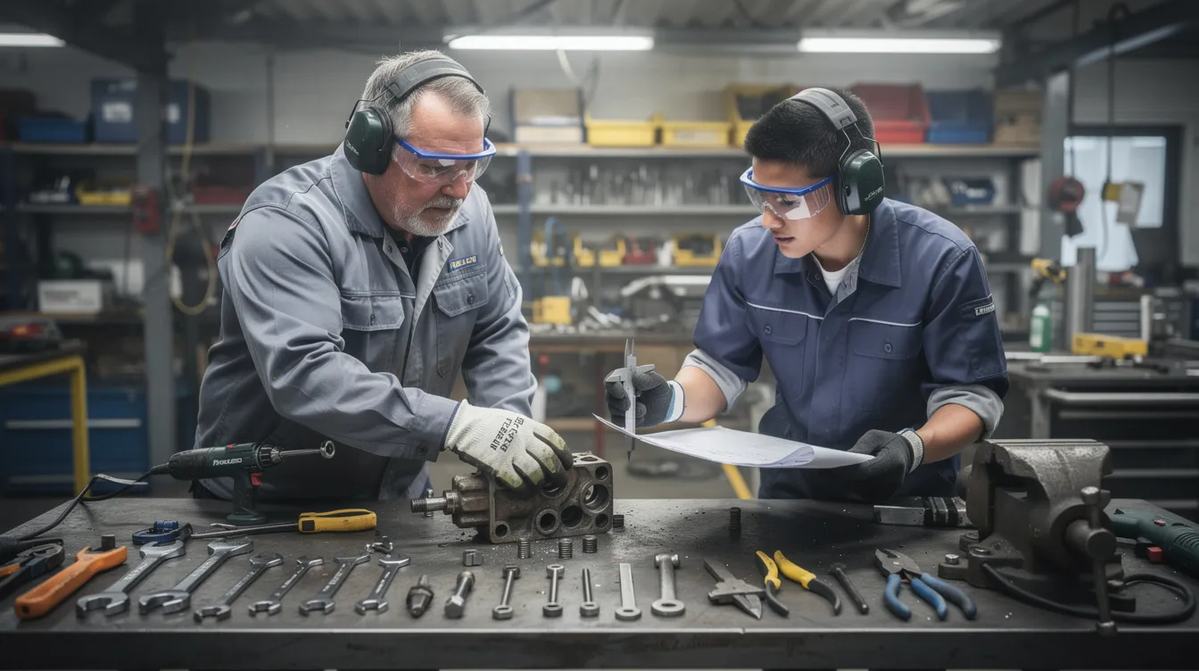
OJT training is essential for skill development in maintenance. It is irreplaceable for learning mechanical maintenance tasks like bearing replacement, hydraulic system repair, and equipment alignment. Structured OJT uses task-based checklists, pairs apprentices or new hires with senior technicians, documents competencies as they develop, and ensures safety while working on live machines and tools. OJT training also reduces the burden on managers during training by distributing teaching responsibilities across experienced team members. A good maintenance training program includes on-the-job training as its backbone. Combine digital learning with extensive on-the-job training under the supervision of veteran technicians for the strongest results.
Internal workshops and vendor-led sessions add value for specific equipment – OEM training on packaging machines, robotics, boilers, or food processing lines is most valuable during new installations or major upgrades. Technical schools, colleges, and workforce development organizations provide foundational courses in industrial maintenance, advanced mechatronics, PLC programming, and reliability engineering.
Online maintenance training works well for self-paced theory modules, microlearning procedure refreshers, and live remote sessions. Always pair online learning with hands-on verification in the facility.
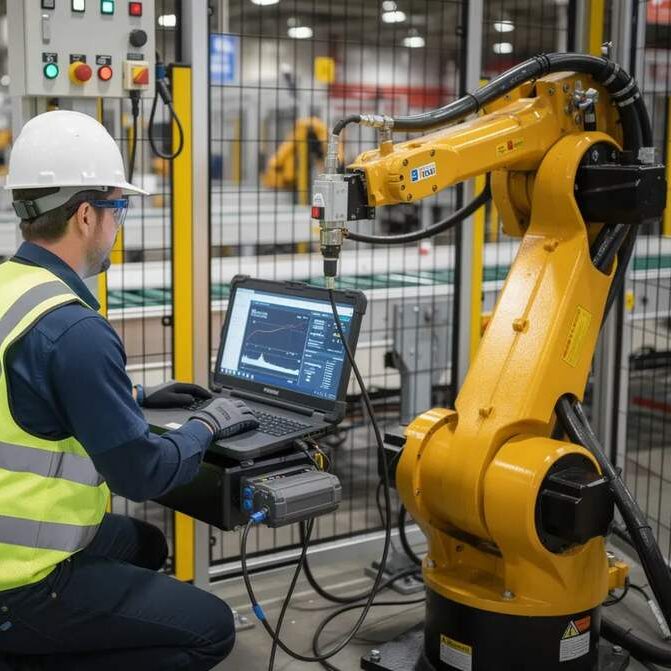
AR and VR technologies enhance maintenance training effectiveness for hazardous or infrequent tasks like confined-space entry, turbine maintenance, or arc flash scenarios. Siemens cut classroom training time by more than 66% using virtual simulation tools while raising initial assessment scores above 93%. Cost and change management remain real constraints, but the technology is maturing rapidly.
Managing, Tracking, and Improving Maintenance Training
Management and tracking turn training from a one-time event into a system that supports effective maintenance over time. An effective industrial maintenance training management system ensures that technical teams have the right skills to minimize downtime and maintain quality across every operation.
Use a learning management system to track training records and certifications. Integrate training records and certifications directly into a computerized maintenance management system so work order data and technician qualifications live in the same ecosystem. This system automatically monitors regulatory safety requirements and tracks training compliance and certification renewals.
Use regular practical assessments and key performance indicators to measure training effectiveness. Compare downtime, MTTR, and safety incidents before and after training. Correlate reductions in repeat failures to specific modules. Training should adapt based on maintenance incidents and assessment results – if a production line keeps experiencing electrical faults despite previous training, revisit the content and delivery method.
Establish a quarterly review cadence. Gather feedback from technicians and supervisors. Update content when new equipment arrives, after significant incidents, or when regulations change. This continuous improvement loop is what separates a world class maintenance organization from one that simply checks boxes.
Role of Maintenance Managers and Leaders in Training Management
Managing an industrial maintenance training program requires a strategic blend of hands-on skill development and structured evaluation. This is a leadership responsibility, not just an HR or compliance task.
Maintenance managers set expectations by formalizing training as part of performance reviews, providing dedicated time during shifts, and linking skills to career progression. Daily behaviors matter: assign stretch tasks under supervision, debrief after breakdowns as learning opportunities, and recognize employees who document new best practices.
Implement a mentorship program to pair junior technicians with seasoned mentors. Build a bench of internal trainers by identifying subject matter experts, giving them train-the-trainer support, and compensating them for their teaching role. Structured cross-training creates a more versatile workforce capable of resolving multi-disciplinary problems quickly.
Maintenance managers new to a facility should spend their first 90 days assessing the current state of training: what is documented, what is tracked, and where the enterprise gaps exist. Cross-functional alignment with operations, safety, HR, and engineering ensures training goals match production plans and capital projects across the organization.
Supporting Continuing Education and Career Pathways in Industrial Maintenance
Ongoing continuing education is essential in industrial maintenance because new automation platforms, digital diagnostics, data-driven reliability tools, and tighter regulations constantly raise the bar for requisite skills.
Create visible career paths: helper or apprentice progresses to maintenance technician I, then II, then III, then senior technician, planner, and ultimately maintenance manager. Each step should have specific training milestones and certifications. Incentivizing skill acquisition can tie training completion directly to career advancement or bonuses. Clear career advancement paths reduce technician turnover – case studies show 30–40% lower turnover in plants with structured pathways.
Partner with community colleges, universities, and workforce development organizations for advanced courses in predictive maintenance, reliability engineering, and industrial networking. Apprenticeship programs can help quickly onboard new hires effectively by combining structured OJT with related technical instruction from accredited providers.
Offer tuition support, paid time for study, and recognition programs that make continuing education attainable for working technicians on rotating schedules. A concrete example: a new hire enters a four-year pathway beginning with the 312-hour Basic Industrial Mechanical Maintenance Program, completes intermediate electrical and controls modules, earns vendor certifications on critical assets, and finishes with the Maintenance Management Certificate Program’s seven sessions – emerging ready for a planning or supervisory role. This pipeline approach builds organizational performance from within rather than competing in a tight labor market.
What to Look For in Maintenance Training Management Software
Manual spreadsheets and paper training logs are risky and inefficient for modern industrial maintenance, especially when managing multiple sites or registered training programs.

Key capabilities to evaluate:
- Creating and assigning training plans for OJT and classroom formats
- Tracking on-the-job hours, related technical instruction, and course completion
- Logging skill sign-offs, digital checklists, and SOP acknowledgements
- Real-time dashboards showing who is qualified for which tasks, upcoming certification expirations, and progress against annual goals
- Compliance reporting: exportable records for internal audits, insurance, regulatory visits, or apprenticeship grants
- Integration with CMMS/EAM, HRIS, and learning platforms for a complete picture of the efficient operation of your maintenance department
Mobile access is critical. Technicians working 24/7 operations need to log OJT completions, view their schedule, and access procedures from the plant floor without returning to an office. Simple, fast tools drive adoption. Complex ones get ignored.
Common Mistakes in Industrial Maintenance Training Management
Most organizations have some form of training. Common management mistakes prevent it from actually improving maintenance outcomes.
- One-time training events with no follow-up: A technician attends a two-day workshop on hydraulic systems, then never practices the techniques on actual equipment. Fix: pair every course with a competency check on real machines within two weeks.
- Generic content not aligned to plant assets: Training on generic motor repair when your facility runs specialized servo drives wastes time. Fix: customize modules to your specific equipment and failure modes.
- No measurement of impact: Tracking completion rates without measuring downtime, MTTR, or safety changes means you cannot prove – or improve – effectiveness. Fix: establish baseline metrics before launching any program.
- Not involving maintenance managers and senior technicians in program design: This kills credibility and participation. Fix: co-develop content with the people who do the work.
- Canceling training when production is tight: This signals that training is optional and undermines long-term capability building across your company.
To build resilience: document everything, invest at world class maintenance levels ($2,000–$3,500 per technician annually rather than under $200), and develop internal trainers who sustain the program through personnel turnover.
Why Choose Our Platform for Industrial Maintenance Training Management
A dedicated training management platform designed for work-based learning simplifies every aspect of industrial maintenance training. Our platform gives maintenance managers and HR teams centralized tracking of OJT and classroom hours, real-time dashboards, automated reminders for overdue training, and streamlined reporting for internal and external stakeholders.
The platform supports collaboration between employers, schools, and workforce organizations running maintenance-focused apprenticeships, internships, or upskilling programs. Technicians get mobile access to log training, view their progress, and access procedures on the floor – supporting effective maintenance without extra paperwork.
For registered programs and compliance, the platform provides structured training plans, competency tracking, and exportable evidence for audits, grants, or regulatory reviews. It reduces administrative overhead so maintenance leaders can focus on what matters: coaching, problem-solving, and building a world class maintenance workforce for the future.
Conclusion and Next Steps
Industrial maintenance training management is a strategic lever for reliability, safety, and organizational performance – not a compliance checkbox. A well-designed training program supported by thoughtful leadership, blended learning methods, and proper tracking helps develop the skills your team needs while closing the gap that threatens the entire manufacturing sector.
Start by honestly assessing your current state. What is documented? What is tracked? Where are the biggest gaps – no formal skills matrix, limited OJT documentation, no clear career paths? Even incremental improvements in how you plan, deliver, and manage training show up quickly as fewer emergency calls, shorter repair times, and a team ready for whatever comes next.
Take one step this month: explore modern training management tools, schedule a demo to see how centralized tracking works in practice, or launch a pilot maintenance training initiative with one crew and three high-impact topics. Contact us to get started within the next 30 days.
Want to Learn More About Your Registered Apprenticeship Opportunities?
BOOK A FREE CONSULTATION
FAQs About Industrial Maintenance Training Management
How much time should technicians spend in maintenance training each year?
Benchmarks from industry studies suggest 40–80 hours per technician annually produces measurable results. Research shows that approximately 40 hours per year correlates with a 9.4% increase in proactive maintenance and a 2.75-hour reduction in MTTR. Distribute sessions across the year using planned shutdowns, low-demand periods, and shift rotations to minimize production disruption.
How do we prove the ROI of a maintenance training program to leadership?
Track baseline performance on downtime, MTTR, rework, spare parts usage, and safety incidents for 6–12 months before training. Compare post-training results against those baselines. Steel plants have demonstrated 200–300% ROI within 12 months. Add qualitative evidence: fewer emergency call-ins, smoother startups, and improved audit findings.
What is the best way to start if we have no formal maintenance training program?
Start with a quick skills inventory. Identify 3–5 high-impact topics – electrical safety, PM tasks on critical assets, or recurring failure modes. Pilot a small training cycle with one crew or line. Document what works, then expand gradually. Trying to build a complete curriculum before delivering anything delays progress indefinitely.
How can small facilities manage maintenance training without a large budget?
Use internal experts as trainers, leverage vendor and OEM resources that often come free with equipment purchases, partner with local technical schools for foundational courses, and deploy targeted online modules. Careful planning and tracking through even simple software provides structure and accountability for smaller teams across any industries.
How often should we update industrial maintenance training content?
At minimum, review annually. Update immediately when new equipment is installed, major incidents occur, or standards and regulations change. Encourage maintenance managers to capture lessons learned from significant failures and convert them into short training refreshers within days, not months.
Do operators need to be included in maintenance training programs?
Yes. Operator care and basic maintenance training for production staff enables early detection of issues, correct use of equipment, and safer interventions. Formalize the boundaries between operator tasks and technician responsibilities through clear documentation and role-specific training so the focus stays on preventing unsafe work while building a more capable team on the floor.