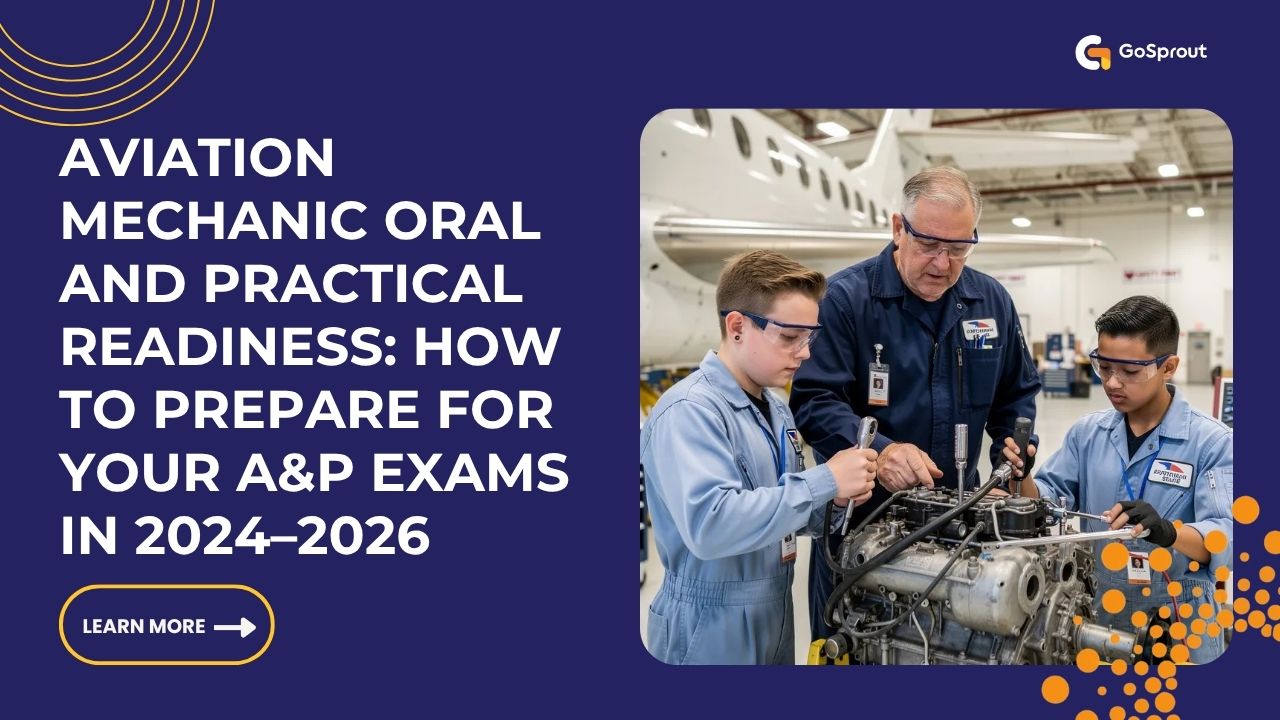
Your written exams get you eligible, but the oral and practical is where you prove you can think, explain, and safely work like an aviation mechanic. This guide breaks down A&P exam structure, current FAA standards, and a practical prep process so you can walk into your DME appointment ready.
Table of Contents
How the Oral and Practical Fit into A&P Certification
The oral and practical tests are the final gate to earning the FAA Aviation Mechanic certificate with airframe and powerplant ratings. The usual process is simple: pass the General, Airframe, and Powerplant knowledge test exams, then complete the combined a p oral and practical readiness process with a designated mechanic examiner within 24 months of the first passed written test. There are three oral tests and three matching practical tests: General, Airframe, and Powerplant. Each section is graded separately, and applicants must achieve a minimum score of 70% on the oral test and satisfactorily demonstrate 70% of the practical projects tested.
Your written performance matters after the computer test is over. The specific oral questions in the exam are influenced by performance on the written knowledge exams, so higher scores and fewer missed ACS codes usually mean fewer required questions. If you fail a section, FAA retest rules may require a 30-day wait unless you receive documented additional training and an endorsement, which is why readiness is not just about confidence; it protects your date, fee, and momentum.
Current FAA Standards: ACS, MTG, and 2023–2026 Rule Changes
Effective August 01, 2023, the FAA requires the use of the Mechanic Airman Certification Standards (ACS) for oral and practical testing, replacing the previous Practical Test Standards (PTS). The FAA’s Airman Certification Standards (ACS) outlines the aeronautical knowledge, risk management, and proficiency standards for the Mechanic Certificate, covering 43 technical subjects necessary for the oral and practical exams. You can read the current FAA ACS documents through the FAA’s Airman Certification Standards page.
The new testing structure combines Airframe Structures and Airframe Systems into one section, and Powerplant Theory and Powerplant Systems into another, resulting in three main tests: General, Airframe, and Powerplant. The Mechanic Test Generator (MTG) is a new system designed by a third-party vendor to generate the oral and practical examinations, which will be administered by Designated Mechanic Examiners (DMEs). The FAA Form 8610-2 has been revised to support the new mechanic testing process, and applicants must have the new form completed prior to testing, along with valid knowledge test reports and matching government photo ID. Keep current FAA-S-ACS-1, FAA-H-8083-30, FAA-H-8083-31, FAA-H-8083-32, and AC 43.13 references in your 2023–2026 study plan for good preparation.
Breaking Down the Oral Exam: General, Airframe, and Powerplant
The oral exam is a one-on-one Q&A with a DME. You may answer test questions in a formal interview style, or the examiner may ask questions while you work through a practical task. The exam includes a minimum of 4 questions per section and additional questions based on missed topics from the written exams. In practical terms, the oral exam consists of a minimum of four questions per content area, with a maximum of 22 general, 34 airframe, and 34 powerplant questions, totaling up to 90 questions depending on the applicant’s performance on the written test.
The General section establishes foundational skills required for aviation maintenance technicians and requires knowledge in fundamentals of electricity, weight and balance, fluid lines and fittings, and cleaning and corrosion control. General oral topics also include aircraft drawings, materials and processes, maintenance publications, FAR compliance, and aircraft maintenance records. The Airframe section covers topics such as structural integrity, assembly and rigging, and hydraulic systems, plus sheet metal, wood and fabric, landing gear, flight controls, fuel systems, environmental systems, and inspections. Powerplant topics include reciprocating and turbine engine theory, ignition, starting, fuel metering, lubrication, cooling, exhaust, propellers, troubleshooting, and engine inspection. For prep, read current FAA handbooks, practice explaining maintenance tasks aloud, and have a friend or mentor simulate a DME interview.
Breaking Down the Practical Exam: Projects and Skill Demonstrations
The practical exam tests the ability to safely perform maintenance using real tools. A practical test now includes a minimum of 9 projects for General, 11 for Airframe, and 11 for Powerplant, with each project requiring a skill demonstration and two related practical questions. The practical exam includes a random sampling of subject areas and consists of 9 projects for General, and 11 projects each for Airframe and Powerplant, with specific passing criteria for each content area.
General projects may include electrical continuity and resistance checks, soldering, safety wiring, logbook entries, or researching an AD. Airframe projects may include sheet metal layout, bending, riveting, control cable rigging, landing gear inspection, hydraulic system servicing, leak checks, and structural damage evaluation procedures. Powerplant projects may include compression checks, magneto timing, mixture and idle speed adjustment, borescope inspection, propeller tracking, and engine logbook documentation after maintenance. During practical exams, candidates can use provided manuals, like AC 43.13, to find necessary information. Safety violations can lead to immediate failure in the O&P exams, so slow, clean, compliant work beats rushing every time.
Step‑by‑Step Oral and Practical Readiness Plan
This is the core oral practical prep plan. At 60–90 days out, finish the three FAA knowledge tests in order: General first, then Airframe and Powerplant. Save every report, highlight missed ACS codes, and build a targeted study list. Exam preparation for the A&P exams emphasizes understanding over rote memorization, so do not just memorize a book answer; be able to explain why the procedure is required and where to find approved information.
Build a weekly rhythm: one day for general airframe fundamentals, one for airframe systems and structures, one for powerplant, and one for hands-on lab practice. Print the Mechanic ACS and mark each subject as “ready” or “needs work.” Quality study materials are crucial for exam success, and ASA test guides are popular resources that have helped aircraft mechanics prepare for decades, covering all required topics and including sample questions and practice tests. The AMT Oral & Practical Exam Guide by Dale Crane provides information on the certification process, typical projects, and required skill levels in a question-and-answer format, making it a valuable resource for exam preparation. In the final two or three weeks, run mock exams with an instructor, technician, or experienced mechanic.

Day‑of Practical Test and Oral Exam Checklist
Use this checklist the morning of the exam:
- Government photo ID that matches FAA paperwork
- Completed FAA Form 8610-2
- Original written knowledge test reports
- Proof of training, Part 147 completion, or documented experience
- DME-required forms, receipt, and payment method
- Calculator, pen, notebook, timer, safety glasses, and hearing protection if allowed
Arrive 30–45 minutes early, eat a balanced meal, hydrate, and dress for clean maintenance work in a hangar. Listen carefully, repeat each task in your own words, verbalize FOD control, fire safety, lockout/tagout, and tool control, and ask for clarification when needed. Many applicants spend 8–10 hours in one day, or two full days, to complete both ratings.
Oral and Practical Strategy by Test Segment
For General, focus on 14 CFR parts 43, 65, and 91, maintenance publications, aircraft records, and weight and balance. Be able to compute a center of gravity shift after a seat relocation and explain whether the aircraft is still within limits. Using Federal Aviation Regulations (FAR) and understanding aircraft maintenance records are crucial for compliance.
For Airframe, think in systems. Trace hydraulic pressure through landing gear extension, describe how flight controls are rigged and balanced on an aircraft such as a Cessna 172, and explain why corrosion control affects structural integrity. For Powerplant, use troubleshooting logic: if a Lycoming or Continental engine runs rough, check magnetos, fuel, induction, compression, and exhaust in a safe sequence. When the DME asks “why,” connect your answer to what you would do in the shop.
Integrating the Knowledge Test with Oral and Practical Prep
Smart candidates prepare for the written, oral, and practical together. After every practice written test, review missed questions, find the ACS code, read the FAA handbook section, and explain the answer out loud as if speaking to an examiner. A multiple-choice question about electrical bonding can become: “Explain how bonding straps are installed on control surfaces and why they matter.”
Use lab time or work experience to connect each subject to a real task. Corrosion control, torque application, fluid lines, and logbook entries are easier to remember when you have performed them. Keep general airframe and powerplant knowledge test prep, oral practice, and hands-on skills moving together during the final 60 days before your exam date.
Working with a Designated Mechanic Examiner (DME)
A DME is an FAA-authorized, independent examiner who conducts the oral and practical tests, collects the fee, and may issue a temporary certificate when appropriate. During the pretest interview, the DME will check your 8610-2, verify eligibility, review knowledge test reports, explain the process, and cover breaks, discontinuance, and failure standards.
Before you schedule, find a current examiner, confirm the fee, ask what tools and references may be used, and please check cancellation policies. Treat the exam like a job interview: be respectful, think before answering, and say when you are using an approved reference instead of guessing. Be ready to describe your training, aircraft worked on, and maintenance tasks completed in the last 12–24 months. DMEs must follow FAA guidance and MTG-generated plans; the content is based on the current standards, not negotiation. Having records from recent years can make these discussions easier.
Retesting, Discontinuance, and 24‑Month Windows
Not every applicant will pass every part the first time. If you fail a segment, such as the Airframe practical, you may need to wait 30 days or provide an instructor sign-off documenting additional training before retaking that failed portion under 14 CFR § 65.19. All required tests for the ratings sought generally must be completed within 24 months of the first passed knowledge test.
If illness, weather, or equipment problems interrupt the exam, the DME may issue a discontinuance and document what is complete. If you fail, review the DME’s feedback immediately, study the exact ACS areas missed, and schedule the retest while your knowledge and practical skills are fresh.
FAQs: General Airframe and Powerplant Oral and Practical Exams
How long does the oral and practical exam usually take?
Most applicants take one to two full days for combined Airframe and Powerplant ratings. A single rating may take less time, depending on the examiner and project flow.
What score do I need to pass each part of the exam?
You need at least 70% on each oral and each practical test. General, Airframe, and Powerplant are graded independently.
What references can I use during the practical exam?
FAA-approved manuals, handbooks, service information, and AC 43.13 may be provided or approved by the DME. You must still show that you can apply the procedures correctly.
Can I take the Airframe and Powerplant tests separately?
Yes. You may pursue one rating or the combined A&P, but the General test is required for either path.
How soon after finishing school should I schedule my practical exam?
Aim for 30–90 days after training or prep is complete. That is usually when your book knowledge, tool handling, and confidence are strongest.
Conclusion and Next Steps for Oral and Practical Readiness
Strong airframe and powerplant readiness comes from three habits: studying the current ACS, practicing clear oral explanations, and performing maintenance tasks safely with real tools. Set an exam date within the next 3–6 months, then work backward with a weekly schedule that includes written review, ACS tracking, and shop practice.
Gather your knowledge test results, ID, training records, and 8610-2 now. Then contact a DME early, book mock orals with a mentor, and reserve uninterrupted time for the practical exam. With steady prep, the oral and practical becomes less intimidating and more like what it is: a professional demonstration of the aviation maintenance skills you have already built.

Want to Learn More About Your Registered Apprenticeship Opportunities?
BOOK A FREE CONSULTATION