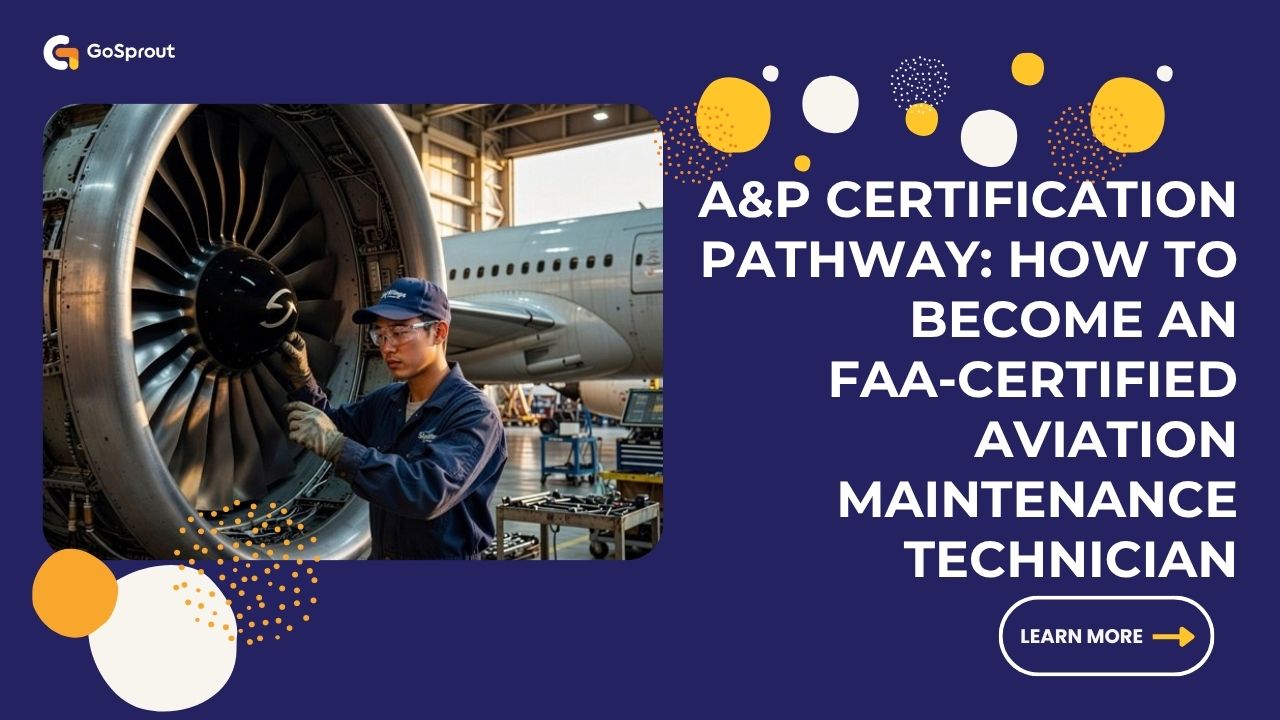
If you want to become an aircraft mechanic, the Airframe and Powerplant certificate is the core FAA credential that opens the door. It allows qualified aviation maintenance professionals to inspect, maintain, and approve work on U.S.-registered aircraft within their ratings.
Other trades, including an electrical apprentice program, follow a similarly structured path toward licensure.
Other skilled trades, such as a welder apprenticeship, follow a similarly structured certification pathway.
This up-to-date 2026 guide explains the A&P certification pathway for career changers, recent grads, military technicians, ramp workers, and anyone ready to start an aviation maintenance career. The process is built around current FAA Part 65 and Part 147 regulations: confirm eligibility, choose training or experience, complete aviation maintenance training, pass the written oral and practical exams, and get to work.
Table of Contents
FAA A&P Eligibility Requirements
All aviation maintenance technicians must first meet baseline certification requirements under 14 CFR Part 65, the federal aviation administration rule that governs mechanic certification. A high school diploma or equivalent GED is typically required by employers and testing centers for A&P candidates, even when the FAA pathway itself focuses on age, English ability, experience, training, and exams.
To qualify for A&P certification, candidates must be at least 18 years old, read, write, speak, and understand English, and complete the required testing as outlined in 14 CFR Part 65.
Key eligibility points include:
- You must be at least 18 years old for certification.
- You must be able to communicate in English.
- You may need TSA and employer background checks for most aviation maintenance jobs.
- Candidates must have a minimum of 18 months of practical experience for each rating, Airframe or Powerplant, or 30 months of concurrent experience for both ratings to be eligible for A&P certification.
- Graduation from an FAA approved aviation maintenance technician school can also satisfy the education and training requirement.
Military aviation maintenance experience, JSAMTCC credit, and on-the-job work at approved aviation maintenance repair stations may be evaluated toward eligibility. An FAA inspector or designated mechanic examiner must verify your experience, school records, or training documents before you receive authorization to test.
Aviation Maintenance Training Pathways to A&P
There are two main options: formal FAA-approved aviation maintenance training or the practical-experience path. The best route depends on your background, schedule, budget, and how much hands-on aircraft maintenance you already know.
The FAA-approved aviation maintenance technician school route is often the most structured. Under Part 147, a program teaches general airframe and powerplant subjects, including electricity, regulations, aircraft systems, hydraulics, structures, engines, propellers, and repair practices. FAA-approved aviation maintenance programs typically last between 18 to 24 months, providing students with hands-on training and instruction aligned with FAA standards.
Common school options include:
- Community college aviation maintenance technology programs
- Technical school certificate programs
- Associate degree programs that combine maintenance training with general education
- Full time AMTS programs designed to meet FAA requirements in about two years, although program lengths can vary
The OJT path is different. You work under supervision, document tasks, and build practical experience. To qualify for the A&P certification, candidates must have at least 18 months of practical experience for a single rating or 30 months for both airframe and powerplant ratings, which can be obtained through FAA-approved training or on-the-job experience.
Many candidates combine routes. For example, a military mechanic may use documented experience and then take a focused p certification prep course to close gaps before the exams.
Step‑by‑Step A&P Certification Process
The FAA Airframe and Powerplant certificate is earned in stages: eligibility, authorization, testing, and issuance. Think of it as a sequence, not one single test day.
Here is the typical process:
- Verify eligibility with age, English, school, military, or work records.
- Complete training or document required aircraft maintenance experience.
- Apply for testing authorization through a local FSDO or DME, often using FAA Form 8610-2.
- Schedule and pass the written knowledge tests.
- Complete the oral and practical final examination with a Designated Mechanic Examiner.
- Receive a temporary certificate after passing, then wait for the official card.
The written knowledge tests include a General Test covering basic physics and regulations, an Airframe Test covering airframe structures and systems, and a Powerplant Test covering engine theory and systems. The knowledge test requires at least 70 percent for each category.
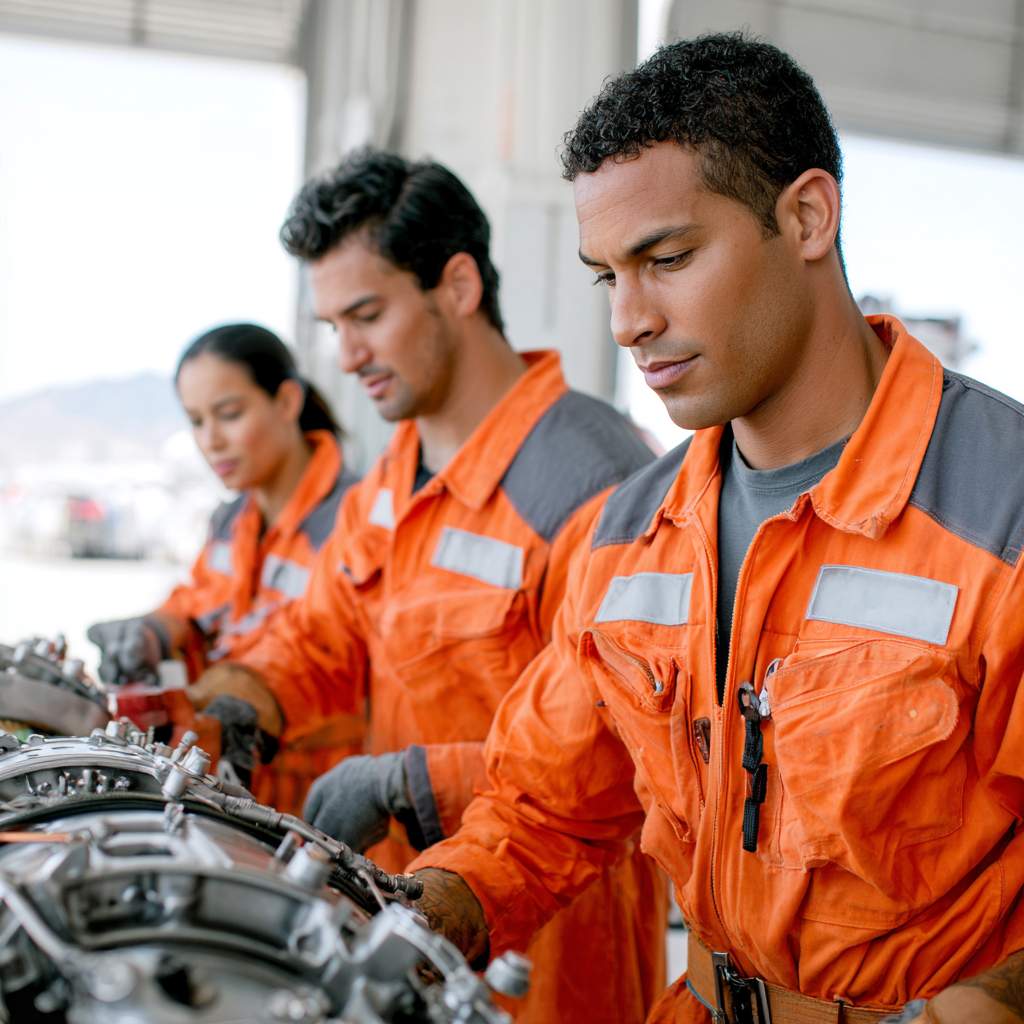
The A&P certification process requires candidates to pass three exams: a written test, an oral test, and a practical test, which must be completed within 24 months after passing the knowledge test. Candidates must pass three exams: written, oral, and practical, which measure technical knowledge, hands-on skill, and the ability to apply aviation maintenance certification standards in real-world situations.
The final examination is conducted by a Designated Mechanic Examiner, which includes an oral exam and a practical exam. The oral exam tests theoretical knowledge across 43 technical subjects, while the practical exam assesses hands-on maintenance skills. The oral and practical exam often takes 8–16 hours over one or two days and uses FAA Airman Certification Standards.
Once the O&P exam is passed, the DME issues a temporary certificate enabling the candidate to work as a mechanic while the official A&P license is processed by the FAA.
Airframe vs. Powerplant Ratings
The airframe rating covers structures, landing gear, hydraulic and pneumatic systems, flight controls, cabin systems, and related aircraft systems. The powerplant rating covers piston engines, turbine engines, propellers, fuel systems, ignition, lubrication, and engine controls.
You may earn airframe only, powerplant only, or both. Holding both is commonly called an airframe and powerplant or A&P certificate. Most employers prefer both airframe powerplant ratings because A&P certification allows mechanics to work on both airframe and powerplant systems, making them versatile and increasing their employability across various aviation maintenance roles.
You can also take one rating first and add the second later, such as earning airframe before powerplant a p testing.
Preparing for the Oral and Practical Exams
The oral and practical stage is often the hardest part because you must prove what you know with your hands, not just on paper.
Use current FAA handbooks, ACS checklists, and recent oral and practical question banks. Practice with real aircraft, engines, and tools like torque wrenches, micrometers, borescopes, and safety wire pliers. A good prep course can simulate a DME session and help you avoid common test-day problems, including weak logbook entries, unclear maintenance records, and unsafe shop habits.
How Long the A&P Certification Pathway Takes
Your total time depends on the path, schedule, and prior experience. A full time FAA-approved AMTS program may take 18–24 months. An intensive certificate program may take about 12–15 months. Aviation Maintenance Technician Schools are designed to meet FAA requirements and typically take around two years of full-time attendance to complete, although program lengths can vary.
Experience-only candidates usually need 18–30 months. To qualify for the A&P certification, applicants must have at least 18 months of practical experience for a single rating or 30 months for both airframe and powerplant ratings, which is typically interpreted as full-time work.
After school or experience is complete, accelerated prep can help. Some candidates take a 12-day fast track, while others use a 3-day oral and practical review. Written exams and DME appointments may add several weeks, so build scheduling time into your plan.
Aviation Maintenance Careers with an A&P Certificate
An A&P certificate qualifies you as an aviation mechanic or aviation maintenance technician able to work on U.S.-registered aircraft. A&P mechanics can pursue various career opportunities in the aviation sector, including roles at airlines, fixed-base operators, manufacturers, repair stations, and in business or general aviation.
Common entry roles include:
- Aircraft mechanic at airlines or regional carriers
- Technician at Maintenance and Repair Organizations
- Mechanic at fixed base operators
- Repair station technician
- Business jet or charter maintenance support
- General aviation shop mechanic
Typical duties include 100-hour inspections, troubleshooting systems, performing airframe and powerplant repairs, following maintenance manuals and FAA regulations, using tools correctly, and making accurate logbook entries.
The demand for certified A&P mechanics is high due to a shortage in the aviation maintenance workforce, particularly in general aviation shops, which are experiencing delays in maintenance services. The Bureau of Labor Statistics reported a median aircraft mechanic and service technician wage of about $78,680 in May 2024, with earnings often increasing through experience, shift differentials, specialty training, and inspection authorization. See the latest BLS aircraft mechanic outlook for updated job data.
Advancement: From A&P Mechanic to IA and Beyond
After three years of practical experience as an A&P mechanic, you may qualify to pursue Inspection Authorization. IA privileges can include annual inspections, major repairs, alterations, and added responsibility.
Additional career opportunities include lead technician, quality control, maintenance planning, instructor, technical representative, and maintenance manager. Extra training in avionics, composites, turbine overhaul, or unmanned aircraft systems can also open specialized opportunities across the industry.
Why Choose Our Aviation Maintenance Training for Your A&P Pathway
We focus on helping students build real maintenance skill, not just test familiarity. Our aviation maintenance education is designed to connect classroom knowledge with the hands-on standards employers expect from a new aviation maintenance technician.

What you can expect from our program:
- FAA-approved curriculum aligned with current Airframe and Powerplant Airman Certification Standards
- Hands-on aircraft maintenance using real aircraft, engines, components, and powerplants
- Instructors with recent industry experience and practical shop insight
- Flexible schedule options when available, including day, evening, or weekend cohorts for working adults and military veterans
- Exam prep for written, oral and practical tests
- Access to designated mechanic examiners on or near campus where available
- Structured study plans, career coaching, resume support, and guidance for local and national aviation maintenance job markets
The goal is simple: help students get ready for certification and become confident, safe, employable mechanics.
Frequently Asked Questions About the A&P Certification Pathway
Here are the questions many students ask before they start:
- Is an A&P certificate the same as an aircraft mechanic license?
- What are the current FAA airframe and powerplant certification requirements?
- Can military aviation maintenance experience count toward A&P?
- What if I fail an A&P written, oral, or practical exam?
- How much does it cost to complete the A&P certification pathway?
Is an A&P certificate the same as an aircraft mechanic license?
Yes. In the U.S., the FAA Airframe and Powerplant certificate is commonly called an aircraft mechanic license. The official FAA term is Mechanic Certificate with Airframe and/or Powerplant ratings.
This p certificate authorizes the holder to perform and approve for return to service many types of maintenance within the ratings held. In the industry, aviation mechanic and aviation maintenance technician are often used interchangeably.
What are the current FAA airframe and powerplant certification requirements?
The current requirements include age 18, English proficiency, qualifying school or experience, and passing the required written, oral, and practical exams.
These requirements are defined mainly in 14 CFR Part 65 Subpart D and FAA guidance. Candidates must apply on the proper FAA airman application form and have eligibility validated before testing. Always double-check the FAA website for updates after this article’s 2026 publication date.
Can military aviation maintenance experience count toward A&P?
Yes. U.S. military aircraft maintenance experience often qualifies toward the 18-month or 30 months requirement when properly documented. JSAMTCC agreements and military transcripts may help connect specific specialties to FAA eligibility.
Veterans should keep records of maintenance tasks, MOS, AFSC, ratings, training, and hands-on experience. We can help review those documents in the context of A&P eligibility before you apply.
What if I fail an A&P written, oral, or practical exam?
You can retake failed knowledge exams after meeting FAA retesting requirements, which may include an endorsement or waiting period. If you fail part of the oral and practical, the DME will identify deficient areas for retesting.
Use the test report and instructor feedback before you schedule again. Many successful mechanics do not pass every part on the first try, but they improve by studying the exact weak areas.
How much does it cost to complete the A&P certification pathway?
Costs vary by region, school, and route. Budget for tuition, written test fees, DME fees for oral and practical exams, tools, books, supplies, and study materials.
Funding options may include federal financial aid, GI Bill benefits for eligible veterans, scholarships, state grants, and employer tuition assistance. Because certification can lead to durable aircraft maintenance career opportunities, many students view it as a high-ROI credential. Contact our school for current tuition and estimated total certification expenses.
Conclusion and Next Steps on Your A&P Journey
A&P certification can help you move from interest to a real career in aviation maintenance. The path is clear: meet eligibility, complete approved training or qualifying experience, and pass every FAA test.
Your next step is to request information, schedule a campus tour, or speak with an admissions advisor about upcoming aviation maintenance technician cohorts. Start now by reviewing FAA handbooks, exploring local aircraft maintenance jobs, and mapping your personal timeline into a field that keeps aircraft safe, reliable, and ready to fly.
Want to Learn More About Your Registered Apprenticeship Opportunities?
BOOK A FREE CONSULTATION