Table of Contents
- Introduction: Why Apprenticeship Time Tracking Software Matters in 2026
- What Is Apprenticeship Time Tracking Software?
- Who Needs Apprenticeship Time Tracking Software?
- Key Features to Look For in Apprenticeship Time Tracking Software
- Compliance, Funding, and Reporting Made Simple
- Industry-Specific Use Cases
- Why Choose Our Apprenticeship Time Tracking Platform?
- How Our Apprenticeship Time Tracking Software Works (Step-by-Step)
- Frequently Asked Questions About Apprenticeship Time Tracking Software
- Next Steps: See the Software in Action
Introduction: Why Apprenticeship Time Tracking Software Matters in 2026
Accurate tracking of on-the-job training hours and related technical instruction has moved from “nice to have” to mission-critical for registered apprenticeship programs. Federal and state scrutiny continues to intensify, with USDOL audits requiring detailed hour and competency documentation. Accurate tracking of apprentice hours is essential for certification, wage calculations, and career advancement.
Regulated programs under the USDOL Office of Apprenticeship, California’s Division of Apprenticeship Standards, New York’s Department of Labor, and the Texas Workforce Commission all demand precise records that prove compliance with state requirements and federal standards. Apprenticeship time tracking software solves this by replacing manual spreadsheets with centralized, automated platforms for managing compliance and progress data.
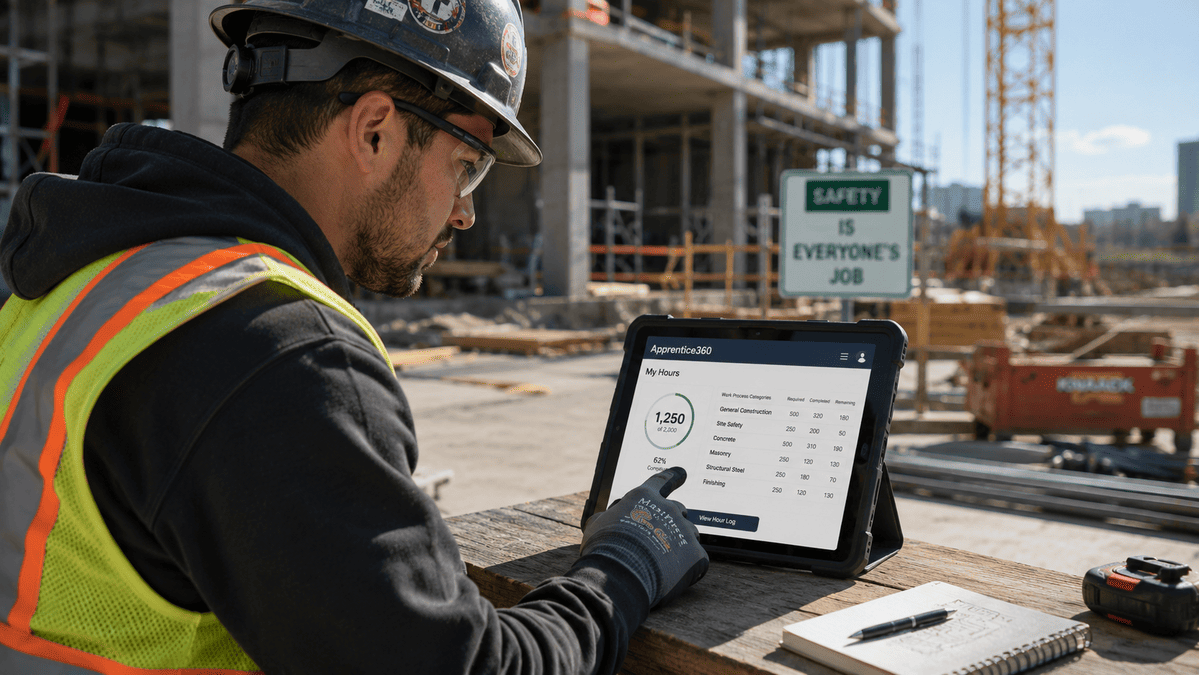
The benefits are immediate:
- Significant time savings compared to managing apprenticeships through scattered spreadsheets
- Reduced errors through automated workflows and validation
- Audit-ready documentation with complete change histories
- Better apprentice experience through real-time visibility into training progress
This article is written from our perspective as a provider of a dedicated digital platform built specifically for registered apprenticeship programs.
What Is Apprenticeship Time Tracking Software?
This category of management software differs fundamentally from generic HR time clocks or project tracking tools. Software must distinguish between On-the-Job Training and Related Technical Instruction to manage compliance effectively. Purpose-built platforms track OJT hours by occupation and work process, RTI hours by course and provider, competency sign-offs with timestamps, and automated wage progression rules.
Effective software solutions for tracking time in apprenticeship programs replace manual spreadsheets with centralized, automated platforms. The system gives sponsors, employers, training providers, and apprentices easy access to the same data through one platform—accessible 24/7 via web and mobile.
The software connects all work based learning programs components: scheduling training sessions, logging hours, tracking competencies, managing evaluations, and generating regulatory reports. Typical data points tracked include:
- Trade/occupation and specific work processes (e.g., conduit bending, motor diagnostics)
- OJT hours logged by task and job site
- RTI subjects, credit hours, and attendance by semester
- Journeyworker approvals with digital signatures
- Wage step eligibility and progression history
Who Needs Apprenticeship Time Tracking Software?
Modern apprenticeship management ecosystems involve multiple stakeholders who all rely on the same time and progress data to stay compliant and make informed decisions. Many apprenticeship management platforms offer features that allow for real-time tracking of apprentice progress, ensuring that all stakeholders have access to up-to-date information.
- Sponsors/Program Administrators: Need to prove full compliance to USDOL and state apprenticeship agencies, manage standards across multiple employers, and demonstrate program management integrity during audits.
- Employers/Contractors: Require easy logging of training hours and skills per job site, especially when managing apprentices across multiple states with their own set of regulations.
- Journeyworkers/Mentors: Need simple tools to verify daily and weekly hours and approve competency milestones without complex administrative processes.
- RTI/Training Providers: Must track attendance, credit hours, and grades accurately for funding reports and ensuring apprentices receive proper documentation for completion.
- Unions and JATCs: Manage hour records for dozens or hundreds of apprentices across classes, shops, and job sites while coordinating with training instructors.
- Apprentices: Want real-time visibility into apprenticeship progress toward completion, upcoming wage increases, and licensure requirements. Apprentices love transparency about their career advancement pathway.
Key Features to Look For in Apprenticeship Time Tracking Software
Not all platforms are built specifically for apprenticeships. Programs should look for features tailored to OJT and RTI requirements rather than retrofitted tools from generic HR or workforce systems. Key features for apprenticeship time tracking software include mobile accessibility for field entries, digital signatures for compliance, and automated progress reporting.
Want to Learn More About Your Registered Apprenticeship Opportunities?
BOOK A FREE CONSULTATION
OJT Hour Tracking by Occupation and Task: Ability to log hours against specific work processes (electrical rough-in, welding, quality assurance) with configurable standards that match your registered apprenticeship requirements.
RTI/RSI Attendance and Credit Tracking: Track classroom, lab, and online hours by course, semester, and provider for both compliance and funding purposes with your training partners.
Competency & Skill Sign-Offs: Digital workflows should enable mentors or supervisors to approve time logs instantly, reducing paperwork and ensuring compliance. Structured workflows capture competency verification with timestamps and electronic signatures.
Automated Wage Progression Rules: Rules engine that triggers recommended wage step changes when hour or competency thresholds are met, with notifications to administrators.
Multi-Employer & Multi-State Support: Manage learners placed with different employers across multiple states, each with different standards and registration numbers. This flexibility ensures programs can scale without complexity.
Real-Time Dashboards & Alerts: Visual dashboards for administrators and apprentices with alerts when someone is off-pace for completion or approaching audit thresholds.
Secure Mobile Access: iOS/Android-friendly interface so apprentices and journeyworkers can log OJT hours on site. Online tracking systems for apprenticeships can significantly reduce errors and provide real-time updates.
Integrations With Existing Systems: Integration with existing company payroll or human resources systems is crucial for seamless tracking of apprenticeship progress. Support for data exchange with HRIS, SIS/LMS, and state RAPIDS APIs.
Compliance, Funding, and Reporting Made Simple
Effective software for tracking apprenticeship programs centralizes on-the-job learning hours, competence evaluations, and compliance reporting in one system. This directly addresses real-world compliance scenarios: USDOL audits, state apprenticeship council reviews, union trust fund audits, and community college funding cycles.
The U.S. Department of Labor requires that registered apprenticeship programs maintain accurate records and documentation to ensure compliance with established regulations. Maintaining precise records of apprenticeship hours is crucial for meeting regulatory requirements and ensuring apprentices receive necessary hands-on experience.
Federal Compliance: Document work process hours and RTI hours for Registered Apprenticeship standards filed with the USDOL Office of Apprenticeship. Automated compliance reporting is essential for Registered Apprenticeship Programs to ensure audit readiness.
State and Industry Regulations: Track requirements specific to trades like electricians, plumbers, and healthcare apprentices in states such as Washington, Oregon, and Massachusetts. Registered apprenticeship programs must adhere to specific standards, including monthly compliance reporting and passing audits to remain in good standing with regulatory agencies.
Concrete reporting capabilities include:
- One-click generation of completion summaries by apprentice, cohort, and occupation for specific time frames (e.g., July 1, 2025–June 30, 2026)
- Pre-built templates that mirror common state forms and funding reports (WIOA-related reports, community college noncredit reporting)
- Audit trails showing who entered or approved hours on what date, with change history preserved for security
- Export options (CSV, PDF, secure API) for sharing with agencies and partners without manual re-keying
These tools prioritize regulatory compliance, such as US Department of Labor RAPIDS reporting, and foster real-time collaboration between apprentices and mentors.
Industry-Specific Use Cases
Apprenticeship structures differ significantly by sector. The 2024–2026 period has seen explosive growth in clean energy and healthcare apprenticeships, each with unique tracking requirements. Robust systems provide a holistic profile for each apprentice, allowing for notes, document storage, and evidence of work for skill evaluation across these diverse environments.

Construction & Building Trades: Multiple job sites, prevailing wage projects, and joint apprenticeship training committees need detailed OJT breakdowns per project and contractor. Programs track hours across different employers while maintaining consistency in competency standards.
Renewable Energy (Solar, Wind, EV Infrastructure): Multi-state projects and rapidly evolving tasks require flexible work process categories. A 2025 solar installer program tracking hours for NABCEP-aligned competencies demonstrates how the software adapts to emerging credential requirements.
Manufacturing & Advanced Manufacturing: Rotation-based programs moving apprentices across departments (CNC machining, welding, quality assurance) with competency-based progression rather than purely time-based advancement.
Healthcare (MA, CNA, LPN Apprenticeships): Balancing clinical hours, classroom coursework, and simulation labs while meeting state licensing board documentation requirements. Education partners require seamless data sharing for students enrolled across institutions.
IT & Cybersecurity: Hybrid and remote work structures where hours can be logged from multiple locations and aligned to industry certifications like CompTIA or AWS. Job seekers entering these fields benefit from clear progress visibility.
Why Choose Our Apprenticeship Time Tracking Platform?
Compliance with federal and state apprenticeship requirements is essential for maintaining the integrity and effectiveness of apprenticeship programs. Our platform was built from the ground up around registered apprenticeship workflows—not adapted from generic HR or LMS tools that create workarounds instead of solutions.
Using digital tools enhances transparency and accountability in apprenticeship programs, enabling real-time tracking of apprentice progress and compliance. Apprenticeship management software helps streamline the administration of apprenticeship programs by integrating various functions such as tracking, compliance, and reporting into a single platform.
Purpose-Built for Apprenticeships: Every feature, from hour logging to competency sign-offs to wage progression, reflects how apprenticeship training actually works in the field.
Multi-Stakeholder Collaboration: Single system for sponsors, employers, RTI providers, and apprentices with role-based permissions. Your dedicated team of administrators, instructors, and mentors all access shared data views.
Proven at Scale: The platform supports programs with dozens to thousands of apprentices across multiple states and cohorts—including organizations managing cohorts from 2020 through 2026 under one umbrella program.
Implementation & Support: Guided onboarding, data migration from spreadsheets, and ongoing support from staff experienced with registered apprenticeships and SAA states agency processes. You won’t wait weeks for answers.
Continuous Improvement: Feature updates aligned with regulatory changes and emerging apprenticeship models, with quarterly feature releases and security updates at least monthly.
Digital solutions for apprenticeship management streamline administrative processes, allowing organizations to focus on growth and development rather than paperwork.
How Our Apprenticeship Time Tracking Software Works (Step-by-Step)
This walkthrough covers typical onboarding and daily usage flow for a new sponsor or employer in 2026. Digital platforms can significantly reduce the time spent on administrative tasks, allowing for more efficient management of apprenticeship programs and better resource allocation.

Step 1 – Configure Standards: Set up occupations, work processes, hour requirements, and RTI curricula based on existing standards filed with USDOL or state agencies. Create the framework that matches your registered apprenticeship exactly.
Step 2 – Import or Enroll Apprentices: Migrate historical hours from spreadsheets starting from a specific date (e.g., January 1, 2023) and enroll new apprentices with cohort tags and employer assignments. No matter how complex your existing data, the system accommodates it.
Step 3 – Enable Logging & Approvals: Apprentices log OJT hours via web or mobile. Journeyworkers and supervisors review and approve weekly with digital signatures, creating timestamped records for compliance.
Step 4 – Monitor Dashboards: Administrators review real-time dashboards showing percent completion, overdue evaluations, and upcoming wage step eligibility by apprentice and cohort. The process becomes proactive rather than reactive.
Step 5 – Generate Reports: Run standard and custom reports for audits, quarterly board meetings, and annual funding submissions with a few clicks. Schedule automated reports to keep the community of stakeholders informed.
Step 6 – Optimize Programs: Use historical hour and completion data to adjust rotations, RTI schedules, and mentor assignments for future cohorts (2027–2028 program years). Effective apprenticeship management software can significantly reduce the administrative burden associated with managing compliance and documentation, allowing organizations to focus on program growth and learner outcomes.
Frequently Asked Questions About Apprenticeship Time Tracking Software
This FAQ covers practical questions programs ask when moving from paper or spreadsheets to a dedicated platform.
Standard time clocks track when employees arrive and leave. Apprenticeship time tracking software tracks hours by specific work processes and RTI courses, manages competency sign-offs, calculates wage progression eligibility, and generates compliance reports for USDOL and state agencies. The focus is on apprenticeship experience documentation, not just attendance.
Yes. The platform supports multi-state registration with different standards, hour requirements, and reporting formats for each jurisdiction. You can manage programs across SAA states while maintaining separate compliance documentation.
The mobile interface was designed for field conditions with minimal training required. Most users become comfortable within their first week. Supervisors can also log hours on behalf of apprentices when needed.
Mobile apps support offline data entry with automatic sync when connectivity returns. Hours logged offline are timestamped at entry time, not sync time, maintaining accurate records for jobs in remote locations.
Your organization retains full ownership of all data. The platform uses encryption in transit and at rest, role-based access controls, and maintains SOC 2 compliance. We integrate security updates monthly.
Records are retained for seven years post-completion by default, meeting USDOL retention requirements. Longer retention periods can be configured based on your program’s needs.
Absolutely. Many programs begin with a single occupation and add others as they scale. The platform handles this complexity without requiring system changes or additional user fees beyond your agreement terms.
Most implementations complete within two to four weeks, including data migration and user training. Programs with straightforward requirements often go live in days.
Next Steps: See the Software in Action
Your next audit cycle or cohort start date is closer than you think. Moving from fragmented tracking systems to a unified platform before September 2026 positions your program for compliance confidence and operational efficiency.
Book a demo to see how the platform handles your specific occupations and state requirements. Request a sandbox account to explore features with your team. Or schedule a consultation about migrating historic data from 2020–2025 cohorts into a system built for the future.
The right apprenticeship time tracking software simplifies compliance, provides real-time visibility, improves the apprentice experience, and prepares your program for growth. Our solution is built to support sponsors, employers, training providers, unions, and apprentices together—on one platform designed for how registered apprenticeship programs actually work.