If your organization sponsors a registered apprenticeship program, you already know the value: apprentices earn while they learn, employers develop skilled workers, and everyone benefits from a nationally recognized credential at completion. But maintaining that program means navigating a web of federal, state, and funding-specific rules that can trip up even experienced sponsors. This guide breaks down what registered apprenticeship compliance actually requires—and how to stay audit-ready without scrambling.
Table of Contents
- What Is Registered Apprenticeship Compliance?
- Core Federal Requirements for Registered Apprenticeship Compliance
- State & Incentive-Specific Rules (Including IRA 2022 Requirements)
- Designing a Compliant Apprenticeship Program Structure
- Ongoing Monitoring, Audits & Recordkeeping
- Common Compliance Pitfalls & Choosing a Support Partner
- Frequently Asked Questions About Registered Apprenticeship Compliance
What Is Registered Apprenticeship Compliance?
Registered apprenticeship compliance means meeting all requirements set by the U.S. Department of Labor’s Office of Apprenticeship (OA) or State Apprenticeship Agencies (SAAs), along with related wage, equal employment opportunity, and safety regulations. Registered Apprenticeship Programs provide a structured pathway for individuals to gain paid work experience while receiving mentorship and classroom instruction, leading to a nationally recognized credential—but that structure comes with ongoing compliance obligations.

Compliance covers far more than program registration. It extends to operations, reporting, and documentation throughout the apprenticeship lifecycle. Registered Apprenticeship Programs must adhere to federal and state regulations, including providing structured training, fair wages, equal employment opportunities, and accurate records to ensure compliance. Failure to maintain compliance can result in loss of program registration, ineligibility for federal and state incentives, repayment of grant funds, and exposure during DOL audits.
The key federal frameworks are 29 CFR Part 29 (Labor Standards for the Registration of Apprenticeship Programs) and 29 CFR Part 30 (Equal Employment Opportunity in Apprenticeship Programs). Many programs registered between 2020–2024 are now entering their first comprehensive compliance review cycles in 2025–2026, increasing scrutiny on documentation and outcomes. This article shows sponsors how to stay audit-ready year-round rather than scrambling when a review is announced.
Core Federal Requirements for Registered Apprenticeship Compliance
All federally registered apprenticeship programs must align with 29 CFR Parts 29 and 30, regardless of industry or occupation. These foundational compliance elements form the basis of what DOL checks during reviews and investigations.
Written Apprenticeship Standards must include the occupation (per O*NET-SOC codes), Work Process Schedule, Related Instruction Outline, program term (typically 2,000+ on the job learning hours per year), wage schedule, and supervision requirements. Programs must have a written plan detailing the supervised on-the-job learning (OJL) and related technical instruction (RTI). The Work Process Schedule and Related Instruction Outline define the education requirements that must be met by the apprentice to complete the program.
Apprentice Agreements require each apprentice to have a signed Apprenticeship Agreement (often ETA Form 671 or equivalent) on file and properly registered in RAPIDS or the relevant state system within 45 days of execution.
Progressive Wage Increases refer to scheduled pay raises as apprentices improve their skills, starting at no less than the federal or state minimum wage. These increases must be documented and tied to time or competency benchmarks, meeting applicable prevailing wage rules where required.
EEO Duties Under 29 CFR 30 include:
- Programs must prohibit discrimination based on various factors including race, religion, sex, and disability
- Sponsors are required to include and publicly post a specific Equal Opportunity Pledge
- Nondiscriminatory selection procedures and prompt handling of complaints
- Apprentice recruitment and selection must be conducted in a fair and open process, requiring sponsors to engage in “universal outreach” to reach all demographic groups
- Affirmative Action Programs are required for sponsors to actively recruit underrepresented groups
- Programs with five or more apprentices must implement a written Affirmative Action Plan within two years of registration
- Sponsors must offer apprentices a one-time invitation to self-identify their disability status
Anti-Harassment and Safety Requirements demand that programs implement clear anti-harassment measures, including policies and training, to maintain a harassment-free environment. Mandatory anti-harassment training must be provided to all apprentices and staff involved in the program. Programs must adhere to safety standards, providing adequate equipment and instruction consistent with OSHA standards.
Related Technical Instruction is classroom-style training that complements job skills, with a general recommendation of at least 144 hours per year. Sponsors should review federal requirements at least annually to catch regulatory updates and re-align local policies.
Key Documents DOL Auditors Commonly Request
Sponsors must maintain these documents for at least five years after completion or cancellation:
- Approved Apprenticeship Standards
- All executed Apprenticeship Agreements
- Records of OJL hours and job assignments
- Related instruction transcripts and completion records
- Wage progression logs with dates and amounts
- EEO outreach plans and recruitment event logs
- Complaint files and resolution documentation
- Selection procedures and applicant rosters
Auditors routinely compare RAPIDS data to internal records, so data accuracy and alignment are critical. Apprenticeship programs must maintain records on all aspects of the program, including candidate recruitment, on-the-job learning, job assignments, and completion of related instruction to verify compliance.
State & Incentive-Specific Rules (Including IRA 2022 Requirements)
Beyond federal OA standards, over 25 states have State Apprenticeship Agencies with supplementary requirements on ratios, licensing, and reporting. California, for example, mandates journeyworker ratios like 1:2 maximum, while New York requires state-specific licensing alignments.
Multi-state employers face particular challenges. Compliance can differ significantly between OA and SAA states, especially when dispatching apprentices across state lines. Some states require dual registration or additional documentation when apprentices work on state-funded or state-regulated projects.
Inflation Reduction Act (IRA) 2022 Requirements add another compliance layer. For most qualifying clean energy projects that begin construction after January 1, 2025, at least 15% of total labor hours must be performed by registered apprentices to receive full federal tax credits under Section 45Y/48E. Owners and contractors must document how apprenticeship hours were calculated and which workers were qualified registered apprentices at the time of work.
Employers can benefit from financial incentives such as tax credits and grants to help cover the costs associated with hiring and training apprentices. Other incentive sources—including state apprenticeship tax credits, WIOA funding, and GI Bill benefits—each have their own recordkeeping and reporting expectations.
Real-World Consequence: A Midwest utility-scale solar developer in 2025 lost full Production Tax Credit after an IRA audit revealed only 12% apprentice hours due to misclassified pre-apprentices. The result: $2.7 million in credit recapture and a retroactive DOL review.

Coordinating Federal, State, and Project-Level Compliance
Create a single “compliance matrix” mapping federal, state, and project-specific rules so staff know which requirements apply to each job site and apprentice. For large projects—like a utility-scale solar farm breaking ground in 2026—assign a lead compliance contact to prevent gaps between HR, payroll, and field supervision.
Early coordination before bids are submitted makes it easier to meet apprentice utilization and documentation obligations. This ensures alignment across all participating departments and representatives.
Designing a Compliant Apprenticeship Program Structure
Strong design choices during program creation make long-term ongoing compliance easier and reduce audit risk. Sponsors must choose a compliant approach: time-based, competency-based, or hybrid per 2026-01 Circular guidance.
Set realistic term lengths for specific occupations—for example, 2–4 year programs with 4,000–8,000 hours of OJL and at least 144 hours of related instruction per year. Align Work Process Schedules with actual job tasks, including modifications (up to 25% where allowed) to match local employer needs while satisfying DOL criteria.
A specific ratio of apprentices to journeyworkers must be maintained to ensure proper supervision and safety. Proper supervision of apprentices is mandatory, requiring qualified journeyworkers and specific apprentice-to-journeyworker ratios consistent with both apprenticeship rules and trade licensing regulations where work occurs. An experienced mentor makes all the difference in developing industry-ready skills.
The probationary period for apprenticeships cannot exceed 25% of the program length or one year, whichever is shorter. Build wage schedules tied to measurable milestones, ensuring transparency for apprentices and easy verification for auditors.
Many apprenticeship programs utilize pre-apprenticeship programs as a component of the recruitment process, designed to help meet recruitment goals for diverse populations and provide training to meet minimum eligibility requirements. Incorporate equal opportunity practices into program design—neutral selection procedures, outreach pipelines—rather than adding them later.
Policies, Handbooks, and Written Standards
To maintain compliance, sponsors must draft an Apprenticeship Standard that defines the requirements apprentices must complete and submit it for approval to the U.S. Department of Labor or a State Apprenticeship Agency. A clear, written Apprenticeship Standards document and companion apprentice handbook are central compliance tools.
These documents should address:
- Eligibility criteria (typically 18+, high school diploma/GED)
- Selection methods with neutral scoring
- Work processes and evaluation procedures
- Wage progression schedules
- Attendance expectations for related instruction (80% minimum recommended)
- Cause for suspension or cancellation (e.g., 10% unexcused absences)
Include a documented EEO pledge, reasonable accommodation process, and instructions for filing discrimination or harassment complaints consistent with 29 CFR 30. A program must have at least one registered apprentice to maintain its registration status, with a one-year grace period allowed between cohorts.
Review and re-approve these documents annually, updating dates and policy references to reflect the current year (e.g., 2026 edition, updated January 2026).
Ongoing Monitoring, Audits & Recordkeeping
Compliance is not a one-time event at registration; it is an ongoing process of monitoring and documentation across the lifecycle of each apprentice. Implement an internal monitoring calendar covering quarterly data checks, annual standards reviews, and pre-audit self-assessments.
Track OJL hours, related instruction completion, and evaluations in real time—not retroactively before an audit. Keep enrollment, cancellations, completions, and demographic data current in RAPIDS or state systems. Consistent documentation of wage increases and job titles is critical for both training administration compliance and wage-and-hour law compliance.
Document any changes to curriculum, work processes, or sponsors (mergers, acquisitions) and immediately report material changes to the OA or SAA. Digital recordkeeping systems that timestamp entries and store scanned documents make it easier to respond to requests spanning several years.
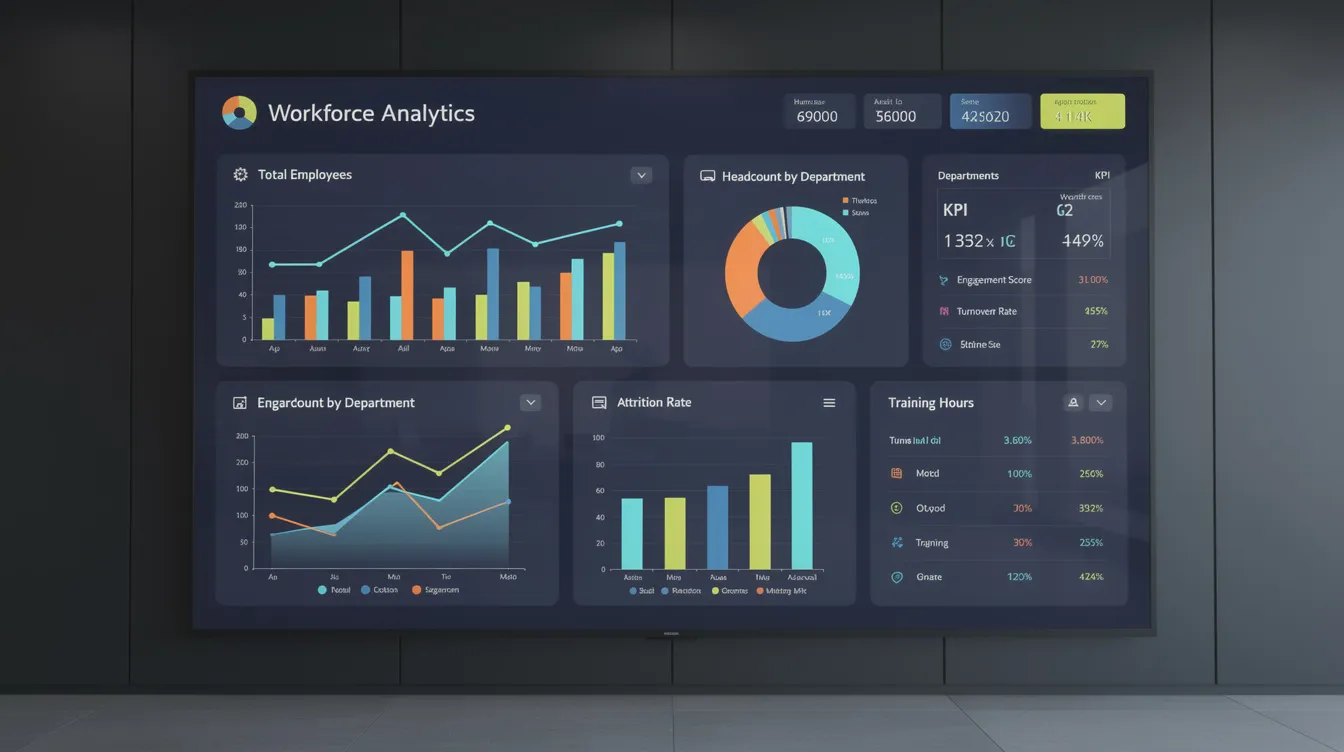
Registered Apprenticeship Programs have been shown to lower employee turnover, increase productivity, and improve workplace safety, making them a valuable investment for employers who maintain proper procedures.
Preparing for DOL or State Compliance Reviews
When notified of an upcoming review:
- Confirm scope and date of the review
- Assign an internal lead and assemble a cross-functional team (HR, training, payroll, field supervisors)
- Prepare the pre-audit file: current Apprenticeship Standards, roster of active and recent apprentices, sample files, EEO documentation, recruitment records, and recent RAPIDS reports
Reviews typically involve document requests, interviews with apprentices and journeyworkers, and facility or site visits. Conduct a mock review at least once before the actual date, focusing on high-risk areas like selection procedures and EEO outreach documentation for the past 12–24 months.
Common Compliance Pitfalls & Choosing a Support Partner
Real-world challenges sponsors encounter include:
- Incomplete or unsigned apprentice agreements (triggers deregistration risk)
- Inconsistent wage progression documentation
- Missed RAPIDS updates (30% of 2025 suspensions stemmed from data lags)
- Poor EEO outreach documentation
- Failing to align project staffing with IRA apprenticeship thresholds
Many new programs struggle when expanding into new states or industries without updating standards, ratios, and licensing references—creating hidden compliance gaps. Small and mid-sized employers often underestimate the time required to maintain records during busy construction or production seasons.
Working with a specialized apprenticeship compliance partner provides templates, monitoring tools, and on-call support. Our business assists with designing compliant standards, building documentation systems, performing pre-audit readiness reviews, and helping align apprenticeships with federal incentives like those in the IRA of 2022. We’ve helped clients reduce compliance risk by 40% while scaling clean energy programs.
Want to Learn More About Your Registered Apprenticeship Opportunities?
BOOK A FREE CONSULTATION
Frequently Asked Questions About Registered Apprenticeship Compliance
DOL audits approximately 5-10% of programs yearly, ramping to 15% in 2026 per recent guidance. Programs with completion rates below 60% face priority review under 2026-03 performance data initiatives.
Maintain Agreements, OJL logs, RTI records, and EEO documentation for at least five years after completion or cancellation—longer if state law requires.
Yes. Adding new occupations or expanding to additional states typically requires re-registration or amendments to your approved Standards.
Projects beginning construction after January 1, 2025 must have at least 15% of total labor hours performed by qualified registered apprentices to receive full tax credit multipliers. Verification occurs via certified payrolls and apprentice certifications.
Programs can be deregistered under 29 CFR 29.8 for uncorrected violations. Avoid this through annual self-checks, RAPIDS accuracy, and proactive documentation.
Pre-apprenticeships lack RAP protections and credentials. They require separate compliance frameworks and don’t substitute for registered program requirements.
Contact our team to prepare your program for 2026 expectations, update older standards, or align with IRA workforce development requirements. Additional resources and other resources are available through our partner network.


