
Filing cabinets stuffed with training plans. Chasing wet-ink signatures across multiple sites. Scrambling to locate funding evidence before an ESFA audit. If this sounds familiar, you’re not alone—but by 2026, this way of working is rapidly becoming obsolete. This guide walks you through why now is the moment to transition, what a modern digital system looks like, and how to make the switch without disrupting your apprenticeship delivery.
Table of Contents
- What is Paperless Apprenticeship Management?
- Why Go Paperless Now? Core Benefits for Apprenticeship Providers
- Key Components of a Modern Paperless Apprenticeship Management System
- From Paper-Heavy to Digital-First: Implementation Roadmap
- Staying Compliant in a Paperless World
- How Our Platform Supports Paperless Apprenticeship Management
- FAQs About Going Paperless with Apprenticeship Management
- Next Steps for Your Organisation
What is Paperless Apprenticeship Management?
Paperless apprenticeship management refers to the complete digitization of administrative processes across the entire learner journey—from initial enquiry and enrolment through off-the-job training logs, periodic reviews, evidence collection, and certification completion. Instead of printed ILR forms, wet-ink signatures on commitment statements, and filing cabinets for funding evidence, providers use cloud-based tools to manage everything digitally.
The contrast with traditional methods is stark. Paper-based systems require manual printing of 20+ page enrolment packs, courier postage for signatures, and physical filing that often leads to lost documents during Ofsted inspections. Digital processes leverage online application forms, electronic signatures compliant with UK eIDAS regulations, and automated workflow approvals. Many systems also feature a dedicated website for applications and data collection, improving accessibility and streamlining the registration process.
By 2026, providers across England, Wales, and Scotland expect digital handling of ILR data, funding evidence, reviews, and EPA documentation as standard. A paperless approach typically combines a learner management system, ePortfolio, and stakeholder portals into a single platform—creating a unified experience for tutors, employers, and apprentices alike. Digital apprenticeship management systems support education providers and integrate with various departments to streamline operations and communication.
Digital tools for apprenticeship management can centralize learner data, ensuring accuracy and reducing administrative burdens by eliminating duplicate entries.

Why Go Paperless Now? Core Benefits for Apprenticeship Providers
The year 2026 marks a tipping point. Ofsted’s inspection framework now prioritizes real-time data visibility, ESFA’s automated clawback algorithms scan for off-the-job shortfalls, and hybrid working has become permanent. Adopting a paperless management system for apprenticeships offers significant improvements in efficiency, compliance, and engagement.
Saving time across administrative processes is the most immediate win. Streamlining administrative processes in apprenticeship management can significantly reduce the complexity of multiple systems by managing funding returns, objective tracking, and evidence capture in one place. Automation simplifies workflows and reduces repetitive administrative tasks, such as logging On-the-Job Training (OJT) hours and generating progress reports, centralizing administration and improving data accuracy for regulatory audits. Enrolment processing drops from 10-14 days of paper back-and-forth to 1-2 days with digital workflows, freeing administrators for 30-40% more learner-facing time.
Compliance strengthens dramatically. Automating data collection and collation can save time and reduce errors in apprenticeship management, allowing for real-time updates and easier compliance with funding requirements. Digital audit trails reduce ESFA funding clawback risk—paper-heavy setups typically see 5-15% of claims affected by data errors.
Visibility improves through dashboards aggregating cohort metrics: starts, achievements, withdrawals, and OJT hours. Reporting features provide insights into learner progress and compliance, helping organizations generate data-driven insights and streamline administrative processes. Tracking learner progress and providing clear visibility into their journey can significantly enhance engagement, as learners are more likely to stay motivated when they can see their achievements.
Learner and employer experience transforms with 24/7 mobile access to progress trackers. The transition to a paperless system enables real-time visibility into apprentice progress via mobile applications, facilitating immediate logging of hours and competencies. Employer portals foster stronger relationships through shared dashboards, reducing review no-show rates by up to 40%. Engagement tools such as discussion boards and profiles serve as valuable resources, helping apprentices connect with each other and fostering a sense of community and collaboration. Personalized learning pathways and streamlined onboarding processes are essential features that improve learner engagement and outcomes from the start of their apprenticeship.
Key Components of a Modern Paperless Apprenticeship Management System
A truly paperless setup goes beyond scanning documents into PDFs. A comprehensive apprenticeship management system leverages automation to simplify workflows, reduce administrative tasks, and streamline onboarding, progress tracking, and overall training delivery efficiency. Here are the core components that matter.
Digital onboarding automates applications with embedded eligibility checks, remote ID verification, and ESFA-compliant e-signatures for training plans and commitment statements. Centralizing learner data in a single system can enhance accuracy, eliminate duplicate entries, and simplify progress tracking, which contributes to overall administrative efficiency in apprenticeship programs.
ILR and funding engines handle automated creation and updates, in-built rulebase validation against 2025/26 ESFA rules, funding calculations, and scheduled batch exports. Effective apprenticeship management systems often include features like automated data validation and compliance tools to safeguard funding and streamline processes. Automated data validation and DfE-compliant submissions are critical features in learner management systems to reduce manual errors and ensure compliance.
ePortfolio functionality enables apprentices to upload photos, videos, and documents while mapping evidence to Knowledge, Skills, and Behaviours frameworks. Digital platforms automate time-consuming tasks like logging On-the-Job Training hours and generating progress reports, centralizing administration and improving data accuracy for regulatory audits. Learners and students benefit from easy access to digital resources, learning materials, and support tools that enhance their assessment and portfolio management.
Compliance toolkits include templated documents updated for funding year changes, workflow prompts for 12-week reviews, and secure storage meeting UK GDPR requirements with 7-year retention capability.
Communication hubs replace scattered emails with in-app messaging, automated reminders for reviews and assessments, and centralised logs that tutors, managers, and students can reference anytime. These hubs also track events such as reviews, feedback, and key milestones, supporting effective communication and evidence collection.
Course and learner management features allow providers to create and manage courses, track student development, and support learners through personalized pathways. The system supports managers in overseeing learner progress, scheduling reviews, and monitoring assessments to ensure program effectiveness. This approach supports learners throughout their journey, from application to achievement and EPA.
Skills bootcamps are included as part of broader training offerings, supporting workforce development and upskilling programs, and are fully integrated into the platform for enhanced learner engagement and compliance tracking.
Analytics and integrations round out the system. Modern platforms offer APIs to integrate with finance tools, HR systems, CRM platforms, and VLEs—so data flows seamlessly without duplicate entries. Users can also create custom workflows or reports, further enhancing efficiency, data management, and collaboration.
From Paper-Heavy to Digital-First: Implementation Roadmap
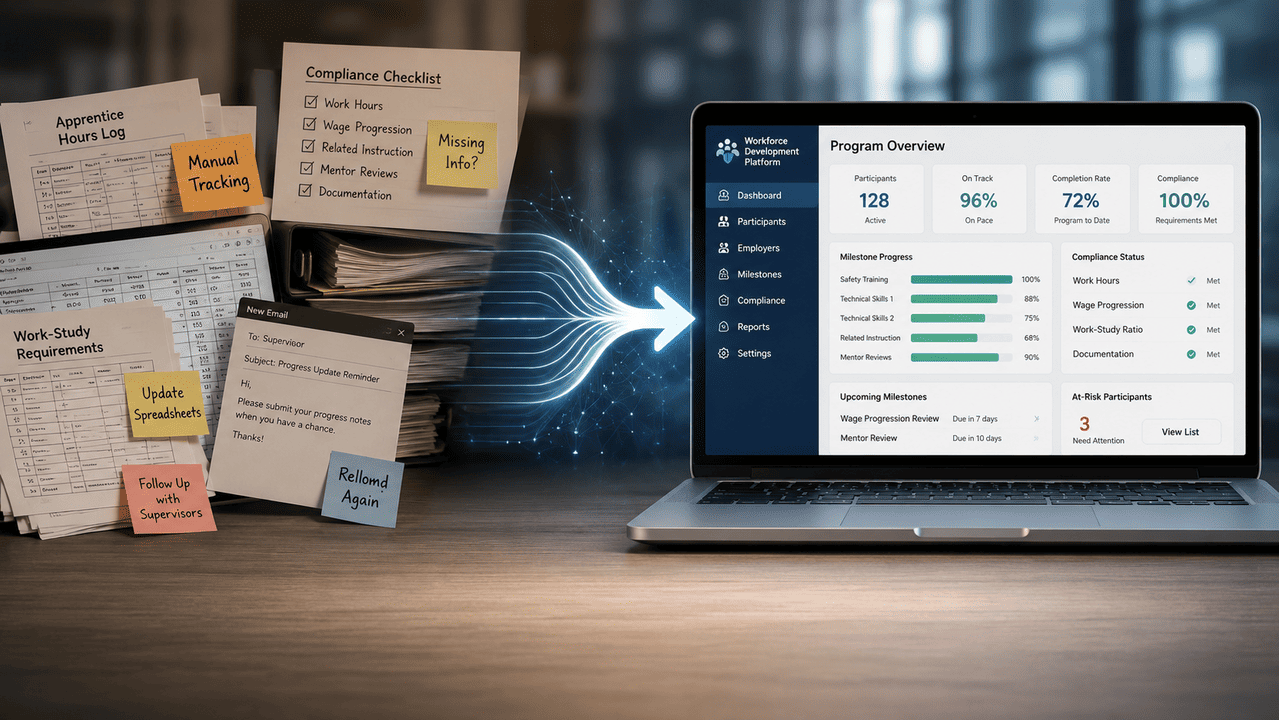
For providers still running on spreadsheets and ring binders, here’s a practical path forward. A paperless apprenticeship management system not only streamlines processes but also enables organizations to scale their programs efficiently and support integrated business operations across departments. Effective implementation of a paperless apprenticeship management system involves auditing current processes, selecting dedicated software, and training stakeholders.
- Audit current processes: Map every paper form and approval step, measuring time spent per cohort on enrolment packs, employer agreements, and review forms, and involve partners such as employers or host organizations to ensure all business workflows are considered.
- Define requirements: List must-haves like ESFA ILR support, automated OJT tracking, and secure employer access—targeting your next academic year intake and ensuring partners’ needs are addressed.
- Select your platform: Evaluate usability for tutors and apprentices, compliance features, integration options for seamless business operations, and implementation support.
- Prepare data migration: Cleanse legacy learner records, digitise key evidence, and decide what to archive versus import.
- Design workflows and train staff: Run pilot groups of 30-50 apprentices across 2-3 standards to refine templates before full roll-out, including training for all stakeholders and partners.
- Go live in phases: Start with onboarding, then reviews, then full ePortfolio functionality, allowing your program to scale without disruption.
- Review and optimise: Gather feedback from staff and partners, and adjust configurations against changing funding rules to support ongoing business needs.
Adoption of a paperless management system requires overcoming initial implementation costs, employee resistance, and technical dependencies. Plan for change champions among your team to support the transition, and remember that auditing current processes, selecting the right software, and comprehensive training are essential steps for effective implementation and long-term business success.
Staying Compliant in a Paperless World
Going digital doesn’t remove regulatory obligations—it changes how you evidence them. Maintaining compliance in apprenticeship programs involves tracking learner progress and ensuring that all necessary documentation is collected and stored securely throughout the training process.
ILR accuracy improves through built-in validation against ESFA 2025/26 rulebases, flagging errors before submission rather than after. Compliance tools are essential for apprenticeship programs to meet statutory requirements such as those set by the DfE/DWP and Ofsted.
Audit and inspection readiness strengthens with timestamped logs, change histories, and digital document trails. Digital systems provide a secure, organized “single source of truth,” making it easier to track compliance with regulatory requirements and enhanced audit readiness. A centralized digital hub for apprenticeships helps streamline compliance tracking, automating tasks that were previously manual. Automation and the ability to integrate with other systems further simplify compliance tracking and reporting, ensuring that data flows seamlessly and compliance documentation is always up to date.
Data protection requires UK GDPR compliance, secure hosting, role-based access, encryption, and clear retention policies. Digital records reduce the risk of losing, stealing, or damaging physical files, providing enhanced security and backup options.
Signatures and legal evidence are often stronger digitally. Compliant e-signatures with IP logging and timestamps provide robust evidence that courts and regulators accept.
Tip: Involve your Data Protection Officer or MIS lead early in the project to address security and data governance from the start.
How Our Platform Supports Paperless Apprenticeship Management
Our cloud-based apprenticeship management platform is designed for end-to-end digital delivery—from initial enquiry through EPA and completion. Our platform’s ability to build a sense of community and facilitate engagement among learners helps support both personal and professional growth. Here’s how we help providers achieve better outcomes.
Rapid digital onboarding lets you publish online application forms, capture eligibility evidence, and secure e-signatures from prospective learners and employers in a single workflow. The platform enables departments to communicate and collaborate efficiently, ensuring all organizational units are aligned. Personalized learning pathways and streamlined onboarding processes are essential features that can improve learner engagement and outcomes from the start of their apprenticeship.
Robust ILR and funding compliance includes automatic population and updates, built-in rulebase checks, and simple exports aligned with ESFA data collection windows.
Intuitive ePortfolio and progress tracking provides real-time dashboards for learners, tutors, and employers, with OJT hour logging and EPA-readiness checks built in. Engagement tools such as discussion boards and profiles can help apprentices connect with each other, fostering a sense of community and collaboration. Users can create custom workflows and reports to enhance efficiency, data management, and collaboration.
Dedicated implementation support means you get onboarding specialists, training sessions for your team, and ongoing guidance as funding rules evolve. With a longstanding presence in the market, our platform is recognized for its commitment to supporting learners throughout their journey. We support learners from application to completion, providing ongoing assistance to ensure their success. Digital tools for apprenticeship management can centralize learner data, ensuring accuracy and reducing administrative burdens by eliminating duplicate entries.
Want to Learn More About Your Registered Apprenticeship Opportunities?
BOOK A FREE CONSULTATION
FAQs About Going Paperless with Apprenticeship Management
Common questions from training providers considering the switch:
Smaller providers can often go live in 8-10 weeks, while larger multi-site organisations may phase implementation over 3-6 months. Timelines depend on data quality, number of live standards, and complexity of current workflows. Parallel running with existing processes is common during the transition stage.
Yes. Both Ofsted inspectors and ESFA auditors routinely work with digital systems. The key is evidential quality—complete, traceable, timestamped records. Maintain clear internal policies on digital signatures and document retention to present confidently during inspections.
Most providers digitise only active learners and recent leavers, archiving older files per ESFA retention rules. Scan and index critical documents for active cohorts so everything needed for audit sits in one system. Take a risk-based approach rather than attempting to scan every historic file.
Reputable platforms use UK or EU data centres, encryption, regular backups, and strict access controls. Look for ISO 27001 certification and clear data processing agreements. Role-based permissions ensure tutors, employers, and apprentices only see relevant data.
Many providers implement with minimal in-house IT, relying on vendor teams and admin super-users. The ideal internal team includes an SLT sponsor, data/MIS lead, and operational leads from apprenticeships and quality. Vendors typically support any integration work needed.
Pricing is usually per-learner-per-year or banded by volume. Focus on total cost of ownership and ROI: time saved, reduced funding errors, and improved retention rates. Contact our team for tailored quotes based on your learner numbers and required modules.
Next Steps for Your Organisation
The shift to paperless apprenticeship management isn’t about technology for its own sake—it’s about operational efficiency, stronger compliance, and improved experiences for learners and employers. Review your current processes and identify your top three pain points caused by paper: slow enrolment, audit anxiety, or poor visibility.
Ready to see how digital could work for your organisation? Contact our team for a demo or free process review. Build a more agile, data-driven apprenticeship program ready for your next intake year.