

The electrical trade offers a career path that pays well, stays in demand, and doesn’t require a four-year college degree. But the steps to become an electrician involve specific milestones: education requirements, training decisions, thousands of documented hours, and a licensing exam. This guide walks you through each stage so you can plan your path with real numbers and clear expectations.
Table of Contents
- What Electricians Actually Do Day to Day
- Minimum Education: Your High School Diploma and Core Skills
- Choosing Your Training Path: Trade School vs. Apprenticeship Program
- How an Electrical Apprenticeship Actually Works
- Licensing, Certification, and Moving Up the Career Path
- How to Get Accepted and Succeed in an Electrical Apprenticeship
- Why Choose a Structured Electrical Apprenticeship Path
- Next Steps If You Want to Become an Electrician
- FAQs About Becoming an Electrician
What Electricians Actually Do Day to Day
Before you decide to become an electrician, you need an honest picture of the work. The job is physical, code-driven, and varies based on whether you work in residential, commercial, or industrial settings.
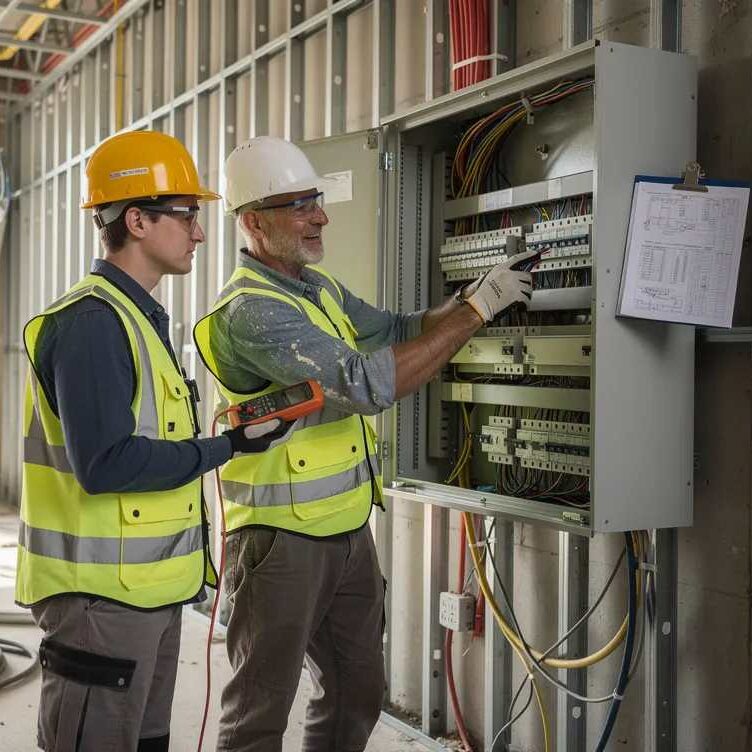
Electricians can specialize as residential, commercial, or industrial electricians. In a residential setting, you might diagnose a wiring fault in a three-bedroom home where outlets are dead but the circuit breaker hasn’t tripped. That means pulling out a multimeter, tracing circuits, and sometimes opening walls. Commercial work looks different: rough-in on a new office building in 2026 involves pulling feeder cables, installing switchgear, and coordinating with HVAC and plumbing trades on a multi-month timeline. Industrial electricians in manufacturing plants troubleshoot motor failures using PLC fault codes, replace variable frequency drives, and keep production lines running. Electricians can also work as solar installers or smart meter technicians as renewable energy and electric vehicles expand the scope of electrical work.
Across all settings, electricians read blueprints, follow the National Electrical Code and local building codes, and use testing devices like insulation resistance meters to locate faults. Diagnosing electrical issues and troubleshooting faulty circuits are critical skills that separate qualified electricians from helpers. Electricians need to demonstrate good color vision to distinguish wire colors and prevent hazards; a high level of physical stamina is often necessary because most electricians spend roughly 89% of the workday standing, climbing, or working in tight spaces. Expect early start times (5-7 AM), outdoor exposure, and working under a foreman or electrical contractor as part of a crew. Safety culture runs deep: lockout/tagout procedures, arc-flash PPE, and fall protection are non-negotiable in the electrical industry.
If this mix of problem-solving, physical work, and continuous code compliance appeals to you, a career as an electrician is worth pursuing.
Minimum Education: Your High School Diploma and Core Skills
Most states and apprenticeship sponsors expect at least a high school diploma or GED as of 2026. A high school diploma or GED is typically required before you can enter any formal training program. No bachelor’s degree is needed.
The most useful high school courses for aspiring electricians include:
- One full year of algebra (for calculating load, voltage drop, circuit capacity)
- Geometry basics and trigonometry (for conduit bending angles)
- Physics (to understand electricity, magnetism, and circuits)
- Electronics or shop classes that build hands-on comfort with tools
Electricians typically need basic math and science skills for daily calculations and safety decisions. Reading technical diagrams, using hand tools and power tools, and basic computer literacy for digital blueprints and time-tracking software are all skills worth developing before you apply to an electrical apprenticeship.
Some employers and apprenticeship programs require a valid driver’s license, drug screening, and mechanical aptitude tests. A recent high school graduate could gain early electrical experience through part-time maintenance work or assisting local contractors on job sites. Older career changers should refresh algebra and basic physics through community college or online prep courses before sitting for aptitude tests.
Choosing Your Training Path: Trade School vs. Apprenticeship Program
Most electricians combine classroom learning with paid on-the-job training, but the sequence differs depending on your situation. The path to becoming an electrician can include a trade school program for foundational knowledge, a registered apprenticeship, or both.
A trade school or technical school offers 9-18 month training programs focused on electrical theory, residential wiring methods, safety, and code basics, while apprenticeships provide a longer, work-based route. These programs accelerate foundational learning and sometimes count toward classroom instruction requirements for licensing. A registered electrical apprenticeship program lasts about four years and combines paid work (typically 4,000 to 8,000 hours) with related technical instruction that leads toward journeyman electrician status. Most states require electricians to complete an apprenticeship program before they can sit for a licensing exam.
Union and nonunion training programs differ mainly in sponsorship structure, benefits, and how you enter the field. Union apprenticeships often offer higher starting wages and structured benefits like health insurance. Some applicants also prioritize hands on experience in real job settings when comparing local options. When evaluating local options in 2026, check program accreditation, completion rates, whether classroom instruction is offered evenings or online, and whether the curriculum covers NEC 2026 changes.
A career changer with a family might choose evening related technical instruction at a community college while working entry-level construction during the day. This extends the calendar timeline but provides income throughout.
How an Electrical Apprenticeship Actually Works
Most states require thousands of supervised hours before you can test as a journeyman electrician. The apprenticeship is where aspiring electricians begin building real electrical experience under direct supervision on the path to becoming a qualified electrician.
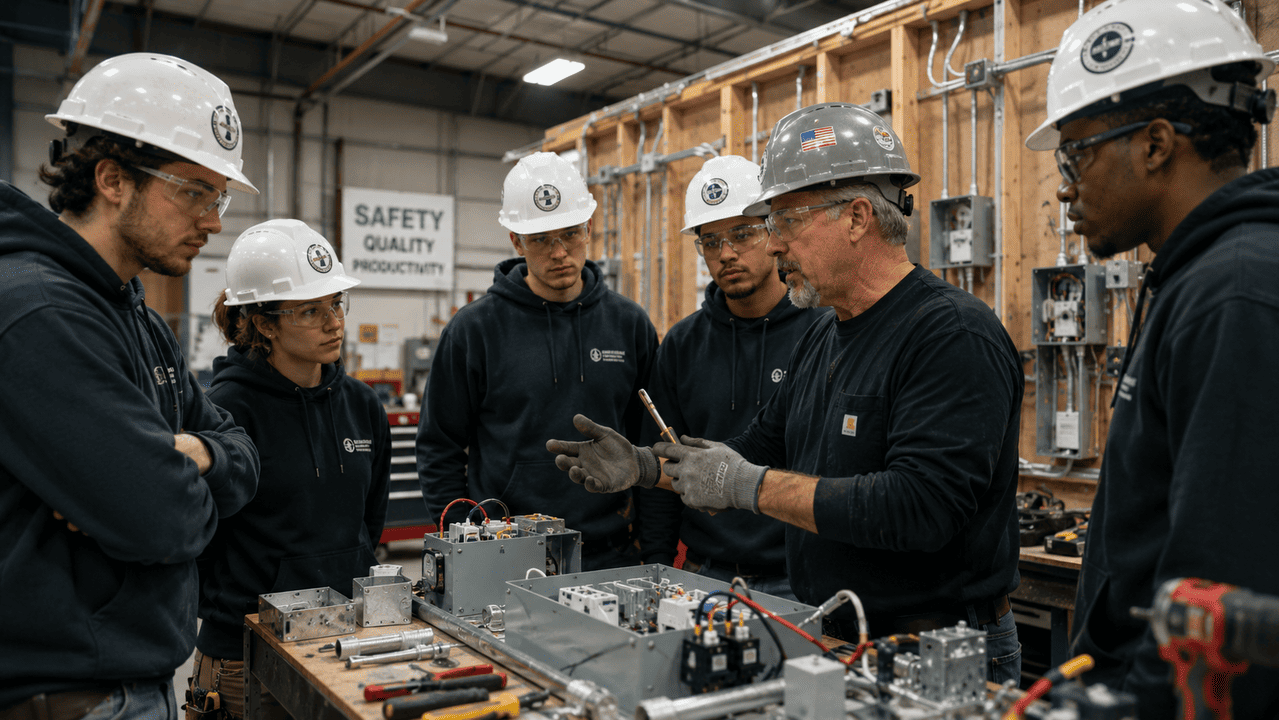
Apprenticeship programs provide hands-on training under supervision, structured in yearly levels or terms. Each level combines on-the-job training with classroom instruction, giving apprentice electricians experience on real installations, maintenance tasks, and service calls while covering electrical theory, code compliance, safety, and specialized topics like motor controls, control systems, and low-voltage systems. Electricians earn while they learn during apprenticeships; starting wages are lower but rise in structured steps as apprentice electricians complete hours and pass classroom modules.
Apprentices must complete 4,000 to 8,000 hours of work experience, depending on the state. Texas journeyman licensure requires 8,000 documented hours. Progression moves from helper tasks (carrying tools, pulling conduit) to layout work, circuit installation, and eventually leading small projects. Experienced electricians supervise this progression, gradually increasing responsibility.
Track your OJT and classroom hours carefully. Accurate records of documented hours are required when applying for a journeyman examination, and lost or incomplete documentation can delay your licensing timeline by months.
Licensing, Certification, and Moving Up the Career Path
To perform electrical work independently or pull permits, electricians usually need a state-issued journeyman or master license. License requirements for electricians vary by state and locality, so check your state’s electrical board for current rules.
Typical licensing steps:
- Complete required OJT hours and classroom instruction
- Document your electrical experience with supervisor verification
- Pass a location-specific licensing exam and earn your journeyman license
The Journeyman Electrician Exam typically covers the National Electrical Code and safety protocols. Electricians must pass a licensing exam to work independently. Continuing education may be required to renew electrician licenses in many states, keeping skilled electrical workers current on code changes and new technologies.
Many electricians earn extra credentials: OSHA 10 or 30, first aid/CPR, EV charger installation, and solar panel certifications. Electricians typically advance from apprentice to journeyman to master electrician. Advancement to a master electrician license usually requires 2 additional years of journeyman experience beyond the initial licensure. Applicants for electrical contractor licenses must be over 21 years old.
The standard career path runs: helper, apprentice electrician, journeyman electrician, then foreman, estimator, project manager, or electrical contractor and business owner. Journeyman electricians perform repairs, installations, and inspections. Earning a journeyman license lets electricians work with less supervision and move forward in the trade. Expect 4-5 years from entry to journeyman electrician licensure, then several more years before qualifying for a master or contractor exam. Career advancement depends on keeping up with battery storage systems, smart building automation, and renewable energy technologies deployed across the electrical industry by 2026.
How to Get Accepted and Succeed in an Electrical Apprenticeship
Many apprentices enter the electrical trade with no prior experience. Apprenticeship sponsors care more about reliability, learning ability, and a safety mindset than a background in electrical work.
The typical application process: submit an application, provide proof of a school diploma or GED, take a math and reading aptitude test, and attend an interview. Preparation matters: brush up on algebra and basic geometry, practice mechanical reasoning questions, and assemble a simple résumé highlighting punctuality, teamwork, and consistent attendance.
Want to Learn More About Your Registered Apprenticeship Opportunities?
BOOK A FREE CONSULTATION
Traits that apprenticeship sponsors and electrical contractors look for:
- Safety-first mindset
- Willingness to work early mornings and outdoors
- Ability to follow directions precisely
- Steady attendance record
Once accepted, build habits that support a successful career: show up 15 minutes early, keep a notebook of code references and lessons from experienced electricians, maintain your hand tools, and ask thoughtful questions. Avoid exaggerating prior electrical experience, ignoring safety rules, or switching employers before completing your required hours. These early behaviors directly shape your long-term career advancement as a licensed electrician.
Why Choose a Structured Electrical Apprenticeship Path
A well-organized apprenticeship gives you a clearer, more reliable route to becoming a licensed journeyman electrician. Structured programs offer a standardized curriculum that prepares apprentices for electrical systems work across residential, commercial, and industrial settings, along with documented OJT hours, clear progression milestones, and built-in exam preparation.
Centralized tracking of on-the-job training and related technical instruction helps sponsors, schools, and apprentice electricians stay compliant with federal and state apprenticeship standards. Coordinated communication between employers, instructors, and apprentices reduces confusion about what skills should be learned at each stage. Program graduates from structured training consistently show higher completion rates and stronger pass rates on licensing exams.
For employers and school districts, structured programs improve workforce planning and align classroom content with real job-site needs. They are especially useful for apprentices who want to work in industrial facilities, where documentation and consistent skill progression matter. For the individual apprentice, these programs deliver predictable raises, clearer expectations, and a smoother path to journeyman electrician status and maintaining equipment responsibilities.
Next Steps If You Want to Become an Electrician
The journey is straightforward: earn your high school diploma, research programs, apply to an apprenticeship, complete your hours, and earn your license. As they advance, many electricians install, maintain, and repair electrical power systems in homes, businesses, and critical sites.
Your checklist:
- Confirm your education (high school diploma or GED)
- Strengthen algebra, geometry, and basic physics skills
- Compare local apprenticeship and trade school options based on training programs, real job-site exposure, and specialization paths such as work with solar panels
- Prepare for aptitude tests with practice problems
- Start submitting applications to electrical apprenticeship programs
Some electricians later specialize in renewable energy work, including solar panels.

Contact local electrical contractors, workforce development agencies, or community colleges to learn what apprenticeship opportunities are open in your area this year. Set a concrete timeline: aim to enroll in a program within the next 3-6 months and be on track for journeyman status within 4-5 years.
The electrical trade rewards consistency, curiosity, and safety-minded work habits. Your first step can start today.
FAQs About Becoming an Electrician
Below are answers to the questions aspiring electricians ask most often, reflecting 2026 realities in wages, timelines, and the electrical industry.
How long does it take to become an electrician?
Most people need about 4-5 years from their first day on a job site to qualify as a journeyman electrician, assuming steady apprenticeship progress. Electricians typically complete a four-year apprenticeship program. Pre-apprenticeship and trade school programs can shorten the early learning curve but do not replace required on-the-job hours. Some states accept 4,000 hours; others require up to 8,000 documented hours, so the exact timeframe depends on local licensing rules.
Can I become an electrician without prior electrical experience?
Yes. Many apprentices start with no electrical background as long as they have a high school diploma or GED and pass aptitude tests. You can stand out by taking a short introductory electrical course, learning basic tool use, and showing strong attendance in previous jobs. Apprenticeship programs teach from the ground up, starting with safety and simple tasks before electricians learn complex troubleshooting.
Do I need a degree to start a career as an electrician?
A four-year college degree is not required. A high school diploma or GED is the educational baseline. What matters is completing an approved electrical apprenticeship program and meeting state licensing requirements. Some electricians later pursue associate degrees in construction management to move into design or leadership roles.
What is the difference between an apprentice electrician and a journeyman electrician?
An apprentice electrician is completing supervised training hours and classroom instruction under licensed electricians. A journeyman electrician has completed the required hours, passed a licensing exam, and can work more independently, often leading small crews. Pay, job responsibilities, and legal authority to sign off on certain types of electrical work increase at the journeyman level. The average salary for electricians in the U.S. is $60,240, with electricians earning approximately $29.98 per hour, or $62,350 annually at the national average.
Is a career as an electrician a good long-term choice in 2026 and beyond?
Employment for electricians is expected to grow by 9% through 2034, and according to labor statistics, the BLS projects 9% employment growth for electricians from 2025 to 2035. Electrician jobs are also projected to grow 6% from 2022 to 2032. Growth in renewable energy, electric vehicle charging networks, data centers, and smart buildings all rely on skilled electrical workers. In Massachusetts, electricians earn an average of $82,120 annually; electricians in Texas average $67,269 per year. The electrical trade offers geographic mobility, the option to start your own contracting business, and pathways into inspection or specialized training.
Can I switch into the electrical trade later in life?
Many apprentices begin in their 30s or 40s, especially veterans and career changers from manufacturing, maintenance, or IT backgrounds. Older candidates should consider physical demands, build fitness, and look for programs offering evening related technical instruction or flexible schedules. Transferable technical skills like troubleshooting, teamwork, and project coordination strengthen applications.