

Table of Contents
- Introduction to the Electrical Apprentice Role
- What Is an Electrical Apprenticeship and How Does It Work?
- Career Path: From Electrical Apprentice to Journeyman, Master, and Beyond
- Minimum Requirements and Who Is a Good Fit
- How to Choose the Right Electrical Apprenticeship Program
- Step-by-Step: Applying and Getting Started as an Electrician Apprentice
- What Apprenticeship Training Looks Like: On-the-Job and Classroom Learning
- Common Mistakes Electrical Apprentices Should Avoid
- Why Choose a Well-Managed Electrical Apprenticeship Program
- Next Steps: Moving Forward on Your Electrical Apprentice Journey
- FAQs About Becoming an Electrical Apprentice
Introduction to the Electrical Apprentice Role
Becoming an electrical apprentice is a great entry point into a high-demand trade where the country adds about 77,400 jobs per year. On any given day, an apprentice electrician might be pulling wire through conduit on a commercial build-out, roughing in receptacles in a new residential development, or assisting experienced electricians with panel terminations in an industrial facility. The work environment changes constantly, and that variety is part of what makes the electrical trade compelling.
In 2026, demand for electricians continues to accelerate. EV charging infrastructure, data center expansion, grid modernization, and an aging workforce of journeymen electricians heading toward retirement mean strong demand for electrician jobs for those entering the industry now. Electricians earn approximately $29.98 per hour at the median, with top earners clearing six figures. An electrical apprenticeship is a structured “earn while you learn” path that combines paid on the job training with classroom training or online instruction. Apprentices earn money while receiving hands-on training from day one, carrying zero student debt. This article walks you from “Is this career right for me?” through how to apply, what training looks like, and how to progress toward journeyman, foreman, and project manager roles.
What Is an Electrical Apprenticeship and How Does It Work?
An electrical apprenticeship is a formal, multi-year apprenticeship training model combining paid work (OJT hours) with structured classes (RTI hours). Most electrical apprenticeships require both on-the-job training and classroom instruction. Apprenticeship programs generally last about four to five years, with apprentices needing between 4,000 and 8,000 hours of work depending on the state and specialty. IEC’s apprenticeship program, for example, lasts four years and includes 8,000 hours of OJT.
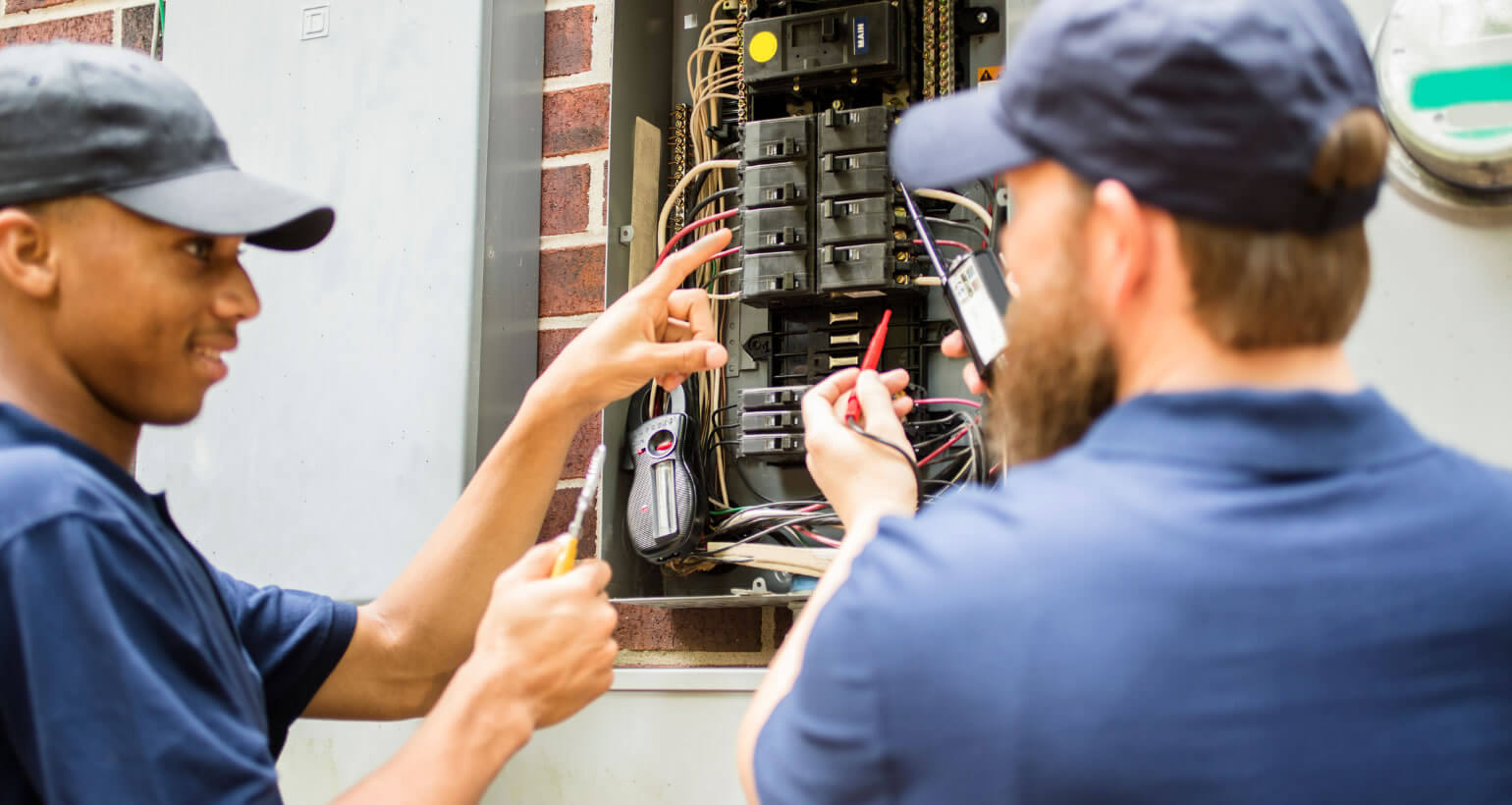
Key structural details:
- An electrician apprentice must work under a licensed journeyman or master electrician at all times during the apprenticeship.
- Apprenticeship program sponsors often connect apprentices with an electrical contractor as a common employer, alongside unions like the IBEW, community and technical colleges, and workforce boards.
- Registered Apprenticeship Programs are approved by the U.S. Department of Labor or a State Apprenticeship Agency. IEC’s programs are recognized by the U.S. Department of Labor. Informal “helper” roles often do not count toward licensing hours.
- Many states require apprentices to hold a trainee card or electrical trainee card before performing electrical work on the tools.
- Apprentices typically attend related training classes one night per week, and registered apprenticeships typically last about four years.
Career Path: From Electrical Apprentice to Journeyman, Master, and Beyond
The standard electrical career ladder follows a clear career path: electrical apprentice, then journeyman electrician, then master electrician, then leadership roles such as foreman, estimator, or project manager. The career path typically progresses from apprentice to journeyman and then to master electrician, with master electrician being the highest level of electrical certification.
Progression in the electrical trade can lead to roles such as estimator, project supervisor, or electrical inspector. Career advancement is based on performance in merit shop programs. Someone starting as an electrician apprentice in 2026 can reasonably become a journeyman by around 2030, move into a foreman role by the early 2030s, and reach project manager or business ownership by the mid-2030s. Electricians can also branch into specialized niches such as industrial automation or renewable energy, building automation, data center operations, or facilities maintenance.
Minimum Requirements and Who Is a Good Fit
Entry criteria vary, but these are the minimum qualifications for entry into most apprenticeship programs:

- At least 18 years old (some youth programs accept 16-17)
- A high school diploma or equivalent, or a GED certificate; applicants usually need a high school diploma or equivalent
- A valid driver’s license and reliable transportation
- Legal authorization to work in the U.S., regardless of national origin
- Passing a drug screening and a criminal background check may be required
- Most programs require proof of passing a high school algebra course
Additional applicant qualifications may include an aptitude test covering math, reading, and mechanical reasoning. Electricians must be physically capable of tasks including lifting heavy materials and working in awkward positions. They also need to distinguish wire color codes for safety and compliance. Good communication skills are important for coordinating with other contractors and following instructions. Equal employment opportunities apply across all programs.
High school students in 10th through 12th grade should take algebra, geometry, physics, and shop or pre-apprenticeship classes. Strong soft skills like punctuality, teamwork, and willingness to learn matter just as much as technical aptitude for long-term advancement in the industry.
How to Choose the Right Electrical Apprenticeship Program
Not all programs deliver the same outcomes. Compare these major pathways: union programs (like IBEW), open-shop and merit-shop programs, community-college-based apprenticeship, and direct-to-employer programs.
Questions every prospective electrician apprentice should ask:
- Is this a Registered Apprenticeship Program approved by the department of labor?
- How are pay raises structured, and how are OJT hours tracked and verified?
- Who teaches the RTI, and does the curriculum meet state licensing requirements for the journeyman exam?
- What are program completion rates, and how many apprentices advance to journeyman or foreman within five years?
Penn Foster’s apprenticeship program includes 756 hours of online training and can meet state licensure requirements. Some programs offer night or weekend RTI, blended formats, or credit for prior experience. Look for mentorship availability, clear competency checklists, and tools that let apprentices see their progress toward completion.
Step-by-Step: Applying and Getting Started as an Electrician Apprentice
Most programs follow a similar sequence. Research openings through local contractor websites, state apprenticeship agency listings, union halls, and workforce boards. During the application phase, attach your resume, school transcripts or GED, test scores, and copies of your driver’s license. Applicants should prepare for aptitude tests by reviewing basic algebra, fractions, and reading technical passages.
In your interview, expect questions about reliability, interest in the trade, and your ability to travel to job sites. In some states, you must obtain an apprentice license or trainee card from the licensing department before your first day. Your first step on the job will be basic tasks: material handling, cleanup, and simple installations. Apprentices typically start by assisting licensed electricians with basic tasks while learning the trade, steadily building skills under journeyman supervision.
What Apprenticeship Training Looks Like: On-the-Job and Classroom Learning
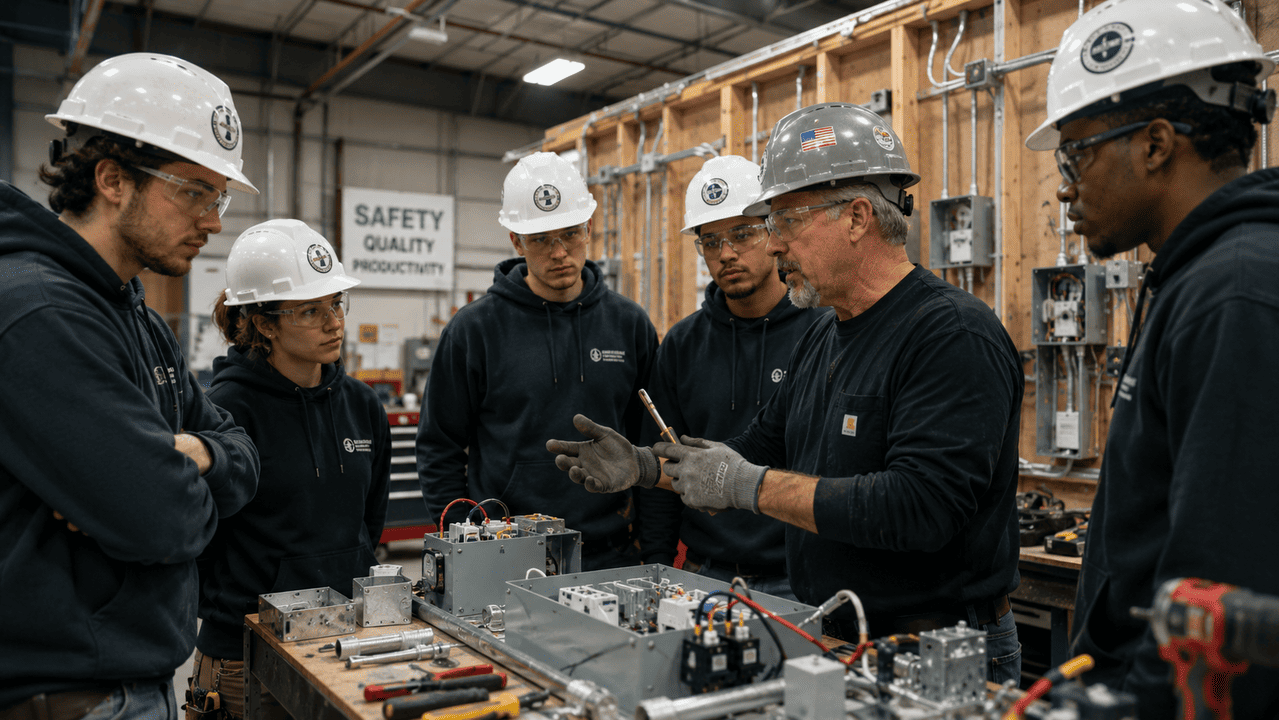
Apprenticeship training splits into OJT and RTI, both essential functions of a full electrical apprenticeship. First-year apprentices handle pulling wire, drilling, and supporting installations as core apprentice responsibilities, while later years add panel terminations, conduit bending, troubleshooting, and small-scope installations with oversight as skills increase. Electricians often perform tasks such as installing complete electrical systems and troubleshooting problems.
RTI covers AC/DC theory, Ohm’s Law, motor controls, NEC code, and safety. Apprentices learn to read blueprints and electrical drawings during their training. Electricians must adhere to safety protocols like OSHA guidelines and comply with local and national electrical codes. Problem-solving skills are essential to troubleshoot wiring issues and diagnose electrical malfunctions.
Modern programs use platforms and mobile apps so students can log hours, review lessons, and check off competencies from any job site. GoSprout offers tools for tracking OJT and RTI hours, and automated reporting tools help manage compliance for apprenticeship programs. Accurate hour tracking is critical because documented OJT and RTI hours are required for licensing applications and exam eligibility.
Common Mistakes Electrical Apprentices Should Avoid
Every electrician apprentice makes mistakes, but some can be avoided with planning and understanding:
- Not wearing required PPE, skipping lockout/tagout, or working energized without authorization
- Chronic lateness, absenteeism, or poor attitude toward feedback from employers
- Failing to log OJT hours accurately or neglecting to keep personal copies of training records
- Attempting tasks beyond current skill level without supervision or shortcutting code requirements
- Waiting until the last minute to prepare for the journeyman test or misunderstanding state deadlines for licensing
Prioritize safety, communicate with supervisors, keep a simple notebook or digital log, and treat each day as part of a long-term career rather than just a job. Being responsible and maintaining knowledge of your progress will pay off at every stage.
Why Choose a Well-Managed Electrical Apprenticeship Program
The quality of your apprenticeship program directly affects your safety, skill development, and long-term career options. Well-managed programs provide documented standards for each year, transparent wage progression, and alignment with current electrical codes. For employers and sponsors, organized apprenticeship management means easier compliance, accurate OJT and RTI tracking, and smoother reporting for registered programs. For the apprentice, modern tools offer real-time visibility into earned hours, reminders about expiring licenses, and clear milestones. A well-run organization builds a predictable talent pipeline that creates pathways to journeyman, lead, and beyond.
Next Steps: Moving Forward on Your Electrical Apprentice Journey
The electrical trade rewards those who show up prepared, stay consistent, and invest in the right program. Whether you are just beginning to explore this career or you are an employer looking to build a stronger apprenticeship pipeline for your company, the path forward starts with action. Research local apprenticeship programs this week, talk to practicing electricians, and review your state’s licensing requirements. If you manage or sponsor programs, evaluate how you track OJT and RTI, handle compliance reporting, and support each employee through their apprenticeship journey. Reach out to your state apprenticeship office, connect with local sponsors, or explore workforce development tools to launch or join a high-quality electrical apprenticeship program today.
Want to Learn More About Your Registered Apprenticeship Opportunities?
BOOK A FREE CONSULTATION
FAQs About Becoming an Electrical Apprentice
How long does an electrical apprenticeship usually take?
An electrical apprenticeship typically lasts about four years. Most states require you to complete 8,000 hours of on-the-job training to get licensed, though the range across all states is 4,000 to 8,000 hours depending on the specialty and jurisdiction. Prior military training or approved education may shorten the duration in some programs.
Do electrical apprentices get paid while they train?
Yes. Electrician apprentices are employed from day one and receive hourly wages that increase as they gain hands on experience and complete training milestones. Starting wages are typically a percentage of the journeyman rate, stepping up every six to twelve months tied to completed hours or class progression.
Is an apprenticeship better than going only to trade school?
Most states require documented apprenticeship experience, not just classroom study, before issuing a journeyman license. RTI-only trade school is usually not sufficient on its own. The strongest option is typically a Registered Apprenticeship Program that combines formal schooling with paid electrical work under licensed electricians.
Can I start an electrical apprenticeship with no experience?
Many entry-level programs are designed for applicants with no prior electrical experience. Requirements center on age, education, and aptitude rather than existing trade knowledge. Experience is the entire point of the apprenticeship itself, and you will enroll to gain hands on experience over the program’s duration.
What happens after I finish my electrical apprenticeship?
Once you have completed the required hours and RTI, you qualify to sit for a journeyman exam. After you pass, you can work more independently, supervise apprentices, and obtain a significant pay increase. From there, you can pursue master electrician licensing or move toward supervisory, estimator, or project manager positions.
Can an electrical apprentice eventually become a project manager?
Many project managers in the electrical industry began as apprentices, then progressed through journeyman and foreman roles. Those aiming for project management should develop communication skills, basic budgeting and scheduling knowledge, and an understanding of how operations across different trades coordinate on commercial and industrial projects. Planning for this trajectory early in your apprenticeship gives you an edge.