

This guide walks you through the full process: how long it takes, what it costs, and how hard the path actually is. If you like hands on work, problem solving, and building something real, this career path is worth a serious look. You will learn about trade school options, how an electrician apprentice gains experience, and why the National Electrical Code matters at every stage.
Table of Contents
- Introduction: What It Really Takes to Become an Electrician
- Step 1: Make Sure the Electrician Career Path Fits You
- Step 2: Finish High School (Diploma or GED) With the Right Foundations
- Step 3: Choose How You’ll Learn the Trade (Trade School, Community College, or Direct Apprenticeship)
- Step 4: Enroll in an Electrician Training Program That Covers Theory, Code, and Safety
- Step 5: Find and Secure an Electrician Apprentice Position
- Step 6: Understand Licensing Levels (Apprentice, Journeyman, Master Electrician)
- Step 7: Prepare for and Pass Your Electrician License Exam
- Step 8: Build Experience, Specialize, and Grow Your Career
- How Long Does It Take to Become an Electrician (and What the Timeline Really Looks Like)
- Is Becoming an Electrician a Good Career in 2026?
- Why Choose a Structured Apprenticeship and Training Pathway
- Next Steps: Move From Research to Action
- Frequently Asked Questions About How to Become an Electrician
Introduction: What It Really Takes to Become an Electrician
Electrician jobs are projected to grow about 8 percent from 2022 to 2032, roughly twice the average for all occupations. That demand comes from new construction, infrastructure upgrades, EV charging stations, and renewable energy projects. If you want a good career that pays while you learn and stays in demand for decades, the electrical trade deserves your attention.
The core path to become an electrician follows a clear sequence: finish high school, choose a training program, complete hands on training as an electrician apprentice, earn a license, then grow toward journeyman and master electrician levels. Most apprenticeship programs take about 4 to 5 years to complete. After that, you may need another 2 to 4 years before you qualify as a master electrician. The training is rigorous because mistakes with electricity can cause fires, injuries, or death; electrical code compliance exists to prevent those outcomes.
This article is written for people starting from zero: high school students, career changers, and adults exploring a new hands on career path.
Step 1: Make Sure the Electrician Career Path Fits You
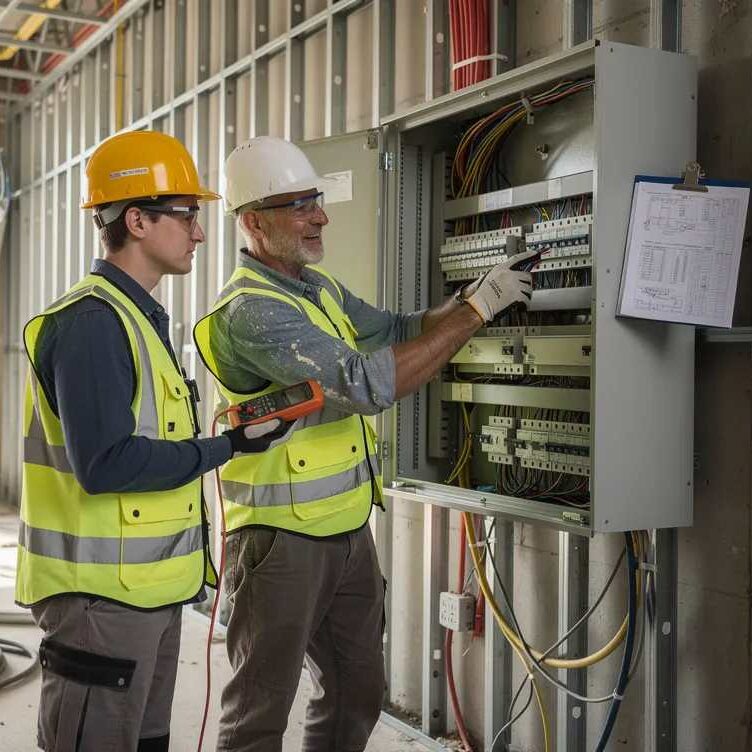
Day-to-day electrical work involves installing wiring, reading blueprints and building plans, troubleshooting panels and circuit breakers, and following the electrical code on jobsites. You will use hand tools, multimeters, and conduit benders. Some days you wire receptacles in a quiet house; other days you run conduit 20 feet overhead in a commercial building.
Before committing, run a quick self-check against three areas of difficulty:
- Technical/academic: Electricians must master abstract algebra and electrical codebooks. You need comfort with Ohm’s Law, load calculations, and reading scaled drawings. This is not calculus, but it is real math applied under pressure.
- Physical: The work includes lifting conduit, climbing ladders, and spending hours in crawl spaces or on rooftops. Physical demands include overhead work causing repetitive strain injuries over time. You need the ability to handle heat, cold, and long days on your feet.
- Commitment: A full apprenticeship runs 4 to 5 years of combined work and evening classes. Can you handle classroom instruction after a full shift? Are you willing to follow strict safety rules around live voltage every single day?
If you answered yes to those questions and enjoy hands on tasks more than desk work, you are a fit for this career.
Step 2: Finish High School (Diploma or GED) With the Right Foundations
Most states require a high school diploma or GED to become an electrician. Typical graduation happens around age 18; adults pursuing a GED can often complete it in under a year through focused study. To become a licensed electrician, you must meet basic age and education requirements, and you generally need to be at least 18 years old to register as an apprentice or take a licensing exam.
The most helpful high school subjects for the electrical field:
- Algebra and geometry: You will calculate voltage drop, conductor sizes, and conduit fill throughout your career.
- Basic physics: Understanding electricity, magnetism, and energy flow gives you a better understanding of how electrical systems behave.
- Electronics or shop classes: Any exposure to wiring, soldering, or reading schematics builds foundational knowledge before formal training.
Adults returning to school should enroll in local adult education or community college GED prep and ask about math refreshers designed for skilled trades applicants.
Step 3: Choose How You’ll Learn the Trade (Trade School, Community College, or Direct Apprenticeship)
You can become an electrician through several routes. The three most common are trade school, community college, and direct entry into a union or non-union apprenticeship. Each has trade-offs in cost, schedule, and speed.
Trade school programs typically run 6 to 12 months and focus on electrical theory, safety, tools, and the National Electrical Code. Many aspiring electricians complete a short trade school program to build foundational knowledge before applying for apprenticeships. Trade schools offer hands on training for practical skills and often run evening classes for working adults. Tuition at public or community-based trade schools ranges from about $4,500 to $11,000; private career schools can charge up to $22,000. An Electrical Technician Diploma can be completed in nine months at some programs.
Community college programs run 1 to 2 years, mix electrical classes with general education, and may lead to an associate degree. That broader credential can help later if you move into supervision, estimating, or management.
Direct-entry apprenticeship means applying through organizations like IBEW/NECA Joint Apprenticeship and Training Committees, local contractors, or workforce boards. You go straight into an electrician apprentice role with built-in classroom instruction. Trade schools offer hands on experience for aspiring electricians, but direct-entry programs bundle that experience into the apprenticeship itself.
Compare costs, schedules (day vs. evening classes), location, and job placement support before choosing a training program.
Step 4: Enroll in an Electrician Training Program That Covers Theory, Code, and Safety
Classroom-style training prepares you for safe, competent electrical work before you start handling real wiring on a jobsite. A solid program covers these core topics:
- Basic electrical theory: Voltage, current, resistance, Ohm’s Law, alternating current vs. direct current, and series and parallel circuits. Hands on training is essential for mastering electrical theories because you connect abstract concepts to physical equipment.
- National Electrical Code: Students learn to size conductors, protect circuits with overcurrent devices, and install equipment according to NEC standards. Electricians must master the National Electrical Code standards because every jurisdiction bases its local requirements on some edition of this book.
- Safety and OSHA rules: Lockout/tagout procedures, personal protective equipment, fall protection, and working near live voltage.
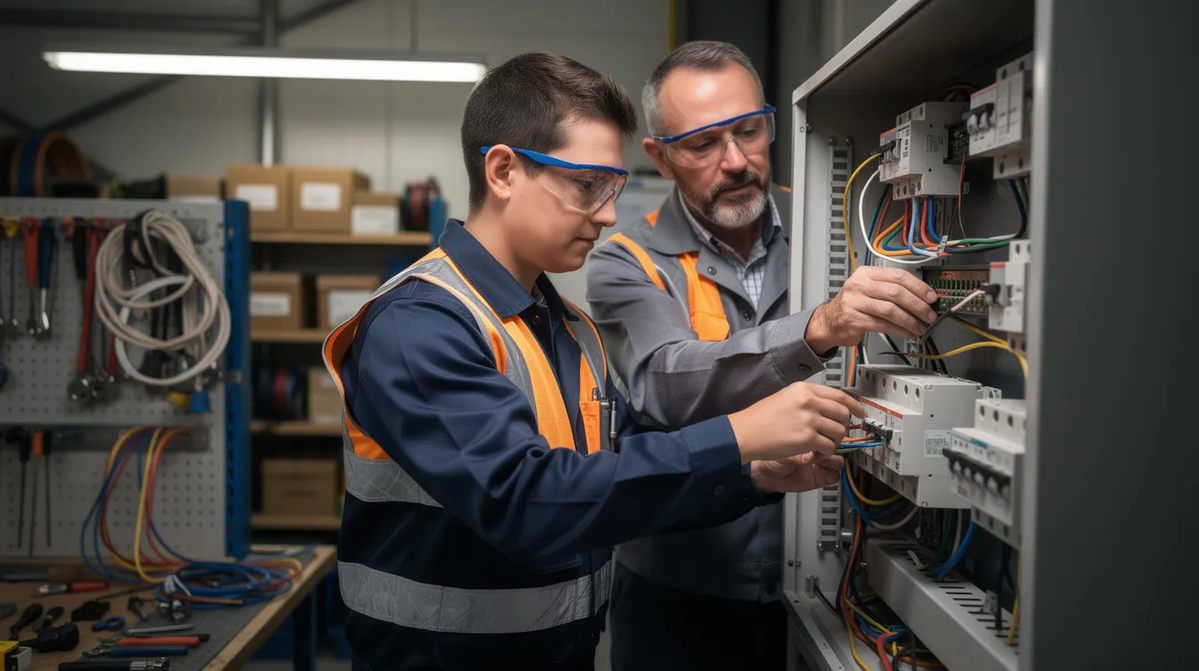
An apprenticeship in electrical work typically requires both classroom instruction and hands on experience. In hands on training labs, instructors guide students through bending conduit, wiring receptacles and lights, setting panels, and using multimeters. Making mistakes in training helps build confidence because you learn to troubleshoot in a controlled environment before facing real electrical issues on a jobsite. Hands on experience builds skills through repetition.
High-quality programs align their curriculum with state licensing exam content and help students track both classroom hours and on-the-job hours, which matters for future licensing applications.
Step 5: Find and Secure an Electrician Apprentice Position
Becoming an electrician requires thousands of supervised on-the-job hours. This step is where you move from student to electrician apprentice and start earning while you learn. Electrical apprenticeships combine paid on-the-job training with classroom instruction.
Apprenticeship requires 8,000 to 10,000 hours of hands on work, typically accumulated over 4 to 5 years. Becoming an electrician requires a five-year apprenticeship in many states. Entry-level electricians often face challenges finding apprenticeships because competition for positions can be stiff. Ways to find an apprenticeship position include:
- Union JATC programs (IBEW/NECA)
- Non-union contractor associations
- State-registered apprenticeship programs
- Workforce development agencies
- Direct applications to an electrical contractor
Day to day, an electrician apprentice pulls cable, installs boxes, supports licensed electricians, learns to read building plans, and gradually takes on more complex tasks like installing service panels and troubleshooting circuits. Tracking OJT hours accurately is critical; many licensing boards require documented proof of every hour before approving you for the journeyman exam.
To stand out when applying for an entry level position: show up on time, pass any required drug screening, demonstrate safety awareness, and prepare a basic trade-ready resume highlighting any previous experience with tools, construction, or physical labor.
Step 6: Understand Licensing Levels (Apprentice, Journeyman, Master Electrician)
Most U.S. states recognize three main levels of electrical license: registered apprentice, licensed journeyman, and master electrician. Each carries different responsibilities.
Licensed journeyman requirements typically include 8,000 to 10,000 hours of supervised work (most states require between 4,000 and 8,000 hours of practical field experience as a minimum threshold, though many exceed that), plus classroom training, then passing a state or local exam on electrical code and safety. For example, New Jersey requires 8,000 field OJT hours and 576 classroom hours. Massachusetts requires 600 clock hours of related instruction. Requirements vary depending on your state and sometimes your city.
A master electrician usually needs additional years of experience as a licensed journeyman (often 2 to 4 more years), plus a deeper exam covering design, business law, and supervisory topics. Master electricians can pull permits and run their own electrical contracting businesses, which opens a higher income ceiling and full independence.
Check your state licensing board or local building department website for current local requirements before mapping out your timeline.
Step 7: Prepare for and Pass Your Electrician License Exam
The licensing exam exists to protect public safety. Candidates generally must pass a state or local exam covering the National Electrical Code to become licensed. Many states require electricians to pass a certification exam before working independently.
Main exam components include:
- NEC questions (often open-book): branch circuits, feeders, service calculations, grounding and bonding
- Calculations: load sizing, voltage drop, conduit fill
- Local amendments to the electrical code
- Safety and OSHA basics
Study strategies that work: use the most recent NEC edition adopted in your state, take a focused exam prep course, work through practice tests under timed conditions, and learn to navigate the code book with tabbed sections. Speed matters; many candidates fail not because they lack knowledge but because they cannot find answers fast enough.
Keep detailed documentation of your apprenticeship hours, training program transcripts, and any prior licenses so your exam application goes through without delays.
Step 8: Build Experience, Specialize, and Grow Your Career
Getting licensed is the starting line. Real skill comes from years of diverse projects across the electrical industry. The field offers several distinct specializations:
- Residential electricians work in homes installing wiring and lighting.
- Commercial electricians handle electrical systems in business environments like offices, retail, and hospitals.
- Industrial electricians maintain machinery and control systems in factories.
- Maintenance electricians inspect and repair existing electrical systems.
- Construction electricians install systems in new buildings from blueprints.
- Control electricians specialize in automated systems for large operations.
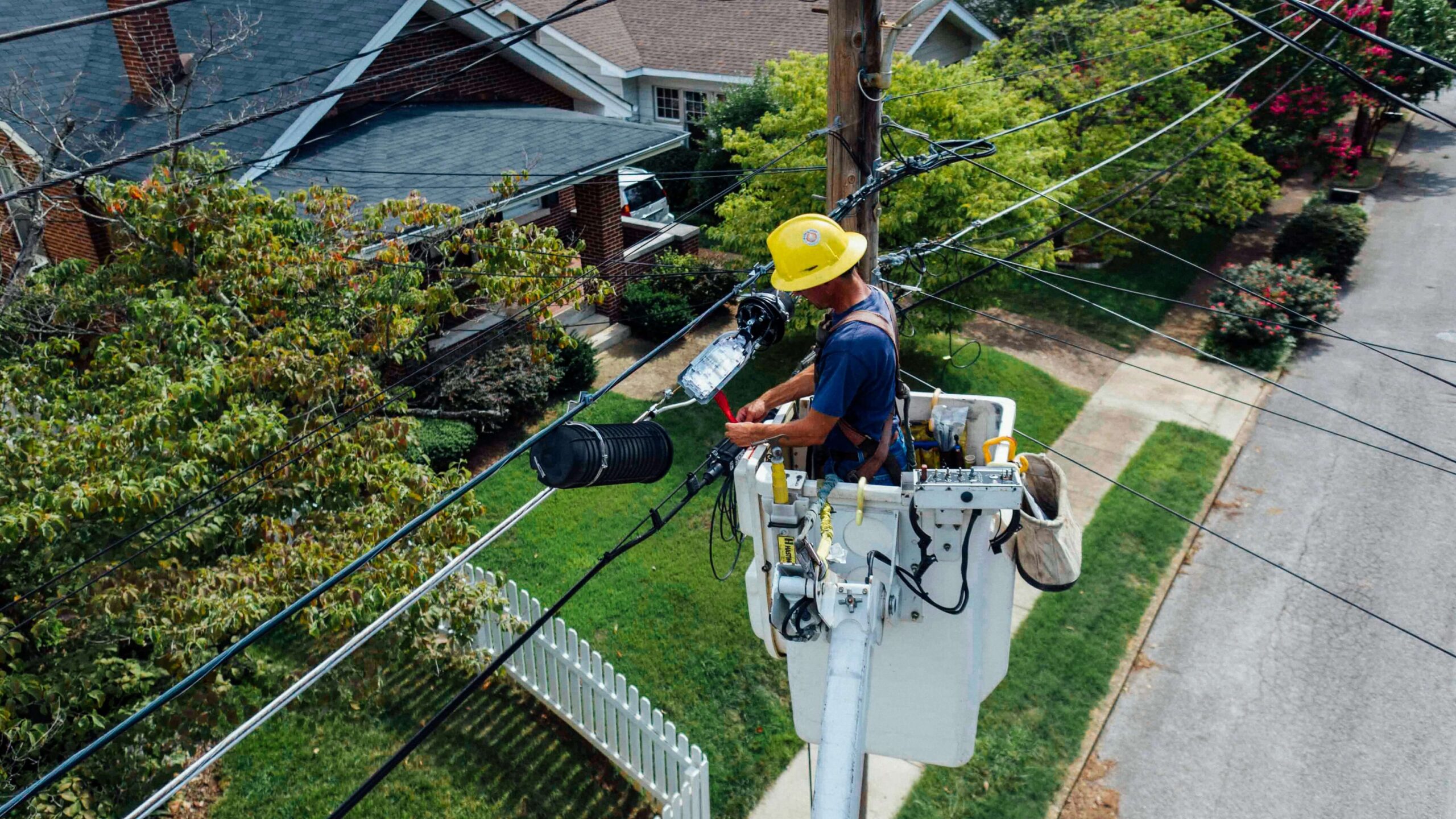
Career progression can move from field roles into estimating, project management, inspection, or training. An associate degree or business courses help at that stage.
Many jurisdictions require continuing education to renew licenses and keep up with updated electrical codes. The NEC updates roughly every three years; states adopt new editions with local amendments. Treat code update classes as a chance to build skills and stay current rather than a checkbox exercise.
How Long Does It Take to Become an Electrician (and What the Timeline Really Looks Like)
Most people need 4 to 5 years from their first apprenticeship day to a journeyman license, plus perhaps a year before that for schooling or GED completion. Electricians typically complete 8,000 to 10,000 hours of apprenticeship during that period.
A realistic example timeline:
| Stage | Timeframe | What Happens |
|---|---|---|
| Year 0 | Pre-apprenticeship | Finish high school or GED, take a trade school course |
| Years 1-5 | Registered apprenticeship | Accumulate 8,000+ OJT hours, complete related technical instruction |
| Year 5 | Licensing | Pass journeyman exam, earn electrical license |
| Years 8-10+ | Advanced career | Gain enough practical experience to qualify for master electrician |
Factors that speed up or slow down progress: availability of overtime hours, regional construction volume, state-specific hour requirements, and your ability to balance work with classroom instruction. Many adults start in their mid-20s, 30s, or later and still complete the path successfully, especially with flexible training and apprenticeship options.
Is Becoming an Electrician a Good Career in 2026?
Electricians remain in high demand because of aging infrastructure, data centers, EV charging installation, solar and battery storage projects, and steady new construction. The electrical industry is not slowing down.
Earning potential starts early: apprentices earn wages while training, and a licensed journeyman’s pay typically exceeds many entry-level office jobs. A master electrician or electrical contractor has a higher income ceiling still.
Non-financial benefits matter too: working with your hands, seeing tangible results, career stability, geographic mobility, and the satisfaction of protecting people through safe electrical systems. This is a good career by most measures.
Challenges are real: irregular hours on some commercial projects, physical wear over decades, and the constant need to learn as codes and technology evolve. Know what you are signing up for.
Why Choose a Structured Apprenticeship and Training Pathway
Structured, registered apprenticeship programs and formal training programs provide clear standards, trackable hours, and recognized credentials. That structure makes moving between employers and states far easier than an informal “helper” path where nothing is documented.
Advantages over informal routes: consistent exposure to electrical theory and code updates, documented OJT hours that satisfy licensing boards, and stronger preparation for journeyman and master electrician exams. Organized tracking of related technical instruction and hands on hours supports compliance with state and federal apprenticeship regulations.
A transparent, well-managed training program lets apprentices know exactly where they stand on the path from beginner to fully licensed professional. Students can see hours logged, competencies completed, and milestones ahead rather than guessing whether they qualify for the next step.
Next Steps: Move From Research to Action
You now understand the steps to become an electrician. Do not stay stuck in research mode. Here is what to do this week:
- Confirm your diploma or GED status. If you need a GED, enroll in a local program now.
- Brush up on algebra and basic geometry using a trade-focused math workbook.
- Research local trade school and apprenticeship programs; compare costs, schedules, and job placement rates.
- Bookmark your state licensing board website and note the specific hour and exam requirements.
- Attend an information session or open house at a nearby training provider or apprenticeship sponsor. Ask about enrollment dates, costs, and what the first month looks like.
After several years of structured hands on training and study, you hold an electrical license that provides stable income, geographic mobility, and a respected place in the skilled trades. Contact a local apprenticeship sponsor or training provider to start the conversation.
Want to Learn More About Your Registered Apprenticeship Opportunities?
BOOK A FREE CONSULTATION
Frequently Asked Questions About How to Become an Electrician
These questions reflect the most common concerns people raise before committing to this career path.
How hard is it to become an electrician if I’m not “good at math”?
You do not need advanced calculus. You do need comfort with basic algebra, fractions, and unit conversions for electrical theory and code calculations. Many successful electricians started out weak in math and improved through consistent practice tied to hands on tasks like calculating circuit loads.
Take a pre-apprenticeship math refresher course or use trade-focused math workbooks. Once you connect the math to real wiring and equipment, it clicks faster than it did in a classroom.
Can I become an electrician without going to trade school?
Yes. In many regions, you can enter a registered apprenticeship directly and complete all required classroom instruction through that program. Some employers prefer applicants who already have pre-apprenticeship or trade school training because they arrive with basic safety and tool knowledge, but it is not always mandatory.
Check local apprenticeship sponsors to see whether they accept beginners without prior schooling and what entry tests (aptitude exams, math assessments) are required.
How old is “too old” to start training as an electrician?
There is no upper age limit in most states. Many people interested in the electrical trade start in their late 20s, 30s, and even 40s. The real questions are physical capability, willingness to learn, and ability to handle multi-year training. Maturity, reliability, and prior work experience often make older apprentices attractive hires. Focus on maintaining fitness, stretching, and recovery habits to handle ladders, lifting, and general wiring tasks over long days.
Do I need to know the National Electrical Code before I apply for an apprenticeship?
No. Beginners are not expected to have the code memorized. Having basic familiarity with how the book is organized gives you a head start, but serious code study becomes important when preparing for the journeyman or master electrician exams, not on day one.
Watch introductory NEC overview videos and flip through a recent code book before your first interview. That small effort signals genuine interest.
Can a criminal record stop me from becoming an electrician?
Rules vary depending on state and type of offense. Some licensing boards restrict certain violent or fraud-related offenses more than others. Check your state licensing board’s published policies and, if possible, speak directly with a licensing specialist about your situation before investing years in a training program. Some apprenticeship sponsors and employers consider candidates case by case, especially when several years have passed and there is evidence of rehabilitation.
What’s the difference between an electrician and an electrical technician?
An electrician typically focuses on installing, repairing, and maintaining building electrical wiring and power systems, usually requiring a state license tied to the electrical code. An electrical technician more often works with equipment, controls, or industrial systems (such as PLCs, motors, and instrumentation) in manufacturing plants or labs.
Some training programs cover both tracks. Many people move between roles during their career depending on interest and local job markets in the electrical field.