Table of Contents:
Introduction: Why WIOA Data Reporting Software Matters in 2026
The Workforce Innovation and Opportunity Act-commonly known as WIOA-reformed federal workforce development programs when it was signed into law in 2014. The opportunity act replaced WIA and introduced unified state planning, common performance indicators, and stricter reporting requirements across titles I through IV. For Program Years 2024–2026, WIOA requires states to submit programmatic performance data to the Department of Labor, and the pressure on grantees to report accurately has never been higher.
If you’ve worked in this space, you already know the pain points. Fragmented spreadsheets, manual PIRL file creation, separate systems for tracking different programs, and a skeleton crew trying to meet quarterly deadlines for ETA-9173 reports, ETA-9130 financials, and state-level extracts. Staff spend more time wrestling with data than actually serving individuals who need help.
This is where wioa data reporting software comes in. A modern platform should automate intake, case management, and performance reporting across Titles I and III so your team can stop re-entering information into five systems and begin focusing on outcomes that matter.
Let’s be honest-some legacy portals feel like a puzzle requires google translate to understand. Dense screens filled with unexplained codes and schema jargon that force staff to disable google translate and still guess at what fields mean. GoSprout takes the opposite approach: an intuitive, English-first interface built for workforce innovation teams who need clarity, not confusion.
This guide is for workforce boards, American Job Centers, apprenticeship sponsors, school districts, and nonprofits that must comply with WIOA while also tracking apprenticeships, internships, and other work-based learning programs. If that sounds like you, keep reading.
Core Capabilities of Modern WIOA Data Reporting Software
A modern WIOA reporting system in 2026 needs to do three things well: consolidate case management across programs, automate performance calculations, and generate compliant files for RAPIDS, WIPS, and PIRL. These are no longer nice-to-have features. Failure to pass WIPS edit checks or produce correct PIRL schema uploads can delay funding, trigger audits, or worse-result in sanctions from your state workforce agency.
WIOA data reporting software manages participant data for compliance and performance tracking from the moment someone walks through the door. The best platforms standardize data collection for improved reporting efficiency so your staff can spend less time on spreadsheets and more time on services that change lives.
Automated Data Collection at Intake
The reporting chain starts at intake. When a participant applies, critical fields must be captured immediately: demographics, SSN, date of birth, barriers to employment, and eligibility indicators. WIOA data reporting software standardizes data collection by mapping online applications directly to PIRL elements.
Here’s what strong intake automation looks like:
- Online applications with e-signatures and document uploads (proof of eligibility, transcripts, certificates)
- Validation rules that flag missing SSNs, invalid date formats, or incomplete demographic fields before proceeding further
- Each step verifies that required PIRL elements match the correct schema version (2018, 2020, or 2021)
- Automated validation features in WIOA software check data for errors before submission, catching problems at the source instead of during quarterly upload
This prevents the cascading errors that plague organizations relying on manual entry. Instead of discovering bad data during a WIPS upload and scrambling to retry the submission, you catch problems at the point of entry.
WIOA data reporting software also assists in tracking supportive services like childcare and transportation, ensuring these wrap-around services are documented alongside core training activities. Without that link, audit trails break down and you lose visibility into the full picture of participant support.
Real-Time Dashboards for Performance Monitoring
WIOA identifies six primary performance indicators for measuring effectiveness across core programs. These WIOA performance indicators include employment rates and median earnings post-exit, along with credential attainment and Measurable Skill Gains (MSG). WIOA promotes accountability and transparency through these established performance indicators, and your software needs to surface them clearly.
Real-time dashboards in WIOA software monitor participant progress and program performance. Performance dashboards help organizations track key performance trends and make decisions based on current data rather than last quarter’s stale numbers. You should be able to filter by program type (Adult, Youth, Dislocated Worker), geography, funding source, and training provider.
For context on what national benchmarks look like for PY 2024:
| Indicator | Adults | Dislocated Workers | Youth |
|---|---|---|---|
| Employment Rate (Q2 after exit) | 72.2% | 69.0% | – |
| Credential Attainment | 73.6% | 75.1% | – |
| Measurable Skill Gains | 74.0% | 72.4% | 67.4% |
Real-time data access enables timely adjustments in program management. Organizations can monitor real-time participant outcomes for informed decisions-spotting a cohort falling behind on MSG before the quarter closes, for instance, rather than after it’s too late to adjust. Immediate access to data enhances accountability and transparency for everyone from frontline case managers to board directors. Real-time data access supports proactive management of program effectiveness rather than reactive audit preparation, and it enables data-driven decision-making at every level.

Built-In Compliance Logic and Edit Checks
WIPS applies multiple layers of validation: file format checks, allowable value checks, and duplicate record detection. Your software should embed compliance rules that mirror current ETA guidance letters (like TEGL 10-16 Change 2 for MSG rules) so you’re not manually cross-referencing PDF guidance documents while building your extract.
Good compliance logic includes:
- Alerts for participants approaching exit date without sufficient services or a credential on file
- Automated exit logic that prevents premature or delayed exits from distorting performance
- Flags for co-enrollment conflicts, missing activity codes, or invalid exit reasons
- Proceeding through submission only after all edit checks pass, reducing WIPS rejection rates
Admin staff should be able to modify the platform directly for compliance when state rules change or new TEGL guidance is released, without waiting on a vendor development cycle. The Participant Individual Record Layout (PIRL) is the schema used to report and analyze participation in WIOA, and your system must stay current with its evolving versions.
Data quality assurance in WIOA data reporting software enhances reliable performance measurement. If you can’t trust the data going in, you can’t trust the outcomes coming out.
Reporting Automation
The payoff of all this structured data collection is one-click (or close to it) generation of:
- WIPS-ready extracts formatted to the current PIRL schema
- State-specific reports for workforce boards and training providers
- Ad hoc dashboard views for board meetings, grant renewals, or funder presentations
- Exports to CSV, Excel, and secure APIs for state data warehouse integration
Software must also support grant lifecycle management and fiscal tracking, connecting programmatic performance to financial reporting so you can confirm that spending aligns with outcomes. This is especially important when managing multiple funding streams across workforce development programs.
Supporting Non-WIOA Funding and Programs
Here’s where many state systems fall short. Many state systems only track WIOA-specific data, leaving gaps when your organization manages apprenticeships, state grants, philanthropic funding, or employer-sponsored training alongside WIOA services. Existing state systems may hinder tracking of non-WIOA funding, forcing staff into parallel tracking systems.
Software should track non-WIOA participants and funding streams within the same platform. WIOA compliance software facilitates cross-program collaboration among workforce initiatives when it’s built to handle blended funding models. Otherwise, adding new software can lead to double data entry issues-one system for WIOA, another for apprenticeships, another for state grants.
It’s worth acknowledging the tradeoffs: investing in new technology incurs upfront costs and training expenses, and new platforms may complicate existing organizational processes in the short term. But the long-term reduction in manual work, error rates, and audit risk typically justifies the investment within a few reporting cycles.
Accessibility and Clear Language
Interfaces should use clear labels-“exit date,” “credential type,” “MSG”-with tooltips and context-sensitive help rather than jargon-heavy screens. Staff working with participants who are disabled or who speak languages other than English need a system that doesn’t create barriers. The goal is a platform where any trained workforce professional can navigate without needing a database administrator standing behind them, and where students and participants using self-service portals don’t hit walls of unexplained acronyms.
A participant portal reduces administrative workload for staff by letting individuals update contact information, upload documents, and track their own progress-freeing case managers for higher-value work.
How GoSprout Powers WIOA Reporting for Apprenticeships & Work-Based Learning
GoSprout is an all-in-one work-based learning platform built for Registered Apprenticeships, pre-apprenticeships, internships, and youth programs. Many of these programs run alongside or are co-enrolled with WIOA-funded services, and GoSprout is designed to handle that overlap without forcing staff to maintain separate systems for each funding stream.
Tracking OJT, RTI, and WIOA Records in One Place
For each apprentice, GoSprout tracks on-the-job training (OJT) hours, related technical instruction (RTI) hours, competency milestones, and wage progression tied to incremental wage steps. Where participants are also WIOA Title I or Title III enrollees, those apprenticeship records roll into the broader WIOA participant record automatically.
This matters because:
- No duplicate data entry across systems
- OJT and RTI hours feed directly into Measurable Skill Gains calculations
- Wage step data supports employment and median earnings reporting
- A single participant timeline shows WIOA services, apprenticeship milestones, and training activities together
One aviation industry sponsor used GoSprout to digitize over 500,000 apprentice records, making tracking dramatically more efficient and transparent. In an IT-support apprenticeship spanning four employers, GoSprout managed cohorts while letting supervisors log OJT hours, RTI providers sync grades, and administrators produce RAPIDS and WIPS-ready output from a single account.
Automated Reporting: RAPIDS, WIPS, and PIRL
GoSprout supports configurable exports for RAPIDS data (the DOL’s system for registered apprenticeship tracking) and builds WIPS-ready files using the correct PIRL schema. The platform supports PIRL versions 2018, 2020, and 2021-including apprenticeship-specific elements that became required as states moved to the 2020 schema.
Pre-built templates help workforce boards consolidate views across multiple providers, and state-specific report formats can be configured without custom development. When schema versions change, GoSprout ships updates so your team doesn’t need to manually remap 200+ data elements.
Collaboration Across Stakeholders
Work-based learning involves many parties: employers, schools and RTI providers, apprenticeship sponsors, case managers, mentors, and the apprentices or students themselves. GoSprout provides dedicated portals for each role:
- Employer portal: Verify OJT hours, review competency progress, approve milestones
- School/RTI portal: Upload grades, sync course completions, share attendance
- Apprentice/student portal: Log hours, complete assignments, upload documents via mobile app
- Case manager portal: View holistic participant records, run reports, manage services
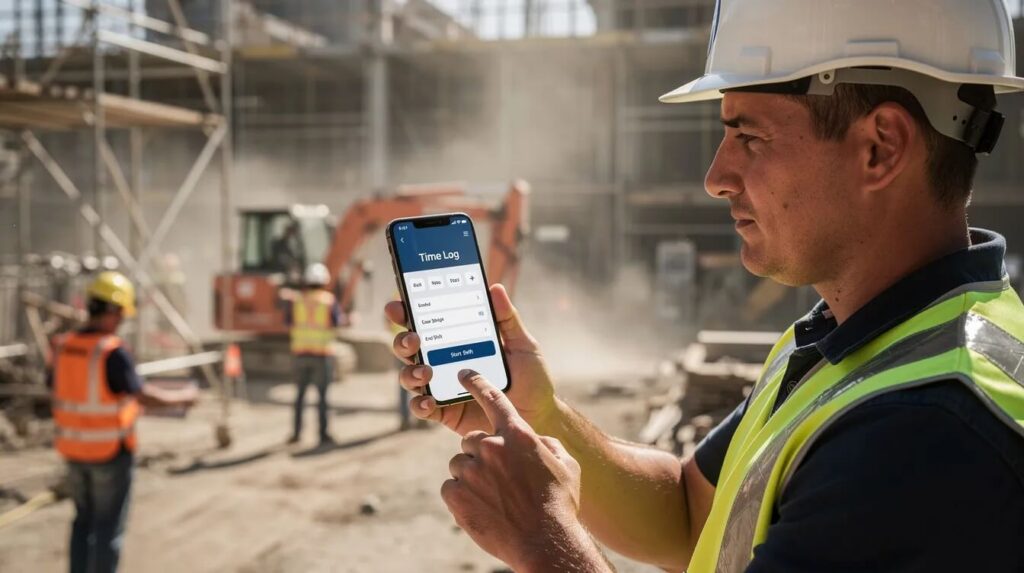
Secure messaging, document sharing, and mobile apps keep everyone in sync. When a supervisor confirms hours on their phone at the job site, that information flows into the participant record without a case manager having to re-enter it.
Scaling Programs Across Regions
GoSprout provides centralized curriculum and competency libraries so new apprenticeship occupations can be launched quickly with standard templates. Bulk enrollment tools allow organizations to spin up cohorts across employers or geographies, which is critical as demand for registered apprenticeships continues to grow in 2026.
This consistency means that whether you’re launching an apprenticeship in healthcare in one state or IT in another, the competency frameworks, reporting structures, and compliance workflows are standardized from day one.
Data Quality and Security
Protecting sensitive participant information is non-negotiable. GoSprout uses role-based permissions so staff only see data relevant to their function. Every edit generates an audit trail. Encryption protects data in transit and at rest. The platform supports compliance with FERPA for education records and relevant state privacy laws.
Every security check built into the platform-from login authentication to document access controls-exists to protect participants and meet the expectations of workforce and education agencies that handle sensitive information. Systems that prevent spam and bot access to participant portals also helps ensure data integrity, because a single compromised record can cascade into reporting errors.
When a system is designed to solve both apprenticeship tracking and WIOA compliance in one platform, the result is fewer systems to maintain, less manual reporting, and clearer outcomes to share with funders and audit bodies.
Frequently Asked Questions
What is WIOA data reporting software?
WIOA data reporting software is a platform designed to manage participant data for compliance with the Workforce Innovation and Opportunity Act. It handles intake, eligibility verification, service tracking, performance measurement, and the generation of required federal and state reports-including PIRL files, WIPS uploads, and quarterly performance reports. The goal is to replace fragmented spreadsheets and manual processes with automated, validated workflows that reduce errors and save time.
What are the six WIOA performance indicators?
WIOA identifies six primary indicators used to measure the effectiveness of core workforce development programs:
- Employment rate in the 2nd quarter after exit
- Employment rate in the 4th quarter after exit
- Median earnings in the 2nd quarter after exit
- Credential attainment rate
- Measurable Skill Gains (MSG)
- Effectiveness in serving employers (currently under pilot and subject to continuing refinement)
These apply across Title I (Adult, Dislocated Worker, Youth), Title III (Wagner-Peyser), Adult Education, and Vocational Rehabilitation programs.
Can WIOA data reporting software handle non-WIOA programs?
It should. Many organizations manage apprenticeships, internships, state-funded training, and philanthropic grants alongside WIOA. Software that only tracks WIOA-specific data forces staff into parallel systems and double entry. GoSprout, for example, manages registered apprenticeships, pre-apprenticeships, and internships in the same platform where WIOA participant records live-so a human complete picture of each individual’s journey is captured without extra work.
What happens if our data fails WIPS edit checks?
A temporary error during WIPS upload-such as an invalid date format, missing SSN, or duplicate record-will cause rejection of part or all of your submission. Without built-in validation, your team must manually identify and correct each error, then retry the upload before the deadline. Good WIOA software runs these edit checks before you ever hit submit, catching problems early. If a submission does encounter issues, the platform should clearly identify what failed and help you request the specific correction needed.
How does GoSprout help with RAPIDS reporting for apprenticeships?
GoSprout organizes apprentice data-demographics, OJT hours, RTI hours, wage steps, completions-in formats aligned with what the RAPIDS system expects. Rather than exporting from one system and reformatting in another, GoSprout produces RAPIDS-compatible outputs directly. This is especially valuable for sponsors managing large cohorts who need to explore efficient ways to stay current with DOL registration requirements.
Is WIOA data reporting software worth the investment for smaller organizations?
Investing in new technology does require upfront costs and staff training. But consider the alternative: staff burnout from manual reporting, audit findings from data errors, missed quarterly deadlines, and the inability to demonstrate outcomes to funders. Even smaller workforce boards and nonprofits find that a purpose-built platform pays for itself within a few reporting cycles through reduced errors, faster submissions, and better visibility into program performance.
Why Choose GoSprout
GoSprout was built specifically for the intersection of apprenticeship management and workforce compliance. That focus matters because most platforms do one or the other-they’re either a learning management system trying to bolt on compliance features, or a state reporting portal with no understanding of how work-based learning actually operates on the ground.
Here’s what sets GoSprout apart:
- Single platform for WIOA and apprenticeship tracking: No more toggling between systems for OJT logs, RTI grades, PIRL elements, and RAPIDS data
- Schema-current reporting: GoSprout supports PIRL 2018, 2020, and 2021 schemas and ships updates when federal requirements change
- Stakeholder portals that reduce admin burden: Employers, schools, mentors, and apprentices each have role-appropriate access to enter and verify their own data
- Audit-ready by design: Role-based permissions, edit audit trails, encryption, and FERPA compliance are built in-not afterthoughts
- Support team with workforce expertise: GoSprout’s team understands WIOA compliance, registered apprenticeship standards, and state-level variations-so when you call with a question about MSG calculations or PIRL element mapping, you get a real answer
For organizations continuing to scale work-based learning in 2026, GoSprout eliminates the friction between running great programs and proving they work.
Take the Next Step
Accurate WIOA reporting doesn’t have to drain your staff’s time or keep you awake the night before quarterly deadlines. The right wioa data reporting software turns compliance from a burden into a strategic advantage-letting you focus on the individuals and communities your programs serve.
If you’re ready to explore what streamlined reporting, real-time dashboards, and unified apprenticeship tracking look like in one platform, reach out to GoSprout. Request a demo, see the PIRL exports and WIPS-ready extracts for yourself, and find out how your team can reclaim the hours currently lost to manual data wrangling. Your participants deserve a program that runs smoothly-and so does your staff.