Table of Contents
- Introduction: Why Immersive Learning Matters for Workforce Training in 2026
- What Is Immersive Learning?
- Types of Immersive Learning (Virtual Reality, VR, AR, Simulations, and More)
- Benefits of Immersive Learning for Employers and Learners
- Industries Using Immersive Learning Today
- How AI Is Transforming Immersive Learning
- How to Build an Immersive Learning Strategy in Your Organization
- Measuring the Success of Immersive Learning Programs
- Future Trends in Immersive Learning and Workforce Development
- Frequently Asked Questions About Immersive Learning
- Why Choose GoSprout for Immersive, Work-Based Learning
- Next Steps: Bring Immersive Learning Into Your Apprenticeship and Training Programs
Introduction: Why Immersive Learning Matters for Workforce Training in 2026
Picture a manufacturing apprentice stepping into a virtual production floor, navigating forklift hazards and lockout/tagout procedures before ever touching real equipment. That is immersive learning in 2026, and it is replacing the paper workbooks and slide decks that employers have relied on for decades.
Immersive learning is an educational methodology that utilizes interactive technologies like virtual reality, augmented reality, simulations, and digital twins to create realistic, repeatable learning experiences. Instead of passively reading about a task, learners practice skills, make decisions, and see consequences in environments that mirror their actual jobs.
Employers, schools, and apprenticeship sponsors are moving beyond traditional training because the old model fails on transfer. Slide-based eLearning checks a compliance box but rarely changes on the job performance. Meanwhile, skills gaps keep widening, regulatory requirements get stricter, and new hires need to be productive faster.
Today, AI, simulations, and extended reality combine to create immersive learning environments where an apprentice, intern, or employee can rehearse real world scenarios safely and repeatedly. This guide covers everything you need to know: the types and benefits of immersive learning, the industries adopting it, how AI amplifies it, and how to build a strategy that connects to measurable workforce outcomes.
What Is Immersive Learning?
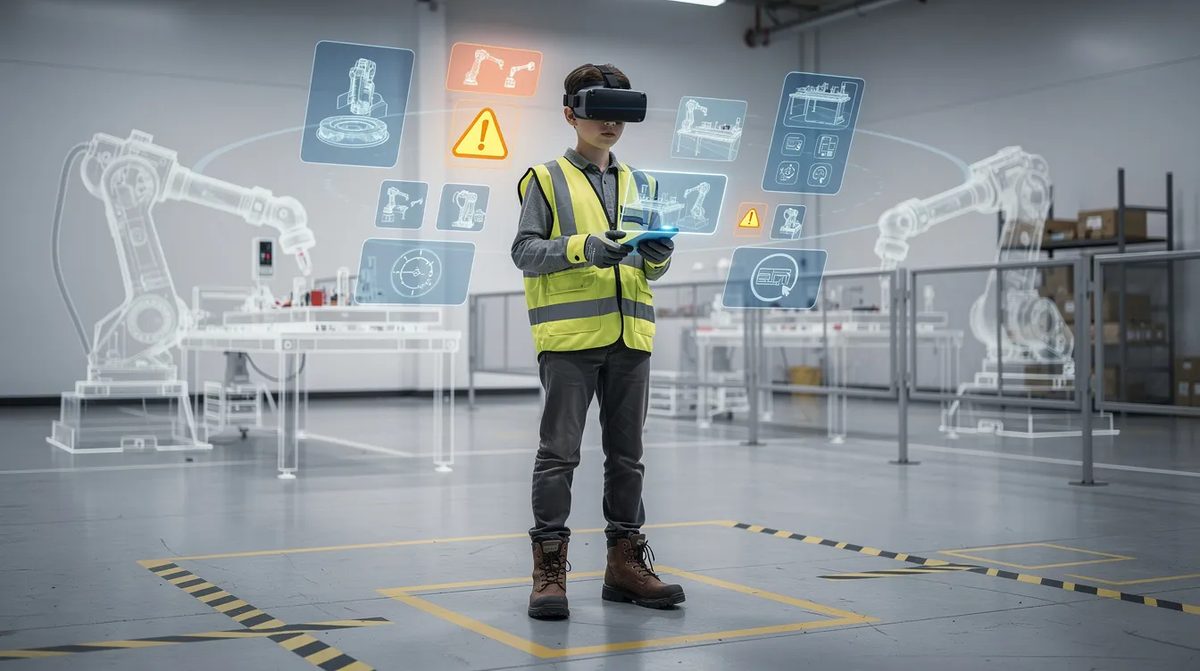
Immersive learning is an educational approach that places learners inside realistic, interactive environments so they can build job-ready skills through direct experience rather than observation. These immersive learning experiences can be fully digital (a VR headset simulation), blended (AR overlays guiding a technician on a live job site), or physical (structured on-the-job simulations with coaching). The common thread is high engagement: learners feel present, make real decisions, and receive feedback that shapes future behavior.
This approach aligns with experiential learning theory and applies across digital learning, corporate training, and higher education. It bridges the gap between completing a course and actually performing on the job. Immersive learning supports active participation, critical reflection, and structured coaching, all of which we will explore in depth below.
Definition
Immersive learning is a training methodology that uses realistic simulations, interactive or spatial environments, and experiential learning principles to let people practice real-world tasks in controlled settings. Immersive learning uses VR, AR, and MR technologies, but it is less about specific devices than about how deeply a learner is pulled into authentic tasks, decisions, and consequences tied to their role.
Immersive learning environments can range from headset-based virtual reality VR experiences to mobile simulations used on a construction site or inside a registered apprenticeship program. What matters is whether the learning process requires the learner to act, not just watch.
How It Differs from Traditional Learning
Traditional education and training rely heavily on lectures, PDFs, and slide-based eLearning. Learners sit as passive recipients of information. The measurement? Completion rates and quiz scores. The problem? Minimal transfer to the job.
Immersive learning flips this model. Instead of reading about a safety protocol, an apprentice navigates a 3D forklift simulation, encounters hazards, and gets instant feedback on every decision. This is the difference between theoretical knowledge and practiced competence. Traditional methods measure whether someone finished a module; immersive learning measures whether someone can actually perform.
This distinction matters most in work-based learning and apprenticeship contexts, where the whole point is preparing someone for real world practice. When OJT and RTI are the backbone of a program, the learning activity itself must connect directly to what happens on the shop floor or job site.
Why It Works: Knowledge Retention in Immersive Learning
The science behind immersive learning draws from behavioral and cognitive science. When learners feel physically present in a scenario, their brains encode the experience more like a real memory than like reading text on a screen. Multi-sensory, spatially anchored experiences activate neural pathways similar to actual events, which is why immersive learning environments improve knowledge retention significantly.
The numbers back this up. VR learners complete training up to four times faster than their classroom counterparts. Immersive learning improves retention rates by 75% compared to traditional methods. Learners are 4 times more focused during VR training than traditional methods, and immersive learning increases focus by 4 times compared to traditional methods overall. Learning through immersive methods allows for deeper connections to material because the emotional engagement mirrors real life stakes.
Immersive learning enhances the understanding of complex subjects by visualizing them in three dimensions, making abstract procedures concrete. For workforce programs, this translates directly into fewer safety incidents, faster time-to-productivity for apprentices, and more consistent performance across locations.
Types of Immersive Learning (Virtual Reality, VR, AR, Simulations, and More)
Immersive learning spans a spectrum from fully virtual to on-the-job digital aids. Here is how each modality works in practice:
- Virtual Reality (VR): Headsets like Meta Quest 3 or HTC Vive transport learners into a fully simulated environment or virtual world. VR is ideal for safety training, technical procedures, and soft skills practice such as customer escalation role-plays. VR learning delivers the highest sense of presence, which is why vr training has a retention rate of 75%.
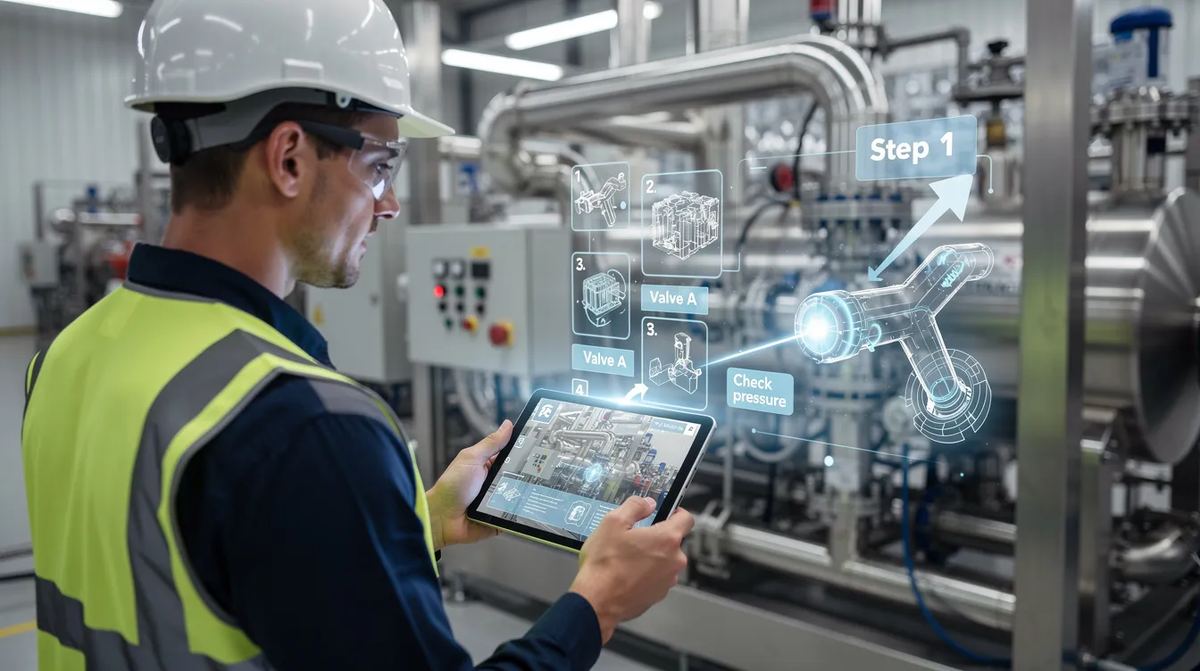
- Augmented Reality (AR): AR enhances real-world environments with digital content overlaid via smartphones, tablets, or smart glasses. On a shop floor, AR can show step-by-step assembly instructions, highlight hazard zones, or label equipment components in real time. Augmented reality AR works well when learners need guidance in real world environments.
- Mixed Reality / Extended Reality (XR/MR): Mixed reality blends physical and virtual objects so workers can interact with digital elements anchored to the physical world. Microsoft HoloLens, for example, lets a technician see a digital blueprint overlaid onto an actual machine during maintenance.
- Simulation-Based Learning: Software simulations replicate equipment, processes, or systems without requiring headsets. Simulation-based training involves interactive scenarios where learners make decisions on a desktop, tablet, or phone, such as running a virtual production line or practicing a customer service call in a simulated environment.
- Scenario-Based Learning: Branching decision trees and role-plays build problem solving skills and soft skills. Role-playing in immersive learning helps develop soft skills through realistic scenarios like handling a compliance issue or leading a difficult conversation.
- Digital Twins: A virtual replica of a factory, store, or vehicle used to rehearse procedures, plan routes, or optimize maintenance. Digital twins let teams interact with virtual objects representing real assets.
- Gamification: Points, levels, challenges, and leaderboards drive deeper engagement in compliance, onboarding, and RTI modules. Even a simple mobile game format for safety quizzes can improve completion and recall.
Additional immersive learning methods include project-based learning, fieldwork, and 360-degree videos that allow users to explore environments from all angles. GoSprout can host, track, or integrate with these immersive tools inside broader apprenticeship and internship pathways.
Benefits of Immersive Learning for Employers and Learners
Immersive learning benefits both sides of the work-based learning equation. Here is what employers, sponsors, and learners gain.
For Employers
- Better retention and fewer re-trains: Immersive learning environments can simulate real-world situations without real risks, so learners build competence before they touch equipment. Companies use immersive training to onboard new hires effectively, reducing re-training cycles and refresher time. A Forrester study commissioned by Meta found enterprise VR training returned 219% ROI over three years.
- Faster onboarding: Immersive learning can lead to 40% faster upskilling compared to classroom-only approaches. Siemens trained over 25,000 electrical apprentices using XR and saw a 70% reduction in time to proficiency.
- Safer training: High-risk tasks like confined space entry, working at heights, or lockout/tagout can be practiced in virtual environments before employees are near real hazards.
- Higher engagement and scalable cost efficiency: Immersive modules can be reused across cohorts and locations. Students report higher motivation and engagement through immersive experiences, and tracking happens centrally in platforms like GoSprout.
For Learners
- Active participation: Active engagement transforms learners into participants rather than observers. Instead of watching a video, an apprentice drives the scenario and learns from mistakes in a risk-free environment. Active participation enhances knowledge retention by 75%.
- Skill development and confidence: Learners are 40% more confident applying skills learned in VR. Repeated practice on realistic situations builds both competence and self-belief, especially for underrepresented or first-generation workers entering a trade.
- Knowledge retention: Immersive learning improves knowledge retention by 75%, and improves skill application by 27% compared to traditional methods. Immediate feedback accelerates skill development in immersive learning, helping learners correct errors before habits form.
- Broader applications: Immersive learning enhances soft skills like customer service and leadership. It also supports language learning, communication across cultures, and even preparation for job interviews through realistic practice.
Technology-enhanced learning environments help students overcome learning obstacles by adapting to individual learners needs and letting each person work at their own pace.
Industries Using Immersive Learning Today
Immersive learning can be used across various fields including medicine and education, and by 2026, adoption has moved from pilot to standard practice in several major sectors. Immersive technologies are increasingly common in schools and corporate training alike.
- Healthcare: Medical training uses VR to simulate high-stakes environments safely. Medical students and nursing apprentices practice surgical procedures, diagnostic reasoning, and patient communication in virtual environments before clinical rotations. Medical schools increasingly use immersive simulations for teaching situational awareness and situational awareness under pressure.
- Manufacturing: Digital twins of production lines, AR-guided assembly, and VR safety modules are standard for equipment like forklifts, CNC machines, and robotic cells. Merck used immersive simulations to cut training time by 15× and reduce errors by 97%.
- Construction: AR overlays on-site safety zones, virtual crane operations, and mixed reality walkthroughs help apprentices interpret blueprints and recognize risk factors before they step onto a live site.
- Retail and Hospitality: Customer service scenarios, conflict de-escalation, and upselling practice use scenario-based learning. McDonald’s deployed AR-powered frontline training to achieve day-one readiness for new hires.
- Technology and IT: Cyber-range simulations and incident response drills let engineers and support staff practice problem solving and troubleshooting in sandboxed networks.
- Public Safety: Fire, EMS, and law enforcement use VR/AR to simulate rare, high-stakes incidents. These realistic simulations support community engagement exercises and critical thinking under pressure.
- Education and Higher Education: 71% of educators believe immersive technology improves engagement. Colleges, high schools, and CTE programs integrate virtual labs, immersive education tools, and workplace simulations aligned with career pathways. Education immersive learning platforms are reshaping teacher training and how students learn in real world context. Immersive learning encourages students to actively participate rather than passively consume.
Sponsors and workforce boards can coordinate immersive learning placements and RTI across these industries using platforms like GoSprout’s apprenticeship management system.
How AI Is Transforming Immersive Learning
AI is the engine that makes immersive learning technology adaptive, scalable, and data-rich, not just flashy hardware.
- Adaptive learning: AI adjusts scenario difficulty, branching paths, and pacing based on learner behavior. If an apprentice keeps missing a step, the system provides more practice on that specific task, addressing individual learners needs automatically.
- AI coaching: Virtual coaches powered by AI deliver real-time feedback on language, tone, decision quality, or safety compliance within simulations. This enables continuous coaching even without a human mentor present, supporting the learning experience at scale.
- Personalized training paths: AI uses performance data from immersive sessions to recommend the next module, microlearning resource, or OJT task. Each learner follows a path shaped by their demonstrated skills, not a one-size-fits-all schedule.
- Skills assessments: AI-driven diagnostics evaluate not just right or wrong answers but timing, sequence, and decision rationale. This supports critical reflection on performance, helping learners develop deeper understanding and problem solving skills.
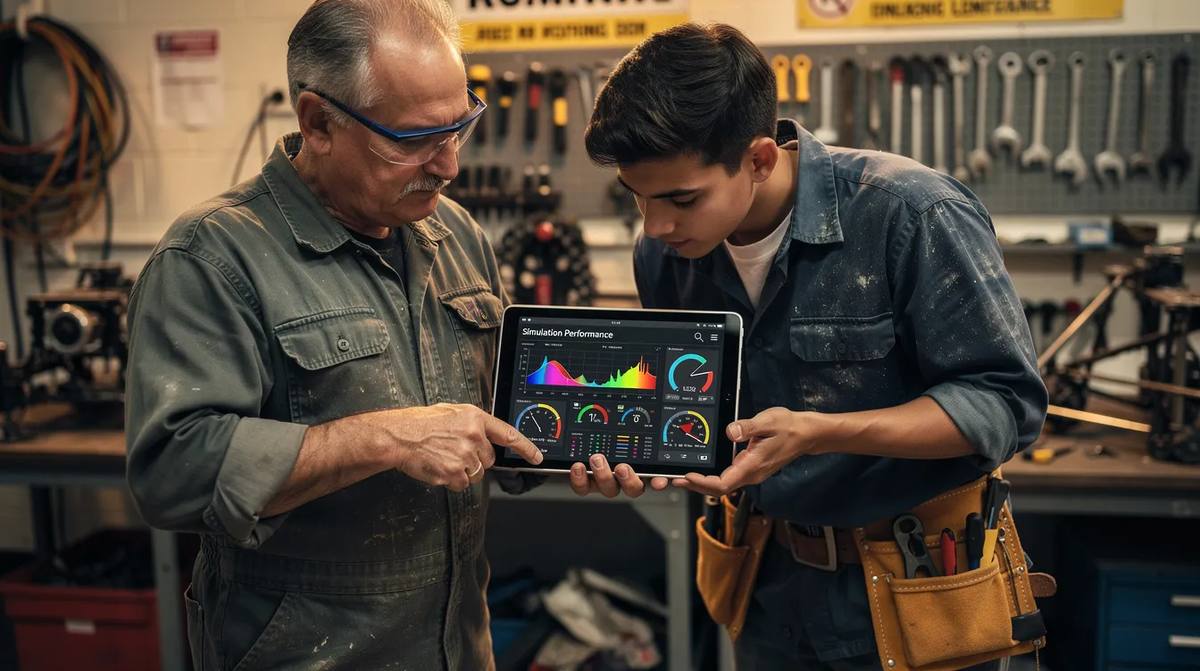
- Analytics and dashboards: Managers, mentors, and apprenticeship coordinators see aggregate and individual performance through competency heat maps, risk scores, and pass/fail trends. A registered apprenticeship sponsor could use these insights to prove skill attainment to regulators or meet compliance reporting requirements.
AI-authored immersive content is also emerging. Tools like FLOWTrainer use large language models to help non-technical educators create immersive lesson plans aligned with learning objectives, lowering the barrier for smaller organizations.
How to Build an Immersive Learning Strategy in Your Organization
Immersive learning requires careful planning to meet learner needs and deliver measurable outcomes. Build your strategy around business goals, not gadgets.
- Clarify goals and use cases. Target one to three high-impact pain points: a high-incident area, complex equipment, costly onboarding errors, or customer complaints. Effective design principles of immersive learning include active participation and immediate feedback, so choose use cases that benefit from hands-on practice.
- Map competencies and standards. Align immersive activities with apprenticeship competency frameworks, job standards, and compliance requirements. Backward design ensures each module ties to a verified learning outcome.
- Choose modalities and tools. Match the modality to the risk, budget, and learner access. Full VR for high-hazard procedural tasks; browser-based simulations or AR for lower-cost entry points. Immersive tools and virtual tools should match your operational context.
- Integrate with existing systems. Immersive modules should sit alongside RTI courses, microlearning, and assessments with a single system-of-record like GoSprout for tracking hours and competencies. Without integration, data becomes siloed.
- Design learner-centric experiences. Keep sessions focused (10–20 minutes), build scenarios from actual workplace incidents, and ensure accessibility for different abilities and tech comfort levels. Computer generated images should look realistic enough to support learning, not distract from it. Immersive interfaces should be intuitive, not intimidating.
- Pilot, iterate, and scale. Run a small pilot with one location or cohort for 60–90 days. Collect data on performance, learner feedback, and operational KPIs before rolling out broadly.
- Enable facilitators and mentors. Supervisors and journey workers should coach learners before and after immersive sessions, connecting the simulated environment to real shifts. Without this reinforcement, transfer to real world situations weakens. This learning activity works best when mentors and technology support learning together.
Measuring the Success of Immersive Learning Programs
Immersive learning must demonstrate ROI to earn ongoing investment, especially in apprenticeship and workforce development budgets. Here is what to track.
| Category | Key Metrics |
|---|---|
| Speed | Time-to-competency, days to full productivity |
| Quality | Error rates, quality defects, safety incidents |
| Engagement | Completion rates, voluntary replays, session duration, student engagement scores |
| Retention | Performance at 30, 60, and 90 days post-training via scenario re-runs or on-the-job observations |
| Competency | Skills checklists, proficiency levels, supervisor sign-offs synced with immersive data |
| Business outcomes | Fewer safety claims, reduced scrap, faster onboarding, lower turnover |
| Compliance | Training hours logged, verified skill practice documented for RAPIDS/WIPS/PIRL reporting |
Detailed records from immersive modules streamline compliance reporting by capturing not just hours completed, but demonstrated competence, decision logs, and error patterns. Learning outcomes become visible and defensible.
Future Trends in Immersive Learning and Workforce Development
2026 is a tipping point. Immersive learning is converging with AI, XR, and skills-based hiring to reshape training and credentialing.
- AI + XR convergence: Extended reality environments will increasingly be AI-driven, generating adaptive scenarios and real-time feedback customized per learner. Expect AI to create new branching scenarios automatically, simulating rare incidents on demand.
- Skills-based hiring and promotion: The shift from degree-first to skill-first hiring means performance in immersive simulations becomes evidence for selection and advancement. Employers care about what you can do, not just what you studied. Traditional education credentials alone no longer suffice.
- Microcredentials and digital credentials: Verifiable, skills-based badges tied to performance in simulations and apprenticeship milestones will gain traction, shareable via digital wallets and recognized by licensing bodies and trade associations.
- Accessible, no-headset options: Browser-based 3D, 360° media, and mobile simulations make immersive learning viable without expensive hardware. This makes immersive experiences accessible to smaller organizations and rural training programs.
- Integration with work-based learning ecosystems: Platforms like GoSprout will connect immersive learning, OJT tasks, classroom RTI, and labor market data into a unified talent pipeline, making learning programs more coherent and measurable.
Start small now so your organization is ready as these trends become standard expectations from workers, regulators, and funders.
Frequently Asked Questions About Immersive Learning
Here are answers to the most common questions from employers, schools, and sponsors considering immersive learning for apprenticeships and workforce training.
What is immersive learning?
Immersive learning is an experiential learning approach that uses realistic, interactive environments such as VR, AR, and simulations to let learners practice real-world tasks safely. It is used in both digital learning and hands-on work-based learning to build practical job skills, going beyond theoretical knowledge to develop demonstrated competence in real world situations.
How does immersive learning work in practice?
Learners enter a scenario, such as a virtual job site or customer interaction, receive a goal, make decisions, and see immediate consequences. Feedback and coaching are built into the experience. Performance data is captured and can be tied to competencies and OJT records in systems like GoSprout, creating a documented learning experience linked to real world practice.
What industries use immersive learning the most?
Top adopters include healthcare (surgical and diagnostic simulations), manufacturing (digital twins, equipment training), construction (AR safety overlays), retail (customer service scenarios), public safety (incident response drills), and higher education and CTE programs. Any industry with safety-critical tasks or complex equipment can benefit.
Is VR required for immersive learning?
No. VR is powerful but not mandatory. Immersive learning can use AR on smartphones, browser-based simulations, digital twins, and scenario-based eLearning. Smaller organizations can start with web-based or mobile formats and scale to headsets as ROI is proven. Choose modalities based on budget, risk level, and learner access.
What is simulation-based learning?
Simulation-based learning replicates systems, equipment, or interactions in a controlled digital environment where learners can practice repeatedly. Examples include running a virtual production line, practicing a customer escalation call, or navigating a cyber-incident drill. Data from these simulations informs coaching and tracks competency development.
How does AI improve immersive learning?
AI personalizes scenarios, delivers real-time coaching, and analyzes performance at scale. It automates reporting, identifies skill gaps, and recommends next training steps within platforms like GoSprout. AI also reduces content creation barriers through tools that help educators build immersive modules aligned with specific learning objectives.
Is immersive learning actually effective?
Yes. Research consistently shows higher knowledge retention, faster upskilling, increased learner confidence, and better on the job performance compared to lecture-based training. A Cambridge study confirmed strong retention across both headset-based and desktop VR. Validate effectiveness through your own pilot metrics and business outcomes.
How much does immersive learning cost?
Cost drivers include content development, hardware (if any), platform licenses, and facilitator time. Initial projects can range from $200,000 to $900,000 depending on complexity. Start with lower-cost options like web simulations or 360° tours, then scale to full VR or digital twins as ROI is proven. Per-learner costs drop steeply in recurring or large-cohort training programs.
How do employers implement immersive learning without disrupting operations?
Use short, scheduled practice blocks (10–20 minutes), pre-shift or post-shift sessions, and combine immersive modules with existing RTI classes. Platforms like GoSprout manage scheduling, track OJT vs. RTI hours, and ensure training aligns with production needs so operations continue smoothly.
What technology supports immersive learning?
Core components include content (VR/AR apps, simulations, scenario modules), delivery devices (headsets, PCs, tablets, phones), and an apprenticeship or learning platform to track progress. Favor interoperable solutions that integrate with your LMS, HRIS, or apprenticeship management tools rather than running standalone pilots that create data silos. Digital environments and immersive interfaces should connect to your existing training ecosystem.
Why Choose GoSprout for Immersive, Work-Based Learning
GoSprout is a work-based learning and apprenticeship management platform that makes immersive learning practical, trackable, and compliant. While immersive tools deliver the learning experience, GoSprout connects those experiences with OJT and RTI tracking, competency management, and automated compliance reporting for RAPIDS, WIPS, and PIRL.
GoSprout supports immersive learning environments through integration with XR and simulation tools, mobile apps for apprentices, real-time dashboards for sponsors and employers, and collaboration spaces for mentors, schools, and employers. Whether a regional healthcare system is tracking VR simulations for nursing apprentices or a manufacturer is layering digital twins into a registered apprenticeship curriculum, GoSprout provides the connective tissue that ties immersive training to verified skill attainment.
For organizations scaling immersive learning across multiple locations, cohorts, and partner schools, GoSprout reduces administrative overhead and ensures every learner’s progress is documented, visible, and defensible.
Next Steps: Bring Immersive Learning Into Your Apprenticeship and Training Programs
Immersive learning delivers higher engagement, stronger knowledge retention, and better workforce outcomes when tied to clear goals and the right platform. The evidence is consistent: learners train faster, retain more, and perform better when they practice in realistic, feedback-rich environments instead of sitting through slides.
Start by identifying one priority use case, whether that is safety, onboarding, or soft skills, and design a small immersive learning pilot aligned with your apprenticeship or internship program. Involve key stakeholders early: L&D, operations, HR, school partners, and apprenticeship sponsors all need to be part of the conversation for smoother adoption.


