Table of Contents
- Introduction: Why Immersive Learning Matters
- What Is Immersive Learning?
- Why Immersive Learning Works
- Types of Immersive Learning Experiences
- From Passive Learning to Experiential Learning
- Immersive Learning in High-Risk and High-Cost Environments
- Beyond Hard Skills
- How AI Is Transforming Immersive Learning Technology
- Building an Immersive Learning Strategy
- Measuring Success: From Engagement to Business Impact
- Future Trends
- FAQs
- Why Choose GoSprout
- Next Steps
Introduction: Why Immersive Learning Matters for Workforce Development in 2026
Five years ago, immersive learning was a novelty. Pilot programs popped up at a handful of large enterprises, mostly for press releases and innovation showcases. By 2026, that has changed completely. In workforce development, immersive learning means experiential training where employees actively practice realistic tasks in interactive digital or blended environments such as VR, AR, simulations, mixed reality, and digital twins, with the goal of improving job performance, safety, and skill retention. The global immersive training market was valued at USD 16.4 billion in 2024 and is on pace to reach USD 69.6 billion by 2030. This is not hype spending. It reflects a structural shift in how organizations prepare employees for real work.
The drivers are concrete: persistent skills shortages in manufacturing, healthcare, utilities, and the skilled trades. Stricter safety compliance requirements. A post-COVID workforce that expects flexible, digital learning experiences. And a growing realization that passive learning-slide decks, compliance PDFs, one-and-done webinars-does not translate into job performance when workers face real world complexity.
Immersive technology, including virtual reality (VR), augmented reality, mixed reality, digital twins, and simulation-based modules, gives workers a way to practice responding to real world situations in safe environments before they touch live equipment or interact with customers. For employers, training providers, apprenticeship sponsors, workforce development leaders, and organizations managing or scaling registered apprenticeship, pre-apprenticeship, or internship programs, that makes immersive learning a practical response to skills gaps, compliance pressure, and the need for stronger job readiness. This article explains the main immersive learning modalities, where they work best in high-risk industries, how they fit into apprenticeships, internships, and other workforce development programs, where AI changes design and delivery, how to build a strategy and measure results, what trends are shaping the next five years, and how GoSprout supports the management of immersive learning at scale. It is written for readers who need practical guidance, not buzzwords.
What Is Immersive Learning? (And How It Differs from Traditional Training)
Immersive learning is an experiential learning approach where workers practice real-world tasks inside interactive digital or blended environments rather than passively consuming information. It spans fully immersive virtual reality simulations, augmented reality overlays on real equipment, desktop or mobile scenario-based modules, and digital twins that mirror physical systems.
What makes it different from traditional training is the role of the learner. In a standard eLearning course, you click through slides and answer quiz questions. In an immersive environment, you make decisions, see consequences, and adjust your approach-much closer to what actually happens on a job site or a clinic floor. Branching scenarios in training allow learners to make choices that affect outcomes, building the kind of judgment that no multiple-choice test can measure.
This approach aligns directly with experiential learning theory: concrete experience leads to reflection, which leads to conceptualization and then experimentation. The result is job-ready competence-not just theoretical knowledge stored temporarily for a quiz. Immersive learning is also modality-agnostic. Whether you use VR headsets, browser-based 3D, a mobile AR app, or a desktop simulation, the defining feature is active participation and meaningful feedback tied to real tasks.
Why Immersive Learning Works: Knowledge Retention, Confidence, and On‑the‑Job Performance
The case for immersive learning rests on how human brains actually encode and retrieve information. Multi-sensory engagement in immersive learning leads to higher long-term retention rates because learners see, hear, and physically interact with the content rather than just reading about it. Research shows that immersive learning improves retention rates by 75% compared to traditional methods, and VR learners complete training up to four times faster than classroom learners. Learners are also four times more focused during VR training than during traditional methods, because the immersive environment eliminates the distractions of a shared classroom or a browser tab.
Immersive training creates muscle memory and cognitive mapping similar to real world practice. When a new maintenance technician practices lockout/tagout steps inside a virtual plant, they build neural pathways for the exact sequence of actions-check energy source, apply lock, verify de-energization-so that when they face the real task, the steps feel rehearsed rather than foreign. Immediate feedback is crucial in immersive learning to correct mistakes and foster skill development; the system flags errors in the moment rather than weeks later during a performance review.
Gamified challenges enhance engagement and retention in training programs by turning repetitive drills into scored, competitive practice. Spaced practice is an effective immersive learning strategy for enhancing skill retention-spreading sessions across days or weeks instead of cramming them into a single workshop. The result: workers build confidence because they have already succeeded at the task multiple times before facing it in the physical world. Immersive learning environments enhance knowledge retention through active participation, closing the gap between knowing something in theory and doing it under pressure.
Types of Immersive Learning Experiences Used in Workforce Development
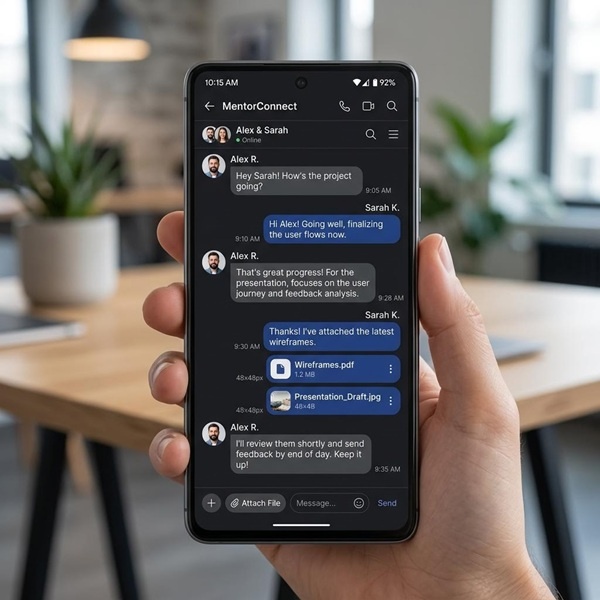
Organizations rarely rely on a single format. Most blend several immersive technologies into immersive environments based on risk level, budget, and learner access. Here are the primary modalities in use across workforce training programs today:
- Virtual reality (VR) simulations fully immerse learners in a virtual world-a digital production line, a hospital ward, or a construction site. Interactive training strategies include VR simulations that replicate high-risk work environments where errors in the physical world would be dangerous or costly. VR environments are ideal for high risk scenarios like confined-space entry, chemical handling, or emergency shutdowns.
- Augmented reality (AR) overlays project digital instructions onto real equipment through tablets, phones, or smart glasses. Augmented reality job aids help employees by overlaying digital instructions during tasks, making them ideal for complex equipment assembly, wiring, and field maintenance.
- Desktop and mobile simulations, including 360-degree video, offer lower-cost, high-scale options for scenario-based decision-making without dedicated VR headsets. These are well-suited for soft skills training, customer escalation practice, and compliance modules.
- Digital twins replicate real facilities or equipment virtually, enabling advanced rehearsal of procedures, emergency responses, and process changes before rollout. Manufacturing employs digital twins for equipment training and safety, and healthcare organizations use them to model clinical workflows.
Immersive learning enhances understanding of complex subjects by visualizing them in 3D, whether it is the interior of an HVAC unit or the layout of a distribution center. All of these modalities fit into broader work-based learning pathways-apprenticeships, internships, OJT milestones-by tying immersive simulations directly to defined competencies.
From Passive Learning to Experiential Learning: Overcoming the Limits of Traditional Training
Traditional training methods rely on passive learning methods like lectures and slides, while immersive approaches move learners from observation into active practice. In 2026, too many workforce programs still default to long compliance modules, sporadic classroom sessions, and unstructured job shadowing. Passive observation may transfer awareness, but it does not build performance in complex or safety-critical roles.
The hidden costs of traditional methods are substantial. When a senior technician stops work to mentor a new hire one-on-one, the line loses output. When training quality varies by instructor or site, competency gaps become invisible until something goes wrong. Immersive training allows learners to practice skills in realistic scenarios without any of these operational disruptions. Safe practice zones in immersive learning allow learners to make mistakes without real world consequences-which is exactly how people learn fastest.
Standardized immersive scenarios can be reused across multiple locations, reducing training time and capturing identical performance data for every learner while reducing trainer hours. Immersive learning enhances focus by four times compared to traditional methods because learners are making decisions under realistic pressure, not passively watching a presenter. And experiences that would be impossible to stage-disaster drills, rare equipment faults, peak-season customer rushes-become repeatable practice sessions that compress months of on-the-job exposure into hours of targeted, experiential learning.
Immersive Learning in High‑Risk and High‑Cost Environments
Immersive technologies can simulate high risk scenarios safely for training, letting workers build instinctive responses instead of relying on theoretical briefings they may never recall under pressure.
| Industry | Use Case | Immersive Modality |
|---|---|---|
| Manufacturing | Shutdown/startup sequences, fault diagnosis | Digital twins, VR simulations |
| Healthcare | Surgical procedures, diagnostic protocols | Immersive virtual reality, simulation labs |
| Construction | Fall protection, hazard recognition | AR safety overlays |
| Energy / Utilities | Chemical spills, electrical hazard response | VR training, scenario-based modules |
| Public Safety | Incident response, mass casualty drills | Multi-user VR experiences |
| Healthcare uses immersive learning for surgical and diagnostic simulations where trial-and-error on real patients is unacceptable. Construction utilizes AR for safety overlays and hazard training at active job sites. Public safety sectors use immersive learning for incident response drills that must be rehearsed repeatedly but cannot be staged safely in the real world. Immersive training reduces workplace incidents and improves safety performance because workers have already practiced responding to the exact conditions they will face. These programs emphasize realistic scenarios, clear performance thresholds, and documented evidence that workers can practice skills in realistic scenarios before touching live systems. |
Beyond Hard Skills: Soft Skills, Leadership, and Frontline Readiness
Immersive learning is not limited to technical procedures. It is equally powerful for communication skills, conflict resolution, leadership development, and customer-facing readiness. Retail implements immersive training for customer service scenarios-think simulated Black Friday crowds where new hires practice de-escalation under pressure, or call center agents handling high-stress customer escalations inside VR environments that replicate real work scenarios.
Extended reality can support empathy-building by placing workers in the perspective of customers, patients, or coworkers-an approach gaining traction in social services, hospitality, and higher education programs. Peer learning can enhance the effectiveness of immersive training through group problem-solving, where cohorts debrief together after shared immersive experiences and build on each other’s insights.
The workforce development payoff: reduced turnover, stronger frontline workers, and more consistent service quality across locations. When employees have rehearsed difficult conversations and practiced responding to ambiguous situations, they show up to their roles with the kind of active engagement that passive learning simply cannot produce, helping drive broader business outcomes.
How AI Is Transforming Immersive Learning Technology
By 2026, AI is as important as hardware in making immersive experiences adaptive, scalable, and data-rich. AI enhances immersive learning by personalizing scenarios and tracking performance-adjusting scenario difficulty, varying customer personalities, or introducing different fault patterns based on each learner’s competency gaps and past decisions.
AI-assisted content development allows instructional designers and subject-matter experts to rapidly prototype dialogue trees, branching outcomes, and equipment behaviors without extensive coding. This dramatically shortens the time from concept to deployable module, which matters for organizations operating under tight training budgets.
On the analytics side, AI processes decision logs, error types, and response times to surface actionable insights for instructors, HR teams, and operations leaders. VR platforms equipped with AI can recommend next training steps automatically, flagging learners who need additional practice before moving to supervised real world practice. For smaller organizations, this combination of AI and immersive learning technology lowers adoption barriers by reducing both development time and ongoing maintenance costs.
Building an Immersive Learning Strategy for Workforce Development Programs

Technology should follow business needs. An immersive strategy built around devices or buzzwords will stall. One built around workforce goals and business outcomes will scale.
Start with these steps:
- Identify priority use cases. Start immersive training pilots in high-risk, high-cost areas where errors are expensive-safety incidents, equipment damage, slow onboarding. Align immersive training with specific business objectives so every module has a measurable purpose.
- Map to competencies and program structures. Tie immersive modules to specific skills, job roles, and pathways-registered apprenticeships, pre-apprenticeships, internships-so that simulation performance counts toward documented progression.
- Integrate with existing systems. Integrate immersive modules with existing learning ecosystems, including your LMS, HRIS, and apprenticeship management platforms, to avoid data silos and duplicate reporting.
- Manage change proactively. Involve operations, safety leaders, instructors, and IT early. Pilot with a defined cohort and gather both qualitative and quantitative feedback before expanding.
- Design blended pathways. Combine foundational theory (classroom or digital learning) with immersive practice sessions and supervised on-the-job reflection to reinforce the full learning process.
- Scale deliberately. Scale immersive training thoughtfully across multiple locations, rolling out only after pilot results validate both learning outcomes and operational efficiency.
Measuring Success: From Engagement Metrics to Business Impact
Immersive learning must prove its value through measurable learning outcomes and business outcomes-not novelty or satisfaction surveys. Use analytics to measure performance gains from the overall learning experience at every stage.
Learning metrics to track:
- Demonstrated competence within immersive simulations
- Error types and frequency
- Reaction times and decision quality
- Number of repetitions needed to reach proficiency
- Progress against defined skill rubrics
Business metrics that matter:
- Reduction in safety incidents and near-misses
- Faster time-to-productivity for new hires
- Decreased rework, warranty claims, or downtime
- Improved customer satisfaction scores
- Lower early-tenure attrition
Immersive platforms provide data-driven performance analytics by tracking detailed behavioral metrics-every decision, hesitation, and error is logged. Measuring transfer of skills is essential to evaluate the effectiveness of training programs; the question is not whether someone passed a simulation but whether their on-the-job behavior changed. This detailed performance data also simplifies compliance and audit reporting for workforce programs where agencies require documented evidence of competency, hours, and training modalities. Treat immersive learning like any strategic investment: define a baseline, pilot with clear success criteria, and scale only when both learner outcomes and business impact are validated.
Future Trends: The Next Five Years of Immersive Learning in Workforce Development
2026 marks a tipping point. Immersive technologies, AI, and skills-based hiring are converging to reshape workforce development in ways that were theoretical just a few years ago.
In the short term, expect more affordable VR headsets, browser-based extended reality tools, and interoperable platforms that connect immersive modules with existing HR and apprenticeship systems. In the medium term, credentials and micro-credentials will increasingly reflect verified performance in immersive simulations rather than seat time-directly influencing hiring and promotion decisions and opening exciting opportunities for career pathways tied to demonstrated capability.
Social and collaborative immersive experiences will mature: multi-user virtual spaces where distributed teams practice together, role-play, and debrief in shared VR environments. This will have a significant impact on how organizations train across geographies. Organizations that start small and build internal capability now will be better positioned for evolving regulations, funding models, and worker expectations around continuous, experiential learning.
Frequently Asked Questions About Immersive Learning in Workforce Development
Below are answers to the questions employers and training providers ask most often when evaluating immersive learning for their workforce programs.
What is immersive learning in a workforce context?
Immersive learning in workforce development is experiential training where employees practice realistic tasks in interactive digital or blended environments-rather than just consuming information. It can involve VR headsets, AR on tablets, desktop simulations, or digitized on-the-job scenarios, all tied to role-specific skills and competencies. The outcome is measurable job performance improvement: safer behavior, faster proficiency, better customer interactions. It is particularly suited to work-based learning pathways like apprenticeships, internships, and reskilling programs.
Do we need expensive VR headsets to get started?
No. Many organizations begin with browser-based simulations, branching scenarios, or 360-degree video accessible on existing laptops and phones. A phased approach works well: validate use cases and ROI with lower-cost formats, then add dedicated VR or AR hardware where deeper immersion is justified. By 2026, hardware prices have dropped, but the bigger investment is usually content design and integration. Meaningful immersive learning programs can be built without large capital outlays in the first year.
How much does immersive training typically cost?
Costs vary widely. Simple scenario-based simulations can be built for a modest budget, while full digital twins or complex VR ecosystems can reach into six figures. Costs include content development, hardware, software licenses, and facilitation time-but per-learner cost drops significantly as cohorts reuse the same modules. Compare these costs against what you currently spend on travel, downtime, instructor hours, and the financial impact of safety incidents or slow ramp-up. Start with a tightly scoped pilot on a single high-impact use case to build your business case.
How can we implement immersive learning without disrupting operations?
Schedule short immersive sessions-ten to twenty minutes-before or after shifts, or slot them into existing classroom or RTI blocks so production continues. Batch learners by role or crew and use portable devices or mobile stations near the workplace to minimize travel and idle time. Immersive modules can actually reduce live equipment downtime by shifting early-stage practice into virtual or simulated environments. Coordinate with line managers to align training windows with production schedules.
Is immersive learning actually more effective than traditional methods?
Research consistently shows that immersive training enhances knowledge retention and engagement significantly, leading to faster skill acquisition and stronger confidence. But outcomes depend on instructional design quality. The advantage is not the novelty of VR-it is the ability to practice realistic tasks with feedback and repetition, closing the gap between theory and performance. Run A/B pilots comparing immersive modules to existing training, measuring time to independent work, error rates, and safety incidents. Blended approaches combining theory with immersive practice and guided reflection tend to outperform any single modality.
Which industries get the most value from immersive learning?
Healthcare, manufacturing, construction, energy and utilities, logistics, public safety, retail, and customer-service-heavy industries all see strong returns. Specific examples include surgical simulations, warehouse equipment training, fall protection drills, and de-escalation roleplays for frontline staff. Any environment where errors are costly, dangerous, or reputationally damaging is a strong candidate. Career and technical education programs increasingly use immersive tools to prepare learners for these industries before they enter the workforce, building deeper understanding and hands on practice for job interviews and beyond.
How do we know what to simulate first?
Prioritize scenarios where you see a history of safety incidents, quality issues, or slow ramp-up times-or where regulations demand demonstrable competence. Interview supervisors, safety officers, and high-performing employees to identify the moments that matter most. Start with one or two high-impact, well-defined scenarios rather than trying to digitize an entire curriculum at once. Align your choices with broader workforce development goals, such as supporting new apprenticeship occupations or reskilling workers for complex equipment.
Why Choose GoSprout for Immersive, Work‑Based Learning Programs
GoSprout is an all-in-one work-based learning management platform that connects immersive training modules directly to OJT and RTI tracking, competency frameworks, and required compliance reports-RAPIDS, WIPS, PIRL-so you spend less time on administrative overhead and more time developing your workforce.
Organizations can deploy standardized training modules globally to maintain skill consistency across every site and cohort. Real-time dashboards, automated reporting, mobile apps for learners, course and scenario development tools, and integrations with existing LMS or HR systems mean you manage everything-employers, schools, sponsors, apprentices-in one place. Immersive learning outcomes tie directly to documented, verifiable skill attainment tracked through the platform, helping connect training progress to measurable business outcomes.
GoSprout is built for workforce development, not generic corporate learning. Whether you are launching a registered apprenticeship, scaling an internship program, or embedding immersive simulations into your operational performance strategy, the platform is designed to grow with you.
Next Steps: Bringing Immersive Learning Into Your Workforce Development Strategy
Immersive learning bridges the gap between knowledge and performance. The organizations seeing the strongest results in 2026 are not the ones with the fanciest hardware-they are the ones that started with a clear problem, ran a focused pilot, and let the data drive their next decision.
Here is a simple roadmap to get moving:
- Identify one high-impact use case tied to safety, quality, or time-to-competency.
- Define success metrics before you build anything.
- Select the right immersive modality for your budget and learner access.
- Run a 60–90 day pilot with a specific cohort.
- Involve L&D, HR, safety, operations, and training partners from day one.
Ready to see how immersive learning fits into your apprenticeships, internships, or internal development pathways? Request a demo or schedule a consultation with GoSprout to start building a safer, more capable, and more resilient workforce-one where training experiences translate directly into operational excellence.