Table of Contents
- Overview of Modern Workforce Training
- Types of Workforce Training Programs and Who They Serve
- How Work-Based Learning and Apprenticeship Power Stronger Career Pathways
- Designing Effective Workforce Training: What Stakeholders Should Know
- Why Choose a Modern, Data-Driven Approach to Workforce Training
- Next Steps: How to Move Forward with Workforce Training
- FAQs About Workforce Training, Work-Based Learning, and Career Pathways
Overview of Modern Workforce Training
Workforce training in 2026 is not what it was a decade ago. It is no longer a matter of sending employees through a one-day seminar and hoping they pick up new skills. Instead, workforce training is designed to help employees acquire and upgrade specific skills that are directly tied to specific occupations, employer needs, and evolving labor market demand. For the job seeker, it represents a faster, more practical route to employment than many traditional academic programs. For the employer, it is a pipeline to workers who can contribute from day one.
The shift is structural. Training programs have moved from isolated classes to long-term career pathways that blend education, work based learning, and credentials earned over time. Where a company might once have relied on a two-week orientation, it now invests in apprenticeships, mentored on-the-job training, and stackable credentials that grow with the worker. This evolution is driven by real pressures: automation is reshaping job requirements, skill gaps continue to widen, and the World Economic Forum projects that roughly 67% of North American workforces will need further training by 2030.
The numbers reflect this momentum. As of FY 2025, the United States had approximately 678,014 active apprentices in Registered Apprenticeship Programs – an 88.45% increase since FY 2015. Healthcare apprenticeships in California alone grew by roughly 400%, and manufacturing apprenticeships surged 473%. These are not marginal shifts. They signal a fundamental change in how the country develops its workforce.
Workforce training can involve various formats, including e-learning and on-the-job training, and the specific model depends on the occupation, the learner, and the employer. Work based learning – which includes internships, pre-apprenticeships, and full Registered Apprenticeship Programs – helps individuals build workplace skills through direct experience rather than theory alone. Pre-apprenticeships prepare people for full apprenticeships by building foundational competencies in areas like safety, math, and digital literacy. Internships provide short-term exposure. Registered Apprenticeship Programs are more structured and comprehensive, combining paid work, classroom instruction, and mentorship under standards overseen by the U.S. Department of Labor.
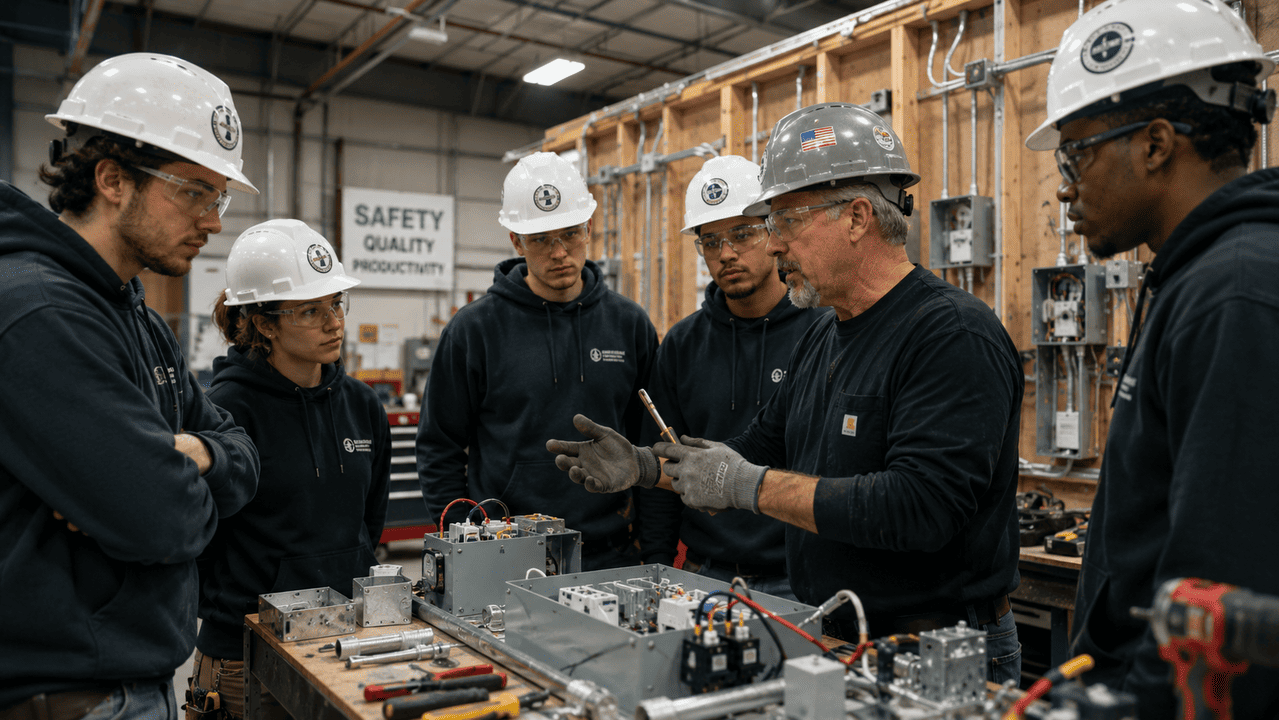
None of these programs succeed in a vacuum. They require collaboration among multiple stakeholders: employers define the competencies they need, community colleges and schools deliver related technical instruction, workforce boards connect the dots with labor market data, and nonprofits often provide wraparound support. When these partners align, training actually leads to jobs – not just certificates that collect dust. Regular training through these channels helps organizations adapt to new technologies and market demands that are changing faster than most academic curricula can keep up with.
But the pain points are real. Job seekers often feel overwhelmed by the variety of options and unsure which path leads to a stable future career. Employers struggle to find qualified talent and rarely have the bandwidth to design training programs from scratch. Administrators and sponsors face complex compliance reporting requirements and spend hours tracking OJT and RTI hours manually. Workforce training programs help organizations bridge skill gaps and boost employee retention, but only when the systems behind them actually work.
Types of Workforce Training Programs and Who They Serve
Think of this section as a map. The right workforce training path depends on where a person is in their career, what experience they bring, and what goals they are working toward. There is no single answer, but understanding the landscape makes it far easier to choose wisely.
Short-Term Training Programs (4–16 Weeks)
Short-term training programs are designed for speed and specificity. They prepare people for roles like Certified Nursing Assistant, IT support specialist, CDL driver, or entry-level construction technician. These programs typically run 4 to 16 weeks and prioritize hands-on competency over academic breadth.
Real examples from 2025–2026 illustrate the model well:
- Alabama’s Pre-Apprenticeship Linework Program runs across six community colleges and lasts 7 to 10 weeks. Graduates learn pole climbing, safety protocols, and CDL preparation, then move directly into employment with partnering energy companies.
- Anne Arundel Community College offers a pre-apprenticeship in carpentry and electrical work totaling roughly 200 hours, including OSHA-30 and CPR certifications.
- The FastForward program offers quick training for Virginia’s top jobs, compressing credentialing into weeks rather than semesters.
- NOVA Workforce provides training for in demand healthcare jobs, connecting participants directly with employers in clinical and allied health settings.
Key types of workforce training also extend into the workplace itself: onboarding programs introduce new hires to company culture and job expectations, technical training focuses on job-specific tools and skills required for tasks, and compliance and safety training ensures adherence to regulations and workplace safety protocols.
Work-Based Learning Models
Work based learning is the umbrella that covers internships, youth apprenticeships, adult Registered Apprenticeship Programs, and employer-sponsored on-the-job training contracts. What they share in common is a blend of paid work with structured learning.
In a typical apprenticeship week, a participant might spend four days at the worksite learning skills under a mentor and one day in a classroom or online course completing related technical instruction. This combination builds both practical expertise and theoretical understanding. Work-based learning includes internships and career coaching alongside more formal apprenticeship structures.
Apprenticeships provide paid workplace training opportunities, which is one reason they are growing in popularity. They reduce the need for individuals to take on debt while still delivering industry-recognized credentials. Blended learning combines multiple training delivery methods for better engagement, and the best programs use this approach by mixing in-person mentorship, online coursework, and hands-on projects.
Pre-Apprenticeships and Career Pathways
Pre-apprenticeship programs serve as the bridge between where a person is today and where an apprenticeship begins. They help high school students and adult learners build foundational skills – math, digital literacy, safety, soft skills – and then transition into full apprenticeships as part of structured career pathways.
- Randolph Community College launched a pre-apprenticeship in 2025 for high school juniors and seniors in advanced manufacturing and IT. Participants receive free tuition, paid work hours, and a clear path into a full Registered Apprenticeship.
- Catawba Valley Community College runs pre-apprenticeship academies in construction, health sciences, and automotive, requiring 100 hours of work-based learning plus supplemental instruction.
Soft skills training develops communication, teamwork, and critical thinking abilities – all of which are embedded in well-designed pre-apprenticeship curricula. These are not add-ons. They are essential for people entering fields where collaboration and problem-solving define daily work.
Career Pathways by Industry
Career pathways give learners a visible line from where they start to where they want to go. Here is what progression looks like in several high-growth fields:
| Industry | Entry-Level Credential | Mid-Level Step | Advanced Role |
|---|---|---|---|
| Healthcare | CNA / Medical Assistant Certificate | LPN / Allied Health Associate | RN / Health Administration |
| Advanced Manufacturing | Pre-Apprenticeship Certificate | Registered Apprenticeship Journeyworker | Production Supervisor / CNC Specialist |
| IT | CompTIA A+ / Help Desk Certificate | Network Technician / Apprenticeship | Cybersecurity Analyst / Cloud Engineer |
| Clean Energy | Solar Installer Certificate | EV Technician Apprenticeship | Energy Systems Manager |
Stackable credentials at each stage mean workers do not have to start over when they want to advance. They build on what they have already earned.
Matching Programs to People
Different audiences need different entry points:
- Dislocated workers benefit from reskilling programs that prepare employees for substantially different roles within an organization or a new industry entirely.
- Recent graduates and youth often start with pre-apprenticeships or internships that offer career coaching alongside workplace exposure.
- Career changers look for programs with credit for prior learning and flexible scheduling.
- Incumbent workers looking to move up benefit from upskilling programs that enhance existing employees’ skills for evolving roles.
- English language learners need accessible language support and culturally responsive instruction.
Funding That Helps
Public funding can significantly offset training costs for eligible participants. Pell Grants help cover education costs for eligible students, including recent expansions allowing use for certain short-term credential programs. WIOA provides employment services to increase job seekers’ earnings, and many states run their own grant programs. Colorado offers free training opportunities through local Workforce Centers, giving residents direct access to skill-building without financial barriers. The Eligible Training Provider List helps identify quality training opportunities that meet federal and state standards for outcomes and credential alignment.
How Work-Based Learning and Apprenticeship Power Stronger Career Pathways
Work based learning is the backbone of modern workforce training because it connects classroom theory to real-world practice while people earn a paycheck. No lecture hall can replicate the decision-making, problem-solving, and muscle memory that come from actually doing the work. And unlike unpaid academic internships, most work-based learning models pay participants from the start.
The Structure of a Registered Apprenticeship
A Registered Apprenticeship Program typically involves four components:
- Employer sponsor – the company that hires the apprentice, provides the worksite, and assigns a mentor.
- Related Technical Instruction (RTI) provider – a community college, training center, or online platform that delivers formal classroom or digital coursework, often requiring at least 144 hours.
- On-the-Job Training (OJT) plan – a structured list of competencies the apprentice must demonstrate at the worksite, usually over 2,000 or more hours.
- Progressive wage increases – pay goes up as the apprentice hits skill milestones, reinforcing advancement.
Registered apprenticeship programs are overseen by the U.S. Department of Labor, which means they follow national standards for quality, safety, and credential recognition. In 2026, new DOL guidance streamlined program registration, required determinations within 30 days, and standardized how completion rates are calculated and reported.
OJT vs. RTI: Two Sides of the Same Coin
On-the-Job Training helps build job-specific skills that cannot be taught in a classroom. OJT provides hands-on experience in real work settings – wiring a panel, drawing blood, configuring a server – under the supervision of an experienced mentor. Employers assist trainees in gaining confidence and expertise through daily feedback and progressively challenging assignments. Over time, OJT leads to meaningful careers for participants who develop both competence and professional identity.
RTI is the formal instruction side. It covers the theory, regulations, and technical knowledge that frame the hands-on work. Think of it as the “why” behind the “how.” Both must be tracked accurately – hours logged, competencies checked off, assessments recorded – for compliance purposes and for evaluating whether the learner is actually progressing.

From Entry to Advancement
Structured work based learning supports clear career pathways. Here is a realistic example:
A job seeker enters a pre-apprenticeship in IT support in early 2025. Over 12 weeks, they earn a CompTIA A+ certification, build foundational skills, and connect with an employer sponsor. By mid-2025, they are enrolled in a full Registered Apprenticeship, splitting their time between a help desk role and evening RTI courses at a community college. By 2027, they have completed the apprenticeship, earned a network technician credential, and are positioned to move into cybersecurity or cloud infrastructure roles – with wage increases at every stage.
This is what career pathways look like when they are designed well. Apprenticeships provide paid workplace-relevant training opportunities at each step, and each credential stacks toward the next.
Building Employer Pipelines
Consider a small manufacturer or healthcare provider in 2025–2026 that cannot find enough skilled technicians or medical assistants. Rather than competing for talent on the open market at premium wages, they sponsor an apprenticeship. They partner with a local community college for RTI and design an OJT plan around their actual equipment and workflows. Within 18 months, they have a pipeline of workers trained specifically for their environment.
Employers can strengthen talent pipelines through strategic partnerships like these. Employers can also upskill their workforce through Tri-C partnerships and similar community college collaborations that align academic instruction with workplace needs. Training programs should be aligned with strategic business goals to be effective – otherwise, you are training people for roles that do not exist or skills the company does not need.
Tracking What Matters
Data and real-time tracking are what separate programs that improve over time from programs that stagnate. Every day, workforce leaders need visibility into hours completed, competencies achieved, assessment scores, and completion rates. This information shows which training programs are working and where adjustments are needed.
On the compliance side, reporting requirements are significant. Programs must submit data through systems like RAPIDS (for apprenticeship registration data), PIRL (the Participant Individual Record Layout used under WIOA), and WIPS (the Workforce Integrated Performance System for federal performance reporting). These systems enforce strict edit checks and require consistent demographic, outcome, and service delivery data. Modern platforms can automate much of this back-end work – reducing errors, saving administrative hours, and keeping sponsors and grantees in compliance without drowning in spreadsheets.
Designing Effective Workforce Training: What Stakeholders Should Know
This section is for employers, schools, and workforce organizations that want to build or improve training programs that actually serve job seekers and local labor markets. The difference between a program that changes lives and one that just checks boxes often comes down to design decisions made before the first participant walks through the door.
Start with Demand, Not Assumptions
The most common mistake in program design is building around what an institution already offers rather than what the local economy actually needs. Start with labor market data – 2024–2026 projections, regional employer surveys, job posting analyses – to identify occupations with real demand and sustainable wages. If your region is growing in clean energy, healthcare, or advanced manufacturing, that is where your training dollars should go.
Investing in employee development boosts productivity and efficiency, but only when the skills being developed match real employer needs. A credential in an oversupplied occupation is not a career pathway – it is a detour.
Steps for Program Design
Here is a high-level framework:
- Define target occupations using labor market intelligence and employer input.
- Collaborate with employers to build competency lists that reflect actual job requirements.
- Map OJT and RTI components – what skills are learned at work, what is taught in the classroom, and how many hours each requires.
- Set clear entry requirements that are rigorous enough to prepare participants but not so restrictive they exclude people who could succeed with support.
- Identify industry credentials that employers recognize and that align with the occupation’s career pathway.
Training improves employee retention by signaling organizational commitment to growth. When workers see a clear path from where they are to where they want to be, they stay. Investment in workforce training strengthens the entire organization – not just the department that receives it.
Align Training with Career Pathways
Best practices for pathway alignment include:
- Stackable credentials – each certificate or badge builds toward the next, so learners never feel like they are starting from zero.
- Clear next-step options – every program should answer the question, “What can I do after this?”
- Credit for prior learning – veterans, incumbent workers, and career changers should not have to repeat what they already know.
- Articulation agreements – formal arrangements with community colleges or universities that let apprenticeship completers transfer credit toward a degree.
Strong workforce training programs prepare leaders for future responsibilities by building not just technical skills but also supervision, communication, and decision-making capabilities.
Common Mistakes to Avoid
- Building programs without employer input, then wondering why graduates cannot find jobs.
- Failing to support learners with childcare, transportation, or financial assistance for basic needs.
- Ignoring digital skills, even in hands-on fields where documentation, scheduling, and communication increasingly happen on screens.
- Not tracking outcomes like completions, job placements, and wage gains – which means you cannot prove your program works or identify where it falls short.
Measuring impact is crucial for understanding training effectiveness. If you are not tracking retention, credential attainment, and earnings after exit, you are operating blind.
Design for the Learner
Learner-centered design is not a luxury. It is a requirement for programs that serve working adults, parents, and people balancing multiple responsibilities.
- Flexible scheduling: evening classes, weekend labs, hybrid online and in-person formats.
- Mobile-friendly tools that let learners log hours, access coursework, and communicate with mentors from a phone.
- Wraparound services including career coaching, tutoring, and referrals for housing or financial assistance.
- Accessible language for people at different reading levels or English proficiency.

Operational Infrastructure
Scaling from a pilot cohort of 12 participants to dozens or hundreds requires operational discipline. That means:
- Centralized data systems for tracking learner progress, OJT/RTI hours, and compliance reporting.
- Automated workflows for attendance, evaluations, and required submissions.
- Communication tools that keep mentors, instructors, employers, and learners aligned.
- Standardized reporting processes that reduce the risk of errors when submitting to RAPIDS, WIPS, or state systems.
Without this infrastructure, growth creates chaos. With it, a single program can expand across multiple sites and employers without losing quality or compliance.
Why Choose a Modern, Data-Driven Approach to Workforce Training
Not all workforce training initiatives are equal. Programs built on data, strong partnerships, and integrated technology consistently produce better outcomes for both job seekers and employers than those running on good intentions and manual tracking.
The advantages of a modern approach are significant:
- End-to-end visibility – program leaders can see every learner’s progress across OJT hours, RTI completion, competency attainment, and credential status in a single view.
- Easier compliance – automated reporting for systems like RAPIDS, WIPS, and PIRL reduces the risk of errors and the hours spent preparing submissions.
- Faster iteration – when real performance data flows in continuously, program designers can adjust curricula, employer partnerships, or support services based on evidence rather than guesswork.
Centralized platforms reduce administrative burden by automating the tracking, attendance logging, evaluation workflows, and reporting that would otherwise consume staff time. For a sponsor managing 20 apprentices, manual tracking might be manageable. For one managing 200 across five employers and three RTI providers, it is not.
Better communication tools – mobile apps, real-time dashboards, integrated messaging – keep apprentices, instructors, and employers on the same page. When a learner falls behind on RTI hours or misses an OJT milestone, the right people find out immediately instead of weeks later. This improves engagement and completion rates in measurable ways.
Organizations using a data-driven strategy are better positioned to scale from a single training cohort to multi-site, multi-employer initiatives without losing quality or compliance. They can demonstrate outcomes to funders, replicate what works across locations, and build the kind of trust with employers and learners that sustains programs over the long term.
This is the thread that runs through everything in this article: structured workforce training, strong work based learning experiences, and clearly defined career pathways help people move into good careers more quickly. The technology and data infrastructure behind those programs determine whether they stay small and fragile or grow into something that transforms a company, a community, or an entire industry.
Next Steps: How to Move Forward with Workforce Training
Whether you are a job seeker planning your next move or an organization looking to build a training initiative, the best time to invest in workforce training and work based learning is now. The labor market will not slow down to wait for anyone to catch up.
For Job Seekers
- Identify target occupations – look at which fields in your region are growing and what credentials employers are actually asking for in job postings.
- Research local training programs and apprenticeships – contact your nearest workforce center, community college, or workforce development board. Colorado offers free training through local Workforce Centers, and many other states have similar resources.
- Talk to a career coach – career coaching can help you find the right fit between your experience, your interests, and the opportunities available.
- Evaluate program quality before enrolling – ask about job placement rates, employer partners, credential recognition, and what support services are available. Use the Eligible Training Provider List as a starting point.
For Employers and Training Providers
- Conduct a needs assessment – identify the roles hardest to fill and the skills your current workers need to advance.
- Connect with regional workforce boards – they have labor market data, employer networks, and funding streams that can accelerate program launch.
- Map internal roles to career pathways – show your workers how they can grow within the company, and build the training infrastructure to make it real.
- Explore technology solutions that simplify program management, OJT and RTI tracking, and compliance reporting – especially if you plan to scale beyond a single cohort.
The Principle That Matters Most
Prioritize programs that offer real work based learning, clear career pathways, and transparent outcomes data. A glossy brochure is not a training program. A credential without employer demand behind it is not a career. The programs worth your time and investment are the ones that can show you exactly how they prepare individuals for work, how they track progress, and what happens to their graduates after completion.
The workforce is changing. The opportunities are significant for individuals willing to learn and organizations willing to invest. Take the next step – whether that means reaching out to a local workforce partner, exploring apprenticeship options for your company, or beginning to design a new training initiative that serves both the people and the economy around you.
Want to Learn More About Your Registered Apprenticeship Opportunities?
BOOK A FREE CONSULTATION
FAQs About Workforce Training, Work-Based Learning, and Career Pathways
Below are answers to common questions from job seekers, employers, and educators about workforce training, work based learning, and how modern programs connect to real career outcomes.
What is the difference between workforce training and traditional education?
Workforce training is job-focused, typically shorter in duration, and tied directly to specific roles and skills that employers need right now. Traditional education – such as a two- or four-year degree – is broader and more academic, covering a wide range of subjects that may or may not connect immediately to a specific occupation. For example, a short-term healthcare training program in 2026 might prepare someone for a medical assistant role in 10 to 16 weeks, while a full nursing degree pathway could take two to four years. Both have value, but the right choice depends on the person’s goals, timeline, and financial situation. Many people find that starting with workforce training and then pursuing additional education over time gives them the best combination of immediate earnings and long-term advancement.
How long do most workforce training programs take to complete?
Duration varies widely. Bootcamps and micro-credentials can be completed in a few weeks. Pre-apprenticeships typically run two to six months. Full Registered Apprenticeship Programs last one to four years depending on the occupation – a medical assistant apprenticeship might be 12 months, while a skilled trades apprenticeship in electrical or plumbing could extend to four years. The length usually reflects the depth of training required, industry standards, and the amount of paid work experience built into the program through work based learning. Shorter is not always better; what matters is whether the program produces people who can actually do the job and advance over time.
Can workforce training really lead to long-term career pathways?
Yes, and the data supports it. Stackable credentials and apprenticeships create real progression from entry-level roles to mid-level and advanced positions, often with wage increases tied to each step. Consider an example: a person starts as an IT support apprentice in 2025, completes the program by 2027 as a network technician, and then moves into cybersecurity or cloud roles with additional certifications. GAO reports indicate that Registered Apprenticeship completers earn approximately $80,000 in average first-year wages after program exit. These are not dead-end credentials – they are launchpads, provided the programs are well designed and connected to employers with real demand.
How do employers benefit from offering work-based learning and apprenticeship?
The benefits are concrete and measurable:
- Reduced turnover, because workers trained within a company develop loyalty and institutional knowledge.
- Stronger internal talent pipelines that reduce reliance on expensive external recruiting.
- Faster onboarding, since apprentices learn on the company’s actual tools, processes, and culture.
- Training tailored to real workflows rather than generic curricula.
Employers also gain access to broader talent pools, including career changers, youth, and nontraditional candidates who bring diverse perspectives and are supported by structured training programs. Onboarding programs that are part of an apprenticeship go far beyond a first-week orientation – they create a foundation for months or years of structured development.
What should a job seeker look for when choosing a workforce training program?
Look beyond the marketing. A strong program will have visible employer involvement – not just a logo on a brochure, but active participation in curriculum design and hiring commitments. Check job placement rates and credential recognition: does the credential mean something to employers in your region? Ask about work-based learning opportunities, because programs that include real paid work tend to produce better outcomes than those that are classroom-only.
Also explore schedule flexibility, available support services like coaching and tutoring, and how the program connects to longer-term career pathways. If a program cannot clearly answer the question “What happens after I finish?” that is a red flag.
How is progress tracked in modern workforce training and apprenticeship programs?
Progress is typically tracked through documented OJT hours, completed RTI coursework, competency checklists, and periodic evaluations by mentors or supervisors. In a well-run Registered Apprenticeship, every milestone – from the first safety certification to the final journeyworker assessment – is recorded and reported.
Many organizations now use centralized platforms to track these data points in real time, generate compliance reports for federal and state agencies, and keep all stakeholders aligned. This replaces the old model of spreadsheets and paper logs with dashboards that show exactly where each learner stands, which cohorts are on track, and where intervention is needed. The result is better outcomes for learners and less administrative burden for the people running the programs.


