
Table of Contents
- Understanding RTI in Registered Apprenticeship Programs
- Federal Regulations & Compliance: What the DOL Actually Requires About RTI
- Building RTI for Your Apprenticeship Program
- Choosing and Managing RTI Education Partners
- Designing Effective RTI Delivery: Classroom, Online Learning, and Blended Models
- RTI Tracking, Record Keeping, and Audit Readiness
- Integrating RTI with On-the-Job Training (OJT)
- Common RTI Management Pitfalls and How to Avoid Them
- When It’s Time to Invest in Apprenticeship Management Software
- Why Choose GoSprout for Apprenticeship RTI Management
- Practical Examples & Use Cases for RTI Management
- Frequently Asked Questions About Apprenticeship RTI Management
- Conclusion & Next Steps
Every registered apprenticeship program runs on two engines: on-the-job training and related technical instruction. If you’re an employer, sponsor, or community college partner launching or scaling apprenticeship programs in 2024–2026, RTI management is the piece that determines whether your program stays compliant, produces skilled workers, or stalls under paperwork. This article covers what RTI is, what the DOL actually requires, how to build RTI with education partners, and how apprenticeship management software like GoSprout simplifies record-keeping and compliance.
Federal regulations under 29 CFR Part 29 and Part 30, combined with USDOL funding requirements, make RTI management both a compliance obligation and a strategic advantage. Whether you’re a workforce board exploring expanding registered apprenticeship programs or an employer trying to develop a highly skilled workforce, getting RTI right from day one changes everything.
Understanding RTI in Registered Apprenticeship Programs
Related technical instruction RTI is the structured education side of a registered apprenticeship. It includes organized instruction in technical subjects delivered through classroom instruction, online learning, labs, simulations, and assessments, all tied to a specific occupation. RTI must be directly related to the apprentice’s occupation, covering the theoretical knowledge and foundational knowledge that apprentices need before they can safely and effectively perform work tasks. In a welding apprenticeship, for example, RTI covers topics like blueprint reading and welding symbols alongside on-the-job training.
RTI complements on-the-job training by explaining the “why” behind what apprentices do during on-the-job learning. Consider an industrial maintenance mechanic apprenticeship: RTI covers fluid dynamics, troubleshooting logic, and preventive maintenance theory, while OJT gives hands-on training with actual equipment, seal replacements, and breakdown responses. Without RTI, apprentices learn by imitation. With it, they understand principles and can adapt to new situations.
RTI can be delivered through classroom, online, or lab settings, depending on the occupation and program design. The distinction matters for auditors: RTI is typically delivered off the job site by qualified RTI instructors, tracked through attendance and assessments. OJT happens at the work site under mentor supervision and is tracked through work process logs.
DOL requires at least 144 hours of RTI per year as a recommended minimum. A four-year program typically requires 576 RTI hours total. However, real requirements vary by occupation, state apprenticeship agencies, and the standards approved for each program. Many trade programs run 150 to 216 rti hours annually depending on format and licensing requirements. RTI uses a multi-tiered approach with interventions becoming more intensive based on progress, ensuring apprentices at varying levels receive the support they need to succeed.
Federal Regulations & Compliance: What the DOL Actually Requires About RTI
RTI is not optional. 29 CFR Part 29 mandates organized classroom instruction for apprentices as a core component of every registered apprenticeship. DOL oversees apprenticeship programs through the Office of Apprenticeship, and state apprenticeship agencies enforce these standards at the state level under both Part 29 (labor standards) and Part 30 (equal opportunity).
Federal regulations require at least 144 hours of RTI per year. However, this figure is guidance, not a rigid nationwide floor. Some occupations and state agencies require more based on industry standards and licensing. The critical point: sponsors must specify in their registered apprenticeship standards the exact number of RTI hours over the apprenticeship term, the technical subjects covered, how those subjects tie to work processes, and instructor qualifications.
Programs must document RTI hours for compliance verification, and those hours must be verifiable and documented for compliance. Instructors must meet DOL qualifications for RTI delivery, including subject matter expertise and training in adult education techniques. Common compliance risks include incomplete attendance records, missing syllabi, unverified instructor credentials, and misalignment between RTI topics and OJT tasks.
Audit readiness requires organized record-keeping: sign-in records, LMS reports, syllabi, evaluation forms, and instructor resumes. These records feed into compliance reporting tools like RAPIDS, WIPS, and PIRL, and are essential for WIOA monitoring, state visits, and federal reviews conducted during 2024–2026 cycles.
Building RTI for Your Apprenticeship Program
Effective RTI-OJT alignment requires intentional curriculum planning. RTI design should start at the same time as OJT planning, not after program registration. Begin with a job task analysis: identify every major task apprentices must perform, then map those tasks to the theoretical knowledge and technical skills that should be delivered via RTI. Competency mapping connects RTI learning to OJT tasks, creating a coherent learning plan.
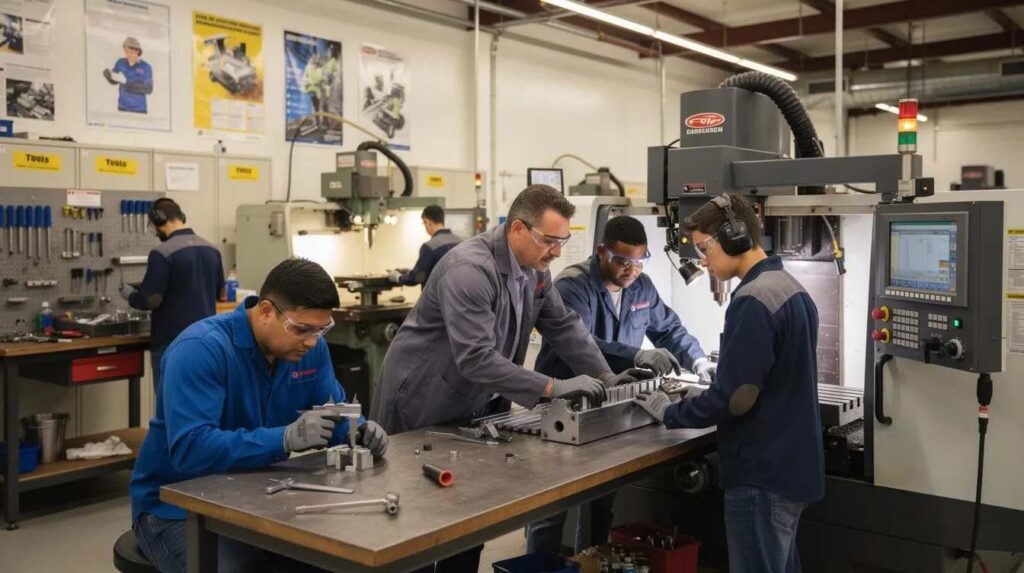
For a CNC machinist apprenticeship, your task inventory might include blueprint interpretation, machine programming, setup, and maintenance. RTI learning objectives then cover blueprint reading, cutting speed calculations, precision measuring, and computer numerical control theory. You select delivery modalities next: some content works best in a community college lecture, some in a lab, others as online learning modules. Then you sequence the rti curriculum and set hour allocations in your apprenticeship standards.
You can build RTI by combining existing courses at community colleges or technical schools with custom short courses delivered by employers. A manufacturer might rely on a local college’s advanced manufacturing program for core RTI theory, then add custom modules on proprietary equipment or safety training. RTI programs should integrate soft skills and safety training alongside technical subjects related to the occupation.
RTI providers come in several forms: community colleges for trades and advanced manufacturing, universities for educator apprenticeships, labor union training centers for electrical and building trades, industry-led academies, and in-house employer academies. Each has different strengths in scheduling flexibility, credential granting, and alignment with industry standards.
Instructor qualifications are critical for RTI program legitimacy. Instructors for RTI must have relevant qualifications and experience, typically including journeyworker-level industry experience (three to five years minimum), recognized credentials or licensure, and familiarity with adult learning principles. Evidence-based strategies are identified and implemented to address specific skill deficits in students, making instructor quality a direct driver of program effectiveness.
GoSprout can help sponsors and colleges build RTI by centralizing OJT competency lists, course catalogs, and lesson plans inside one apprenticeship management platform, ensuring that RTI design stays aligned with work process schedules as programs evolve.
Choosing and Managing RTI Education Partners
Most sponsors don’t deliver RTI alone. Partnerships with community colleges, technical schools, and online training providers are standard practice across the industry.
To find RTI providers, start with your state apprenticeship agency directory, local workforce boards, community college CTE directors, national trade associations, and industry intermediaries. When vetting partners, check their apprenticeship experience, alignment of curriculum with your work process schedule, scheduling flexibility (evening, block weeks, online), ability to offer certifications or college credit, and prior success with similar apprentices. Registered apprenticeship programs can combine paid employment with structured learning, and apprenticeships can offer academic credit towards advanced degrees in education or specialized fields when RTI aligns with college courses.
Structure partnerships through MOUs or articulation agreements that define responsibilities: who tracks attendance, who holds records, who reports to RAPIDS, how data is shared, and who issues credentials. Operational friction often surfaces through mismatched academic calendars, night shift schedules, or rural distance barriers. Blended or asynchronous online learning fills these gaps effectively.
GoSprout supports RTI partnerships by giving employers, colleges, and sponsors a shared dashboard for RTI hours, course completion, and documentation. A manufacturing sponsor working with two community colleges in different counties can compare RTI performance across providers, flag apprentices missing required hours, and coordinate schedule adjustments from a single platform.
Designing Effective RTI Delivery: Classroom, Online Learning, and Blended Models
RTI is not just seat time. It should be designed for mastery using multiple delivery models that match apprentice schedules and occupation demands. RTI management involves managing the implementation of tiered interventions across classroom training, digital platforms, and hands-on labs.
Traditional classroom training works best for equipment-heavy instruction, safety training labs, welding, and electrical work. The advantages include peer learning, immediate instructor feedback, and richer situational learning. The limitations are fixed schedules, travel requirements, and limited enrollment windows.
Online learning enables self-paced modules, synchronous virtual sessions, and simulations that support apprentices in remote or rural regions. Individuals in RTI management apprenticeships gain practical skills in educational technology, making digital delivery increasingly sophisticated and accessible for programs of all sizes.
Blended models combine in-person lab days with online theory: an electrician apprentice might attend evening online sessions on NEC code and then weekend labs onsite. Using LMS platforms inside apprenticeship management software keeps both modalities tracked in one place, providing seamless integration between classroom and digital instruction.
Accessibility matters: ADA accommodations, language supports, scheduling for caregivers or second-shift workers, and mobile learning options expand access for underrepresented groups. GoSprout integrates with existing LMS tools or hosts basic RTI learning paths, giving apprentices a single mobile-friendly view of both RTI and OJT requirements.

RTI Tracking, Record Keeping, and Audit Readiness
Apprenticeship RTI management often breaks down at the tracking and record keeping stage. Once programs pass 20 to 30 apprentices or involve multiple cohorts and providers, manual systems become unreliable.
Small programs may use sign-in sheets, email attachments, and spreadsheets. The risks are predictable: missing records, inconsistent formats, delayed data entry, and no real-time visibility into apprentice progress. When a sponsor reaches scale, these risks multiply into compliance exposure.
Essential RTI data points include date and time of instruction, modality (classroom, online, lab), instructor identity, topics covered, alignment with the registered apprenticeship work process schedule, hours delivered, and assessment results. RTI tracking should align with on the job training records so sponsors can see the full picture. Centralized platforms can automate RTI tracking and documentation, replacing scattered files with reliable digital records.
This tracking feeds directly into compliance reporting tools: RAPIDS captures program status and hour requirements, while WIPS and PIRL report performance metrics for apprentices under WIOA or federal grants. Implementation monitoring ensures interventions are executed with fidelity and student progress is tracked consistently. Apprentices collect and analyze performance data to monitor student progress, and data-driven decision-making is a crucial skill developed in RTI management programs.
During a 2024–2026 state review, auditors look for attendance records, syllabi, proof of instructor qualifications, grading policies, and evidence that the apprentice actually received and passed the training. Apprenticeship management software such as GoSprout replaces fragmented record keeping with automated RTI hour logs, digital attendance, instructor sign-offs, centralized document storage, and instant report generation.
Integrating RTI with On-the-Job Training (OJT)
RTI and OJT should function as one integrated learning plan, not separate checklists. Integrated RTI and OJT enhance apprentices’ skill retention, and seamless RTI and OJT integration boosts apprentice motivation because apprentices see how classroom theory connects to real work.
Alignment works through a timeline approach. In the first quarter, RTI delivers safety and basic tools theory while OJT tasks focus on introductory work under close supervision. In later quarters, RTI covers advanced diagnostics, compliance, or supervisory skills while OJT ramps to more complex responsibilities. RTI requires a minimum of 144 hours per year, giving sponsors a clear planning baseline for sequencing content.
The benefits of explicit mapping are concrete: better apprentice engagement, easier mentor coaching, clearer evidence of competency for regulators, and more persuasive documentation for funders. Apprentices learn to evaluate apprentice progress metrics to improve program outcomes, creating a feedback loop between RTI and OJT.
GoSprout lets sponsors see both OJT and RTI progress on the same dashboard, quickly identifying apprentices ahead on hours but behind on coursework. In advanced manufacturing, this means a sponsor can spot when an apprentice has completed robotics control theory in RTI but hasn’t yet logged corresponding OJT hours on the production line, and intervene early.
Common RTI Management Pitfalls and How to Avoid Them
Many apprenticeship programs fail to scale because of avoidable RTI management issues rather than lack of demand for apprentices. The pitfalls are consistent across industries and program sizes.
Inconsistent rti tracking is the most common failure. Without standard templates and real-time logging, hours go unverified, attendance gaps accumulate, and progress monitoring breaks down. The fix: establish standard templates, use software for real-time logging, and run quarterly audit reconciliations.
RTI curriculum that lags industry needs is equally damaging. When syllabi go years without updates, apprentices learn outdated processes. Institute annual curriculum review cycles with employer partners and industry experts who can flag changes in tools, regulations, or processes.
Unqualified or overstretched RTI instructors erode program quality. Instructors must be qualified to deliver RTI content effectively. Require minimum industry experience, verify credentials on file, and invest in ongoing professional development for teaching techniques and adult learning approaches.
Siloed communication between employers and training providers leads to scheduling conflicts, content drift, and compliance gaps. Simple communication rhythms like monthly RTI-OJT sync meetings keep all organizations aligned.
Documentation risk is real: sponsors who cannot show proof of RTI hours or instructor qualifications during a DOL or state visit face findings, jeopardized funding, and potential deregistration. A continuous improvement cycle anchored in data from GoSprout dashboards turns RTI from a compliance headache into a long-term workforce development asset.
When It’s Time to Invest in Apprenticeship Management Software
Trigger points for investing in software include multiple cohorts, multiple occupations, multi-site programs, or working with several rti providers, including community colleges and online vendors. Apprentices assist with scheduling interventions and allocating resources, but these tasks become unmanageable at scale without a centralized system.
Spreadsheets and email typically break down beyond 25 to 50 apprentices. Version control issues, missing data, delayed insights, and reactive compliance work consume coordinator time. Apprentices develop skills in data analysis and progress monitoring, but the administrative infrastructure must keep pace. Career advancement opportunities are available through practical experience and academic instruction in RTI management, but only when the program itself runs smoothly.
What sponsors should look for: RTI and OJT tracking in one system, mobile access for apprentices, instructor and mentor portals, automated reminders for upcoming deadlines, RAPIDS/WIPS/PIRL-ready reporting, and secure record keeping. A regional healthcare system with multiple hospital sites and RTI delivered through local colleges and online vendors could save hundreds of hours per year and improve RTI completion rates after adopting a centralized platform like GoSprout.
Why Choose GoSprout for Apprenticeship RTI Management
GoSprout is an all-in-one work-based learning management platform built specifically for apprenticeship programs, pre-apprenticeships, and internships. An RTI management apprenticeship provides supervised experience in coordinating academic support systems, and our platform is designed to support exactly this kind of multi-stakeholder coordination.
We support RTI management through configurable RTI plans per occupation, integration with OJT competency tracking, centralized record keeping for syllabi and instructor credentials, digital attendance and instructor sign-offs, and course-level analytics that surface rti performance issues before they become audit findings.
Our platform streamlines RAPIDS, WIPS, and PIRL reporting. Real-time dashboards help sponsors stay ahead of federal and state monitoring requirements, with technical assistance built into the workflow rather than bolted on as an afterthought. We provide technical assistance through guided setup, documentation templates, and support for teams at every stage.
GoSprout’s multi-side design gives employers, community colleges, RTI providers, sponsors, and apprentices their own tailored views, all sharing the same real-time RTI data. Unlike a generic LMS or HR system, our apprenticeship-specific workflows handle RTI/OJT alignment, work process schedule mapping, and purpose-built audit trails that deliver RTI tracking and compliance in one seamless integration.
Practical Examples & Use Cases for RTI Management
Concrete scenarios help sponsors and colleges picture how apprenticeship RTI management works in practice.
In advanced manufacturing, a CNC machinist program uses a community college for RTI theory covering machine control, material properties, and CAD/CAM. Lab sessions happen at the manufacturer’s training center. GoSprout tracks classroom hours, lab attendance, and maps each RTI topic to work process tasks, resulting in fewer safety incidents and faster progression to journeyworker status.
In healthcare, a medical assistant apprenticeship receives RTI from a college of allied health covering anatomy, pharmacology, and patient communication. Apprentices typically earn a paycheck from their first day of work in RTI management programs while completing clinical OJT in hospitals. GoSprout coordinates RTI schedules across providers and employer sites, tracks instructor credentials from licensed health professionals, and monitors assessment results.
In cybersecurity, RTI is delivered largely online through certified vendors combined with bootcamp-style labs and employer-led projects. Certifications like CompTIA and CISSP prep are built into the rti component. GoSprout integrates with the LMS, allows digital proof of completion, and maps courses to required competencies, supporting apprentices’ preparation for external exams.

Frequently Asked Questions About Apprenticeship RTI Management
How many RTI hours does my registered apprenticeship need?
A minimum of 144 hours of RTI is recommended annually under federal regulations. A four-year time-based program typically requires 576 total hours. However, requirements vary by occupation, state agencies, and the standards your program registers under. Work with the Office of Apprenticeship or your state apprenticeship agency for occupation-specific guidance.
Who can provide RTI for an apprenticeship program?
Options include community colleges, universities, technical schools, employer academies, labor organizations, and vetted online learning providers. The key is that the provider’s curriculum aligns with your work process schedule and that their instructors meet qualification requirements.
How do I prove RTI completion during an audit?
Auditors expect attendance records, course rosters, syllabi, instructor credentials, and assessment results. Apprenticeship management software makes these documents easy to retrieve and export, reducing the scramble that manual record keeping creates.
Do apprentices get college credit for RTI?
They can, through articulation agreements between the sponsor and an accredited education institution. Aligning RTI with existing college courses increases value for apprentices and supports developing pathways into further education.
When should I move from spreadsheets to apprenticeship management software?
When you manage more than 25 apprentices, work with multiple rti providers, or find your team spending more time on administrative tracking than on program quality. If audit prep takes weeks instead of hours, it’s time.
What’s the difference between an LMS and apprenticeship management software?
An LMS focuses on course delivery and content management. Apprenticeship management platforms like GoSprout handle RTI, OJT, compliance reporting, multi-stakeholder coordination, and audit-ready documentation in one system, covering the full labor and education lifecycle of each apprentice.
Conclusion & Next Steps
Effective apprenticeship RTI management combines sound RTI curriculum, strong education partners, robust record-keeping, and integrated technology. When these pieces work together, programs produce apprentices with real technical skills and clear progress toward occupation mastery. RTI is both a regulatory requirement and a strategic tool for building a long-term talent pipeline across industries from healthcare to advanced manufacturing to cybersecurity.
If you’re ready to consolidate RTI and OJT tracking into one platform, schedule a demo with GoSprout. Our team can walk you through how to design RTI plans with community colleges and other providers, automate compliance reporting, and scale your program with confidence. The workforce needs of 2026 and beyond demand apprenticeship programs built on data, transparency, and continuous improvement, and GoSprout is built to help you deliver exactly that.


