
Building a reliable talent pipeline doesn’t happen by accident. With skilled labor shortages projected to persist through 2026 and beyond, launching an apprenticeship program offers employers a proven path to develop the workers they actually need.
This guide walks you through everything from workforce analysis to program optimization. Jump directly to any section:
Table of Contents
Why Launch an Apprenticeship Program in 2026?
The U.S. Bureau of Labor Statistics projects over 700,000 annual openings in construction and extraction occupations alone through 2032. Similar gaps exist in HVAC, IT, healthcare, and advanced manufacturing—driven by retirements and technological shifts. Hiring apprentices gives you control over your talent pool instead of competing for scarce skilled workers.
Key employer benefits:
- Lower turnover: Apprentices are 41% more likely to stay with sponsors post-completion
- Predictable pipeline: Reduce time-to-productivity from 12-18 months to 6-12 months
- Reduced costs: Save $8,000-$12,000 per hire by avoiding agency fees
- Better culture fit through internal development
- Built-in succession planning for critical roles
A registered apprenticeship program unlocks additional funding opportunities: WIOA reimbursements, GI Bill eligibility for veterans, and state tax credits averaging $1,500-$5,000 per apprentice annually in 28+ states.
Unlike internships, apprenticeships are paid positions lasting 1-5 years, combining on the job learning with classroom training to produce a nationally recognized credential.
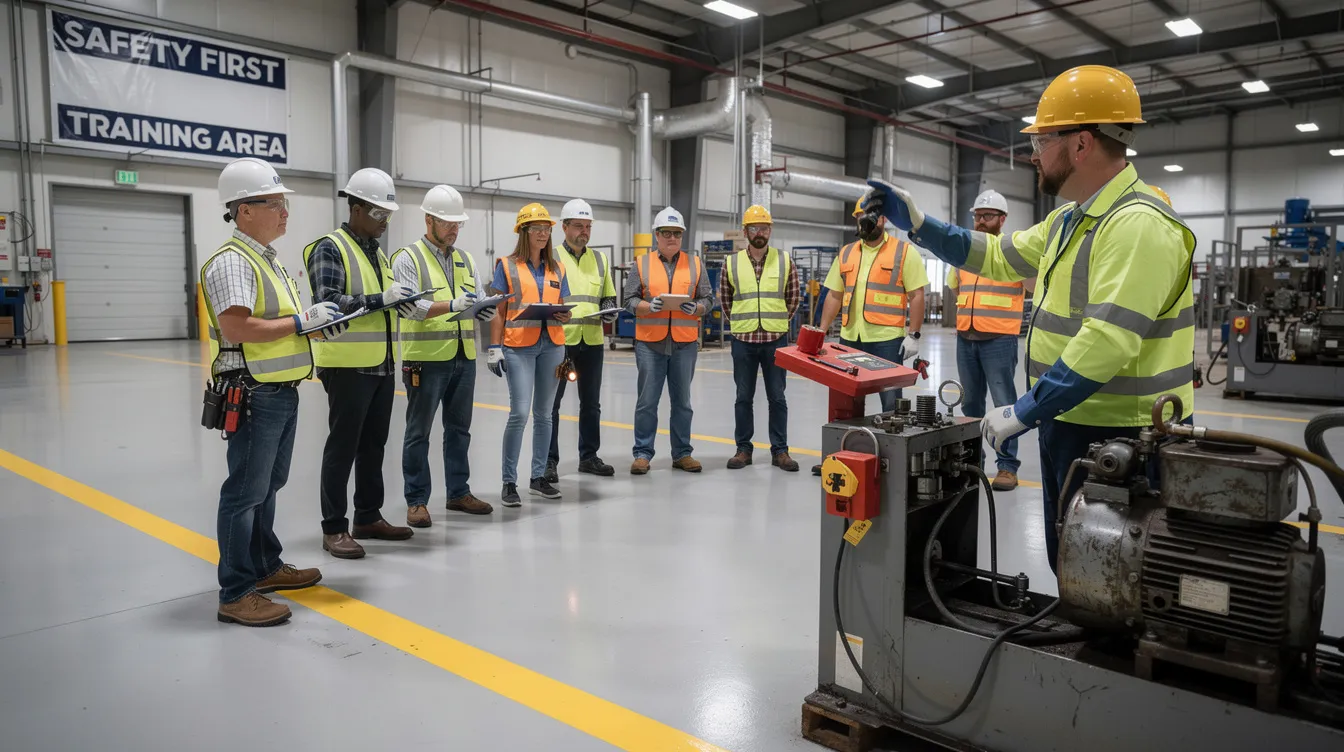
How to Start an Apprenticeship Program: 8 Practical Steps
The following steps align with Department of Labor Registered Apprenticeship industry standards as of 2026, though you can adapt them for internal programs. Expect the entire process to take 8-16 weeks from planning to launch for single employers.
1. Assess Your Workforce Needs
To start a registered apprenticeship program, organizations should conduct an internal review of their current and future hiring challenges. Focus on a 12-24 month workforce forecast rather than reacting to last month’s vacancies.
Identifying skill gaps involves analyzing current and future workforce needs through surveys or interviews with department heads. Look for roles with:
- Turnover exceeding 20%
- Overtime reliance above 10%
- Vacancy duration beyond 60 days
Calculate the cost comparison: replacing one HVAC technician averages $25,000 (recruiting $5,000, lost productivity $10,000, training $10,000). A 2-year apprenticeship pipeline costs roughly $15,000 net after incentives.
2. Choose Apprenticeable Occupations
More than 1,000 occupations qualify for registered apprenticeships, including roles in construction, healthcare, and IT. The U.S. Department of Labor provides an Occupation Finder tool on Apprenticeship.gov to help organizations identify approved occupations.
To select an occupation, evaluate your greatest hiring needs, focusing on positions with high turnover or difficulty in hiring. Occupations that require a mix of on-the-job training and classroom learning are suitable for apprenticeships.
Common starting occupations:
- Electrician (4 years/8,000 hours)
- HVAC/R Technician (2-3 years/4,000-6,000 hours)
- CNC Machinist (3-4 years/6,000-8,000 hours)
- Cybersecurity Support Technician (2 years/4,000 hours)
If your desired occupation isn’t listed, work with your state apprenticeship agency to determine whether new standards can be recognized.
3. Build Strong Sponsors and Partnerships
A sponsor is any person, association, committee, or organization that operates a Registered Apprenticeship Program and assumes full responsibility for its administration and operation. Deciding if your organization will act as the sponsor or join a group sponsor is an important early step.
Sponsor options:
- Single employer (ideal for 50+ staff)
- Consortium of small businesses
- Community college
- Workforce intermediary
- Industry association
Apprenticeship programs rely on a strong partnership network, which may include apprenticeship offices, educators, workforce development boards, and community organizations. Community colleges and community-based organizations can serve as sponsors, providing essential support and resources.
Educational institutions can partner with community colleges or vocational schools to provide the related technical instruction. Partnerships with community-based organizations can help reach underrepresented populations.
If your workforce is unionized, Joint Apprenticeship Committees should engage labor representatives early to establish oversight committees.
4. Design a Structured Training Plan (OJT + RTI)
A structured training plan is necessary, providing a clear roadmap for training and advancement. The two pillars are paid on-the-job training and supplemental education through related technical instruction.
Creating a Work Process Schedule is important for detailing the specific tasks and skills apprentices will master under a mentor. Structured on-the-job learning requires developing this schedule, which can be developed using templates offered by the U.S. Department of Labor.
Typical structure:
- 2,000+ hours OJT per year
- The classroom component should usually consist of a minimum of 144 hours per year
- Duration: 2-4 years depending on occupation
Break tasks into competencies: safety basics, tool use, codes and standards, diagnostics, and customer communication with estimated hours for each.

5. Define Program Policies, Wages, and Requirements
Clear policies prevent confusion for apprentices, mentors, and supervisors. Developing a fair, transparent selection process for apprentices focuses on potential rather than just existing hard skills.
Key policy areas:
- Eligibility criteria (age, education, physical requirements)
- A scaffolded pay scale where wages increase as apprentices hit specific skill milestones (e.g., 60% starting, 75% at 6 months, 90% at 18 months)
- 90-day probationary period with weekly check-ins
- Regular assessments against established competencies to ensure apprentices are on track
Developing an Equal Employment Opportunity plan is important for ensuring fair recruitment and training practices. Remove unnecessary barriers and expand outreach to underrepresented groups.
6. Register Your Apprenticeship Program (U.S. Focus)
Contacting a state apprenticeship agency or the federal Office of Apprenticeship can help review your plans. The registration process can take several weeks to a few months, depending on complexity.
Required documents:
- Program standards
- Work process schedule
- Related instruction outline
- Wage schedule
- EEO compliance forms
Utilizing the DOL Standards Builder can help generate registration packages. Workforce intermediaries can help navigate registration and compliance requirements. Book early consultations to cut approval time to 4-12 weeks.
Before enrolling or hiring apprentices, you must receive official approval from the appropriate agency. International readers should check their national apprenticeship authority (UK’s IfA, Canadian provincial agencies).
7. Promote, Recruit, and Launch Your Program
Effective promotion of apprenticeship programs can help close skill gaps and support business growth. Apprenticeships should be promoted as a consistent and strategic tool in workforce development, rather than a seasonal initiative.
Want to Learn More About Your Registered Apprenticeship Opportunities?
BOOK A FREE CONSULTATION
Using a multi-channel approach to promote your apprenticeship program significantly enhances recruitment:
- Local high schools and community colleges
- Veterans’ organizations
- Job centers and online boards (Indeed, LinkedIn)
- Targeted marketing to attract diverse candidates
It is critical to select and train experienced employees to serve as mentors. Mentorship involves assigning and training experienced employees to transfer practical knowledge and assess apprentices’ progress.
Formal onboarding is necessary to introduce apprentices to their mentors and outline program expectations and milestones. Start with 2-6 apprentices per occupation to ensure adequate supervision.
8. Track Progress, Report, and Continuously Improve
Tracking apprentice hours and skill acquisition is necessary to meet regulatory requirements. Keep records of OJT hours, RTI completion, wage progression, evaluations, and completion data.
Use a digital tracking system to log competencies and generate required reports. Establish quarterly reviews with mentors and apprentices to adjust training plans early.
Final assessments often include an End Point Assessment to issue certifications. Apprenticeship programs should culminate in a portable, industry-recognized credential upon completion. Successful graduates should transition into full-time, permanent positions within the organization.
One manufacturer analyzed 85% Year 1 retention, refined screening with mechanical aptitude tests, and lifted completions to 92% by Year 2.
Core Components Every Apprenticeship Program Needs
Registered Apprenticeship Programs include five key components that are essential for establishing a successful program. Regardless of industry, effective programs share these elements:
- Employer sponsorship with business-driven standards
- Structured OJT (2,000+ hours, supervised 1:5 ratio)
- Quality RTI mapped directly to job tasks
- Wage progression tied to competency milestones
- Trained mentors (DOL recommends 20-hour curriculum)
- Competency assessments yielding credentials
- Compliance and reporting for funding eligibility
These drove 91% employment rates for 2024 completers—17% above non-apprentices.

How Our Business Can Help You Launch Faster and Smarter
We specialize in practical implementation—not generic consulting. Our team supports employers through:
- Program design: Mapping job roles to competencies, drafting work process schedules, aligning RTI to real tasks
- Digital learning: On-demand technical courses and simulations serving as your RTI backbone
- Compliance support: Compiling standards documents, wage schedules, and reporting templates for DOL or state agencies
- Launch optimization: Training mentors, setting up progress tracking, and analyzing retention data after your first cohort
FAQs About Launching an Apprenticeship Program
These FAQs address common questions employers ask in 2025-2026 when exploring apprenticeships.
Typically 8-16 weeks for registered programs, 4-8 weeks for internal non-registered programs.
No. While joint programs exist (about 20% of total), union partnership is not required.
Expect $15,000-$40,000 per apprentice net after incentives, with ROI typically achieved within 18 months.
Yes. Even employers with fewer than 10 employees sponsor successfully via consortia—roughly 40% of new programs use this model.
Options include $100M+ in WIOA OJT reimbursements, state grants (e.g., Texas $2,500/apprentice), and tax credits in 28 states. Availability varies by location.
Most programs include prorated clawback provisions. Early leavers can often be rehired later.
Begin with a workforce needs assessment, then connect with our team for tailored guidance on your specific situation.


