
Table of Contents
- What Is a Workforce Development Plan?
- Why Workforce Development Planning Matters for 2027 and Beyond
- Key Components of an Effective Workforce Development Plan
- How to Build a Workforce Development Plan Step by Step
- Workforce Development Strategies and Training Programs That Work
- Implementing and Sustaining Your Workforce Development Plan
- FAQs About Workforce Development Plans
- Why Choose Our Platform to Power Your Workforce Development Plan
- Next Steps: Put Your Workforce Development Plan Into Action
What Is a Workforce Development Plan?
Workforce development is a system-level approach that connects job seekers, employers, and training providers through coordinated education, career pathways, and skills building. It goes far beyond a single job training initiative or a one-time workshop.
A workforce development plan is a documented, multi-year blueprint-typically spanning 2027 to 2030-that aligns human capital capabilities with business goals. It evaluates current staff capabilities and identifies future skill gaps so organizations can build training programs, registered apprenticeships, and partnership strategies around real labor market demand. Future needs forecasting anticipates upcoming talent requirements based on industry trends like AI automation, clean energy expansion, and healthcare workforce shortages.
These plans should be living documents that evolve based on feedback and changing needs, not static reports filed away.
Why Workforce Development Planning Matters for 2027 and Beyond

Workforce development planning enhances employee performance and efficiency while delivering measurable outcomes in retention, recruitment, and regional economic growth. Companies focusing on workforce development see 34% higher retention rates, and 45% of workers stay longer if companies invest in education. Investing in employee development improves ROI and reduces hiring costs compared to constant external recruitment cycles.
For workers and job seekers, a strong plan creates career development pathways that show employees how they can advance within an organization – from entry-level through supervisory roles—and support career advancement. A learning culture fosters innovation and critical thinking skills across departments. Companies report increased recruitment and retention through registered apprenticeship programs, and organizations with structured plans are better positioned to win competitive grants, partner with school districts, and participate in sector partnerships heading into 2027.
Key Components of an Effective Workforce Development Plan
A practical plan is structured around assessment, goals, strategies, partnerships, infrastructure, and measurement, and clear goals are vital to help organizations achieve workforce outcomes. Here are the core components:
- Skills gap analysis identifies shortages and obsolete skills before implementing training programs. A comprehensive skills inventory assesses existing employee capabilities and organizational gaps.
- Gap analysis compares current employee skills against future organizational requirements across departments.
- Target populations including youth, veterans, older workers, displaced workers, and people with disabilities.
- Recruitment and retention strategies outline tactics for attracting talent and reducing turnover.
- Succession planning prepares high-potential employees for critical leadership roles.
- Training programs and career pathways aligned with industry needs, connecting Related Technical Instruction with on-the-job training so learning paths are clear, trackable, and focused not only on current-role training but also broader growth and knowledge development.
- Support services for job seekers: childcare, transportation, digital access, language support, and accommodations for workers with disabilities.
- Partnering with education providers or training organizations helps support businesses with relevant training and can include expert partners who advise on program design while keeping curricula relevant.
- Performance metrics and evaluation establish KPIs to measure the success of workforce initiatives.
- Continuous feedback and mentorship encourage regular discussions about learning goals and skill development.

How to Build a Workforce Development Plan Step by Step
Implementing a workforce development plan requires a data-driven approach. Here is a repeatable process organizations can implement in early 2027.
Step 1: Identify business and community needs. Use interviews with hiring managers, labor market data from workforce boards, and job posting analytics, along with the public workforce system, to pinpoint roles and competencies needed over the next three to five years.
Step 2: Set SMART goals and objectives. Setting SMART goals improves training program effectiveness and sets clear expectations for managers and employees. Example: “By December 2028, create 75 new apprenticeship slots and reskill 120 incumbent workers for automation-enhanced roles.”
Step 3: Map training programs and career pathways. Training programs should align with business and industry needs. Show current employees concrete next steps so pathways help them qualify for promotions and career advancement, from entry-level certifications through mid-level credentials to supervisory roles.
Step 4: Choose workforce development strategies. Blend on-the-job training, coaching, mentoring, job rotations, micro-credentials, and cross-training between departments to develop the skills and knowledge needed to achieve business goals.
Step 5: Formalize partnerships with high schools, community colleges, workforce development nonprofits, apprenticeship sponsors, and local American Job Centers to reach job seekers and align curricula; partners across the country, including apprenticeship offices and training organizations, can advise employers and help with implementation.
Step 6: Define metrics and reporting. Measuring impact and iterating the plan involves tracking key performance indicators over time-completion rates, wage progression, retention, and compliance data needed for RAPIDS, WIPS, and PIRL reporting.
Workforce Development Strategies and Training Programs That Work
Training and development programs include a mix of formal training and experiential learning. The most effective workforce development strategies combine several program types to build practical skills, deeper knowledge, and stronger employee engagement:
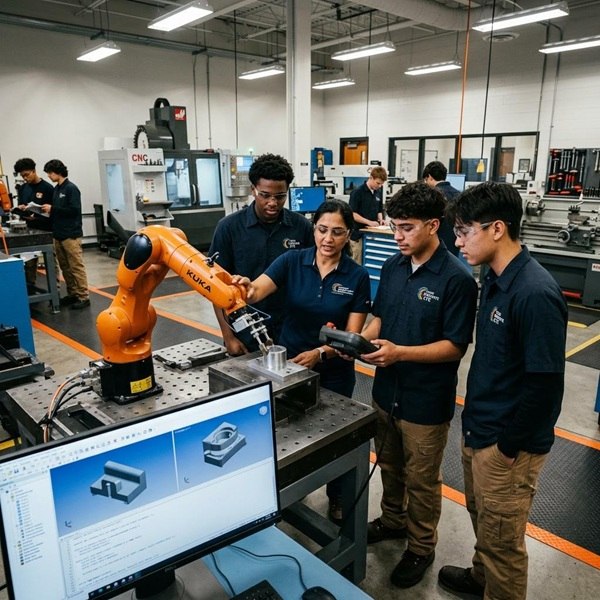
- Pre-employment training for job seekers entering new industries
- OJT for new hires-employees are hired first and then trained for roles that need added preparation beyond pre-employment; this is essential for jobs requiring additional training
- Incumbent worker upskilling through courses and micro-credentials
- Registered apprenticeships that blend classroom instruction with on-the-job training for high-skill roles, with benefits such as stronger recruitment and retention for the company
- Youth work-based learning and internships for early career exposure
Registered apprenticeship programs help reduce overall training costs, and a company may receive reimbursement for up to 50% of on-the-job training costs. The federal Office of Apprenticeship provides technical assistance for program setup. RTI tracking is crucial for compliance with apprenticeship standards, and OJT and RTI tracking tools streamline apprenticeship program management across stakeholders while helping programs meet compliance expectations.
Implementing and Sustaining Your Workforce Development Plan
Launch a pilot in 2027 with a limited set of occupations. Real-time dashboards aid in tracking OJT and RTI hourseffectively, while automated compliance reports reduce manual spreadsheets. Support managers with training so they can coach participants, document progress, and hold continuous feedback and mentorship conversations about development goals. Run quarterly reviews: assess outcome data, review KPI trends to measure the plan’s positive impact, address barriers with employees and job seekers, and refine implementation over time. Embed workforce development into annual budgeting and strategic planning-not as a side project.
FAQs About Workforce Development Plans
How is a workforce development plan different from standard job training?
Job training addresses immediate skills for a specific role. A workforce development plan is focused on long-term growth beyond immediate job training, supporting career advancement while mapping multi-year career pathways, partnerships, and talent pipelines for an entire organization or region, integrating education providers, sponsors, and employers.
Who should be involved in creating a workforce development plan?
HR leaders, operations managers, training providers, apprenticeship coordinators, finance departments, and external partners like workforce boards. Include current employees and recent job seekers to validate assumptions about barriers and support services, and let external partners advise on training design and labor market expectations.
How long does it take to design and launch a workforce development plan?
Expect three to six months to assess needs, design pathways, and secure partners, then another six to twelve months to pilot programs and refine them.
What types of training programs should be included?
A mix of short targeted job training, longer upskilling courses, registered apprenticeships, pre-apprenticeships for youth or career changers, and internships linked to credentials can help employees develop knowledge through both formal training and experiential learning.
How do we measure whether our workforce development plan is working?
Track enrollment, completion rates, certification attainment, OJT and RTI hour completion, promotion and wage growth, employee retention, and employer satisfaction quarterly.
Can small and mid-sized organizations create a workforce development plan?
Yes. Partner with local training providers, industry associations, or regional workforce initiatives. Start with one or two high-priority occupations, then scale based on early results, new opportunities, and whether your organization may qualify for state or local training support.
Why Choose Our Platform to Power Your Workforce Development Plan
GoSprout is a specialized work-based learning management platform that centralizes apprenticeship, internship, and training program management in one system. You can launch and manage registered apprenticeships, pre-apprenticeships, and internship programs while tracking OJT and RTI hours in real time with built-in dashboards and mobile access for apprentices.
Built-in automation simplifies compliance reporting for RAPIDS, WIPS, and PIRL, eliminating manual spreadsheets and reducing errors. The platform supports multi-stakeholder collaboration among employers, schools, sponsors, and workforce nonprofits with shared visibility into every participant’s progress. Organizations using dedicated apprenticeship management tools have doubled enrollment and cut admin time per apprentice by over 40%. GoSprout gives you the resources and expertise for successful implementation, helping teams implement every element of the workforce development plan with a data-driven approach and the tools needed to achieve goals.
Next Steps: Put Your Workforce Development Plan Into Action
A workforce development plan is a strategic necessity in 2027, not a nice-to-have. Choose one practical next step in the next 30 days that reflects your company’s current capabilities and future needs: conduct a skills gap analysis, map a pilot apprenticeship pathway, or convene partners from local schools and workforce agencies.
Schedule a demo to see how GoSprout can support your specific goals, programs, and reporting needs. Come prepared with example roles, target populations, and current training programs so we can help you build a realistic, customized plan for 2027 through 2030. A demo can also help employers understand the benefits of partnering with training organizations, education providers, and workforce agencies to support workforce development initiatives for american workers.


