Table of Contents
- Overview of the WIOA Youth Program and Why It Matters in 2027
- Eligibility, Key Services, and Required Program Elements for WIOA Youth
- Work-Based Learning, Apprenticeships, and Improving Outcomes in the WIOA Youth Program
- FAQs About the WIOA Youth Program
- Why Choose a WIOA Youth Program for Work-Based Learning
- Next Steps: How to Engage With a WIOA Youth Program in Your Area
Overview of the WIOA Youth Program and Why It Matters in 2027
The Workforce Innovation and Opportunity Act enacted in 2014. WIOA is the governing federal law for workforce development in 2027, and they created a framework for connecting young people with education, training, and employment. The WIOA youth program, authorized under Title I-B, serves youth aged 14 to 24 who face barriers to completing their education or entering the labor market. The program operates year-round for eligible youth, offering a combination of academic support, career coaching, occupational skills training, and real work experience.
Before WIOA, earlier federal workforce laws directed only 30% of youth formula funds toward out of school youth. The innovation and opportunity act reversed that priority, requiring at least 75% of youth funds to serve out of school youth – the population statistically hardest to reach and most at risk of long-term disconnection from both education and employment. This shift reflected a core principle of workforce innovation: target resources where the need and the potential return are greatest.
Participants are divided into two primary groups: in-school youth (ISY), ages 14 through 21, and out of school youth (OSY), ages 16 through 24. Each group has distinct eligibility criteria, but both share a common thread – they must face barriers that make it difficult to secure stable employment or complete an educational program without structured support. Common barriers in 2027 include basic skills deficiency, unstable housing, involvement in the justice system, parenting responsibilities, lack of transportation, disability, and limited digital access.
The core goals of the WIOA youth program center on reconnecting young people to school, helping them complete high school diplomas or equivalency credentials, building marketable skills through industry-recognized credentials, and launching participants onto career pathways in in-demand industries. The labor market context heading into 2027 reinforces why this matters: post-pandemic shifts have accelerated demand in healthcare, IT and cybersecurity, advanced manufacturing, clean energy, and logistics. Youth who can access effective training in these sectors have a meaningful advantage.
Nationally, 72.7% of youth participants were employed in the second quarter after exit, and 73.4% of youth participants were employed in the fourth quarter after exit. The national credential attainment rate was 61.8%, and 63.2% of participants reported measurable skill gains. These numbers confirm that when WIOA services are delivered well, they produce real outcomes.
Local workforce development boards and American Job Centers manage most WIOA services at the ground level, but they increasingly partner with schools, community colleges, employers, and apprenticeship sponsors to deliver work-based learning. That collaboration is what turns a federal grant program into a functioning career pipeline.
Eligibility, Key Services, and Required Program Elements for WIOA Youth
WIOA youth services are not universal. To participate, individuals must meet federal eligibility rules and, in many cases, additional local priorities set by the workforce development board in their area. Understanding these requirements before walking through the door saves time for everyone involved.
In-School Youth Eligibility
In-school youth are typically ages 14 to 21 and must meet low-income and additional barrier criteria. They must be enrolled in secondary or postsecondary education at the time of eligibility determination. In addition to meeting the low income threshold, ISY must demonstrate at least one qualifying barrier, such as:
- Basic skills deficiency
- English language learner status
- An individual with a disability
- Currently or formerly in foster care
- Pregnant or parenting
- Homeless or runaway
- At risk of dropping out of school
Out-of-School Youth Eligibility
Out of school youth are ages 16 to 24 and are not attending school while facing significant barriers. OSY eligibility is somewhat more flexible on the income front – not all OSY categories require low income verification if other qualifying barriers are present. An OSY must meet at least one of these criteria:
- School dropout
- Within the age range but lacking a secondary credential and not enrolled in postsecondary education
- Subject to the juvenile or adult justice system (offender status)
- Homeless or runaway
- In foster care or aged out of the foster care system
- Pregnant or parenting
- An individual with a disability
- Low income and requiring additional assistance to enter or complete an educational program or to secure and hold employment
Youth facing barriers may include those who have dropped out, are involved in the justice system, or are homeless. Federal law allows up to 5% of enrolled youth in a local area to qualify without meeting the low income requirement, provided they meet other barrier criteria. Local boards must track these exceptions carefully.
Federal Funding Priorities
Two spending thresholds shape every local WIOA youth program:
| Requirement | Minimum Threshold |
|---|---|
| Youth funds directed to out of school youth | 75% of formula allocation |
| Youth funds spent on work experience | 20% of non-administrative funds |
Veterans and eligible spouses also receive priority of service when they meet program criteria.
The 14 Required Program Elements
WIOA requires 14 program elements for youth services. Not every participant receives all 14, but every local board must make all of them available. Here is what each looks like in practice:
- Tutoring, study skills training, and dropout prevention – One-on-one academic remediation, after-school literacy labs, GED prep cohorts. The program provides academic support for high school diploma or GED completion through these services. WIOA provides tutoring and dropout recovery services as a foundational element.
- Alternative secondary school services and dropout recovery – Flexible credit recovery programs, virtual alternative schools, YouthBuild partnerships.
- Paid and unpaid work experience – Paid and unpaid work experience includes internships and summer employment opportunities, pre-apprenticeships, and job shadowing aligned with local sectors.
- Occupational skills training – Short-term credential programs such as CNC machining, certified nursing assistant, or IT help desk certifications aligned with local labor market demand.
- Education offered concurrently with workforce preparation and training – Dual-enrollment programs, combined related technical instruction and on-the-job training models.
- Leadership development – Peer mentoring circles, civic service projects, youth advisory councils.
- Supportive services – Transportation passes, childcare stipends, work uniforms and tools, exam fees, digital devices. These reduce barriers that prevent school youth and out of school youth from persisting in their programs.
- Adult mentoring – Pairing participants with employer or community mentors for at least 12 months, including the post-exit period.
- Comprehensive guidance and counseling – Comprehensive guidance includes mentoring, career counseling, and personal development. This element covers both academic advisement and mental health support.
- Financial literacy education – Financial literacy education helps participants manage money and understand budgeting through workshops using real-world scenarios like rent, credit scores, and student loans.
- Entrepreneurial skills training – Business plan courses, micro-internships with small business owners.
- Services providing labor market and employment information – Labor market information sessions, job fairs, career awareness activities using current regional data.
- Postsecondary preparation and transition activities – Assistance with college applications, financial aid, scholarship searches, apprenticeship enrollment guidance.
- Follow-up services – Required for at least 12 months after program exit. Includes phone or text check-ins, job retention support, and further education tracking.
WIOA offers occupational skills training and leadership development as core elements alongside tutoring, career coaching, and work-based learning.
Braiding Funding Streams
Local programs often braid WIOA youth funds with Perkins V career and technical education dollars, state youth workforce grants, and philanthropic funds to expand youth program options. This approach stretches resources without violating the innovation and opportunity act rules on allowable activities. For example, a vocational high school CTE program might be jointly funded through Perkins and WIOA, with the WIOA allocation covering supportive services and work experience while Perkins handles curriculum and equipment costs.
What Families and Young People Should Prepare
Before seeking eligibility determination, gather the following:
- Proof of age (birth certificate or state-issued ID)
- Income documentation (tax returns, public assistance letters, school lunch eligibility verification, or proof of homelessness or foster care)
- Selective Service registration confirmation for males ages 18 and older
- School transcripts or documentation of non-enrollment
- Disability documentation if applicable (IEP, medical records, court documents)
- Identification for right-to-work verification

Work-Based Learning, Apprenticeships, and Improving Outcomes in the WIOA Youth Program
WIOA requires 20% of youth funds for work-based learning activities. This was written directly into the opportunity act WIOA because decades of workforce research consistently showed that work experience is an effective engagement strategy for out of school youth – and one of the strongest predictors of long-term employment retention.
Types of Work-Based Learning
The WIOA youth program supports several distinct forms of work-based learning, each with different structures and regulatory requirements:
| Type | Key Features |
|---|---|
| Paid work experience | Wages paid through program funds; structured learning objectives; typically time-limited |
| On-the-job training (OJT) | Employer provides training; employer contributes to wages; written training plan required |
| Pre-apprenticeship | Structured preparation leading to eligibility for a registered apprenticeship; often includes classroom instruction |
| Registered apprenticeship | Formal employer-sponsored program with OJT and related technical instruction (RTI) meeting federal or state standards |
| Internships | Supervised placement in a professional environment; may be paid or unpaid depending on structure |
| Job shadowing | Short-term observation of professionals in a workplace; used for career exploration |
| Transitional jobs | Time-limited, subsidized employment for individuals with barriers; combines work and supportive services |
WIOA programs must include paid and unpaid work experiences as part of their service delivery. At least 20% of funds must support work-based learning, ensuring that every local area invests meaningfully in connecting youth to real employers.
Targeting In-Demand Sectors
Workforce boards use labor market information to identify in-demand sectors and then build youth program partnerships with employers in those industries. In 2027, the sectors drawing the most attention from workforce development professionals include:
- Healthcare (allied health, certified nursing assistants, medical coding)
- IT and cybersecurity (help desk, network administration, entry-level cybersecurity)
- Construction and skilled trades (electrical, plumbing, carpentry)
- Logistics and supply chain (warehouse operations, commercial driving)
- Clean energy (solar installation, energy auditing, wind turbine technology)
- Advanced manufacturing (CNC operation, robotics maintenance, quality control)
The alignment between training content and actual employer demand in local areas is what separates effective youth programs from programs that produce credentials nobody is hiring for.
Lifecycle of a Strong Work-Based Learning Placement
A well-executed WIOA youth work-based learning placement follows a clear sequence:
- Objective assessment and career exploration – Evaluate the participant’s skills, interests, and barriers. Use career awareness activities and labor market data to narrow industry focus.
- Matching – Connect participant interests and assessed skills to an employer or worksite. Define measurable learning objectives tied to the Individual Service Strategy (ISS).
- Structured onboarding – Prepare the employer to supervise and mentor. Establish expectations around hours, competencies, and workplace behavior.
- Active tracking – Monitor OJT and classroom (RTI) hours. Provide ongoing career coaching, case management, and supportive services to address non-work obstacles like transportation or childcare.
- Transition – Connect the participant to permanent employment, further education, or a registered apprenticeship. Begin the 12-month follow-up period.
Common Mistakes to Avoid
Programs that underperform often share a few recurring problems:
- Arranging unpaid work that violates wage and hour rules – if the employer benefits from the work and controls the conditions, the participant likely must be paid
- Failing to define clear learning outcomes, turning a “work experience” into unskilled labor without skill development
- Weak employer onboarding that leaves supervisors unsure of their role
- Not tracking progress toward WIOA performance indicators, including employment in the 2nd and 4th quarter after exit, credential attainment, measurable skill gains, and median earnings
Youth programs must document participation carefully to meet federal reporting requirements such as PIRL data elements and state-level performance reporting. Accurate tracking of work hours, competencies, and credentials is crucial to demonstrate return on investment and maintain compliance.
Practical Examples From 2025–2027
Several program models illustrate how workforce innovation activities can align with education pathways:
- CTE dual-credit co-enrollment: High school students enrolled in a career and technical education pathway simultaneously participate in the WIOA youth program, earning both academic credit and a short-term industry credential in fields like welding or health information technology.
- Pre-apprenticeship to registered apprenticeship pipeline: Out of school youth complete a 12-week pre-apprenticeship in construction trades, including OSHA safety certification and hands-on skill building, then transition into a registered apprenticeship with a local employer or trade association.
- Young parent healthcare credential: A 20-year-old parenting participant receives childcare assistance and transportation stipends through supportive services while completing a certified nursing assistant program at a community college. Upon completion, the participant enters employment at a local healthcare facility and continues receiving follow-up services.
- IT help desk pathway for justice-involved youth: Youth with prior justice involvement complete a CompTIA A+ certification through a WIOA-funded occupational skills training provider, paired with a paid internship at a regional IT firm. Adult mentoring and counseling address re-entry challenges throughout the program.
Technology Platforms for Reducing Administrative Burden
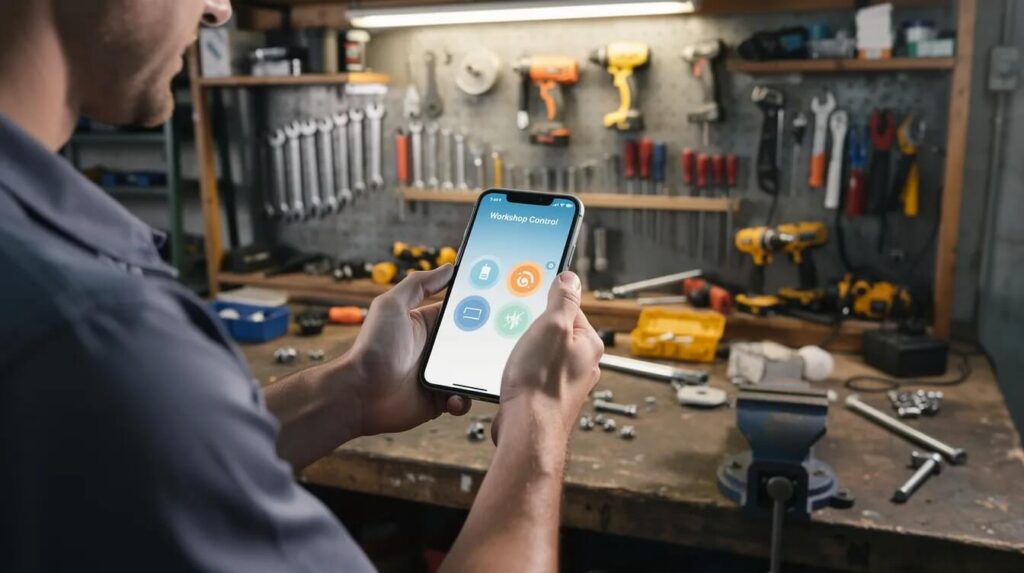
One of the persistent challenges in running a WIOA youth program is the administrative overhead: tracking eligibility documentation, logging OJT and RTI hours, managing employer agreements, and generating compliant reports for federal and state monitors. Technology platforms built specifically for work-based learning management address these pain points by:
- Consolidating employer agreements, training plans, and participant records in a single system
- Tracking competency progress and skill gains in real time through dashboards accessible to case managers and workforce staff
- Logging OJT and RTI hours via mobile apps that allow youth participants and supervisors to submit entries from the worksite
- Generating compliant reports, including outputs aligned with RAPIDS, WIPS, and PIRL requirements, without manual data extraction
- Providing automated reminders for follow-up services, Selective Service verification, and credential documentation deadlines
For workforce boards, schools, and employers managing multiple participants across several worksites, this kind of platform eliminates the spreadsheet chaos that leads to compliance findings and disallowed costs.
Looking Ahead: Reauthorization and Expanding Flexibility
Discussions around WIOA reauthorization in Congress continue to raise important questions for youth programs. Proposals under consideration include increasing flexibility in youth age ranges, strengthening definitions around apprenticeships, enhancing equity provisions for justice-involved youth and youth with disabilities, and improving funding mechanisms to better support OSY and rural youth.
At a state level, innovation pilots are testing integrated behavioral health supports, embedded digital literacy training, and credential stacking models that build from entry-level certifications to industry-recognized journey worker credentials over multiple program years. The direction is clear: career pathways that connect education, work-based learning, and employer demand will continue to define effective youth programs in the states that take this work seriously.
FAQs About the WIOA Youth Program
Who qualifies for the WIOA Youth Program as of 2027?
WIOA serves youth aged 14 to 24 years old. In-school youth must be between 14 and 21, enrolled in school, meet low income criteria, and have at least one qualifying barrier. Out of school youth must be between 16 and 24, not currently attending school, and meet one or more barrier criteria such as being a dropout, justice-involved, homeless, in or aged out of foster care, pregnant or parenting, disabled, or low income with a need for additional assistance. Local workforce areas may further prioritize certain populations – for instance, some boards prioritize foster youth or young parents based on regional needs assessments. Participants must meet low-income criteria in most categories, though certain OSY barrier categories waive the income requirement.
What is the difference between in-school youth and out of school youth in WIOA?
The distinction comes down to enrollment status, age, and funding allocation. In-school youth are actively enrolled in secondary or postsecondary education and must be low income with at least one barrier. Out of school youth are not attending any school as defined by state law and face significant barriers to education or employment. The critical funding difference is that at least 75% of WIOA youth formula funds must be directed toward out of school youth, reflecting the federal recognition that OSY are harder to reach, more likely to be disconnected, and in greater need of intensive services.
What kinds of training and education can WIOA youth funds support?
WIOA youth funds can support a wide range of training and education, including high school completion programs, GED preparation, short-term occupational skills training aligned with local labor market demand, pre-apprenticeships, registered apprenticeships, and postsecondary bridge programs. The key requirement is that training must connect to in-demand occupations and lead to recognized credentials. Programs also offer concurrent education and workforce preparation – for example, a young person might attend a community college RTI class while completing paid on-the-job training with a local employer, earning both academic credit and industry experience.
How does work-based learning under WIOA help youth find long-term careers?
Work-based learning gives young people something a classroom alone cannot: proof of competence in a real work environment. Youth who complete paid work experience, internships, or pre-apprenticeships build resumes, earn industry-recognized credentials, receive adult mentoring from experienced professionals, and develop the soft skills employers consistently rank as critical – reliability, communication, problem-solving. Combining work and classroom learning supports retention because participants see a direct connection between what they study and what they do on the job. Nationally, 72.7% of youth participants were employed after exiting WIOA, and the national credential attainment rate was 61.8% in 2023, demonstrating that the model delivers tangible advancement.
How long can a young person stay in the WIOA Youth Program, and what happens after exit?
There is no single mandated duration. Program length is driven by the Individual Service Strategy developed for each participant, which accounts for their goals, barriers, and the services needed to reach self-sufficiency. Some youth participate for several months; others remain enrolled for a year or longer. After exit, WIOA requires a minimum of 12 months of follow-up services – check-in calls or texts, job retention support, help with further enrollment if needed. Youth are also tracked for federal performance metrics including employment in the 2nd and 4th quarters after exit, credential attainment, and measurable skill gains.
Can WIOA youth participants move into adult or dislocated worker programs later on?
Yes. Co-enrollment between WIOA youth and adult programs is allowed and, in many local areas, actively encouraged. When a participant ages out of youth eligibility or experiences a qualifying layoff, local boards can facilitate a smooth transition into adult or dislocated worker services under WIOA Title I. This supports continued career advancement without forcing the individual to start over. Many boards design their case management workflows to anticipate these transitions, ensuring that credentials earned during youth participation carry forward and that employment plans remain continuous across program titles.
Why Choose a WIOA Youth Program for Work-Based Learning
A well-run WIOA youth program is more than a compliance exercise – it is a regional workforce strategy that benefits employers, schools, community organizations, and young people simultaneously. When the pieces are in place, everyone gains.
Strong programs share several characteristics: alignment with federal workforce innovation and opportunity act requirements, experienced case managers who understand both eligibility rules and the realities of working with youth who face barriers, robust employer networks willing to host and mentor participants, and established processes for assessing skills, matching placements, and delivering supportive services that keep individuals engaged through completion.
For employers, integrated work-based learning and apprenticeship pathways create a predictable talent pipeline. Instead of posting job listings and hoping for qualified applicants, employers who partner with WIOA youth programs get candidates who have already been screened, trained in basic skills and workplace readiness, and matched to the role based on assessed competencies. This reduces hiring risk and improves retention among youth hires – a meaningful advantage in industries where turnover is expensive.
Compliance matters just as much as outcomes. Accurate reporting and adherence to opportunity act WIOA rules – including timely data entry, complete documentation of eligibility and services, and precise tracking of OJT and RTI hours and measurable skill gains – protect local boards from audit findings and disallowed costs. Programs that treat compliance as an afterthought inevitably pay for it.
Technology-enabled youth programs can offer real-time dashboards for workforce staff, mobile access for youth participants logging hours from the worksite, employer portals for supervisor feedback, automated reminders for follow-up milestones, and pre-built reporting templates that satisfy RAPIDS, WIPS, and PIRL requirements. These capabilities simplify administration for workforce boards, schools, and employers while making the data available to demonstrate program impact.
When implemented with intention, the WIOA youth program is not just another grant cycle to manage. It is a long-term strategy to help school youth and out of school youth move into sustainable careers, earn credentials that hold value in the labor market, and meet regional workforce needs that are only growing more urgent as demand in healthcare, IT, manufacturing, and clean energy continues to rise.
Next Steps: How to Engage With a WIOA Youth Program in Your Area
Whether you are a young person exploring career options, a parent helping your child prepare for the workforce, an educator looking to expand pathways for students, or an employer ready to build a pipeline of prepared workers, the first step is the same: connect with your local workforce development board or American Job Center.
Here is a straightforward action sequence to get started:
- Locate the nearest American Job Center through the Department of Labor website or by searching for your state’s workforce development agency online.
- Schedule an intake appointment to discuss eligibility, interests, and available youth program options.
- Gather eligibility documents – age verification, income documentation, school enrollment status, Selective Service registration for males 18 and older, and any barrier documentation.
- Complete assessments – expect an objective evaluation of academic skills, career interests, and barriers.
- Collaborate on an Individual Service Strategy (ISS) that maps out your goals, services, and timeline.
Different audiences should ask different questions:
- Youth: What career pathways are available in my area? What supportive services can help me participate? What work-based learning options exist? How will I learn skills that lead to a credential employers recognize?
- Schools and educators: How can we coordinate dual enrollment or CTE integration with WIOA youth services? What does data sharing look like? How do we set up coordinated case management with workforce staff?
- Employers: How do we design an internship or on-the-job training that meets WIOA standards? What are the employer responsibilities and incentives? How do apprenticeships fit into the youth program structure?
Decision-makers currently managing youth services should evaluate whether their tools and processes support accurate tracking of WIOA services, effective communication among partners, and evidence of impact that satisfies both local boards and federal monitors. If your team is still managing participant records, employer agreements, and OJT hoursacross disconnected spreadsheets and email chains, you are spending time on administration that could be spent on the young people you serve.
The opportunity is real and the need is immediate. Reach out to your local WIOA youth case manager, explore regional apprenticeship and youth program partnerships, or assess your organization’s internal readiness to host work-based learning opportunities for individuals who need a structured path forward. The young people in your community who qualify for these services are waiting for someone to meet them where they are and show them where they can go.