
If you want to become an aircraft mechanic without taking on the cost of a full-time school program, an apprenticeship can be a practical way into the aviation industry. The Federal Aviation Administration (FAA) sets the strict legal and practical requirements that allow third-party, employer-based apprenticeship programs to exist, but you must apply directly to aviation employers who have structured their internal training to meet FAA standards.
This guide explains how the pathway works, what experience is required, and how to prepare for certification as an airframe and powerplant mechanic.
Table of Contents
- What Is an FAA Aviation Apprenticeship?
- Overview of Aircraft & Aviation Maintenance Apprenticeship Programs
- How the FAA 18‑ and 30‑Month Experience Requirements Work
- Program Structure: What You’ll Learn and Do Day to Day
- Requirements to Get Started
- Timeline to Your Airframe and Powerplant Certificate
- Career Outcomes & Full-Time Opportunities
- How to Find, Apply for, and Succeed
- FAQs About FAA Aviation Apprenticeships
What Is an FAA Aviation Apprenticeship?
An FAA aviation apprenticeship is a structured, supervised on-the-job training program that helps you meet FAA experience requirements for the Aviation Mechanic certificate. Instead of completing all training through a traditional FAA approved trade school, apprenticeships substitute classroom time with documented, practical work. Sponsors who run these programs often use registered apprenticeship management software to keep that documentation organized and audit-ready.
Apprentices work under FAA-certificated A&P mechanics in repair stations, airlines, manufacturers, corporate flight departments, or general aviation shops. This pathway can satisfy either the FAA’s 18-month single-rating requirement or the 30-month requirement for both airframe and powerplant ratings.
Main components include:
- Paid job training on real aircraft and components
- Classroom instruction, manuals, quizzes, or workbook study
- Mentorship from experienced maintenance technicians
- Preparation for FAA written, oral, and practical testing
The goal is to become a qualified aviation maintenance technician, or amt, who can help protect aircraft safety and reliability in the real world.
Overview of Aircraft & Aviation Maintenance Apprenticeship Programs
An aircraft maintenance apprenticeship is a structured program that combines hands-on training with classroom instruction, typically lasting from one to four years depending on various factors. Employers running these programs often rely on apprenticeship management software to keep hours, sign-offs, and progress in one place.
- Training settings may include Part 145 repair stations, airlines, manufacturers, corporate hangars, and general aviation facilities.
- Aviation maintenance work can include inspections, repairs, component changes, preventive maintenance, and approved alterations.
- Formal instruction may include modules, manuals, safety lessons, maintenance data, and FAA test preparation.
- Many aviation maintenance apprenticeship programs typically last between one to four years, depending on the specific program and the number of required on-the-job training hours.
- Many apprenticeship programs are planned around 30–36 months so apprentices can build eligibility for both A and P ratings.
- Apprentices usually report to a lead maintenance technician and move from basic support work to more complex troubleshooting.
- Apprenticeships in aviation maintenance often require participants to work under the mentorship of experienced FAA-certificated mechanics, ensuring they gain practical experience alongside their training.

How the FAA 18‑ and 30‑Month Experience Requirements Work
The FAA requires a minimum of 18 months of appropriate experience for each rating to qualify for an Aviation Mechanic certificate, or 30 months of concurrent experience for both ratings. Under current FAA guidance, one month generally means a meaningful block of practical work; applicants should verify acceptable proof with their local Flight Standards District Office.
To become a licensed aircraft mechanic via the practical experience route, you must fulfill the legal hourly and monthly minimums dictated by FAA guidelines. Practical experience for apprentices must be logged while working full-time under the direct supervision of an FAA-certificated A&P mechanic or documented as an equivalent arrangement accepted by the FAA.
Qualifying experience may include:
- Airframe structural work, corrosion control, landing gear, hydraulics, and flight controls
- Powerplant repairs, turbine or piston systems, fuel, ignition, cooling, and exhaust
- Inspections, preventive maintenance, component replacement, and approved alterations
- A 30–36 month apprenticeship program designed to prepare one apprentice for both ratings
- Daily logs showing dates, aircraft types, systems worked, supervisor signatures, and task details
To pursue certification, an applicant must apply to the FAA using Form 8610-2 for verification of hours worked. Once your practical experience is completed, you must pass written, oral, and practical exams to receive your A&P license within a 24-month window after the first passed knowledge test. For current information, review the FAA’s page on how to become an aviation mechanic.
Program Structure: What You’ll Learn and Do Day to Day
Most programs use phased training: you start with safety, tool control, cleaning, parts handling, and basic inspections, then take on more responsibility as your skills improve. The FAA sets the baseline training requirements for Aviation Maintenance Technician (AMT) Apprenticeships offered by various institutions, while each company builds its own process around those standards. Sponsors handle this classroom side through apprenticeship rti management, which keeps instruction hours and coursework documented.
You may learn:
- Airframe systems such as structures, hydraulics, landing gear, flight controls, and cabin systems
- Powerplant systems such as turbine engines, pistons, fuel, ignition, exhaust, and engine accessories
- Avionics basics, wiring practices, manuals, service bulletins, and airworthiness directives
- Shop safety, regulatory compliance, documentation accuracy, and quality assurance
- Environmental control systems that regulate air circulation and cabin conditions
Daily work can include helping with scheduled inspections, troubleshooting pilot squawks, replacing components, performing leak checks, and making logbook entries under supervision. Completing an aviation apprenticeship provides not only technical skills but also personal and professional growth, including problem-solving, teamwork, and communication skills essential for a successful career in aviation.
Skills You Build as an Apprentice Maintenance Technician
- Read manufacturer maintenance manuals and service information
- Use precision measuring tools, torque wrenches, and inspection equipment
- Interpret wiring diagrams and basic avionics data
- Follow torque specs, safety procedures, and task cards
- Communicate clearly with pilots, supervisors, and the maintenance team
- Manage time during aircraft turnarounds and shift changes
- Solve problems under schedule pressure without cutting corners
- Prepare for FAA knowledge tests and hands-on practical exams
These capabilities help make a successful apprentice more employable after certification.
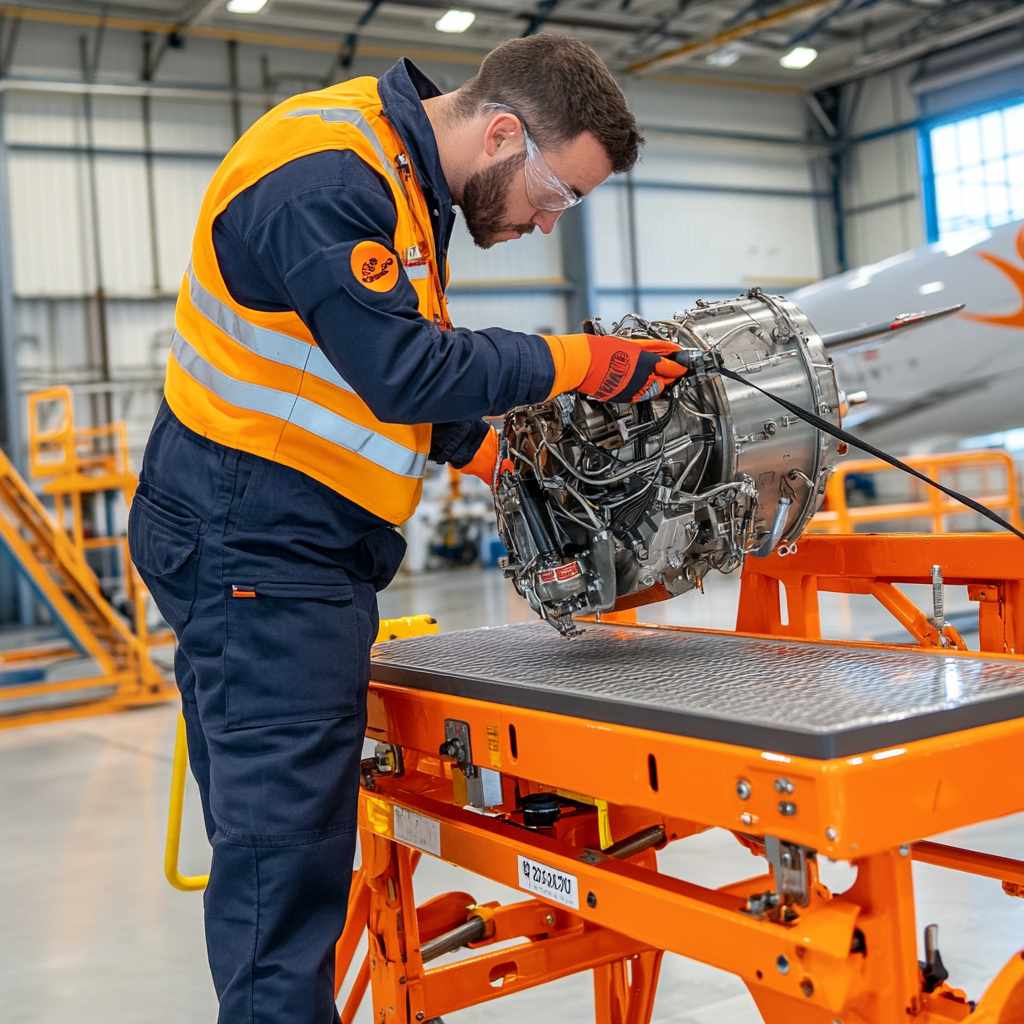
Entry Requirements: Who Qualifies for an Aviation Maintenance Apprenticeship?
To start an aircraft maintenance apprenticeship, candidates generally need a high school diploma or an equivalent qualification, although some programs may not require prior experience in aviation or mechanics. Eligibility criteria for an aviation apprenticeship include being at least 18 years old, having a high school diploma or GED, and having the legal right to work in the U.S.
Common requirements include:
- Minimum age of 18
- Ability to read, write, and understand technical English
- Legal authorization to work in the United States
- Passing drug tests and background checks where required
- General requirements for entering an FAA apprenticeship include passing drug tests and documenting practical experience of 30 months
- Mechanical aptitude from auto repair, military maintenance, shop classes, or personal projects
- Ability to lift, climb, stand, work around noise, and handle evening or weekend shifts
Some employers may prefer applicants with community college aviation maintenance coursework. In your application, highlight safety mindset, attention to detail, reliability, and genuine interest in aviation technology.
Timeline to Your Airframe and Powerplant Certificate
The basic path is simple: get hired as an apprentice mechanic, accumulate 18–30 months of documented experience, apply for FAA authorization, take the knowledge tests, and complete oral and practical exams with a Designated Mechanic Examiner.
A typical timeline may look like this:
- Month 0: onboarding, safety, tools, company policies, and hangar basics
- Months 6–12: simple inspections, removals, installations, and supervised tasks
- Months 12–24: advanced systems, troubleshooting, documentation, and study routines
- Months 24–30: test prep, log review, Form 8610-2, and FAA authorization
- Months 30–36: final testing, retakes if needed, and transition into a certified role
Many apprentices begin formal studying midway through the program because real work gives context to the general, airframe, and powerplant knowledge areas. Coordinate testing with your employer so you are able to get study support, scheduling flexibility, and access to practice materials.
Upon passing, you hold the A&P certificate and may sign off certain aircraft maintenance and return aircraft to service within the privileges of the certificate and applicable regulations.
Does an Apprenticeship Lead to a Full-Time Job?
Yes, many aviation maintenance apprenticeship programs are long-term hiring pipelines, not short temporary internships. Apprentices often work full time in a paid position, and employers often cover apprenticeship fees, tools, and provide benefits like medical and dental from day one.
Apprenticeships generally offer job placement and pay raises upon certification, contingent on program completion. Completing an aviation apprenticeship can lead to full-time employment opportunities, as many apprentices are hired into entry-level roles after demonstrating their skills and reliability. These opportunities can open doors to new responsibilities as experience grows.
Aviation Maintenance Technicians (AMTs) can find employment in various sectors including airlines, manufacturers, repair stations, and general aviation, showcasing the versatility of their skills. The aviation industry offers a range of career pathways for those with an Aviation Mechanic certificate, including specialized fields such as avionics and unmanned aircraft systems.
How to Find, Apply for, and Succeed in an FAA Aviation Apprenticeship
You can find opportunities through airlines, repair stations, local airports, FBOs, and company career pages. Search terms like “aviation maintenance apprentice,” “A&P trainee,” “aircraft mechanic helper,” and “maintenance technician apprentice” can uncover openings.
To apply and stand out:
- Build a focused resume with mechanical projects, safety habits, coursework, and work history
- Write a short cover letter explaining why you want a long-term aviation maintenance career
- Ask local pilots, instructors, and airport staff where apprenticeships may be posted
- Be ready to discuss problem-solving, teamwork, and willingness to work variable shifts
- Treat the apprenticeship like a prolonged job interview
- Show up early, ask questions, take notes, and maintain your own logbook
- Remember that a professional identity is more than a logo on a uniform; it is built through safe, consistent work
Apprenticeships offer financial and career advantages, such as earning while learning and avoiding tuition fees.
Want to Learn More About Your Registered Apprenticeship Opportunities?
BOOK A FREE CONSULTATION
FAQs About FAA Aviation Apprenticeships
Do I need any certification before starting an apprenticeship?
Usually, no. Most employers are looking for attitude, reliability, mechanical interest, and the required eligibility documents rather than an existing FAA certificate.
How long does it usually take to qualify for the A&P exams?
The FAA requires 18 months for one rating or 30 months of concurrent experience for both airframe and powerplant. Many programs take 30–36 months, while some broader apprenticeship tracks may run one to four years.
Can military aircraft maintenance experience count toward FAA requirements?
Yes, military experience may count if it matches FAA subject areas and is properly documented. You should bring records, supervisor letters, and maintenance history to the FSDO for review.
Is an apprenticeship better than going to an aviation maintenance school first?
It depends on your learning style and finances. A school may provide more structured classroom time, while an apprenticeship gives paid hands-on experience and may reduce tuition costs.
What tools am I expected to buy myself?
Each employer is different. Some provide a starter tool set or reimburse costs, while others expect you to build your own basic kit over time.
Are apprenticeships usually paid?
Yes, most are paid, often full time, with benefits depending on the employer and region.
Conclusion: Choosing the Apprenticeship Path into Aviation Maintenance
An FAA-aligned apprenticeship is a practical pathway into aircraft maintenance for people who want hands-on work, mentorship, and a clear route to A&P certification. It replaces much of the traditional classroom model with documented experience while keeping you aligned with FAA requirements.
The biggest benefits are real-world training, paid experience, reduced tuition exposure, and strong potential for a full-time career. If you enjoy solving mechanical problems and want to build a future in aviation, start researching local openings, prepare your application, and learn what each program expects.
Ready to take the next step? Visit our apprenticeship training page or contact us for more information about starting your aviation maintenance career.


