
Career and technical education has evolved well beyond the old “shop class” stereotype. In 2027, CTE programs of study represent one of the most effective ways for high school students to graduate with real skills, industry certifications, and a clear pathway into either postsecondary education or the workforce.
Whether you are a parent researching options for your children, an educator designing curriculum, or an employer looking to build a talent pipeline, this guide breaks down how CTE programs work and why they matter now more than ever.
Table of Contents
- What Are CTE Programs of Study?
- How CTE Programs of Study Work for High School Students
- Major Career Pathways and Example CTE Programs
- Industry-Recognized Credentials and Certifications
- Work-Based Learning: Internships, Apprenticeships, and Beyond
- Designing and Improving a CTE Program of Study
- FAQs About CTE Programs of Study
- Why Choose a Modern Work-Based Learning Platform to Support CTE Programs
- How to Get Started With a CTE Program of Study
What Are CTE Programs of Study?
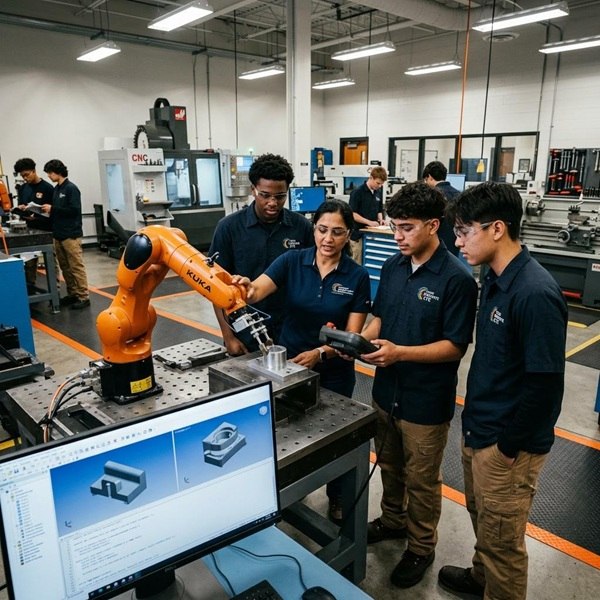
A CTE program of study is a planned, multi-year sequence of career and technical education courses that starts as early as grade 9 and builds toward a specific career pathway. Unlike a single elective course-say, one semester of graphic design-a full program of study spans three to four years, integrates academic content like math, science, and English with technical education, and culminates in an industry recognized credential, certificate, or college credit opportunity.
Career and Technical Education (CTE) is organized into 16 distinct Career Clusters that align with workforce needs, including Health Science, Information Technology, Business Management, and more. States define specific career pathways within each cluster. Texas, for example, offers over 120 CTE programs of study across these career pathways, each aligned with high-wage, in-demand occupations.
CTE programs are supported by the Perkins Act-specifically the Strengthening Career and Technical Education for the 21st Century Act (Perkins V)-which provides federal funding and requires state education agencies to approve, monitor, and refresh programs of study. CTE programs aim to connect academic learning with practical skill-building in various industries. CTE programs are available in grades 9–12 and beyond, serving adult learners through community colleges and technical schools, but this article focuses primarily on secondary implementation.
- A single elective CTE course provides isolated exposure. A full program of study builds from broad to specific over multiple years, leads to industry certifications, and often includes dual enrollment or articulated credit with postsecondary institutions.
How CTE Programs of Study Work for High School Students
Most CTE programs follow a three-stage progression that keeps students engaged while building depth over time:

- Explore (Grade 9–10): Students take foundation courses that introduce a broad career cluster. These are designed so students can explore various occupations before committing to a specific career path.
- Concentrate (Grade 10–11): Students narrow into a single pathway, taking intermediate and advanced CTE courses with prerequisites that build technical competency.
- Capstone (Grade 11–12): Students complete applied projects, work-based learning experiences, or certification-prep courses that demonstrate readiness for the workforce or further education.
CTE programs of study typically require three to four courses in sequence. In many states-including Texas, Ohio, and Michigan-CTE credits count toward elective graduation requirements. Counselors and CTE coordinators work with students to build Individual Graduation Plans starting in 8th or 9th grade, allowing flexibility to revise pathway choices without wasting credit.
CTE enhances student engagement by aligning education with personal career interests. Students in CTE learn both technical skills and essential soft skills like teamwork and problem solving. CTE curricula may include project-based learning and direct industry insights-students might troubleshoot a network security issue, design a safe kitchen workflow, or write a grant proposal for a simulated business. Real-world skills are taught through labs, projects, simulations, and workplace activities in CTE.
High school CTE programs can partner with community colleges for dual enrollment opportunities, so advanced courses count toward certificates or associate degrees, reducing college time and tuition. CTE programs also support equity and inclusion through open enrollment policies, support services for English learners and students with disabilities, special education accommodations for credential exams, and initiatives to increase nontraditional-gender participation.
Major Career Pathways and Example CTE Programs
The following high-demand career pathways illustrate the range of CTE programs available to students in 2027. CTE programs cover various fields like healthcare, IT, manufacturing, and hospitality.
- Health Science: Principles of Health Science (grade 9–10) → Medical Terminology and Anatomy (grade 10–11) → CNA Clinical Prep (grade 11–12). Students use medical instruments, electronic health record software, and learn infection control. Capstone: operate a mock health clinic or run a community health screening.
- Information Technology: Intro to IT (grade 9) → Intro to Cybersecurity or Network Admin (grade 10–11) → Certification Prep and Capstone (grade 11–12). Tools include Python programming, virtualization software, and cloud platforms. Capstone: design and secure a small business network.
- Advanced Manufacturing: Foundations of Technology (grade 9–10) → CNC Machining or Manufacturing Systems (grade 10–11) → Mechatronics or Robotics (grade 11–12). Students use CNC machines, CAD software, and robotics kits. Capstone: assemble and test a robotic arm.
- Construction Trades: Intro to Construction and Safety (grade 9) → Carpentry, Electrical, or Plumbing (grade 10–11) → OSHA-30 and Apprenticeship Prep (grade 12). Students learn blueprint reading and power tool operation. Capstone: build a small structure such as a tiny home or shed.
- Business and Marketing: Marketing Foundations (grade 9) → Digital Marketing or Financial Accounting (grade 10–11) → Entrepreneurship Capstone (grade 11–12). Tools include Excel, Adobe Creative Cloud, and social media strategy platforms. Capstone: launch a student-run startup.
- Hospitality and Culinary Arts: Culinary Basics and Food Safety (grade 9–10) → Global Cuisine or Hospitality Management (grade 10–11) → Restaurant Operations Capstone (grade 11–12). Students earn ServSafe certification and learn menu planning. Capstone: run a pop-up café or cater a school event.
- Agriculture and Environmental Systems: Plant and Animal Science (grade 9) → Sustainable Agriculture (grade 10–11) → Agribusiness Capstone (grade 11–12). Students use soil-testing kits, GIS mapping, and farm equipment. Capstone: operate a school garden or agricultural business.
- Arts, AV Technology and Communications: Digital Media Fundamentals (grade 9) → Video Production or Graphic Design (grade 10–11) → Portfolio or Broadcast Capstone (grade 11–12). Tools include Adobe Premiere and Photoshop. Capstone: produce a short documentary or podcast series.
CTE pathways support careers in high-demand industries, including healthcare and information technology, and many CTE pathways align with high-demand careers in transportation, construction, and business leadership.
Industry-Recognized Credentials and Certifications
Industry recognized credentials are certifications validated by employers or professional bodies that verify a student’s competency in specific technical skills. Industry certifications enhance the employability of students completing CTE programs, and in 2027 they are essential for state and federal accountability, apprenticeship entry, and postsecondary credit.
CTE programs often allow students to earn industry-recognized certifications before graduation. Concrete examples by pathway:
- Health Science: Certified Nursing Assistant (CNA), Basic Life Support (BLS), CPR
- Information Technology: CompTIA IT Fundamentals+, CompTIA A+, CompTIA Security+
- Construction and Manufacturing: OSHA-10, OSHA-30 safety cards, AWS (American Welding Society) certifications, NCCER credentials
- Culinary Arts and Hospitality: ServSafe Food Handler, ServSafe Manager
- Agriculture: Certified Horticulture Professional, plant science certifications
Industry certifications verify skill mastery for students, and certifications are portable across schools and employers. CTE programs embed industry-based certifications in their curriculum-credential exams are built into capstone or advanced-level courses, supported by practice tests and vouchers, and often administered on campus. Certification and licensing requirements vary significantly across different CTE industries.
Districts choose which certifications to support using state-approved industry certification lists and local employer input. Texas increased its Industry-Based Certifications list from 309 to 474 for the 2025–2030 cycle, and over 120 programs of study include certifications in Texas. Florida uses Gold Standard Career Pathways Articulation Agreements to guarantee college credit for recognized certifications. Virginia publishes a board-approved credential list with assessments and accommodations for English learners and students with disability.
Students can earn industry-recognized certifications through CTE, which can improve part-time job prospects, signal verified skill levels to employers, and count toward Perkins V performance indicators for school and district accountability.
Work-Based Learning: Internships, Apprenticeships, and Beyond
High-quality CTE programs of study usually include at least one significant work-based learning experience by 11th or 12th grade. Hands-on learning is central to CTE programs, providing practical experience in real-world environments. Students in CTE programs can gain insights through work-based learning models, such as internships. Common models include:
- Job shadowing and career days in 9th–10th grade for early exposure
- Paid and unpaid internships in 11th–12th grade aligned to the student’s pathway
- Pre-apprenticeships and youth apprenticeships connected to Registered Apprenticeship Programs
- School-based enterprises like a student-run bistro, print shop, or IT help desk
On-the-job training complements classroom instruction by developing soft skills-teamwork, time management, problem solving-in real business settings. Compliance matters: students under 18 typically need work permits, employers must meet supervision standards, and experiences must be structured and connected to the CTE program curriculum rather than generic part-time work.
Districts in 2027 increasingly use digital platforms to track hours, evaluate competencies, coordinate among employers and teachers, and generate compliance reports, reducing manual paperwork and improving program quality.
Designing and Improving a CTE Program of Study
For district leaders, CTE directors, and principals, intentional program design is the difference between scattered elective offerings and a coherent education system that drives student achievement and economic development. Key design steps:
- Conduct regional workforce analysis using state labor market tools and 2027 projections to identify high wage, high demand sectors
- Select a limited number of career pathways rather than trying to offer everything
- Map coherent course sequences from grade 9 to graduation, integrating academic and technical education requirements
- Identify target industry certifications and related technical instruction partners such as community colleges or training centers
- Build advisory committees with employers, workforce boards, and higher ed partners to review curriculum, equipment, and emerging skills like automation, data literacy, and AI-aware problem solving
Measure outcomes continuously: CTE concentrator graduation rates, credential attainment, placement in postsecondary education or employment, and student satisfaction surveys disaggregated by race, gender, and socioeconomic status. Common pitfalls include outdated equipment, fragmented courses with no clear program of study, and weak integration of academic standards in CTE classes. Research from Oklahoma shows CTE concentrators are significantly less likely to be disengaged and more likely to avoid poverty.
FAQs About CTE Programs of Study
The following questions address what families, students, and community partners most often ask about CTE programs.
Is a CTE program of study only for students who don’t plan to go to college?
Not at all! Modern career and technical education is designed for both college-bound and workforce-bound students. CTE pathways support both workforce entry and further education. A student who completes a Health Science program of study, earns a CNA credential, and enrolls in a nursing degree at a community college often receives advanced standing-saving significant tuition. CTE programs help students make better college decisions by giving them real-world exposure before choosing a major. CTE can significantly reduce college time and tuition.
Can high school students take CTE programs of study and still enroll in AP or IB classes?
Yes. Most districts design schedules so CTE students can participate in AP, IB, honors, or dual enrollment courses by using elective slots and careful four-year planning. Families should meet with counselors as early as 8th or 9th grade to map how CTE courses, graduation requirements, and advanced academics fit together.
What if my child starts a CTE pathway and later changes their mind?
Early CTE courses build broad, transferable skills-communication, technology use, problem solving-so changing direction is common. Districts allow students to pivot to a different program of study by 11th grade while still counting earlier technical education credits toward graduation. CTE offers pathways that can lead to immediate job placement or further education opportunities regardless of the path chosen.
How are CTE programs of study funded and regulated?
In 2027, most CTE programs are supported by a combination of local district budgets, state CTE allocations, and federal Perkins V funds. States publish approved programs of study and industry certification lists. Local districts must align offerings to these standards-including state board requirements for size, scope, and quality-to maintain funding and ensure educational attainment goals are met.
Do CTE programs of study really improve job prospects for teenagers?
Evidence from state longitudinal data shows that CTE students who complete a program and earn at least one industry certification have higher employment rates and higher starting wages in certain sectors. North Carolina data shows manufacturing concentrators earning a median of nearly $50,000 ten years after graduation. Concrete examples include high school students working as certified nurse aides, entry-level IT support technicians, line cooks, or welding assistants while continuing their education.
How much time outside of class do CTE programs usually require?
Introductory CTE courses require homework similar to core academics. Advanced courses with industry certifications or work-based learning may require extra study, practice hours, or time on job sites. Families should ask teachers and CTE coordinators about typical weekly time commitments before students commit to advanced internships, clinical rotations, or evening lab sessions. Other resources like department websites and financial aid offices can provide additional guidance on support and enrollment details.
Why Choose a Modern Work-Based Learning Platform to Support CTE Programs
Managing CTE programs across multiple employers, diverse pathways, and detailed compliance reporting is complex. In 2027, districts and training providers increasingly rely on specialized platforms to create scalable, accountable programs. These platforms streamline:
- Matching students to internships, pre-apprenticeships, and youth apprenticeships
- Tracking on-the-job training hours and related technical instruction
- Collecting evaluations from mentors and teachers
- Generating reports aligned with federal and state workforce data requirements
For schools, this means reduced administrative overhead for CTE coordinators, real-time dashboards showing which CTE students are on track, and easier collaboration among counselors, teachers, employers, and parents. For employers, it means clearer expectations for student skills, simple feedback tools, and better visibility into future talent pipelines across career pathways. Thoughtfully chosen technology makes career and technical education programs more scalable, accountable, and student-centered.
How to Get Started With a CTE Program of Study
Getting started is less intimidating than it looks when broken into clear steps for each audience.
For families and high school students: Visit your district’s CTE or counseling site to explore current programs. Attend CTE nights or pathway fairs-often held in early spring for rising 9th graders. Schedule a meeting with a counselor to build a four-year plan that includes both CTE and academic goals so your children can make informed decisions early.
For educators and school leaders: Start with an audit of existing technical education programs versus current labor-market demand. Form or re-engage CTE advisory committees with local employers and community partners. Pilot one or two updated programs of study with refreshed curriculum and teaching methods before scaling district-wide. Invest in initiatives that improve access for all enrolled students.
For employers and community partners: Connect with local school districts or workforce boards to learn what programs they already support. Define safe, structured roles for high school interns or youth apprentices with clear competencies and supervision. Establish communication channels with teachers and CTE coordinators to ensure your workforce needs shape the curriculum.
I the evolving job market in 2027, driven by rapid technological change and shifting employer demand-early, intentional engagement with career and technical education sets students up for success that lasts well beyond graduation. Reach out to your school’s CTE department, district office, or local workforce partners today to explore or expand CTE programs of study in your community.

