
This guide covers what career technical education is, how CTE programs work in 2027, and pathways in fields like IT and business management. It also covers how work-based learning and apprenticeships support CTE students in meeting their career aspirations.
Table of Contents
- Overview of Career Technical Education (CTE) Programs
- CTE Pathways, Career Clusters, and Popular Program Areas
- How CTE Programs Prepare Students for College, Careers, and Apprenticeships
- Key Components of High-Quality Technical Education in 2027
- Work-Based Learning and Apprenticeships Within CTE Programs
- Design and Scale CTE Programs That Align With Local Workforce Needs
- What to Know Before Choosing or Expanding CTE Programs
- Common Mistakes to Avoid When Building or Modernizing CTE Programs
- FAQs About CTE Programs, Work-Based Learning, and Apprenticeships
- Why Choose a Data-Driven Approach to Managing CTE and Work-Based Learning
- Next Steps: Moving From Interest in CTE to Action
What Are CTE Programs and Why They Matter in 2027
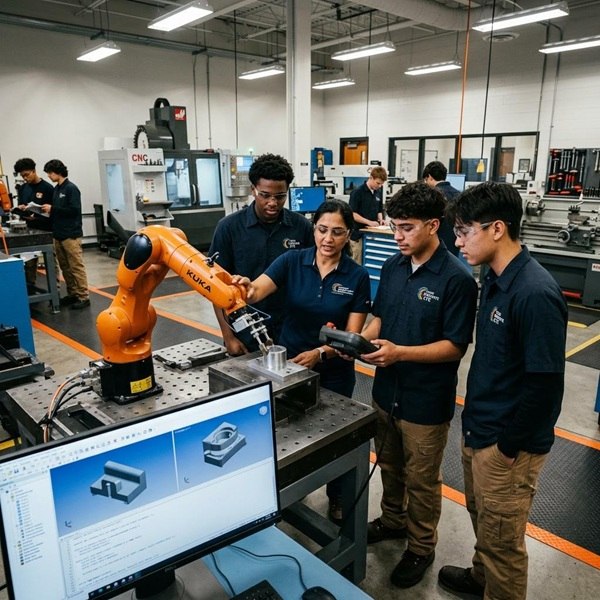
Career technical education, often called CTE, refers to programs that blend academic learning, technical education, and work-based experience.
CTE is taught in middle schools, high schools, and post-secondary institutions, giving students a structured on-ramp into skilled careers from an early age. CTE programs prepare students for various career options spanning healthcare, construction, information technology, business, and dozens of other structures within the workforce.
In 2027, the labor market context makes these programs extremely urgent. The country faces a shortage of roughly 265,000 cybersecurity professionals, allied health roles remain understaffed, and skilled trades employers across the nation struggle to fill positions. Career technical education CTE helps close these gaps by producing graduates who bring both practical knowledge and industry credentials to the job on day one.
This article is written for leaders, high school and college administrators, CTE directors, and employers exploring partnerships. The focus is on practical program design, work-based learning mechanics, and aligning CTE programs with students’ career aspirations.
Overview of Career Technical Education (CTE) Programs
CTE programs in the U.S. are organized into 16 career clusters, each containing multiple programs of study and pathways. Approximately 7.8 million secondary students participated in CTE coursework in the 2022–23 school year, with about 3.3 million at the postsecondary level. CTE is offered in high schools, community colleges, and adult education programs, making it one of the broadest educational delivery systems in the country.
Key characteristics of technical education programs include:
- Hands-on labs with industry-standard tools and software
- Curriculum aligned to employer-defined competency models
- Integration of employability skills like teamwork, communication, and problem solving
- Embedded industry certifications and dual credit opportunities
Unlike traditional academic tracks, CTE pathways apply core subjects inside real contexts. Algebra becomes structural calculations in a construction trades class. English composition turns into business plan writing or IT documentation. Science principles are tested in healthcare labs. CTE encompasses various fields such as skilled trades, business, and health sciences, and students in CTE programs learn both technical skills and foundational academic skills throughout their course sequence.
The progression moves from exploratory courses in middle school to focused high school pathways and then into community college, technical college, registered apprenticeship, or direct employment.
CTE Pathways, Career Clusters, and Popular Program Areas
The 16 national career clusters organize CTE into recognizable fields: Information Technology, Business Management and Administration, Health Science, Manufacturing, STEM, Agriculture, Architecture and Construction, Hospitality, Marketing, and others. Each cluster contains pathways that sequence courses from introductory to capstone levels.
High-enrollment and high-growth CTE program areas for 2027 include:
- Information technology: IT support, networking, cybersecurity, and software development
- Business management and entrepreneurship
- Health science: medical assisting, nursing pathways, and emergency medical responder (health science is the largest CTE career cluster today)
- Skilled trades: construction, HVAC, welding, advanced manufacturing
- Digital media and marketing
- Engineering and architecture
A typical pathway works like this: an IT Support and Cybersecurity sequence might span three to four courses, moving from basic computer systems and networking fundamentals through security concepts to a capstone project or work-based learning placement. Students can gain practical experience in fields like healthcare and information technology through these structured sequences.
Each pathway ties to clear postsecondary and employment options, so CTE students and families can see how coursework connects to certificates, associate degrees, bachelor’s degrees, and apprenticeship programs. This clarity helps students explore careers with a realistic understanding of where each pathway leads.
How CTE Programs Prepare Students for College, Careers, and Apprenticeships
Modern CTE is not a replacement for college. It is a launchpad. CTE graduates often pursue further education at four-year universities, and many enter with dual credits and industry credentials that give them a head start over peers who followed purely academic tracks.
CTE programs prepare students in three dimensions:
- Academically: Math and science are embedded in engineering, IT, and health labs, helping students meet or exceed graduation requirements and college-and-career readiness indicators.
- Technically: Students earn industry certifications through CTE programs, from CompTIA A+ to OSHA-10 to CNA credentials, building credentials that employers recognize immediately.
- Professionally: Career development skills taught in CTE include résumé writing, job searching, mock interviews, and workplace communication.
Students can earn a CTE Pathway Endorsement by completing three credits in a single pathway, and many districts tie graduation endorsements to this completion. Dual credit agreements allow students to earn college credit while still in high school, keeping the door to postsecondary education wide open. CTE pathways lead to immediate employment opportunities as well, giving students flexibility depending on their goals.
CTE students have a higher graduation rate than the national average. CTE programs improve high school graduation rates significantly and help increase student engagement by connecting classroom learning to tangible career opportunities. Individual learning plans, counseling sessions, and tools that surface local labor-market data help students connect CTE experiences to their career aspirations.
In 2027, many CTE programs are tightly linked to registered apprenticeship and pre-apprenticeship options in areas like IT, advanced manufacturing, construction, and healthcare, giving students a smooth transition into paid, structured training after graduation.
Key Components of High-Quality Technical Education in 2027
Nationally recognized elements of quality in career technical education CTE include alignment to industry needs, rigorous academics, and equitable access for all learners. Districts and colleges should build these components into every program:
- Clearly defined, sequenced programs of study from introductory to capstone
- Standards-based curriculum aligned to state CTE frameworks and industry competency models
- Hands-on labs with current equipment and software, especially in information technology and advanced manufacturing
- Integrated employability skills and work-readiness training, including soft skills like problem-solving and teamwork
- Multiple work-based learning touchpoints: guest speakers, job shadows, internships, youth apprenticeships
CTE offers hands-on training in high-demand industries, and hands-on training improves student engagement and learning outcomes across every cluster. Hands-on learning is essential for careers in health science and technology, where simulation alone cannot replicate the demands of real practice.
Credential stacking matters. Students start with entry-level certifications and build to higher-value credentials as they progress. Students in CTE programs often receive industry certifications after training, creating a portable record of competency that employers trust.
Data-informed continuous improvement keeps programs relevant. Washington State, for example, has set its work-based learning participation target to rise from 43.3 percent in 2025 to 44.3 percent by 2027, using Perkins V performance indicators to drive accountability. Districts that track completion rates, credential attainment, placement data, and employer feedback can refine CTE pathways each year with confidence.
Work-Based Learning and Apprenticeships Within CTE Programs
In 2027, CTE programs increasingly rely on structured work-based learning and apprenticeships to connect classroom learning to real workplaces. The national average for secondary work-based learning participation is approximately 36.84 percent and projected to rise toward 45.93 percent in coming years. CTE programs often integrate internships and work-based learning opportunities as core program requirements, not optional extras.
The continuum of experiences includes:
- Career awareness: Industry speakers, virtual facility tours
- Career exploration: Job shadows, short-term employer projects
- Career preparation: Internships, clinicals, cooperative education, youth apprenticeships
Pre-apprenticeship programs are often embedded inside CTE pathways, especially in construction, manufacturing, and information technology, giving students a head start on the related technical instruction and on-the-job training they will complete after high school. CTE programs include hands-on training and real-world experience that make this transition seamless. CTE programs focus on hands-on experience and skill development throughout.
Accurate OJT and RTI tracking is critical for any CTE program connected to registered apprenticeship. Automated systems reduce administrative burdens for schools and employers, ensuring hours are documented correctly and compliance reporting flows smoothly.
Benefits span every stakeholder: CTE students gain paid, real-world experience and a clearer sense of their passion and career aspirations. Employers build a predictable talent pipeline and can shape the skills being taught. Schools and districts demonstrate strong outcomes in placement, retention, and earnings data.
Design and Scale CTE Programs That Align With Local Workforce Needs
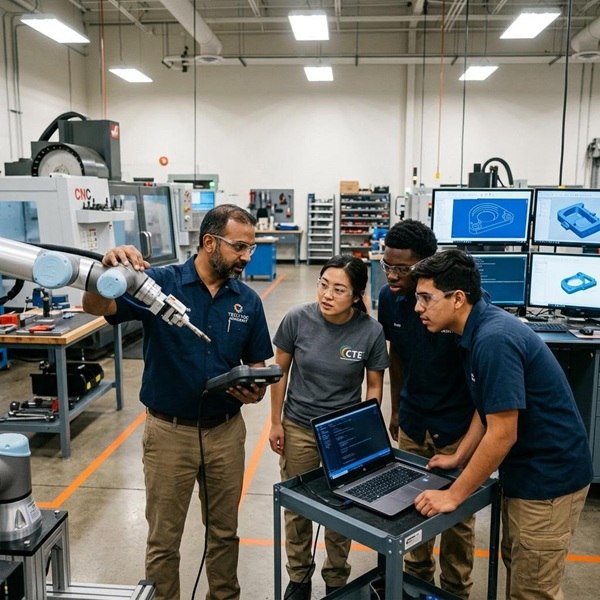
Impactful CTE programs are built around local and regional labor-market data, not generic lists of popular careers. CTE curricula are designed in consultation with local industry partners to ensure relevance.
Steps for education leaders to follow:
- Analyze state and regional labor-market data for in-demand careers through 2030
- Convene advisory committees with employers from information technology, business management, healthcare, and skilled trades
- Audit current CTE pathways for relevance and sunset programs that no longer align to strong career opportunities
- Build new pathways where unmet employer demand and student interest intersect
For scaling, start with a pilot pathway and expand based on enrollment, outcomes, and employer feedback. Braid funding from Perkins V, state CTE grants, workforce boards, and employer contributions. Use technology platforms to centralize student records, work-based learning placements, and compliance reporting as programs scale across campuses.
Nebraska’s secondary work-based learning participation sits at roughly 16.7%, highlighting a lot of room for growth compared to states like Washington at 43%. The gap shows how investments in infrastructure, employer partnerships, and tracking tools can accelerate progress.
Equity and access must be priorities: remove unnecessary prerequisites, offer transportation support, provide flexible schedules, and conduct targeted outreach to underrepresented student groups so every student has the chance to excel and develop skills for high demand careers.
What to Know Before Choosing or Expanding CTE Programs
District superintendents, CTE directors, and college deans should ask pointed questions before launching or expanding programs:
- Do current CTE pathways genuinely prepare students for living-wage jobs or strong postsecondary programs in our region?
- Are we covering fast-growing areas like information technology and healthcare, plus local industries such as logistics, advanced manufacturing, or agriculture?
- Do CTE students have meaningful opportunities for work-based learning, not just classroom simulations?
- Are employers actively engaged through advisory boards, curriculum review, and hosting apprenticeships or internships?
Potential pitfalls include launching trendy pathways without committed employer partners, underestimating startup costs for labs and equipment, and neglecting to train CTE teachers in new technologies and industry standards. Educators need ongoing professional development to keep programs engaging and current.
Pilot new programs with clear outcome goals and data-collection plans, then scale based on evidence: credential attainment, enrollment growth, student satisfaction, and employment outcomes. Clear communication with families and community members is essential so they understand CTE pathways support both college and career readiness, giving students opportunities that advance their future.
Common Mistakes to Avoid When Building or Modernizing CTE Programs
Even well-intentioned CTE expansions fall short when they overlook employer input, student voice, or data-driven planning. Frequent mistakes include:
- Designing programs without ongoing employer advisory input, resulting in outdated skills training
- Focusing only on equipment purchases rather than curriculum quality, teacher development, and work-based learning
- Treating CTE as a separate track instead of integrating it with core academics and counseling services
- Failing to give CTE students access to rigorous academics, limiting their future options for college and advanced training
- Neglecting to track OJT and RTI hours accurately for apprenticeship-connected programs, creating compliance and reporting problems
- Under-communicating success by not sharing CTE outcomes data with school boards, organizations, and families
Remedies: form cross-functional teams spanning CTE, academics, counseling, and data/IT staff. Build multi-year professional development plans for CTE teachers. Use centralized digital tools for program tracking and reporting. Start with a small number of well-supported, high-quality pathways and expand after demonstrating measurable impact to the community and interested stakeholders.
FAQs About CTE Programs, Work-Based Learning, and Apprenticeships
What is the difference between CTE and traditional academic programs?
CTE adds hands-on technical education and career-specific skills to core academics. Students work in IT labs, healthcare simulation rooms, welding shops, or culinary kitchens alongside their required English, math, and science courses. CTE students still take every academic class needed for graduation and college eligibility, but they also leave high school with employable skills and often industry certifications that their peers on purely academic tracks do not have.
Do CTE programs limit students’ options for college or university?
No. High-quality career technical education CTE pathways are designed to keep college options open. Many include dual credit, advanced math and science coursework, and transferable general education credits. CTE graduates regularly pursue bachelor’s degrees, and their background in applied learning often helps them excel in postsecondary programs that value practical knowledge.
How early can students start exploring CTE pathways?
Many districts introduce CTE exploration in middle school with broad career awareness courses in grades six through eight. Students then select focused pathways in high school. Early exposure helps students refine their career aspirations before committing to a specific program of study, and it builds enthusiasm that keeps them engaged through graduation.
Which CTE pathways are most in demand in 2027?
Strong nationwide demand exists in information technology, health science, advanced manufacturing, logistics, and business management. However, the best guidance is to check regional labor-market data. A pathway thriving in one part of the country may have limited openings locally. Districts should match national trends with local employer needs to give students the strongest career opportunities.
How do work-based learning and apprenticeships fit into CTE programs?
Internships, clinicals, cooperative education, and youth or registered apprenticeships allow students to apply classroom skills in real workplaces, earn wages or credit, and document OJT and RTI hours that count toward credentials or apprenticeship completion. These experiences give students a chance to practice what they learn and develop confidence before entering full-time employment in their chosen field.
How can employers get involved with local CTE programs?
Employers can join advisory boards, host site visits and job shadows, offer internships and apprenticeships, donate equipment or resources, and collaborate with schools to design projects or curriculum that reflect current industry practices. Engaged employers shape the world students are preparing to enter and gain access to a pipeline of graduates ready to contribute from day one.
Why Choose a Data-Driven Approach to Managing CTE and Work-Based Learning
As CTE programs grow across multiple schools, districts, and employer partners, manual tracking with spreadsheets and paper forms becomes unmanageable and risks non-compliance. Centralized, digital platforms help CTE leaders:
- Track student progress across multiple pathways and campuses
- Manage and verify OJT and RTI hours for internships, pre-apprenticeships, and registered apprenticeship connections
- Simplify reporting requirements to state education agencies and workforce entities, including RAPIDS, WIPS, and PIRL reporting where apprenticeships are involved
- Share real-time dashboards with administrators, instructors, and partners to drive continuous improvement
A modern system also improves the experience for students and employers. Students get mobile access to their progress, competencies, and work logs. Employers approve hours and provide feedback quickly. Coordinators spend less time on paperwork and more time on instruction and relationship-building. GoSprout was built specifically for this purpose, offering automated compliance reporting, OJT and RTI tracking, and stakeholder collaboration tools designed for the way CTE and apprenticeship programs actually operate.
Decision-makers should evaluate tools based on how well they support their specific mix of CTE pathways, work-based learning models, and apprenticeship or internship structures. This infrastructure is essential for any district, college, or workforce organization aiming to scale programs sustainably and demonstrate return on investments to boards and funders.
Next Steps: Moving From Interest in CTE to Action
Demand for skilled talent will continue to rise through 2030 in information technology, healthcare, advanced manufacturing, and business management. Robust CTE programs remain one of the most effective ways to prepare students for life in a competitive global economy.
Suggested next steps:
- District and school leaders: Conduct a current-state audit of CTE pathways, connect with regional employers, and identify one to two pathways to modernize or launch in the next academic year.
- College and training providers: Align certificate and degree programs with local high school sequences and explore dual credit, bridge programs, and shared facilities.
- Employers: Reach out to local CTE directors or workforce boards to explore hosting interns, co-designing curriculum, or sponsoring apprenticeships.
Prioritize data-informed planning, student voice, and employer partnership in any CTE initiative launched between now and the next three to five years. Whether you are reviewing current programs, scheduling a planning session with partners, or exploring tools that centralize CTE and work-based learning management, the most important step is the first one. Take it now, and build programs that truly prepare students for meaningful, future-ready careers and lasting success in the workforce.

