A job shadowing program is a short-term workplace learning experience that pairs students with professionals to observe workdays, ask questions, and connect academic concepts to workplace situations. For high school students choosing between two-year college, four-year college, trade school, registered apprenticeships, military service, or direct entry into the workforce, a well-structured shadow day can reshape how they think about their future.
This article walks educators, counselors, and employers through every phase: defining what a job shadowing program is, designing one that works, preparing all participants, staying compliant, and scaling with technology. Job shadowing sits on the early end of a broader work-based learning continuum that extends through internships, pre-apprenticeships, and registered apprenticeship pathways.
Table of Contents
- What Is a Job Shadowing Program?
- Why Job Shadowing Matters for High School Career Paths
- Designing a High-Quality Job Shadowing Program
- Preparing Students, Educators, and Hosts for a Successful Shadowing Experience
- Finding and Expanding Job Shadowing Opportunities
- Compliance, Safety, and Documentation in a Shadowing Program
- FAQs About Job Shadowing Programs
- Why Choose Our Platform to Power Your Job Shadowing Program
- Next Steps: Launching or Scaling Your Job Shadow Program
What Is a Job Shadowing Program?
Job shadowing is an observation-focused, unpaid experience in which a high school student follows a professional through part or all of a workday. Single-day shadows generally last two to eight hours. Students spend 16 to 24 hours job shadowing in healthcare settings, where multi-day rotations across specialties are common. Job shadowing provides insight into daily job responsibilities, and it helps individuals explore career options without making a long-term commitment.
During a shadow, students observe meetings, briefings, site tours, and informal Q&A sessions. They do not perform production work. A student shadowing a civil engineer might watch a site inspection and review blueprints; a student at a hospital follows a surgical tech through pre-op procedures. The focus is awareness, not output.
| Model | Duration | Activities | Pay |
|---|---|---|---|
| Job shadowing | Hours to days | Observe, Q&A, tours | Unpaid |
| Internship | Weeks to months | Supervised project tasks | Sometimes paid |
| Pre-apprenticeship / Apprenticeship | Months to years | OJT + Related Technical Instruction | Usually paid |
Common formats include single-day job shadows, career-exploration weeks where students rotate through multiple departments, and industry-themed shadowing days tied to CTE or college- and career-readiness courses.
Why Job Shadowing Matters for High School Career Paths

Job shadowing is recognized as a valid work-based learning activity across at least 33 states that maintain formal definitions of WBL in policy.
An OECD analysis found that students who participated in job shadowing by age 15 earned roughly 9.7% more in adulthood than peers with similar academic backgrounds but no such exposure. A separate study of 131 rural high schoolers showed a statistically measurable increase in career decision self-efficacy (p < .001) after participating in structured shadowing.
For students, the benefits are concrete. Job shadowing helps students explore various career options and career possibilities before committing to education pathways or training programs. Students can network with professionals during job shadowing, and that networking can lead to job referrals or long-term mentorships. Seeing professionals tackle daily challenges highlights specific hard and soft skills valued in the industry, which helps students determine whether a particular job or field aligns with their values and interest.
Job shadowing helps participants understand a job’s responsibilities and challenges before making commitments. It also helps students and career changers test out a field before committing to formal education. A student who shadows a diagnostic medical sonographer at UAMS in Arkansas and discovers the role requires patient interaction skills they enjoy may shift their class schedule toward anatomy and dual-enrollment health courses. That single job shadow experience can influence career decisions for years.
Schools and districts benefit through improved career readiness indicators. Employers gain a low-risk pipeline: hosting shadows costs little, and the exposure helps them identify potential candidates for internships, pre-apprenticeships, and future hires. Job shadowing provides an opportunity to build a network and find potential mentors in the industry, strengthening relationships between the community and the school.
Designing a High-Quality Job Shadowing Program
Start by defining measurable program goals. Examples: every 10th grader completes one four-hour shadow by spring; 40% of placements go to students from underserved zip codes; priority industries align with local labor market data in healthcare, IT, advanced manufacturing, or clean energy. High school students must be in good academic standing to apply, which keeps participation encouraged as an earned opportunity rather than a random assignment.
Select partner employers and roles using workforce board data on in-demand occupations. Hosts should be willing to structure the experience: a schedule, a safety orientation, a designated mentor, and time for Q&A. Age-appropriate placement matters. Many states permit shadowing at any high school age for observation-only experiences, but clinical or manufacturing environments often require students to be at least 16, with immunization records or background clearances.
Build a program structure: an application form where students identify career goals and interest areas, a matching process that pairs students to hosts by industry and schedule, school-approved shadow days coordinated with the academic calendar, and documentation for each shadowing experience.
Preparing Students, Educators, and Hosts for a Successful Shadowing Experience
Preparation is the difference between a forgettable field trip and a shadowing experience that changes how a student thinks about their life after graduation.
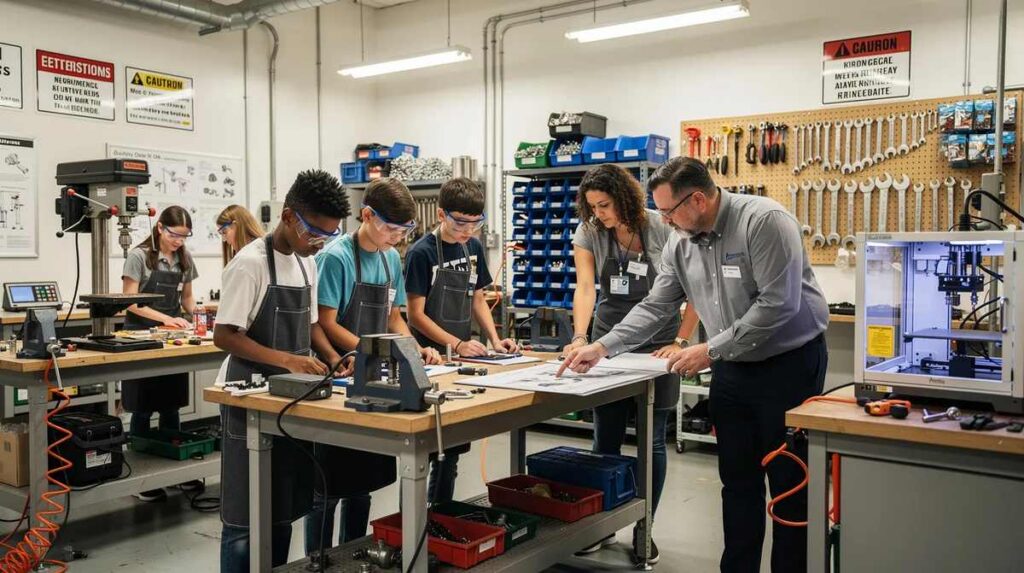
Students should research the organization and the specific job they will observe. They should write a list of questions covering daily responsibilities, required skills, and career paths within the company. Job shadowing offers insight into unwritten workplace norms and industry-specific terminology, so students should plan to listen carefully and take notes. Schools should cover dress code expectations, punctuality, phone use, and confidentiality rules. After the shadow, sending a thank-you note demonstrates professional etiquette and keeps the door open for future contact.
Educators and counselors handle the procedural side: obtaining parent or guardian consent, arranging transportation, coordinating with teachers on missed class assignments, and facilitating post-shadow reflection activities. Reflection can take the form of a written assignment, a group discussion, or a portfolio entry. These activities help students connect what they observed to their academic advisor conversations and next steps in course selection.
Hosts and employers should prepare a half-day or full-day schedule that includes short introductions to colleagues, observation of real work (not staged demos), and safe, age-appropriate demonstrations. Allocate at least 15 minutes for Q&A at the end.
Finding and Expanding Job Shadowing Opportunities
Many high schools struggle to fill enough placements for all interested students. Start with what you have: CTE advisory boards, alumni networks, and existing internship or apprenticeship partners can often surface job shadowing opportunities with a single email. Students can find job shadowing opportunities through school connections, and contacting companies directly can increase the pool further.
Work with local chambers of commerce, workforce development boards, and industry associations to recruit new hosts. Employers who participate once often return when the program is organized well. Encourage employers to create recurring shadowing slots, such as monthly shadow days or industry-specific weeks that align with the school calendar.
Job shadowing does not lend itself to virtual activities the way some other WBL models do; the value comes from being physically present in a workplace. For equity, districts should coordinate transportation and distribute high-demand placements so students from different high schools and neighborhoods can participate in the same group of opportunities.
Compliance, Safety, and Documentation in a Shadowing Program
Observation-only job shadows fall outside most paid-employment regulations. Under OSHA guidance, unpaid students in job shadowing are not classified as employees. Federal child labor rules under the FLSA regulate paid work and hazardous tasks, but observation-only shadows for high school students generally sit outside those requirements. State laws vary, so check your state’s WBL implementation guide.
Documentation includes parental consent forms, emergency contact information, confidentiality agreements, and site-specific clearances. Hospital shadows may require immunization records. Every shadowing program should have sign-in/out procedures and a plan for ending the experience early if needed.
Centralized tracking matters. Recording student participation, hours, industries, and host feedback gives districts the data they need for state accountability reporting, Perkins V compliance, and continuous program improvement.
FAQs About Job Shadowing Programs
How long does a typical high school job shadow last?
Duration of job shadowing usually ranges from a single day to a couple of weeks. Most single-day experiences run two to eight hours. In healthcare, high school students can spend 16 to 24 hours across multiple shadow days to rotate through specialties like radiology, nuclear medicine, or surgical technology.
Can high school students job shadow during the school day?
Most districts treat shadow days as excused absences with pre-approval. Students submit a permission form, coordinate with teachers on missed assignments, and receive information about schedule expectations from both the school and the host site.
What can students actually do during a job shadow?
Job shadowing is primarily observation. Students may sit in on meetings, follow workplace tours, and ask questions. Some hosts allow low-risk supervised tasks like organizing materials or simple data entry, but students should not perform unsupervised or hazardous duties.
Is job shadowing paid, and does it count as work experience?
Job shadows are unpaid. Most states do not grant academic credit for standalone shadows unless they are part of a registered WBL program. Still, shadowing counts as valuable experience on a resume, portfolio, or college application, and job shadowing can lead to long-term professional relationships or mentorships.
How early in high school should students start job shadowing?
Introductory career exploration shadows work well in 9th and 10th grade to help students explore broad career possibilities. By 11th and 12th grade, shadows should align with a student’s chosen career pathway, CTE concentration, or dual-enrollment plan.
What if a student decides they don’t like the job after shadowing?
Discovering a poor fit is one of the most useful outcomes. It helps students refine career goals, avoid pursuing a mismatched field, and redirect their energy toward better-aligned courses, training, or additional shadowing in a different industry.
Why Choose Our Platform to Power Your Job Shadowing Program
Running a job shadow program across multiple high schools, dozens of employers, and hundreds of students creates real administrative complexity: consent forms, scheduling conflicts, host communication, tracking hours, and reporting to the state. Spreadsheets and email chains break down after the first semester.
GoSprout centralizes the entire workflow. Educators can manage job shadow requests, approvals, and scheduling from a single dashboard. Employers receive a portal to offer shadowing slots, confirm attendance, and submit feedback. The same system tracks student participation across job shadowing, internships, pre-apprenticeships, and registered apprenticeship pathways, giving districts a unified view of work-based learning. Document workflows handle e-signatures for consent forms, safety checklists, and liability waivers. Reporting tools generate the data districts need for state WBL compliance and Perkins V accountability, without manual data entry.
Next Steps: Launching or Scaling Your Job Shadow Program
Job shadowing gives high school students a low-risk, high-clarity way to test career assumptions before those assumptions become expensive commitments. Here is a simple roadmap:
- Define your program goals: target grade levels, exposure hours, priority industries, and equity benchmarks.
- Engage five to ten local employers willing to host students on a recurring schedule.
- Pilot with a small cohort of 15 to 20 students. Collect pre- and post-shadow reflections.
- Gather feedback from hosts, students, and educators. Identify what to improve.
- Expand to additional schools, employers, and industries using a centralized platform.
Collaborate with workforce partners and neighboring districts to build a shared, regional shadowing program instead of isolated efforts. Contact GoSprout to explore how the platform can support your next school year’s job shadow program from pilot through district-wide scale.