

The skills gaps in advanced manufacturing result from retiring workers, and that means the door is wide open for newcomers. A CNC machinist apprenticeship is a structured training program that combines paid on-the-job training with classroom instruction, preparing individuals for careers in advanced manufacturing without piling on student debt. CNC machinists are in high demand across multiple industries, from aerospace to medical devices. Below, you will find everything you need to decide whether this trade and this training model are right for you.
Table of Contents
- What a CNC Machinist Apprenticeship Really Looks Like Day to Day
- How Registered Apprenticeship Programs for CNC Machinists Are Structured
- On the Job Training vs. Classroom Learning: Building Real Skills
- Requirements, Pay, and Career Path in a CNC Machinist Apprenticeship
- How to Choose the Right CNC Machinist Apprenticeship Program
- Steps to Getting Started and Common Mistakes to Avoid
- Why Choose a Structured CNC Machinist Apprenticeship for Your Career
- Next Steps: How to Take Action on a CNC Machinist Apprenticeship
- FAQs About CNC Machinist Apprenticeships
What a CNC Machinist Apprenticeship Really Looks Like Day to Day
At its core, CNC machining involves programming and operating computer-numerical-control mills and lathes to produce precision metal parts. Apprentices earn while they learn through paid training programs, meaning you draw a paycheck from day one while building real skills on a production floor. Earn while learning is a core principle of apprenticeship programs, allowing pay from day one rather than years of unpaid study.
Programs typically start with manual machining to grasp fundamental skills before moving to CNC equipment. Daily tasks include reading blueprints, setting up lathes and milling machines, loading G-code programs, and measuring finished parts. Apprentices gain experience in blueprint reading, which involves interpreting engineering drawings and specifications to meet special engineering needs. Machinists use tools such as micrometers, vernier calipers, and other precision instruments to ensure parts meet engineering specifications. Precision measuring tools are essential for quality control in machining, whether you are producing titanium aerospace brackets, automotive drivetrain shafts, or surgical implant components.
The difference between a general machinist track and a focused CNC machinist position is emphasis. A CNC track pushes earlier exposure to CAM software, Fanuc or Haas controllers, and multi-axis machining procedures, while a general track spends more time on manual lathes and bench work. Advanced manufacturing requires familiarity with CAD/CAM technology for effective production, so the CNC path front-loads that knowledge.
Apprentices graduate able to independently run production jobs, conduct test runs, verify operational efficiency, and exchange technical information with manufacturing personnel, applying knowledge that qualifies as real skills and genuine job training rather than observation.

How Registered Apprenticeship Programs for CNC Machinists Are Structured
Many apprenticeship programs are registered with the U.S. Department of Labor or a state apprenticeship agency. Registration ensures documented standards for pay, safety, and competency so every apprentice and employer operates under clear rules.
CNC machinist apprenticeship programs typically last four years. While some introductory CNC machinist certificate programs average four months, full registered apprenticeship programs require 8,000 hours of hands-on experience. On-the-job training usually comprises 90% to 93% of the CNC apprenticeship program, with classroom instruction generally accountin g for around 10%. Registered Apprenticeship programs can last from 2 to 5 years depending on occupation and structure, and machinists often fall under ONET code 51-4041.00. Programs may be time-based, competency-based, or hybrid.
Common occupation titles include CNC machinist, precision machinist, maintenance machinist, gear machinist, and tool room machinist. Work Process Schedules break OJT hours into skill areas like setup, operation, programming, inspection, heat treating, and preventive maintenance, which matters for compliance, funding, and tracking. Completion of an apprenticeship program can result in a nationally recognized certification, making your credentials portable across employers and states.
On the Job Training vs. Classroom Learning: Building Real Skills
On the job training is the backbone of any machinist apprenticeship. Apprentices complete 2,000 hours of on-the-job training annually, rotating through CNC mills, lathes, grinders, and related production equipment. OJT is essential for becoming journey-level workers, and OJT helps apprentices gain practical skills in their occupation rather than only theoretical knowledge. Structured training plans prevent apprentices from being stuck only deburring scrap or waste material. Instead, you rotate through setups, first-article inspection, tool changes, offsets, and production runs under the supervision of a journey level machinist.
Apprentices complete a minimum of 144 hours of supplemental instruction yearly. Classes for machinist apprentices are held one evening per week, covering shop math, trigonometry, GD&T, metallurgy, CNC programming, and safety standards. Understanding material science is critical in machining to select suitable cutting tools and determine operational methods for different metal properties. Course topics also include how to operate metalworking machinery safely, how to mark metal stock, how to secure holding fixtures, and how to replace defective parts and repair machine tools when machine tool malfunctions occur.
Requirements, Pay, and Career Path in a CNC Machinist Apprenticeship
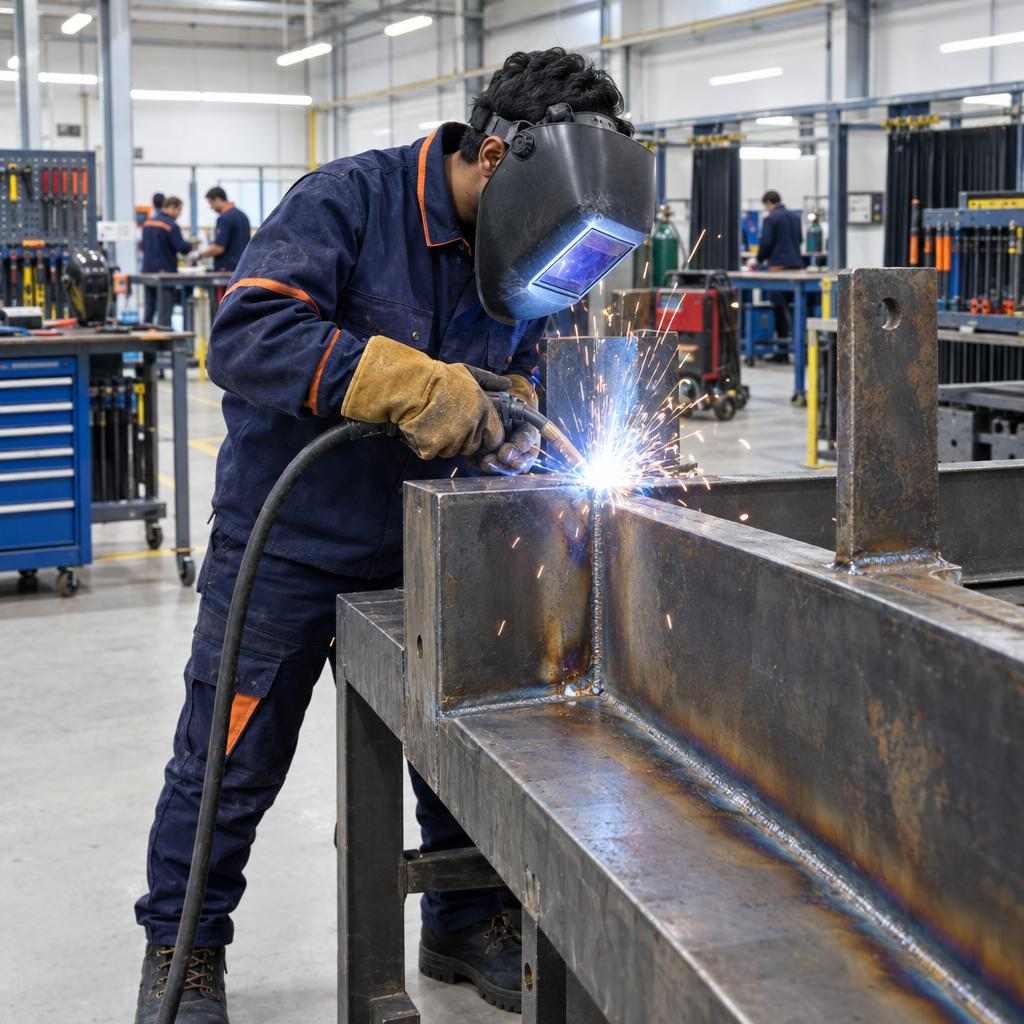
Most programs require a high school diploma or GED, basic algebra and geometry skills, English literacy, and the physical ability to stand for long periods. Employers value mechanical aptitude, attention to detail, and strong attendance. Prior shop class, makerspace, or welding experience helps but is rarely mandatory.
Wage progression typically starts at 50–60% of journey-level pay, rising in scheduled steps every 1,000 hours. National averages put CNC machinist apprentice wages near $20/hr, with journey-level machinists earning roughly $28/hr. CNC machinist apprentices earn four NIMS certifications during their training, and many programs offer college credits toward an associate degree in manufacturing technology. Apprenticeships lead to industry-recognized credentials or a journeyman card that is respected across the industry.
CNC machinist roles can lead to quicker career advancement compared to traditional paths. After certification, career options include CNC setup technician, senior machinist, toolmaker, CAM programmer (joining the ranks of numerical control programmers), quality inspector, or supervisor. Long-term, experienced machinists move into manufacturing engineering or production leadership, using electronic instruments and precision instruments daily to verify tolerances on experimental parts and precision parts alike.
How to Choose the Right CNC Machinist Apprenticeship Program
Not every program offers the same mentoring, equipment, or advancement opportunities. Confirm the program is a registered apprenticeship with documented OJT hours, RTI schedules, competency milestones, and wage increases in writing.
- Evaluate the shop: look for a variety of CNC machines and cutting tools, modern controllers, clean fixtures, and a strong safety culture.
- Ask about rotation plans so you gain experience in setup, troubleshooting, fabrication, assembly, and quality control, not just button-pushing.
- Check graduation rates, average wages at completion, and whether past apprentices advanced into programmer or lead roles.
- Confirm transparent communication: documented work process schedules, regular performance check-ins, and clear environmental regulations.
Steps to Getting Started and Common Mistakes to Avoid
The journey follows a simple arc: research programs, prepare your application, interview, and start learning. Build a basic resume highlighting any mechanical or technical experience, gather references, and brush up on math. Exploring a pre-apprenticeship or community college machining certificate can strengthen your application in competitive pools.
Common mistakes to avoid:
- Treating the program as “just a job” instead of structured training.
- Skipping RTI classes or neglecting to log on the job training hours accurately.
- Avoiding exposure to new machines, cutting equipment, or holding fixtures.
- Underestimating the math and computer side of the machining process.
Maintain a skills log with photos of parts, inspection reports, and notes on setups. Persistence, showing up on time, and asking good questions often matter as much as prior knowledge when breaking into the trade.
Why Choose a Structured CNC Machinist Apprenticeship for Your Career
A structured apprenticeship program protects you with clear standards for pay, training content, and safety. Graduates walk away with nationally recognized credentials, documented competencies, and real skills that transfer across aerospace, automotive, defense, medical, and general manufacturing sectors. The combination of on the job training, classroom learning, and verified competencies makes you attractive to employers far beyond your first shop. If you enjoy hands-on problem solving, precision work, and applying knowledge of metal properties, tools, and machines to create something tangible, this occupation is worth pursuing now.
Next Steps: How to Take Action on a CNC Machinist Apprenticeship
Demand for skilled CNC machinists shows no signs of slowing. Search for local registered apprenticeship programs through your state labor department, contact nearby manufacturers, or talk with a community college machining department. Prepare a simple resume, brush up on math, and request a shop tour or informational interview to see the work environment firsthand.
Set a realistic start date, identify two or three apprenticeship programs to apply to this month, and commit to following through on applications and assessments. The trade rewards people who show up ready to learn, and there has never been a better time to start.
Want to Learn More About Your Registered Apprenticeship Opportunities?
BOOK A FREE CONSULTATION
FAQs About CNC Machinist Apprenticeships
Below are answers to the most common questions about entering and completing a CNC machinist apprenticeship program.
How long does a CNC machinist apprenticeship usually take?
Most registered programs last four years and require 8,000 hours of on the job training plus related instruction. Exact length depends on whether the program is time-based, competency-based, or hybrid.
Do I get paid while I’m a CNC machinist apprentice?
Yes. Apprentices are paid employees from day one. Wages rise in scheduled steps as skills and hours accumulate, typically starting at 50–60% of journey-level pay.
What kind of math and computer skills do I need for CNC machining?
You need comfort with algebra, basic trigonometry, fractions, and decimals. Computer literacy is necessary for CNC controls and CAM software. Most programs teach these topics but expect basic readiness.
Is a CNC machinist apprenticeship better than going straight to college?
Apprenticeships often provide an alternative to incurring student debt while delivering industry credentials and college credit. The right choice depends on your career goals, but earning while learning gives you a financial head start.
Can I move into CNC programming or engineering after an apprenticeship?
Absolutely. Typical progression moves from operator to setup technician, then to programmer or quality roles. Shop-floor experience is highly valued in engineering and supervisory positions later in your career.
What if my current employer doesn’t offer a registered apprenticeship?
Look for employers that already sponsor registered apprenticeship programs, contact your local workforce development department, or ask your employer to join an existing multi-employer program. Community colleges and labor organizations can point you to related materials and open positions.