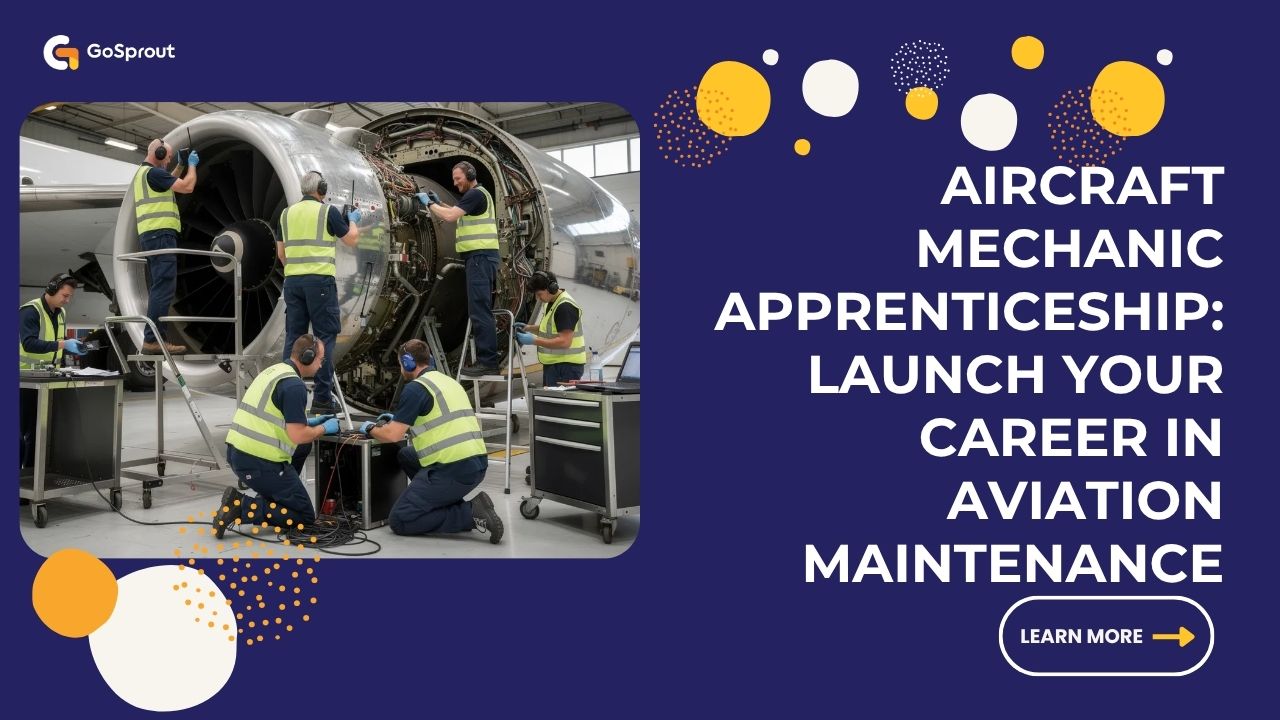
An aircraft mechanic apprenticeship is paid job training that blends full-time aircraft maintenance work with structured classroom instruction. It is built for high school graduates, career changers, and military veterans who want to become a maintenance technician without taking on heavy school debt.
Most programs run 24–36 months, with many designed as registered apprenticeship program tracks through the U.S. department of labor and aligned with FAA Airframe & Powerplant requirements. You get mentorship, wages, experience, and a clearer path into aviation employment.
Table of Contents
Overview of the Aircraft Maintenance Technician Career
An aviation maintenance technician, aircraft mechanic, aircraft maintenance technician, A&P mechanic, maintenance technician, or amt inspects, troubleshoots, documents, and repair work on aircraft systems so every flight is safely air ready. Hands-on training covers essential maintenance, inspection, and repair techniques necessary to keep aircraft safely flight ready.
Mechanics work in MRO facilities, airlines, corporate aviation, cargo, military contractor sites, and repair stations. The career has strong future opportunities as older technicians retire, and air travel grows; BLS reported 2024 median pay near $78,680 for aircraft mechanics and service technicians. Apprenticeship creates a direct pipeline compared with traditional aviation maintenance schools and remains a main entry route for many new technicians.
How an Aircraft Mechanic Apprenticeship Program Works
Apprenticeships in aircraft mechanics typically include a combination of on-the-job training and classroom instruction, allowing apprentices to gain practical experience while also learning theoretical concepts. Apprenticeships in the aviation industry typically combine on-the-job training with classroom instruction, leading to certification as an Airframe & Powerplant (A&P) technician.
Programs may be time based, competency based, or hybrid; many require 4,000–5,600 OJT hours over 2.5–3 years. The Kalitta Air Apprentice Program is a registered apprenticeship approved by the United States Department of Labor, lasting approximately 2.5 years and requiring a minimum of 5360 hours of training.
A sponsor company, airline, MRO, or shop provides tools, equipment, mentors, and aircraft access. A technical partner may provide classes. Traditional aviation schools can average around $50,000 in tuition costs, while apprenticeships often provide paid training opportunities, reducing the financial burden on trainees.
On-the-Job Training in Aviation Maintenance
OJT means shadowing certified mechanics, rotating through airframe, powerplant, avionics, and line maintenance areas. Apprentices assist with inspections, component removal, engine service, troubleshooting, and logbook entries.
You must meticulously track your daily maintenance, troubleshooting, and paperwork tasks using a logbook when working as an apprentice. Apprentices in aircraft mechanic programs often work under the supervision of certified mechanics, which provides them with direct mentorship and guidance throughout their training. Many work 40 hour weeks, with days, nights, or weekends.
Classroom and Related Technical Instruction
RTI supports the theory behind the hands work: aircraft fundamentals, turbine and piston engine topics, hydraulics, electrical basics, human factors, regulations, corrosion control, and safety. Some schedules split two class days and three hangar days; others use evenings or online study. Classroom totals may reach 600–900 hours.

Requirements and Eligibility for an Aircraft Mechanic Apprenticeship
The FAA Aviation Mechanic Regulations outline the eligibility criteria for applying as an aircraft mechanic apprentice. Candidates must be at least 18 years old, have a high school diploma or GED, and fluently understand English to apply for an aircraft mechanic apprenticeship.
Applicants need legal work authorization and a clean background without disqualifying federal crimes, such as aircraft registration fraud or forgery of certificates. Employers may require drug screening, security checks, and proof of technical training.
Candidates must demonstrate strong hand-eye coordination, mechanical reasoning, and the ability to work in confined spaces. You may lift 50+ pounds, climb ladders, and work around noise, chemicals, and changing weather. Physical readiness can make daily maintenance tasks easier to manage.
Helpful Skills and Traits for Maintenance Technicians
Great candidates show attention to detail, problem-solving, communication, teamwork, reliability, and comfort with tools, manuals, blueprints, basic math, and safety procedures. In interviews, explain how your prior mechanical hobbies, auto repair, military work, or school shop projects would help you learn quickly.
Training Curriculum: What You Learn as an Aircraft Maintenance Apprentice
The apprenticeship curriculum typically includes aircraft fundamentals, airframe and structural integrity, powerplant and auxiliary systems, avionics and electrics, and safety and record-keeping. Many programs mirror FAA Part 147 topics and move from basic cleaning and inspection to complex troubleshooting.
Airframe and Structural Training
You learn structures, sheet metal, composites, corrosion control, non-destructive testing basics, flight controls, landing gear, and pressurization. Practical work may include rivets, skin repair, door adjustments, and interiors.
Powerplant and Engine Systems
Powerplant training covers piston and turbine engines, fuel, ignition, lubrication, cooling, exhaust, oil changes, filters, borescope support, and engine run-up assistance using manuals and service bulletins.
Avionics, Electrical, and Modern Systems
Apprentices get foundational exposure to wiring, circuit protection, navigation, communication, glass cockpit displays, multimeters, connectors, and test equipment.
Regulations, Documentation, and Safety
You study FAA maintenance rules such as 14 CFR Parts 43, 65, 91, and 145, plus airworthiness, lockout/tagout, FOD control, PPE, work cards, and digital records.
Program Length, Phases, and Career Progression
Programs for aircraft mechanic apprenticeships can vary in length from 12-to-15 month fast-tracked courses to comprehensive 36-month on-the-job training tracks. Many aircraft mechanic apprenticeship programs are designed to last between 30 to 36 months, during which apprentices receive mentorship from experienced FAA-certificated mechanics.
The duration of aviation maintenance technician apprenticeship programs can vary, with some programs designed to last between 30 to 36 months, depending on the structure and requirements of the specific program. A simple timeline: Year 1 fundamentals, Year 2 systems depth, final 6–12 months A&P exam prep and more independent work.
Path to FAA Airframe & Powerplant Certification
The Airframe & Powerplant (A&P) certification is a credential issued by the Federal Aviation Administration (FAA) that allows individuals to work as aircraft mechanics, specifically in the maintenance and repair of aircraft airframes and engines.
Apprentices must log at least 30 months of practical experience for both Airframe and Powerplant ratings, or 18 months for one rating. To obtain A&P certification, candidates must complete a minimum of 1,900 hours of training for airframe mechanics and 1,900 hours for powerplant mechanics, or a combination of both totaling 3,600 hours, which can be achieved through an approved apprenticeship program. A&P certification requires passing written, oral, and practical exams administered by the FAA, which test the candidate’s knowledge and skills in aircraft maintenance and repair.
Pay, Schedule, and Benefits During Apprenticeship
Working as an apprentice allows individuals to earn a paycheck while gaining on-the-job training, avoiding the expenses of trade school. The starting wage for apprentices in the aviation industry can range from $17 to $35 per hour, depending on the company and location.
Apprenticeships in aviation can lead to total earnings of approximately $95,000 over the duration of the training program, which typically lasts around 2.5 years. Benefits may include health insurance, retirement, paid time off, tool support, tuition help, and exam support.
Balancing Work, Study, and Life
Use a calendar, study groups, employer resources, and daily logbook discipline. Before exams, expect intense study time on top of maintenance seasons.
How to Choose the Right Aircraft Mechanic Apprenticeship
Check whether the program is registered, FAA-aligned, transparent on pay progression, and based on the aircraft areas you want: airline, corporate, MRO, or manufacturer. Ask about mentors, application windows, exam support, post-completion commitments, and career paths that may lead to a leadership position in the future.
Red Flags and Green Flags to Watch For
Green flags: written curriculum, documented competencies, experienced mentors, safety culture, and clear raises. Red flags: vague timelines, no certification plan, stagnant wages, hidden tool costs, and little hands-on access.
How to Apply and Get Accepted into an Apprenticeship
To apply for an aircraft mechanic apprenticeship, you must meet the baseline FAA eligibility criteria, find an employer willing to sponsor your On-the-Job Training (OJT), and formally document your service hours. Expect an online application, resume, mechanical reasoning test, interviews, transcripts, and references.

Preparing Before You Apply
Refresh math and physics, practice hand tools, take basic electricity or OSHA safety courses, visit airports, and ask technicians questions about their path. Learning what experienced mechanics like most about the profession can help set realistic expectations.
FAQ: Aircraft Mechanic Apprenticeships
How long does an aircraft mechanic apprenticeship take?
Most take 24–36 months; many aviation tracks run 30–36 months.
Do I need prior aviation experience?
No, but mechanical experience, shop classes, or military maintenance helps.
Can I get FAA A&P certified through an apprenticeship?
Yes, if your documented OJT and training meet FAA requirements and you pass exams.
Is apprenticeship better than aviation school?
If cost matters, apprenticeship is often stronger because you get paid while learning.
What tools do I need?
Usually basic hand tools, measuring tools, and safety gear; some employers provide allowances.
Am I too old to start?
No. If you meet health, physical, and learning requirements, a career change is realistic.
Why Choose Us for Your Aviation Maintenance Training
We focus on quality instruction, real-world aircraft exposure, experienced A&P mentors, and structured career paths. Apprentices get support beyond technical skills, including professional development, exam prep sessions, and long-term career planning.
Conclusion: Take the Next Step Toward an Aircraft Maintenance Career
An aircraft mechanic apprenticeship is a practical, affordable route into aviation maintenance: paid training, mentorship, documented experience, and a path toward A&P certification.
Contact us if you are ready to work with your hands and support aircraft safety worldwide, explore the program, or wish to request more information.
Want to Learn More About Your Registered Apprenticeship Opportunities?
BOOK A FREE CONSULTATION