
Table of Contents
- Introduction: Why Welder Training Management Matters in Today’s Welding Industry
- What Is Welder Training Management? (And How It Differs from Simple Welding Training)
- Designing Effective Welder Training Programs: From Fundamentals to Advanced Skills
- Structuring and Tracking Competencies in Welder Training
- Using Technology and Software to Streamline Welder Training Management
- Compliance, Quality, and Documentation Across the Welding Training Lifecycle
- Measuring the Impact of Welder Training Management on Business Outcomes
- Common Mistakes in Welder Training Management (and How to Avoid Them)
- Why Choose a Dedicated Platform for Managing Welder Training
- Next Steps: Putting Welder Training Management into Action
- Frequently Asked Questions About Welder Training Management
Introduction: Why Welder Training Management Matters in Today’s Welding Industry
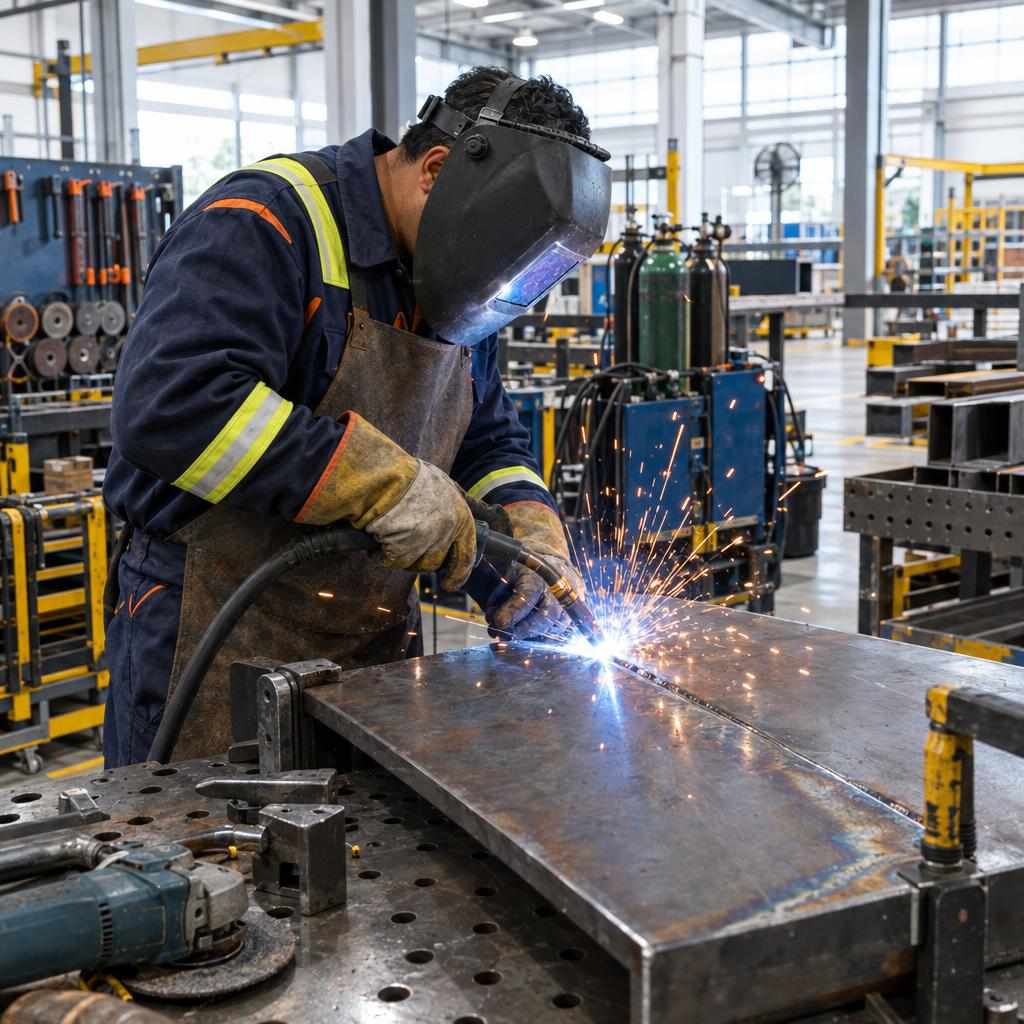
The U.S. Bureau of Labor Statistics reports roughly 40,300 welder job openings per year through 2035, creating steady demand for welding jobs driven mostly by retirements rather than growth. Infrastructure investment and tightening code requirements from the American Welding Society and ASME mean employers find themselves needing more certified welders at the same time fewer graduates enter the pipeline. Managing a high-performing welder training program requires balancing industrial safety and skill progression under one coordinated system, which underscores the importance of welder training management.
Most organizations still track welding training through fragmented spreadsheets, paper sign-off sheets, and siloed folders. Missed certification renewals, inconsistent assessment criteria between shifts, and the inability to prove competency to auditors or customers are common results. Welder training management solves this by treating training as an end-to-end system: designing welding education, assigning competencies, logging OJT and classroom hours, and helping organizations assess competency consistently while tying everything to quality and compliance outcomes.
This article covers a practical framework for building and scaling welding training programs, using software to track welding skills, handling destructive testing results and certifications, and growing welding career pipelines across your organization.
What Is Welder Training Management? (And How It Differs from Simple Welding Training)
Welder training management is comprehensive welding training, not a single course. It encompasses the full lifecycle of a welder’s development: onboarding, structured skill development that combines theory with practical learning, qualification testing, certification tracking, and ongoing upskilling. A well-defined skills framework in training management systems improves clarity in training logistics, reduces administrative guesswork, and helps welders learn more clearly across each stage.
Key elements include:
- Structured welding training programs with defined learning outcomes per level
- Competency frameworks covering core welding processes (SMAW, GMAW, GTAW, FCAW), positions, and materials
- Standardized evaluations tied to code acceptance criteria
- Documented progression from novice through experienced welders
Contrast this with ad-hoc training where a new hire shadows an experienced welder for a few weeks with no formal record. Managed programs produce consistent, auditable results whether you run a fabrication shop, a construction company, a shipyard, or a technical college preparing students for certification and long-term success.
Designing Effective Welder Training Programs: From Fundamentals to Advanced Skills
Program design is the foundation of welder training management. Training should cover fundamental welding processes before advancing to specialized techniques. Using a modular training design allows customization and targeted skill development in welding education, so each trainee follows a path matched to their role and career goals and can achieve role-specific milestones through the program.
Building blocks for welding training programs:
- Welding safety protocols from day one. A strong safety culture should be prioritized from day one in welding training. Personal protective equipment (PPE) enforcement is critical for safety in welding programs. Proper ventilation and fume control are critical; local exhaust ventilation systems are essential for maintaining air quality in welding environments. Welders should conduct pre-shift equipment checks before starting work. Integrating safety training into every module ensures a comprehensive approach to compliance.
- Process fundamentals. SMAW, GMAW, GTAW, FCAW basics, blueprint reading, weld symbols, and material knowledge. The Welder Training Program offers a variety of modules for all skill levels, while the Advanced Welder Training program includes specialized courses like underwater welding.
- Layered progression. Entry-level flat and horizontal welding, intermediate multi-position work, then advanced pipe, stainless, aluminum, aerospace applications, or code-specific techniques.
- Hands-on training and labs. Hands-on practice is essential for developing welding skills. Realistic training environments mimic actual working conditions, with theory reinforced through practical application in labs to improve learner readiness. Programs like Elite Welding Academy provide hands-on training in small class sizes because a low instructor-to-student ratio enhances individualized feedback in welding training.
- Embedded assessments. Bend tests, visual inspection, and destructive testing validate welder performance before they touch critical production work.
Structuring and Tracking Competencies in Welder Training
Competency-based training breaks welding skills into concrete, observable units. Example: “Perform 3G SMAW fillet weld on carbon steel plate meeting AWS D1.1 acceptance criteria.” Each competency should specify process, position, material, thickness range, acceptance criteria, and evaluation method.
Welding procedure specifications help produce consistent welds without rework by linking training directly to the procedures welders will use in production. Non-destructive and destructive testing methods verify weld quality and integrity at each stage.
Map competencies to roles: entry-level production welder, structural welder, pipe welder, or a certified welding inspector pathway. Regular assessments and re-certifications are vital to maintain skill proficiency among welders. Continuous feedback is vital for skill development in welding programs; use a digital log to track when each competency is introduced, practiced, and signed off by a qualified supervisor.
Using Technology and Software to Streamline Welder Training Management
Many organizations still run on paper sign-off sheets and Excel files, making reporting and scaling difficult. Training management software should provide practical solutions for OJT tracking, reporting, and certification management by storing related technical instruction hours, test results including destructive testing data, and required records in one place. OJT tracking is essential for managing apprenticeship hours in any apprenticeship or structured program.
GoSprout offers real-time dashboards for training management, letting supervisors see which welders are cleared for specific procedures, who is due for recertification in 30 or 60 days, and which modules have the highest failure rates. Performance analytics help identify skills gaps and training needs in welder programs. Automated alerts help manage certification expirations and training updates so nothing slips through.
Automated reporting tools help track compliance in training programs, and GoSprout integrates course development for apprenticeship programs directly into the platform. Training management tools support stakeholder collaboration in apprenticeships, connecting employers, schools, workforce boards, and sponsors to real-time trainee progress without endless email chains.

For supplemental welding education content, the American Welding Society offers over 40 self-paced online welding courses, and a Career Readiness Online Course helps prepare students for welding job applications.
Compliance, Quality, and Documentation Across the Welding Training Lifecycle
Training records tie directly to quality systems for shops following AWS, ASME, or ISO standards. Documentation of training attendance and assessments ensures compliance and quality control. AWS QC47, for instance, requires welder qualification records to be retained for at least three years.
Welder training management intersects with procedure qualification records (PQRs), welding procedure specifications (WPSs), and welder performance qualifications. Comprehensive Hazard Communication ensures trainees understand welding hazards, while occupational safety standards provide guidance on managing welding hazards effectively. Accredited programs ensure compliance with industry standards across the board.
Centralized documentation helps during audits: pulling the training history of all welders on a job, proof of instructor qualifications, and evidence of safety refresher courses in minutes rather than days. Welders trained in quality control can reduce production costs by catching defects early and consistently.
Measuring the Impact of Welder Training Management on Business Outcomes
One fabrication client invested $70,000 in a redesigned welding training program. Within one year, weld rejection rates dropped from 28% to 4%, and attrition fell from 19% to 7%. Welding training programs should align with industry trends and technologies to prepare for the future and maintain that kind of return.
Track these KPIs before and after implementing structured welder training management:
- Defect rate per weld or per joint
- Rework hours as a percentage of total labor
- Time-to-independence for new hires
- First-time pass rate on qualification tests
- Welder continuity (percentage maintaining active certifications)
Review metrics quarterly with training leaders, quality managers, and operations supervisors. Collect feedback from welders on which modules, welding equipment, and techniques improved their skills the most.
Common Mistakes in Welder Training Management (and How to Avoid Them)
Many companies invest in welding equipment but underinvest in planning and managing their training programs. Welders can earn higher salaries with quality training programs, yet organizations often skip the structure needed to develop them.
Typical mistakes:
- No defined skill ladder. Welders plateau without a clear path from basics to advanced competencies and careers in inspection, supervision, or specialized operations.
- Inconsistent assessment criteria. Different instructors or shifts using different standards leads to uneven quality.
- Over-focusing on one process. Training only flat MIG welding leaves welders unprepared for vertical, overhead, or pipe work on real construction or manufacturing projects.
- Neglecting instructor development. Great welders do not automatically make great trainers. Provide coaching tools and resources so instructors can match each student’s learning style, adapt materials for a visual learner, and deliver effective welding education.
- Ignoring documentation of informal training. If it is not logged, it did not happen during an audit.
Fix each by building a repeatable framework, using digital tracking, and requiring regular calibration between training, quality, and operations leaders.
Why Choose a Dedicated Platform for Managing Welder Training
Organizations running welding training on spreadsheets and generic LMS tools struggle with scale, accuracy, and compliance. GoSprout provides unified dashboards, automated reminders for expiring qualifications, and the ability to track both RTI and OJT in one place across every program and location.
Multi-stakeholder collaboration means employers, a partner school, workforce boards, and sponsors all see real-time progress for apprentices without manual data entry or endless email chains. The platform supports registered apprenticeships and structured work-based learning in welding, aligning training records with federal and state reporting requirements (RAPIDS, WIPS, PIRL). You can start small with one program or location, prove value, then expand.
Next Steps: Putting Welder Training Management into Action
Organized welder training management reduces rework, accelerates onboarding, and keeps your team audit-ready while building clear welding career paths for every trainee. Start by inventorying your current welding training activities, defining core competencies for critical roles, choosing a pilot group, and evaluating whether your current tools can track everything reliably.
If spreadsheets and paper logs are holding your program back, explore how GoSprout can replace manual tracking with a unified system for welding training programs, apprenticeships, and internships. Schedule a walkthrough to see how the platform can manage welder training at your organization, or begin planning a phased rollout aligned with your next hiring cycle.
Want to Learn More About Your Registered Apprenticeship Opportunities?
BOOK A FREE CONSULTATION
Frequently Asked Questions About Welder Training Management
How is welder training management different from a standard welding class or course?
A welding class teaches a set of techniques over a fixed period. Welder training management coordinates hands-on labs, classroom instruction, on-the-job training, and formal testing under a single framework and record system. It spans onboarding through ongoing upskilling across a welder’s entire career, covering everything from safety protocols to advanced welding tasks.
Who typically owns welder training management inside an organization?
Responsibility is shared. Training coordinators manage curriculum and scheduling. Quality staff or a certified welding inspector handle qualification and testing standards. The Certified Welding Inspector exam has three parts, so CWIs bring deep code knowledge to the program. Supervisors manage daily coaching. Designate one program owner who keeps the complete picture: training plan, documentation, and reporting.
How long does it take to build a structured welder training program from scratch?
Expect 2 to 3 months to formalize a basic program for entry-level welders using existing industry experts, and 6 to 12 months to map competencies, testing, and documentation across multiple locations. Start with critical roles, pilot with a small group, then expand after validating the training sequence and assessment methods. That first step matters more than perfection.
How do we incorporate destructive testing into welder training without slowing production?
Schedule periodic test plates or coupons dedicated to training rather than pulling from production. Run destructive testing on representative samples and log findings in your training management system so trends in failure modes (lack of fusion, porosity) guide targeted coaching. This keeps production moving while building real knowledge.
What role does a Certified Welding Inspector play in welder training management?
A certified welding inspector validates welding procedure compliance, helps design performance tests, and confirms welder qualifications align with applicable codes. CWIs also mentor instructors, support root-cause analysis of weld failures, and maintain alignment between welding education and current code updates. Their expertise anchors the program’s credibility.
How do we keep experienced welders engaged in ongoing training?
Offer advanced modules: exotic materials, out-of-position pipe, or automated welding systems. Cross-train operators on inspection basics or leadership skills for those moving into lead roles. Recognize achievements in the training management system through competency badges, wage tiers, or role titles. Experienced welders stay committed when they see clear value and a successful career trajectory ahead.


