Table of Contents
- What Is Simulation-Based Learning
- Types of Simulation: From Low-Fidelity to High-Fidelity Experiences
- Simulation-Based Learning Across Education, Apprenticeships, and Workforce Training
- Core Benefits of Simulation-Based Training for Learners and Organizations
- Challenges and Pitfalls in Simulation Learning (and How to Avoid Them)
- Designing Effective Simulation-Based Learning Experiences
- Enabling Tools and Technologies for Simulation-Based Learning
- Integrating Simulation-Based Learning into Work-Based Programs
- Measuring Impact: Assessment, Feedback, and Continuous Improvement
- What to Consider Before Investing in Simulation-Based Learning
- FAQs About Simulation-Based Learning
- Why Choose a Modern Work-Based Learning Platform to Support Simulation-Based Training
- Conclusion and Next Steps
Introduction: Why Simulation-Based Learning Matters in 2026
Since 2020, simulation-based training has moved from a niche tool in medical education to a core method across healthcare, skilled trades, and technical apprenticeships. Research output in simulation-based learning across higher education grew at a compound annual growth rate of 10.65% from 2015 to 2024, with 2025 already exceeding that pace. The reason is practical: industries need workers who can make high-stakes decisions from day one, and time-based classroom instruction alone does not produce that readiness.
Simulation-based learning is an educational technique that replaces real experiences with interactive scenarios. It bridges the gap between theory and actual practice, giving learners a way to rehearse tasks, absorb feedback, and build confidence before they touch real equipment or serve real patients. For apprenticeship and internship programs, simulated learning complements on-the-job training and related technical instruction by filling gaps that classroom lectures and even job shadowing cannot cover.
Consider what this looks like on the ground in 2025 and 2026: nursing students running code blue responses on high fidelity manikins, utility apprentices rehearsing confined-space entry in virtual reality, manufacturing interns troubleshooting CNC machine setups using digital twins. This article provides a practical overview of simulation based learning, including design principles, real examples, implementation steps, FAQs, and how a modern work-based learning platform can support it all.
What Is Simulation-Based Learning?
Simulation-based learning uses realistic but controlled scenarios for learners to practice decisions, skills, and behaviors with immediate feedback. That feedback helps learners understand the consequences of their actions before those consequences carry real-world weight. Unlike generic eLearning modules or lectures, simulation learning centers on learning by doing in a safe environment.
Active engagement in simulations shifts learners from passive listening to active problem-solving. Students take active ownership by making decisions and performing tasks, and they can practice skills in a risk-free environment. A scenario in simulation can range from physical manikins to computer-generated environments; what matters is that learners face realistic choices and see the results play out.
Here is what this looks like across domains. A third-year medical student practices responding to cardiac arrest on a robotic patient that changes vital signs based on the student’s interventions. An electrical apprentice troubleshoots a faulty virtual panel, identifying the root cause before touching a live circuit. A logistics trainee optimizes warehouse layout in a simulation game, balancing throughput and safety. In each case, the simulated environment creates space for experiential learning that a textbook or slideshow cannot deliver.
Simulations also target soft skills within the same learning experience. Customer conflict resolution, team communication under pressure, and negotiation can all be practiced through role-play-based or branching digital scenarios. Simulation-based learning enhances problem-solving skills without real-world risks, whether the skill is technical or interpersonal.
Types of Simulation: From Low-Fidelity to High-Fidelity Experiences
Fidelity describes how closely a simulated learning environment matches the real task, equipment, and context. Simulations can be categorized into low, medium, and high fidelity, and choosing the right level depends on what you need learners to accomplish.
Low fidelity simulations include paper-based clinical case studies, simple role-plays, and desktop branching scenarios. They cost less, need less infrastructure, and work well for early concept exploration and decision-tree practice. Low fidelity simulations rely heavily on participant engagement because the environment itself offers minimal sensory cues. A group of apprentices talking through a safety incident using printed cards and a facilitator is a low fidelity simulation, and it can be effective for building foundational decision making skills.
Medium fidelity simulations use minimal props for increased participation: standardized patients (trained actors), partial-task trainers like a practice arm for IV insertion, or 2D process simulators for manufacturing lines. These add enough realism to rehearse specific interactions without the cost of full immersion. Augmented reality blends real-world and simulated experiences and falls into this middle range when used to overlay procedural steps onto physical equipment.
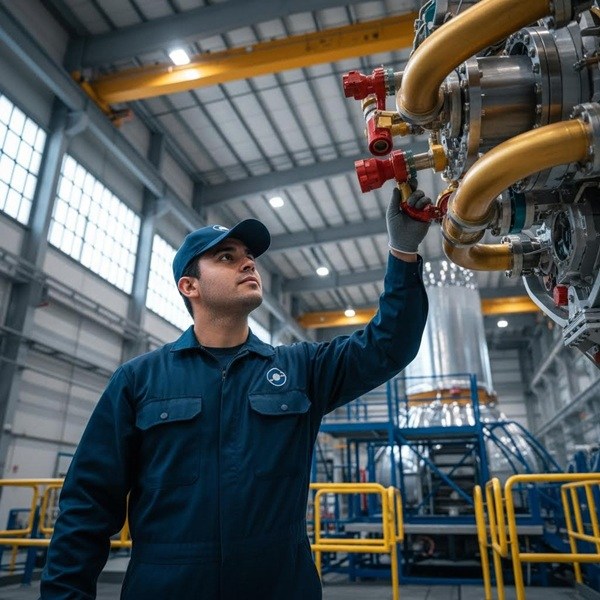
High fidelity simulations closely resemble real life scenarios. Healthcare simulations use high-fidelity robotic manikins and standardized patients for training. Aviation relies on full-motion flight simulators for training in high-stress scenarios. High fidelity simulations use realistic settings and trained actors to provide immersive experiences. High-fidelity simulations use advanced technology for realistic training, and computerized simulations record participant actions for feedback and later review. Virtual reality creates immersive 3D environments for learning, placing the learner inside a fully rendered workspace or clinical setting.
Matching fidelity to learning objectives matters more than maximizing realism. Early-stage learners benefit from lower fidelity because it reduces cognitive overload and lets them focus on core decisions. Advanced trainees preparing for independent practice may need high fidelity for transfer to real work. Simulations can replicate complex technologies and processes safely, but only if the fidelity level fits the learning goal and the learner’s readiness.
Simulation-Based Learning Across Education, Apprenticeships, and Workforce Training
Simulation based learning looks different depending on the learner group and setting.
K-12 and Pre-Apprenticeship. K-12 education uses interactive software for manipulating variables in science and social studies, giving younger students early exposure to cause-and-effect reasoning. Pre-apprenticeship programs use OSHA-scenario simulations to prepare learners for worksite hazards before they set foot on a job site.
Higher Education and Clinical Training. In nursing education and broader medical education, simulation has become standard. Doctors and nurses use simulations before performing life-threatening procedures, rehearsing medical procedures on manikins and standardized patients. Seventy-five percent of simulation-based learning publications in higher education are in nursing and health sciences, according to a recent bibliometric synthesis.
Registered Apprenticeships and Workforce Development. The X-Manufacturing platform in Bordeaux, France paired physical assembly hardware with digital twins and VR/AR in 2024, allowing apprentices to learn digital twin use cases in both physical and virtual environments. Journeyman-level apprentices in energy and manufacturing use simulations for advanced diagnostics on equipment they cannot safely practice on during live operations. Business training employs market simulations and roleplaying for teaching strategic management to corporate learners.
Simulations help standardize learning experiences when clinical placements, job sites, or mentors vary. An apprentice at a rural hospital and one at an urban trauma center can both run the same emergency scenario, ensuring consistent exposure to critical events regardless of location.
Core Benefits of Simulation-Based Training for Learners and Organizations
Simulation-based learning generally supports improvements in knowledge, skills, and behaviors. The specific gains depend on design quality, but the evidence base is strong.
Retention and readiness. Simulation-based training boosts knowledge retention rates by 70% compared to passive methods. Simulation-based learning enhances engagement and knowledge retention because engaging learners in simulations increases motivation and engagement. A 2024 quasi-experimental study of nurses found that scenario-based simulation training on infection prevention produced higher knowledge scores (p < 0.001), greater self-efficacy, and stronger adherence to standard precautions compared to conventional education.
Safety and productive failure. Simulation-based learning provides a safe environment to eliminate risks associated with real-world mistakes. Simulation learning allows for productive failure in a safe environment: learners make mistakes, receive feedback, and correct course without harming patients, equipment, or customers. Simulation learning creates safe spaces for practicing real-world skills, and simulations provide instant feedback, enhancing problem-solving skills in the process.
Organizational outcomes. Simulation-based learning reduces training costs by 30% in documented cases. At Constellium, a manufacturing company, a digital twin of furnace operations increased furnace capacity by 23.5% over a four-week trial and reduced operator search times by 90%. Healthcare professionals in a cluster randomized trial using VR simulation for infection control saw higher long-term return on investment compared to traditional training methods.
Equity and access. Simulations equalize learning opportunities when some learners cannot access certain rotations, tools, or locations. A learner at a small community hospital can practice the same critical scenarios as someone at a major teaching facility.
Challenges and Pitfalls in Simulation Learning (and How to Avoid Them)
High implementation costs and time are the most frequently cited challenges of simulation-based learning. A single high fidelity manikin can cost tens of thousands of dollars, and VR hardware requires ongoing maintenance, content updates, and technical support.
Instructional pitfalls are equally dangerous. A simulation with unclear objectives becomes an expensive activity that fails to build competence. Good instructional design enhances the effectiveness of simulation-based learning, but poor debriefing undermines learning transfer. One common failure: a program runs a rushed assessment-style simulation without pre-briefing learners on the scenario’s purpose, creating anxiety instead of learning.
Simulations cannot replicate every unpredictable aspect of the real world. A learner who masters a branching scenario may still face surprises on a live job site. This is not a flaw in the method; it is a reason to use simulation as preparation, not replacement.
Technology access creates equity issues. Remote learners or small programs may lack hardware, broadband, or technical support. Learners with lower digital literacy may struggle, widening gaps instead of closing them.
Practical mitigation strategies:
- Start with low fidelity prototypes before investing in expensive equipment
- Reuse and adapt scenarios annually instead of building from scratch each cycle
- Train facilitators in structured debriefing and psychological safety
- Map every simulation to a specific competency framework before development begins
- Run orientation sessions so learners understand the simulation’s purpose and feel safe to make mistakes
Designing Effective Simulation-Based Learning Experiences
Effective simulations require well-developed guidelines and instructions before the first learner enters the scenario. Four design elements drive outcomes: clear learning objectives, authentic task context, opportunities for practice and feedback, and structured debriefing.
Simulation designs should align with learning objectives to ensure effective outcomes. Start by mapping each simulation to specific competencies, skills checklists, or assessment rubrics already in use. If the simulation does not connect to a measurable outcome, it becomes an exercise in entertainment rather than development.
The design workflow follows a predictable sequence. Conduct a needs analysis to identify which skills are high-risk or undertrained. Script the scenario with branching paths that allow learners to make choices and see consequences. Choose fidelity and tools based on the skill type, learner level, and budget. Facilitators should establish a timeline for simulation activities, and simulations should allow participants to critically examine their options at each decision point. Controlled complexity in simulations allows educators to adjust difficulty based on learner pace, so build in variable difficulty levels for different cohorts.

Here is a concrete example. A warehouse reported a near-miss forklift incident in 2023 where an operator turned a blind corner without sounding a horn. The training team scripted a branching scenario: the learner approaches the same corner and must decide whether to sound the horn, slow down, or proceed at speed. Each choice leads to a different outcome, including a simulated collision with injury consequences. The debrief covers why each decision led to its result. Facilitation and debriefing are critical phases for reflecting on actions and emotional responses in simulations, and this example shows how a real incident becomes a reusable teaching tool.
Enabling Tools and Technologies for Simulation-Based Learning
The educational technology landscape for simulation spans several categories: LMS-integrated simulation modules, serious games, VR/AR headsets, scenario authoring tools, high fidelity manikins, and desktop process simulators.
Modern learning platforms support simulated learning by scheduling sessions, tracking attempt data, capturing performance metrics, and storing debrief notes alongside OJT and RTI records. This matters because simulation data sitting in a disconnected system is invisible to program coordinators trying to assess overall learner progress.
Mobile apps enable simulation based learning on job sites through micro-simulations before tasks, just-in-time refreshers, and offline access for field apprentices. A plumber apprentice can run a two-minute scenario on pipe joint selection before starting a real installation.
Analytics dashboards show completion rates, error patterns, and common failure points in scenarios. This data informs curriculum improvements: if 40% of learners fail the same decision branch, the RTI content covering that topic needs revision. When evaluating tools, prioritize interoperability with existing systems, instructor usability, and scalability over advanced graphics.
Integrating Simulation-Based Learning into Work-Based Programs
Simulation works best when embedded into the lifecycle of internships, pre-apprenticeships, and registered apprenticeship programs rather than treated as an add-on.
Consider a 12-month electrical apprenticeship. In month one, new apprentices complete orientation simulations covering lockout/tagout procedures and basic panel identification (low fidelity, desktop-based). By month four, they run medium fidelity troubleshooting scenarios on virtual panels, practicing fault diagnosis. At month eight, they complete a team-based simulation coordinating a panel replacement with a journeyworker. At month twelve, a capstone simulation requires independent diagnosis and repair under time pressure, serving as a competency sign-off before unsupervised work.
Under U.S. apprenticeship regulations (29 CFR Part 29), time-based apprenticeships require at least 2,000 hours of on-the-job learning. Simulation hours are not yet explicitly accepted as substitutes for OJT in federal standards, but competency-based and hybrid models allow more flexibility. Programs that document simulations as structured RTI or supervised practice, mapped to industry competencies, are better positioned for regulatory acceptance.
Collaboration between employers, educators, and program sponsors matters. Co-designed scenarios reflect actual equipment, workflows, and compliance requirements. An employer who helps script the simulation ensures the scenario matches the real conditions apprentices will face.
Measuring Impact: Assessment, Feedback, and Continuous Improvement
Assessment in simulation-based learning uses multiple methods: checklists for psychomotor skills, rating scales for teamwork and communication, and scenario scoring for decision-making and safety behaviors. Combining self-assessment, peer feedback, and facilitator evaluation produces a fuller picture of competence.
Simulation data tracked over time reveals patterns. Comparing the 2024 cohort’s error rates to the 2025 cohort’s can show whether curriculum changes worked. Common weaknesses across cohorts signal that RTI content or OJT rotations need adjustment.
Evidence organizations might track includes: reduction in on-the-job error rates after simulation roll-out, improved pass rates on licensure or certification exams, and faster time-to-productivity for new hires. A hospital that integrated simulation-based learning into its 2024 nursing residency program might track central line infection rates before and after the change. Structured debriefs and reflection sessions are core to assessment, not optional add-ons; they are where learners process what happened and consolidate learning.
What to Consider Before Investing in Simulation-Based Learning
Start by asking which skills in your program carry the highest risk or the highest cost when performed poorly. Those are your first simulation candidates.
Differentiate between capital expenses (VR hardware, high fidelity simulators) and ongoing costs (scenario licensing, facilitator training, content updates). A common mistake is buying expensive equipment without budgeting for the instructional design and facilitation that make it effective.
Run a pilot first. Choose one or two priority scenarios, define success metrics (e.g., learner pass rates, error reduction on the job, time to competency), and test with a specific cohort. Use the results to build the case for broader investment.
Change management is the underestimated variable. Prepare instructors, supervisors, and learners to treat simulated learning as real practice, not a game to rush through. If the culture around simulation is casual, the learning outcomes will be too.
FAQs About Simulation-Based Learning
How is simulation-based learning different from traditional classroom training?
Instead of passively listening to a lecture, learners in a simulation actively perform tasks, make decisions, and see realistic consequences inside a controlled environment. Classroom sessions remain useful for introducing concepts, but simulations translate those concepts into applied skills and behaviors. The learning process shifts from receiving information to practicing it under conditions that mimic real world scenarios.
Do we need high-fidelity simulators or VR headsets to get value from simulations?
Many organizations start with low or medium fidelity simulations and still see measurable gains. Role-plays, desktop branching scenarios, and tabletop exercises cost a fraction of VR setups and can be effective for teaching decision making skills, communication, and procedural sequences. Choose fidelity based on risk level, learning objectives, and budget rather than chasing the most advanced technology. Allowing learners to engage with well-designed low fidelity scenarios often produces better results than poorly facilitated high fidelity ones.
Can simulation-based training replace real-world practice hours?
In most regulated fields, simulations supplement but do not fully replace required hours. They prepare learners to use real-world time more effectively and safely. Current 2024-2026 U.S. apprenticeship regulations do not explicitly count simulation hours toward OJT requirements, though competency-based models offer more flexibility. Review your specific accreditation standards and apprenticeship guidelines to see where simulation hours are recognized.
How many simulated learning sessions does a typical learner need?
Frequency depends on skill complexity and risk. Repeated, spaced simulations (four to eight sessions over a term) are generally more effective than a single high-stakes event. Use data from early cohorts to calibrate how many runs produce acceptable on-the-job performance and confidence. Retention rates improve when practice is distributed over time rather than concentrated in one block.
What skills are best suited to simulation-based learning?
Skills where decisions, coordination, and judgment matter are ideal: emergency response, troubleshooting, procedural sequences, customer interactions, and teamwork under pressure. Routine memorization of isolated definitions is less suited. Simulation-based learning offers the most value when learners need to practice real life scenarios that involve uncertainty, time pressure, or safety consequences.
How long does it take to develop a high-quality simulation?
A simple branching scenario might take two to four weeks from design to rollout. A multi-role, high fidelity simulation with creating custom environments could take several months. Reusable core templates and scenario libraries cut development time for future simulations. The first investment is always the most time consuming; subsequent scenarios built on the same framework move faster.
Why Choose a Modern Work-Based Learning Platform to Support Simulation-Based Training
An integrated work-based learning management platform provides a single source of truth for OJT hours, RTI completion, and simulated learning data. Instead of tracking simulation sessions in a spreadsheet while apprentice hours live in a separate system, everything connects.
Features that matter include real-time dashboards, automated compliance reporting for apprenticeship programs (RAPIDS, WIPS, PIRL), competency tracking tied to simulation outcomes, and mobile access for learners and supervisors. Teachers and facilitators can log debrief notes, attach scenario scores, and flag learners who need additional practice, all in one place.
For multi-stakeholder ecosystems involving employers, schools, sponsors, and apprentices, shared visibility into simulation performance enables quicker remediation plans and scalable program growth. This is not the same as a generic LMS. Apprenticeship-specific workflows, hour tracking, and regulator-ready reports are what separate a purpose-built platform from a tool that was designed for corporate compliance training.
GoSprout provides exactly this kind of integrated environment, connecting simulation tracking with the full apprenticeship lifecycle from enrollment through completion.
Conclusion and Next Steps
Simulation-based learning in 2026 is not a novelty; it is an increasingly important method for building job-ready workers across health care, manufacturing, public safety, and the skilled trades. The evidence supports its impact on safety, performance, and cost effectiveness when simulations are designed with clear objectives, appropriate fidelity, and structured debriefs.
Organizations do not need to start with the most expensive equipment. A well-designed branching scenario tied to real competencies, facilitated by a trained instructor, and tracked in a centralized platform can produce measurable results. Begin by auditing your current training and apprenticeship programs to identify where simulation based approaches could reduce risk, improve outcomes, or standardize the learning experience across sites.
If you are ready to see how simulation tracking integrates with OJT, RTI, and compliance reporting in a single platform, schedule a demo with GoSprout and explore what a connected work-based learning ecosystem looks like in practice.