
Table of Contents
- What DOL Apprenticeship Reporting Actually Requires
- Core Data You Need to Track for Registered Apprenticeship
- Key Systems: RAPIDS, WIPS, and PIRL Explained
- Compliance Timelines, Deadlines, and Common Pitfalls
- How to Build a DOL-Ready Data Workflow
- Using GoSprout to Automate DOL Apprenticeship Reporting
- What Sponsors, Employers, and Schools Should Know Before They Scale
- Common DOL Reporting Mistakes to Avoid
- Why Accurate DOL Apprenticeship Reporting Matters
- FAQs About DOL Apprenticeship Reporting
- Why Choose GoSprout for DOL Apprenticeship Reporting
- Conclusion and Next Steps
If you sponsor, employ, or train apprentices in the United States, you already know that running the program is only half the work. The other half is proving it – through data, documentation, and recurring reports submitted to the U.S. Department of Labor.
DOL apprenticeship reporting requires systematic documentation of registered apprenticeship programs, covering everything from enrollment demographics to on-the-job training hours to completion outcomes. Programs must report apprentice and program data to the DOL and often to state apprenticeship agencies on a recurring basis, using systems and formats that are specific, standardized, and unforgiving of errors.
The three reporting channels you need to know by name are RAPIDS, WIPS, and PIRL. Each has different formats, different deadlines, and different audiences – and the clock starts as early as the first quarter after enrollment. If you are managing apprenticeship grants, the reporting stakes are even higher: missed or inaccurate submissions can cost you funding.
This matters more now than it did even two years ago. The national apprenticeship system is expanding rapidly across the country, with more federal grant funding tied directly to performance data and higher expectations around equity and outcomes. In 2025 and 2026, DOL has issued new guidance, new data format requirements, and new enforcement signals that make accurate reporting non-optional. GoSprout is a work-based learning management platform built to centralize apprentice data and automate much of the DOL reporting workload – but whether or not you use a platform, understanding what’s required is where compliance starts.

What DOL Apprenticeship Reporting Actually Requires
The specific requirements for DOL apprenticeship reporting differ depending on whether your program is federally registered (through the Office of Apprenticeship) or state-registered (through a State Apprenticeship Agency). But the core data elements are consistent: enrollment, demographics, OJT progress, RTI completion, wage progression, and outcomes like completions and cancellations.
Here is what each major system requires:
RAPIDS (Registered Apprenticeship Partners Information Data System) is the national registration and reporting system operated by DOL’s Office of Apprenticeship. It is the system of record for federal programs and is used by approximately 43 states for individual apprentice and sponsor data. Sponsors use RAPIDS to register new apprentices, update statuses, record wage progression, and document completions or cancellations.
WIPS (Workforce Integrated Performance System) is the portal where grantees under WIOA and apprenticeship grants upload performance files. These files are submitted quarterly, often starting in Program Year 2025, and must follow the PIRL format. Grantees managing apprentices under grants like State Apprenticeship Expansion Formula awards or successor programs to the American Apprenticeship Initiative use WIPS as their primary performance reporting tool.
PIRL (Participant Individual Record Layout) is the standardized record format that defines every required data element for DOL-funded participants. It specifies hundreds of potential fields – veteran status, barriers to employment, exit outcomes, type of apprenticeship (time-based, competency-based, or hybrid), expected completion dates, and more. Equal employment opportunity compliance is mandated under 29 CFR Part 30 for apprenticeship sponsors, and PIRL captures demographic fields tied to that mandate.
In addition to these systems, sponsors may need to respond to special surveys (such as yearly demographic or wage surveys at the federal or state level) and ad-hoc audits. The DOL expects submitted information to be accurate, complete, and on-time. Errors or missed submissions can trigger warnings, corrective action plans, or financial consequences for grant-funded apprenticeship initiatives.
Core Data You Need to Track for Registered Apprenticeship
Accurate DOL apprenticeship reporting depends entirely on what you capture at the ground level. If your data is incomplete or scattered across disconnected systems, no export tool will save you at deadline time. Here are the key data categories you need to track in real time:
- Participant identity and eligibility data. Full legal name, date of birth, SSN or unique ID, and contact details. You also need WIOA and PIRL eligibility indicators such as low-income status, youth status, veteran status, and justice-involved status. These fields must have source documentation and are often verified during audits.
- Demographic data. All records must include demographic information to monitor diversity efforts in apprenticeship programs. This means race, ethnicity, gender, disability status, and other protected characteristics. Apprenticeship programs must track participant demographic data for equal opportunity compliance. “Did Not Self-Identify” responses are permitted in some fields but reduce data quality and can trigger flags.
- Program enrollment data. Occupation code (SOC or RAPIDS-specific), sponsor ID, program start date, expected end date, and whether the program is federal or state-registered. These fields come from the apprenticeship agreement (ETA Form 671 or state equivalent) and define the apprentice’s program record.
- OJT (On-the-Job Training) tracking. On-the-job training hours must be tracked by apprenticeship sponsors as part of program requirements. This includes hours worked, skills or competencies completed, supervisor sign-off, wage progression dates, and occupation milestones. Time-based programs need clocked hours; competency-based programs need documented skill assessments.
- RTI (Related Technical Instruction) tracking. Course enrollments, seat time or credit hours, grades, provider type (school, CTE center, community college, four-year institution), delivery mode, and completion dates. PIRL includes specific elements for RTI provider type and training service details.
- Outcome data. Cancellations, transfers, completer status, credential attainment (industry certifications, degrees), employment retention, and post-program wages when available. Exit reasons must be documented accurately – incorrect exit codes are one of the most common causes of WIPS file rejections.
Centralized tracking of this data is the foundation for accurate RAPIDS entries, WIPS file uploads, and PIRL reporting. If you are collecting this information across spreadsheets, HR systems, school SIS platforms, and email threads, you are building on a fragile base.

Key Systems: RAPIDS, WIPS, and PIRL Explained
Understanding what each system does – and does not do – is essential for building a reporting workflow that holds up under scrutiny.
RAPIDS
The Registered Apprenticeship Partners Information Database System serves as the primary case management platform for reporting. It handles both apprentice-level and sponsor/program-level data. Sponsors register with RAPIDS, obtain credentials, and use the system to enter new apprentice registrations, update statuses (active, completed, cancelled, transferred), document wage progression, and track OJT and RTI data.
RAPIDS data entry can happen through batch uploads or manual entry, depending on program size and state requirements. Sponsors must assign occupation codes, align program standards with individual apprentice records, and keep statuses current. The Office of Apprenticeship tracks participant performance across active grants through data flowing into and out of RAPIDS. Apprentice counts can be viewed by state and location through dashboards DOL maintains from this data.
Updates should happen at least monthly, though best practice is to reflect changes as they occur – especially completions and cancellations, which directly affect performance metrics.
WIPS
WIPS is the portal through which apprenticeship grantees submit quarterly performance files. If your organization holds grants such as Apprenticeship Building America, State Apprenticeship Expansion Formula, or successor awards, you will submit PIRL-formatted files through WIPS starting within your first active program year.
WIPS relies on PIRL layout files created from your local systems. If your file format is misaligned or fields are missing, the upload will be rejected. The March 2026 WIPS 24.4.0 release implemented new logical rule validations (including Rules 216B and 216C) and added PDF templates for PIRL 2025 Quarterly Performance Report generation. If you have not tested your files against the new format, you should do so before your next submission window.
PIRL
PIRL is a detailed technical specification listing hundreds of potential data elements. Most apprenticeship programs use a subset based on their funding streams and participant types. Key apprenticeship-specific elements include expected completion date (Element 2909), type of apprenticeship program (Element 2910), and date of completion (Element 2911).
The smartest thing a sponsor can do is map internal data fields to specific PIRL elements early – well before the first WIPS upload deadline. Waiting until submission day to figure out which field maps to which element is how files get rejected, and deadlines get missed.
GoSprout is designed to map OJT, RTI, and demographic fields directly to RAPIDS and PIRL/WIPS requirements, reducing the manual file-building process that trips up so many programs.
Compliance Timelines, Deadlines, and Common Pitfalls
Reporting is not a once-a-year event. It is a rolling obligation with multiple deadlines that can stack up quickly.
- Quarterly WIPS submissions. DOL grants typically follow standard calendar quarters (Q1: January through March, Q2: April through June, etc.), with PIRL files often due to WIPS within 45 days after each quarter ends. Missing a quarterly submission can result in data quality flags that follow your program into the next reporting cycle.
- RAPIDS registration and updates. Sponsors must submit a signed apprenticeship agreement (ETA Form 671 or state equivalent) to the Registration Agency within 45 days of execution. New apprentice registrations, completions, cancellations, and wage progression changes should be entered promptly – ideally within days, not weeks.
- PIRL version transitions. DOL approved the PIRL 2025 changes, with testing beginning June 1, 2026, and required use starting July 1, 2026 for some programs. If you are still building files in the legacy format, you need to begin transition planning now.
- State-specific deadlines. Some states layer additional requirements on top of federal ones. Illinois requires annual apprenticeship data submission by January 15, 2026. Penalties for non-compliance in Illinois apprenticeship reporting start at $100 per day – a cost that adds up fast.
- Record retention. Sponsors must maintain apprenticeship records for five years to meet compliance requirements. This applies to apprenticeship agreements, OJT logs, RTI records, demographic forms, and correspondence with registration agencies.
- Audits and evaluations. Registered apprenticeship programs are subject to regular audits and evaluations by the DOL. Programs that show data quality issues or late submissions face elevated monitoring, including more frequent site visits.
Assign a single compliance lead or small team responsible for DOL apprenticeship reporting. Set clear internal cut-off dates – for example, freeze data one week before each WIPS submission day – and maintain written standard operating procedures that describe how data is collected, validated, and transmitted every quarter.
How to Build a DOL-Ready Data Workflow
Getting your reporting right is less about heroic last-minute efforts and more about building a system that collects, validates, and organizes data continuously. Here is how to approach it:
Start with a data inventory. List every system that touches apprenticeship data: HRIS, LMS, student information systems, timekeeping software, spreadsheets, email threads. Identify which ones currently feed DOL reporting and which ones hold data that never makes it into a report.
Map fields to RAPIDS and PIRL. Take each data field you currently collect and map it to the corresponding RAPIDS or PIRL element. Flag gaps where needed data is not captured or where definitions differ across partners. For example, your school’s “enrollment date” may not match the “program start date” your employer records – and that discrepancy will show up during an audit.
Standardize onboarding forms. Implement digital forms for apprentice onboarding so that demographic, eligibility, and consent fields are completed once and reused across all reports. This eliminates the need to chase down information months after an apprentice starts.
Sync OJT and RTI data frequently. Daily or weekly syncing of OJT hours and RTI progress is far better than trying to reconstruct months of data before a deadline. If supervisors and instructors enter data in real time, your quarterly report is already 90% built before you start.
Build validation rules. No future start dates. Total weekly hours within reasonable ranges. Mandatory demographic responses. Occupation codes that match registered program standards. These checks catch errors before they become WIPS rejections or audit findings.
Maintain audit trails. During a DOL monitoring visit, you need to show when data changed, who approved it, and what source system it came from. Platforms that log every edit and approval are significantly easier to defend than folders of spreadsheets with no version control.
Using GoSprout to Automate DOL Apprenticeship Reporting
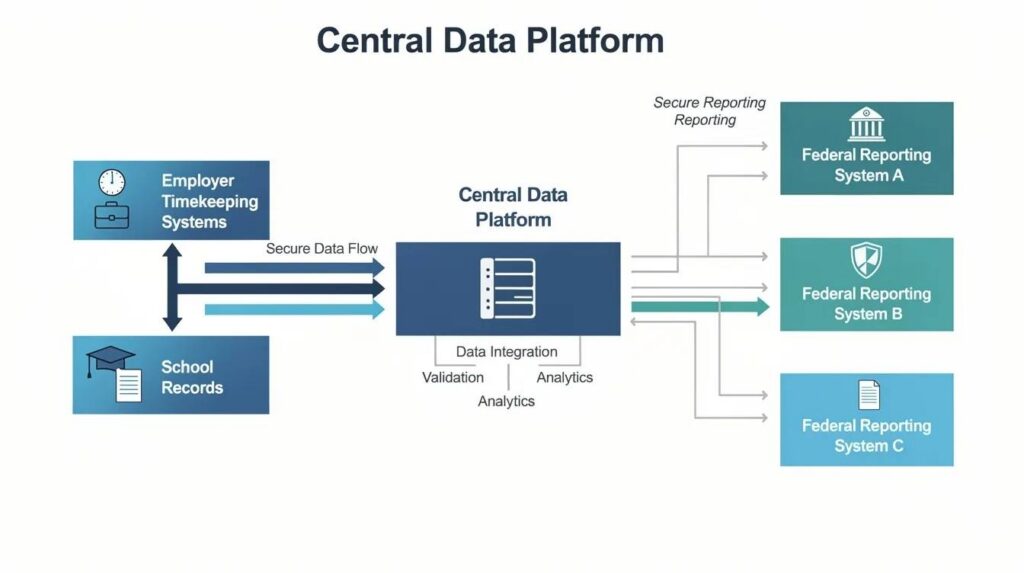
GoSprout is built specifically for registered apprenticeship programs, pre-apprenticeships, and internships. Unlike generic HR or LMS tools, it stores all OJT, RTI, and participant data in a unified platform designed around the data structures DOL actually requires.
GoSprout can generate RAPIDS-ready files and support data exports aligned with federal and many state apprenticeship data formats, reducing double entry. Instead of exporting from three systems, reformatting in a spreadsheet, and uploading manually, sponsors can pull reporting data from a single source of truth.
The reporting engine can be configured to output PIRL-compliant data sets, enabling faster WIPS uploads for grantees managing apprentices under WIOA or apprenticeship grants. In addition, real-time dashboards show enrollment counts, demographics, hours logged, completions, and performance metrics needed for DOL reports – so administrators can spot issues before deadlines arrive, not after.
The mobile apprentice app lets apprentices and supervisors log OJT hours and competencies daily, with supervisor approval flows that feed directly into compliance reports. This eliminates the gap between what happens on the job site and what gets recorded in the system.
GoSprout also supports collaboration between employers, school districts, and sponsors so all parties see the same data. Instead of chasing down a variety of spreadsheets via email each quarter, every stakeholder works from a shared platform with role-based access.
What Sponsors, Employers, and Schools Should Know Before They Scale
A pilot program with five apprentices and one employer can often manage DOL apprenticeship reporting in spreadsheets. It is not elegant, but it works. Scaling to dozens or hundreds of apprentices across multiple employers and training providers changes the equation entirely.
In multi-partner ecosystems, one sponsor may work with several school districts and dozens of employers, each collecting different pieces of the data needed for RAPIDS, WIPS, and PIRL. Without standardization, you end up with conflicting data formats, missing fields, and no single person who knows where all the information lives.
Early decisions matter. Data ownership, privacy considerations (including FERPA for student data and consent language in apprentice paperwork), and role-based access should be defined before the first apprentice starts – not retrofitted after the program has been running for a year.
Build a long-term reporting architecture from the start. This means standard data dictionaries, clear expectations for each partner’s reporting responsibilities, and a platform that can absorb new employers or schools without multiplying the reporting burden. GoSprout is designed to standardize these practices so that growth does not mean proportionally more compliance headaches.
Common DOL Reporting Mistakes to Avoid
These are the errors that come up most often in audits, WIPS rejections, and DOL monitoring visits. Each one is preventable with the right systems and habits.
- Incomplete demographic fields. Missing race, ethnicity, or gender data causes data quality flags and undermines equity analyses of registered apprenticeship participation. If your onboarding process does not require these fields, you will pay for it in every subsequent report.
- Mismatched dates between systems. School enrollment dates that do not align with apprenticeship registration dates in RAPIDS create discrepancies that auditors notice immediately. Agree on a single source of truth for each date field across all partners.
- Inconsistent OJT hours. Supervisors who approve time outside expected patterns – or who batch-approve weeks of hours at once without review – inflate or under-report apprentice experience and can throw off wage progression triggers.
- Delayed cancellation and withdrawal tracking. If an apprentice drops out in March but is not cancelled in RAPIDS until July, your active counts and completion rates are wrong for an entire quarter. Update statuses promptly.
- Poor documentation of supportive services. If your program provides accommodations, mentoring, or supportive services, these may need to appear in PIRL reporting. Failing to track them means you cannot demonstrate program responsiveness to apprentice needs.
- Last-minute manual data entry. Scrambling to enter months of data the week before a WIPS deadline increases error rates dramatically. It also makes it nearly impossible to reproduce data or explain discrepancies if questions arise later.
Why Accurate DOL Apprenticeship Reporting Matters
It is tempting to treat reporting as a compliance checkbox – something you do because you have to. But accurate data does far more than keep auditors away.
Accurate reporting provides transparency in the national apprenticeship system. It feeds the dashboards and analyses that policymakers, workforce boards, and employers use to make investment decisions about apprenticeship expansion. Data monitoring helps identify industries with workforce shortages, directing resources to the sectors and regions that need them most. The average national completion rate for apprenticeships is available through DOL’s published data, and your program’s numbers contribute directly to that picture.
Reporting ensures training programs meet national standards for quality, safety, and equity. Performance and equity data are used to refine recruitment strategies, improve outreach to underrepresented populations, and design support services that help apprentices succeed. When your data is clean and complete, you can learn what is working and what is not – and make the case for continued or expanded funding.
Strong reporting also builds trust with employers and education partners who want clear evidence of outcomes, completion rates, and return on investment before committing resources to a program. And apprentices themselves benefit when their hours, competencies, credentials, and completions are recorded correctly. Apprentices earn a portable, nationally recognized certificate upon program completion, and that credential depends on accurate documentation.
The federal government’s commitment to apprenticeship data goes back years. The American Apprenticeship Initiative launched in October 2015 with the goal of expanding apprenticeships into new sectors. The AAI provided five-year grants to 46 grantees, and AAI aims to expand apprenticeships in healthcare and IT among other industries. Some AAI grantees received extensions through September 2021 to continue their work. An evaluation of AAI was commissioned in April 2016 to assess the program’s impact. DOL published a Registered Apprenticeship Grant Performance Dashboard in January 2025, aggregating data across active grants – making performance information more visible than ever.
GoSprout’s mission connects directly to this: enabling organizations to spend less time chasing spreadsheets and more time supporting apprentices and employers with meaningful programs.
FAQs About DOL Apprenticeship Reporting
Who is responsible for DOL apprenticeship reporting in a registered apprenticeship program?
The program sponsor holds primary responsibility for DOL apprenticeship reporting. This includes submitting apprenticeship agreements, maintaining RAPIDS records, and filing PIRL/WIPS reports when required by grant terms. However, employers provide OJT data, schools provide RTI data, and the sponsor must coordinate all of it. Clear role definition and written SOPs prevent gaps.
How often do I need to update apprentice information in RAPIDS?
RAPIDS should be updated whenever a status change occurs: new registrations, completions, cancellations, transfers, and wage progression milestones. At minimum, updates should happen monthly. Apprenticeship agreements must be submitted within 45 days of execution. Delaying updates skews active counts and can trigger data quality flags during audits.
Do all apprentices need to be included in PIRL and WIPS reporting?
No. PIRL and WIPS reporting applies to participants tied to specific DOL funding streams, such as WIOA formula grants or competitive apprenticeship grants. If your apprentices are not funded through a DOL grant, they may not require WIPS submission – but they still need to be registered and tracked in RAPIDS. Always confirm with your grant officer or ETA regional representative which participants fall under PIRL reporting requirements.
Can I manage DOL apprenticeship reporting without specialized software?
For small cohorts – say, fewer than ten apprentices with a single employer – spreadsheets and manual RAPIDS entry can work. But the error rate climbs quickly as you add apprentices, employers, and training providers. Missed fields, inconsistent formats, and the inability to produce audit-ready documentation make manual processes fragile at scale. GoSprout reduces this risk by centralizing all apprenticeship data in one platform with built-in validation and export capabilities.
What happens if my WIPS file is rejected?
WIPS rejections typically result from file format mismatches, missing required fields, or logical rule violations (for example, a completion date that precedes the start date). When a file is rejected, you will receive error codes identifying the problem. Correct the data in your source system, regenerate the file, and resubmit. Keeping a detailed error log helps you identify recurring issues and prevent them in future quarters. If rejections persist, request technical assistance from your ETA regional office.
How does GoSprout help with apprenticeship audits and monitoring visits?
GoSprout maintains centralized records with full audit trails – every data change is logged with a timestamp, the user who made the change, and the source. During a DOL monitoring visit, you can pull apprenticeship agreements, OJT logs, RTI records, demographic data, and completion documentation from a single system. Exportable reports can be filtered by date range, employer, occupation, or status, giving auditors exactly what they need without a scramble.
Why Choose GoSprout for DOL Apprenticeship Reporting
GoSprout is built for apprenticeship and work-based learning management. It is not a generic HR tool with a reporting add-on, and it is not an LMS that happens to track hours. Every feature – from onboarding forms to OJT logging to quarterly report generation – is designed around the data structures that DOL, state agencies, and grant programs actually require.
The platform maps data fields directly to RAPIDS and PIRL specifications, with configurable report templates and export formats that align with federal and state requirements. Real-time validation checks catch errors before they reach WIPS, and dashboards give compliance leads visibility into data completeness across all partners.
GoSprout supports the full ecosystem: employers logging OJT, schools tracking RTI, sponsors managing agreements, and apprentices documenting their progress through a mobile app. When everyone works from the same data, the quarterly reporting process becomes a routine export instead of a cross-organizational fire drill.
Organizations that move from spreadsheet-based reporting to GoSprout consistently report significant time savings and fewer data quality flags. And because GoSprout tracks equity metrics, completions, and employment outcomes alongside operational data, sponsors can use the same platform for both compliance and continuous improvement.
Conclusion and Next Steps
Take a hard look at your current DOL apprenticeship reporting workflow. Where is data being collected? How many systems are involved? How long does it take to produce a quarterly file, and how confident are you that it is accurate?
If the answers make you uncomfortable, you are not alone – and the fix does not have to be painful. GoSprout can help you design a reporting-ready data architecture before your next quarterly submission or new grant cycle. Contact GoSprout to schedule a demo focused on RAPIDS, WIPS, and PIRL automation, and bring your specific state and federal reporting questions. Whether you are launching your first registered apprenticeship or scaling across multiple employers and schools, the time to get your data right is before the next deadline – not after.


