Table of Contents
- Why Apprenticeship RTI Tracking Matters Now
- Understanding RTI in Registered Apprenticeship Programs
- Building RTI for Your Apprenticeship Program
- RTI Compliance: What the DOL Actually Expects You to Track
- From Spreadsheets to Systems: How to Track Apprenticeship RTI Effectively
- Connecting RTI, OJT, and Recruitment: Turning Data into Talent Pipelines
- Common RTI Tracking Mistakes (and How to Avoid Them)
- What to Look For in Apprenticeship Management Software for RTI Tracking
- Why Choose GoSprout for RTI and Apprenticeship Tracking
- FAQs about Apprenticeship RTI Tracking
- Conclusion & Next Steps
Why Apprenticeship RTI Tracking Matters Now
Apprenticeship RTI tracking has moved from a back-office paperwork exercise to a front-and-center compliance and growth priority. Related Technical Instruction (RTI) covers the classroom portion of an apprenticeship-the organized, technical education that apprentices receive alongside on-the-job training. With nearly 700,000 active apprentices across the U.S. as of 2025, up from roughly 360,000 a decade ago, the volume of RTI data that sponsors, employers, and education partners must manage has exploded.
The core problem is familiar: sponsors and community colleges are drowning in spreadsheets, paper sign-in sheets, and scattered email threads to document RTI hours, instructor qualifications, and course outcomes. Poor RTI tracking threatens compliance with 29 CFR Part 29 and Part 30, disrupts RAPIDS/WIPS/PIRL reporting, and puts grant funding at risk. GoSprout is an apprenticeship management software platform that centralizes RTI and OJT tracking for employers, schools, sponsors, and industry intermediaries.
This article covers how to build RTI, track it effectively, stay compliant with federal regulations, and turn your RTI data into a recruiting and workforce readiness advantage.
Understanding RTI in Registered Apprenticeship Programs
Related technical instruction (RTI) is the structured education component of any registered apprenticeship program. While on-the-job training puts apprentices on a worksite under a mentor or journeyworker to develop hands-on skills, RTI delivers the foundational knowledge, safety rules, and theoretical knowledge they need to perform that work correctly. Integrated RTI and OJT enhance apprentices’ skill retention because learners connect what they study in the classroom with what they practice on the floor.
Apprentices typically require at least 144 hours of RTI annually under DOL guidance. Many programs exceed that based on occupation complexity or state apprenticeship agencies’ requirements. RTI can be delivered through various channels such as community colleges, CTE high schools, union training centers, and employer-led bootcamps. RTI can include classroom instruction, online courses, and lab work, as well as written exams. Blended learning combines online instruction with in-person sessions, which is increasingly common. Online learning platforms offer flexibility for geographically dispersed apprentices who can’t attend evening classes at a single campus.
RTI includes classroom instruction, lab learning, and written exams-essentially all organized instruction that isn’t supervised workplace practice. Effective RTI supports practical skills learned during OJT, creating a feedback loop between theory and application. Modern programs must track RTI separately from OJT to satisfy federal regulations and state agencies’ requirements, which is why understanding RTI’s structure matters before diving into tracking mechanics.

Building RTI for Your Apprenticeship Program
You can’t track what you haven’t clearly designed. Solid RTI design is the foundation of reliable RTI tracking, and rushing past this step is where many programs create compliance problems that haunt them for years.
Here’s how to build RTI step by step:
- Start from work processes. Map your occupational work process schedule to technical subjects and learning objectives. Every RTI course should connect directly to a skill the apprentice will practice on the job. RTI must be directly related to the apprentice’s occupation.
- Co-design with education partners. Work with community colleges, adult education centers, or union training centers to build an RTI curriculum that mirrors real job tasks. Community colleges often provide established RTI curricula for apprenticeships, which saves significant design time. Curriculum alignment between RTI and OJT is essential for success.
- Define hours by occupation. A 2,000-hour IT Support Specialist registered apprenticeship might stipulate 288 RTI hours over two years, divided among networking theory, cybersecurity, and customer service-well above the 144-hour annual minimum.
- Document instructor qualifications up front. Under 29 CFR 29.5, RTI instructors must meet state vocational-technical requirements or be industry experts with training in adult learning. Instructors must meet DOL qualifications for RTI delivery, so capturing degrees, certifications, and journeyworker status in your program standards from day one is critical for record keeping.
- Store everything centrally. GoSprout can store RTI curricula, course catalogs, lesson plans, and instructor profiles so sponsors aren’t chasing PDFs and email threads each time they update a standard.
Seamless RTI and OJT integration boosts apprentice motivation because learners see the direct connection between what they study and what they do on the job.
RTI Compliance: What the DOL Actually Expects You to Track
The DOL’s expectations for RTI in a registered apprenticeship are spelled out primarily in 29 CFR 29.5, with equal opportunity requirements in 29 CFR 30. 29 CFR Part 29 mandates organized classroom instruction for apprentices, and DOL regulations ensure equal opportunity in apprenticeship programs. RTI is essential for compliance with DOL apprenticeship standards, and RTI must be documented and verifiable for compliance.
Here are the concrete data points every sponsor should be able to produce on demand:
| Data Point | Why It Matters |
|---|---|
| RTI hours by apprentice | Federal regulations require at least 144 RTI hours per year; a four-year program typically requires 576 RTI hours total |
| Course titles and codes | Must map to work process schedule |
| Session dates and times | RTI tracking must include detailed records of class participation |
| Delivery mode | Classroom, online, hybrid, employer-led |
| Attendance tracking records | Verify who was present, absent, or partial |
| Instructor qualifications | Degrees, certifications, teaching training |
| Grades and completion status | Pass/fail, competency demonstration |
This RTI data feeds directly into RAPIDS, WIPS, and PIRL reporting. Missing or inconsistent entries can delay approvals, funding reimbursements, or grant renewals. The PIRL schema requires specific fields like RAPIDS ID, dates, occupation codes, and status values in exact formats.
During a federal or state apprenticeship audit, auditors typically request syllabi, rosters, attendance logs, instructor credentials, and sign-offs-often going back three to five years. Apprenticeship programs must document RTI hours for compliance. RTI typically requires a minimum of 144 hours per year, and auditors will check that requirement against actual records.
Many compliance issues arise not from bad instruction but from poor record-keeping and fragmented systems across employers, colleges, and industry intermediaries. Apprenticeship management software like GoSprout standardizes RTI data collection across all partners, reducing the scramble before audits.
From Spreadsheets to Systems: How to Track Apprenticeship RTI Effectively
Most programs follow a familiar journey: paper sign-in sheets at the community college, then Excel spreadsheets on a shared drive, then frantic emails when someone asks for a report. Digital systems are commonly used for apprenticeship tracking and documentation because the manual approach simply doesn’t scale.
The limitations of manual tasks in RTI tracking are real:
- Delayed data entry means sign-in sheets sit in a folder for weeks
- Inconsistent fields between sites make aggregation painful
- Matching RTI to specific apprentices and cohorts requires cross-referencing multiple files
- No real-time visibility into apprentice progress
Centralized platforms can reduce RTI reporting time significantly. The core features of a robust RTI tracking process include real-time attendance capture, digital time-stamps that provide verifiable evidence of RTI attendance, linkage between RTI sessions and OJT competencies, and secure storage for at least five to seven years to satisfy audit retention periods.
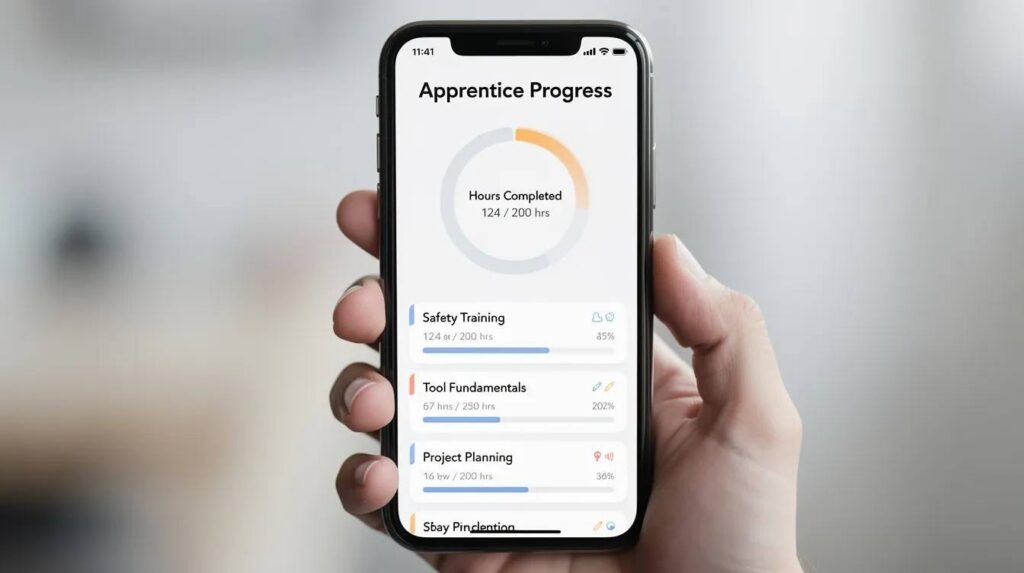
GoSprout allows RTI instructors and apprentices to log attendance directly from a mobile app, with hours and course codes flowing automatically into dashboards. Tracking systems help identify apprentices needing additional academic support by flagging missed sessions or falling grades. Apprentice tracking systems provide performance metrics for monitoring educational progress across both RTI and OJT simultaneously.
Program managers can see each apprentice’s combined OJT and RTI progress toward program requirements-for example, 6,000 OJT hours plus 432 RTI hours for a four-year electrical apprenticeship. Standardized RTI tracking also simplifies invoicing and reimbursement to colleges or other RTI providers, which is crucial when a program grows across multiple partners.

Connecting RTI, OJT, and Recruitment: Turning Data into Talent Pipelines
Accurate RTI tracking isn’t just about satisfying auditors. It can become a recruitment and workforce planning tool that gives your apprenticeship program a competitive edge.
Completed RTI modules create a verifiable skills profile for each apprentice. Employers can use this to fill mid-program openings or transition workers to new roles based on demonstrated technical skills and competencies. Apprenticeship programs often link wage increases to RTI completion milestones, which also helps with retention. Data from RTI tracking can assess future employer needs in apprenticeship design by revealing which technical subjects are most in demand.
Education partners and community colleges can use RTI progress data to market apprenticeship pathways to currently enrolled students who are “RTI-complete but not yet placed.” Industry intermediaries and workforce boards can aggregate RTI data across employers to demonstrate regional training capacity in sectors like advanced manufacturing, IT, and clean energy.
Consider a 2025 manufacturing consortium that uses RTI tracking to identify 50 pre-apprentices who finished safety and blueprint-reading courses. Those learners can be fast-tracked into open apprenticeship slots, cutting time-to-hire and improving workforce readiness across the region. GoSprout’s dashboards make this practical with filters by occupation, RTI completion percentage, cohort start date, and region to support proactive recruitment and equitable placement. This turns RTI data into a job postings strategy and employment pipeline intelligence.
Common RTI Tracking Mistakes (and How to Avoid Them)
Even mature programs struggle with RTI tracking when multiple campuses, schedules, and instructors are involved. Here are the most common pitfalls and how to fix them:
- Mixing RTI and OJT hours in one bucket. Keep distinct records with separate reporting fields. Your system should clearly label every logged hour as either RTI or OJT-never “training” generically.
- Inconsistent course naming across partners. Develop a shared course catalog with standardized titles and subject tags. Map every RTI session to a specific work process so that technical subjects related to the occupation stay consistent regardless of which educator delivers them.
- Missing instructor qualification documentation. Require instructor profiles with credential uploads before any course is scheduled. Periodic verification prevents gaps from accumulating.
- Not capturing no-shows or withdrawals. Use attendance tracking per session and flag missed sessions. Failure to record partial completions-say 18 of 24 hours-distorts both compliance reports and apprentice support decisions.
- Poor data hygiene before reporting periods. Complete an annual RTI data health check: export records, verify missing fields, reconcile hours with your work process schedule, and ensure alignment with each apprenticeship agreement.
GoSprout helps avoid these errors through standardized templates, required fields, validation rules, and automated reminders for instructors and coordinators. Progress monitoring becomes proactive rather than reactive.
What to Look For in Apprenticeship Management Software for RTI Tracking
There are many HR and LMS tools on the market, but apprenticeship RTI tracking has unique needs that generic platforms don’t address. A traditional LMS tracks courses and grades but doesn’t handle OJT hours, competency mapping, or compliance reporting for varying levels of federal and state requirements.
Key criteria for choosing a platform:
- Purpose-built for apprenticeship. Native RTI and OJT tracking, not a bolted-on module
- RAPIDS/WIPS/PIRL reporting support. Ability to export data in correct schemas and valid-value formats
- Multi-side access. Employers, sponsors, community colleges, K–12 districts, and apprentices all need appropriate views and permissions for seamless integration
- LMS and SIS integrations. RTI attendance and grades should sync automatically from systems like Canvas or Brightspace instead of being double-entered
- Mobile-friendly. Simple instructor workflows and an apprentice portal for logging hours on the go
- Clear dashboards. Show RTI completion at individual, cohort, and program levels so program effectiveness is visible at a glance
Apprenticeship managers can use dedicated software to streamline RTI tracking and eliminate the manual tasks that consume coordinator time. The right platform should also deliver technical assistance through onboarding support and configuration help.
Why Choose GoSprout for RTI and Apprenticeship Tracking
GoSprout is an all-in-one work-based learning platform serving employers, schools, sponsors, and intermediaries who need to launch, track, and scale registered apprenticeship programs.
Concrete RTI capabilities include:
- Real-time RTI attendance and RTI hours tracking with digital time-stamps
- Instructor and course management with credential verification
- Centralized record keeping aligned with five-to-seven-year audit retention needs
- Automated compliance reporting for RAPIDS, WIPS, and PIRL
- RTI performance analytics that surface at-risk apprentices based on engagement
- Combined RTI and OJT dashboards showing full apprentice progress toward completion
GoSprout is built for collaboration among employers, community colleges, workforce boards, and industry intermediaries, with role-based access and shared dashboards. It supports configurable workflows for registered apprenticeship, youth apprenticeship, and pre-apprenticeship programs. Students, mentors, and instructors each get the views they need without administrative overhead. Programs can scale from a handful of apprentices to thousands without proportionally increasing headcount-so your program grows without your admin burden growing with it.
FAQs about Apprenticeship RTI Tracking
These FAQs address common questions from employers, schools, and sponsors about RTI tracking.
What’s the difference between RTI and OJT, and why do I have to track them separately?
Related technical instruction delivers theoretical knowledge and technical skills through courses, while on-the-job training provides supervised hands-on experience. A 4,000-hour electrical apprenticeship program might require 2,000 OJT hours plus 144 RTI hours per year. Tracking them separately is required under 29 CFR Part 29 because each serves a distinct purpose and has different completion rates, instructor requirements, and reporting fields.
How many RTI hours do I need for a registered apprenticeship program?
DOL requires at least 144 hours of RTI per year. A four-year program typically requires 576 RTI hours total. Some state apprenticeship agencies and specific occupations set higher minimums, so check with your registration agency before finalizing your program standards.
Can I use online learning for RTI, or does it all have to be in person?
RTI can be delivered through classroom instruction, online courses, hybrid formats, and electronic media approved by the registration agency. The key is verifiable attendance and qualified instructors. Whatever the format, you need documented proof that apprentices participated and that the instruction met learning objectives.
What RTI records should I keep in case of an audit?
Keep syllabi, course outlines, attendance rosters, grades, instructor credentials, and evidence of alignment to work processes. Store these records for at least five years to satisfy most state and federal audit retention requirements. Developing a consistent filing system now prevents panic later.
How does GoSprout integrate with our community college or LMS?
GoSprout supports data imports and LMS connectors to pull course completions and grades from platforms like Canvas and Brightspace. This eliminates double data entry and ensures RTI records stay synchronized between your education partners and your central tracking system.
We’re just getting started with a new apprenticeship program. When should we set up RTI tracking?
Configure RTI tracking before your first cohort starts. Define your RTI component, map courses to work processes, upload instructor qualifications, and set up attendance workflows. This ensures you capture clean data from day one and helps apprentices succeed by making progress visible from the start.
Conclusion & Next Steps
RTI is the backbone of every quality apprenticeship. Without reliable tracking, even excellent instruction becomes invisible to auditors, funders, and the employers who need to see outcomes. The programs that treat RTI data as a strategic asset-not just a compliance checkbox-are the ones that scale, retain talent, improve completion rates, and win grants.
Effective apprenticeship RTI tracking supports compliance, funding, apprentice success, and smarter recruitment across your entire career and workforce pipeline.
Ready to see how centralized RTI and OJT tracking works in practice? Schedule a GoSprout demo, request a walkthrough of RTI tracking features, or contact the team to design your RTI data workflows. GoSprout works with employers, school districts, community colleges, apprenticeship sponsors, and industry intermediaries across the U.S. to launch and scale registered apprenticeship programs.
The future belongs to programs that pair strong RTI design with modern, centralized tracking tools-building resilient talent pipelines that deliver for apprentices and employers alike.


