
If you like tools, systems, problem-solving, and the idea that your work helps keep every aircraft safe in the air, aviation maintenance apprenticeships can be a great way to get started without taking on heavy school debt.
An apprenticeship program in aviation combines paid, full-time employment with structured training, usually over 18 to 36 months. Many programs are registered with the U.S. department of labor and are built around real aircraft maintenance, classroom instruction, and mentorship.
To become an Aviation Maintenance Technician (AMT), individuals must obtain an Airframe and Powerplant (A&P) certification from the Federal Aviation Administration (FAA). AMT, aircraft mechanic, maintenance technician, and A&P mechanic are closely related terms for technicians who inspect, troubleshoot, repair, and service aircraft. Compared with a traditional 2-year aviation maintenance school, an apprenticeship gives you paid job training and earlier hands-on exposure. Industry outlooks from Boeing and the FAA continue to show strong aviation maintenance demand through at least 2035.
Table of Contents
Use this outline to jump to the section you need.
How an Aviation Maintenance Apprenticeship Program Works
Many major airlines, regional carriers, and Maintenance, Repair, and Overhaul (MRO) facilities offer registered apprenticeship programs. Apprentices in aviation maintenance programs often work under the supervision of FAA-certificated mechanics, gaining hands-on experience while assisting with maintenance tasks.
Many aviation maintenance apprenticeship programs are designed to lead to FAA certification, such as the Airframe and Powerplant (A&P) certification, which is essential for a career as an aircraft mechanic. You may work on inspections, structural repair, engine changes, fluid systems, landing gear, and documentation.
Every maintenance task performed must be logged for FAA verification, requiring signature from an FAA-certified A&P mechanic to prove work across all required subject areas.
Day in the life of an apprentice maintenance technician:
- Review safety notes and assigned aircraft
- Use technical manuals before touching a system
- Assist with inspection, repair, or troubleshooting
- Log work accurately for review
- Receive coaching from a lead technician
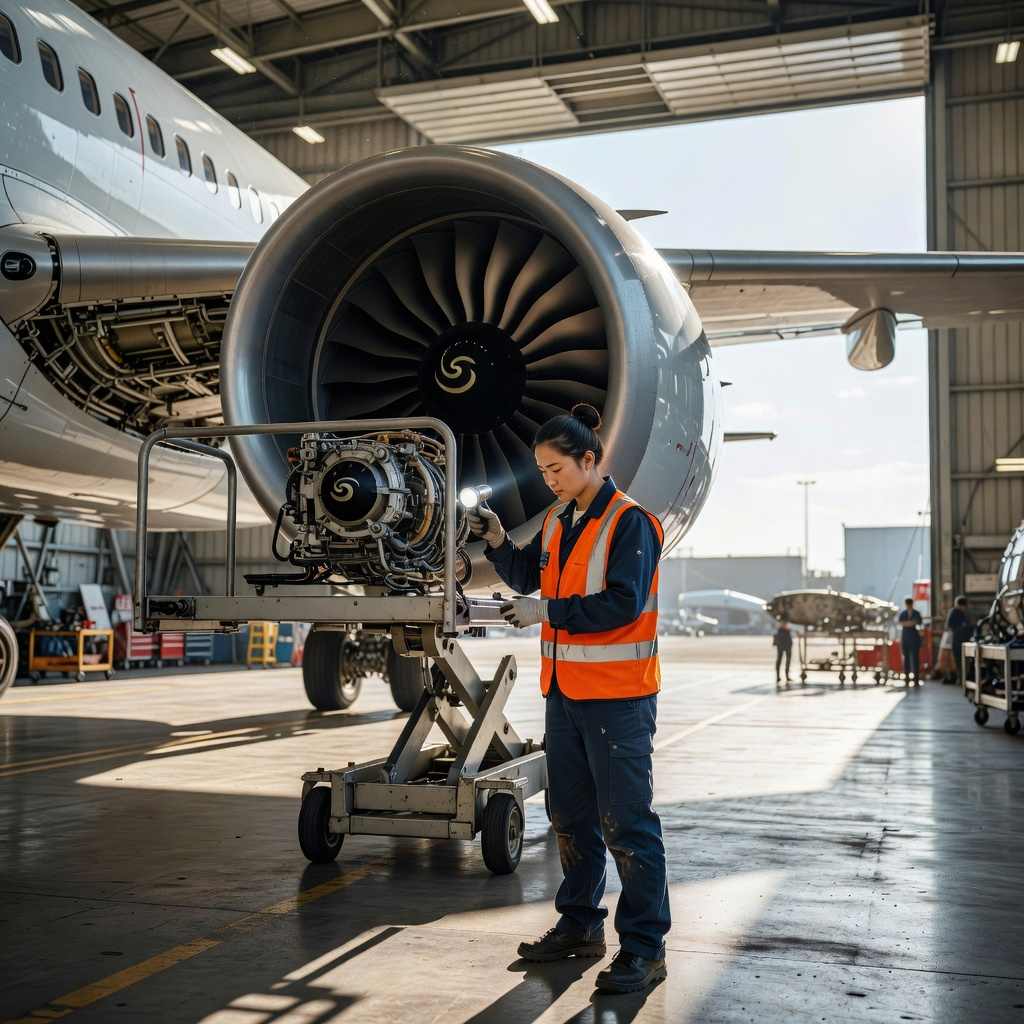
Programs also evaluate attendance, safety habits, teamwork, and professionalism. Raises may be tied to time in the program and demonstrated competency.
Entry Requirements and Ideal Candidates
Most programs are open to people without prior aviation experience, but they do expect mechanical aptitude and commitment.
Common requirements include:
- You must be at least 18 years old and would need to possess a high school diploma or GED to enter aviation maintenance apprenticeship programs.
- Standard requirements for aviation apprenticeships include passing a TSA background check and a pre-employment drug screening.
- Legal employment eligibility in the U.S.
- Ability to read manuals, follow procedures, and use tools safely.
- Willingness to work in hangars, on ramps, at heights, and sometimes nights or weekends.
Prior shop class, automotive work, military maintenance, construction, or industrial repair experience can help, but it is not always required. Veterans and second-career applicants often make strong candidates because they understand discipline, safety, and teamwork. Check the application page for exact information before you apply.
Training Structure: On-the-Job and Classroom Learning
Aviation maintenance apprenticeships typically include a combination of on-the-job training, classroom instruction, and mentorship from experienced technicians. Participants in aviation maintenance apprenticeship programs often receive a combination of on-the-job training, classroom instruction, and mentorship from experienced technicians, which helps them develop the necessary skills for their careers.
On the job, you learn by working on live aircraft and components under supervision. Classroom or online training covers general maintenance practices, airframe structures, hydraulic systems, pneumatic systems, fuel systems, electrical systems, piston engines, turbine engine theory, human factors, documentation, and FAA rules.
The A&P certification requires candidates to pass written, oral, and practical exams that demonstrate their knowledge and skills in aircraft maintenance. Some programs also partner with a technical college so an apprentice can receive credit toward a certificate or degree.
What you’ll learn in your first year:
- Tool control and shop safety
- Basic airframe inspection
- Maintenance manual use
- Simple component removal and installation
- Accurate logbook entries
Search terms like airframe powerplant, powerplant A&P, and P certification usually point to the same goal: FAA-recognized A&P license preparation.
Timeline: How Long Does an Aviation Maintenance Apprenticeship Take?
Aviation maintenance apprenticeship programs typically last between 18 to 36 months, providing a structured pathway for individuals to gain hands-on experience and training in the field. Many aviation maintenance apprenticeship programs are designed to last between 18 to 36 months, during which apprentices receive structured training and mentorship to prepare for certification.
Candidates for the A&P certification must have at least 18 months of practical experience working on airframes or powerplants, or a combination of both, to qualify for the certification exams. For both ratings together, FAA guidance generally requires longer documented experience; review current FAA mechanic requirements before testing.
Year 1 vs. Year 2+ focus areas:
- Year 1: safety, tools, inspections, documentation
- Months 6–18: systems, troubleshooting, repair procedures
- Final phase: advanced tasks, testing prep, leadership exposure
Some department of labor registered occupations specify 5,000+ hours of on-the-job learning plus related instruction. A motivated apprentice may move faster in a competency model, but the required experience still matters.

Costs, Pay, and Benefits for Apprentice Maintenance Technicians
Apprentices are paid employees from day one. That makes this path different from school-first routes where tuition, tools, and living costs can add up before your first aviation job.
Pay varies by company, location, and shift. Many programs start in the mid-teens to low-twenties per hour, with increases as skills grow. Employers may cover or reimburse classroom costs, textbooks, FAA testing fees, and license support.
What you’ll earn and save may include:
- Paid work while you learn
- Health, dental, and vision benefits
- Retirement or 401(k) options
- Paid holidays or time off
- Help buying required tools
- Exam prep and testing support
After completing an aviation maintenance apprenticeship and obtaining the FAA Airframe & Powerplant (A&P) certification, individuals can expect to receive a pay raise and secure a permanent position in the aviation industry.
Career Paths After Completing an Aircraft Maintenance Apprenticeship
The aviation maintenance industry offers a range of job opportunities, with many companies providing structured apprenticeship programs that lead to full-time employment upon completion.
Common first roles include:
- Aircraft mechanic
- Aviation maintenance technician
- A&P mechanic
- Component shop technician
- Line maintenance technician
Aviation maintenance technicians can pursue various career paths, including roles as qualified inspectors, lead technicians, or team leaders, depending on their experience and certifications. Over several years, you could move into quality inspection, maintenance control, avionics, turbine overhaul, heavy checks, corporate aviation, safety, training, or maintenance management.
How to Choose the Right Aviation Maintenance Apprenticeship Program
Not every program offers the same exposure, support, or long-term opportunities. Before you make a decision, compare:
- Is the program registered with the department of labor?
- Does the employer operate a strong safety culture?
- Will you get both airframe and powerplant experience?
- Are mentors experienced FAA-certificated A&P mechanics?
- Are wage increases written and transparent?
- Does the program help with FAA testing?
- Is the schedule realistic for your life?
- Does the company offer a full-time job path after completion?
A good program should be clear about expectations, work hours, training phases, benefits, and certification support.
FAQs About Becoming an Aviation Maintenance Apprentice
How long does it take to become an aircraft mechanic through an apprenticeship? Most programs take about 2 years to 3 years, although some run 18 to 36 months depending on structure.
Do I need prior aviation experience or schooling? No. Many programs accept beginners with a high school diploma or GED, mechanical interest, and strong work habits.
Can I earn my FAA A&P certification through an apprenticeship? Yes. Many programs are designed to help you meet FAA experience requirements and prepare for written, oral, and practical testing.
What tools am I expected to buy myself? It depends. Some employers provide tools, while others require a starter set and may offer reimbursement.
What is a typical schedule? Apprentices often work full time, and aviation shifts may include evenings, weekends, holidays, or overtime.
Is there a contract to stay after finishing? Some employers have repayment or service agreements. Read the offer carefully and ask questions before signing.
Can veterans use GI Bill or housing benefits? Some registered programs may qualify, but benefits depend on approval status and your eligibility.
Why Choose Our Aviation Maintenance Apprenticeship Program
Our program is built for people who want a serious, supported path into aviation maintenance. We focus on safety, structured job training, experienced A&P mentors, modern tooling, and clear progress expectations.
You will learn from a team that understands aircraft maintenance work in real settings, not just in theory. We offer practical mentorship, transparent communication, certification guidance, and support with FAA testing steps so you can become a confident maintenance technician.
If you are ready to start a career with long-term opportunities, review the program details and start your application today.
Want to Learn More About Your Registered Apprenticeship Opportunities?
BOOK A FREE CONSULTATION
Conclusion: Is an Aviation Maintenance Apprenticeship Right for You?
An apprenticeship is a practical, low-debt route into a high-demand aviation career. In roughly 2 to 3 years, you can learn the technical skills, safety habits, and documentation discipline required to support safe flight operations.
If you enjoy hands-on mechanical work and want to build a future in aircraft maintenance, now is a strong time to take the next step. Visit our program page, request information, or apply to find out whether this path is the right fit for you.


