
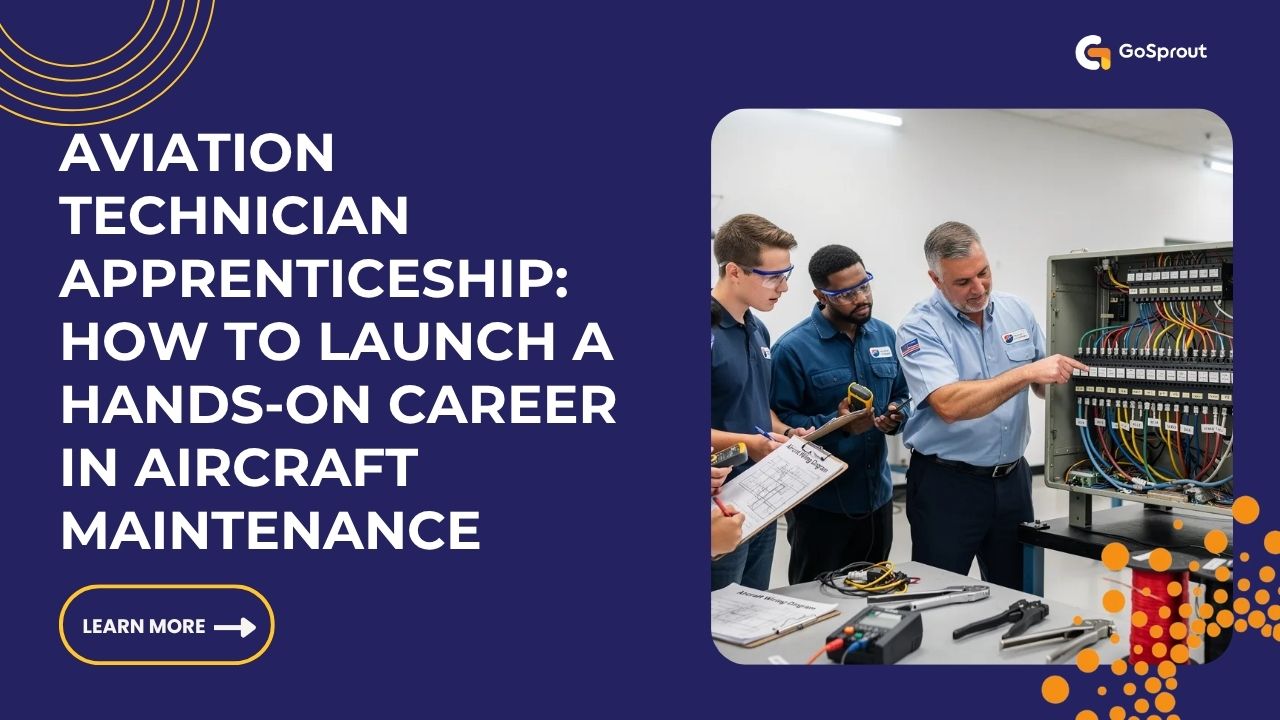
If you like mechanical problem-solving, aircraft systems, and work where safety matters, an aviation technician apprenticeship can help you start an aircraft maintenance career without taking on traditional college debt. You get paid job training, real hangar experience, and a structured route toward FAA certification.
Table of Contents
Jump directly to details like program length, pay, benefits, and certification outcomes.
What Is an Aviation Technician Apprenticeship?
An apprenticeship program blends paid, full-time work with structured training in aviation maintenance. It is built for recent high school graduates, veterans, career changers, and mechanically minded learners who would rather learn by doing.
Most aviation apprenticeship programs are registered with the United States department of labor or aligned with its standards, ensuring specific training requirements. Many are also designed around FAA Airframe and Powerplant, or A&P, outcomes.
Apprenticeships in aviation maintenance typically last between 18 to 36 months, during which participants gain hands-on experience and training under the supervision of certified mechanics. Many programs offer health insurance, 401(k) plans with employer matching, and tuition reimbursement for further education or certification costs through registered workforce development pathways.
Earn while you learn: aviation technician apprenticeships typically offer paid positions, and some programs indicate total earnings of around $95,000 over the course of the apprenticeship.
How an Aviation Technician Apprenticeship Program Works Day to Day
A typical week is about 40 hours, combining hangar work with classroom or online study. One sample schedule might be Monday–Friday, 7:30 a.m.–4:00 p.m., with 2 days of technical instruction and 3 days of on-the-job aircraft maintenance tasks.
Apprentices are regular employees: they clock in, attend team briefings, use required safety procedures, and help return each aircraft to service. Safety is the first priority throughout every task and training activity. Senior A&P mechanics or maintenance technicians supervise tasks and sign off logbooks.
Key elements include:
- Paid training with progressive responsibility.
- Rotations through airframe, powerplant, avionics, and inspection areas.
- Structured workbooks, skills checks, and mentor feedback.
- Real repair, maintenance, and inspection work from the first month.
- Close coordination with parts, quality, and flight operations teams.

Program Length, Structure, and Certifications
Program length can range from 18 months to about 3 years depending on whether the focus is airframe, powerplant, or full A&P preparation. The duration of aviation apprenticeship programs typically ranges from 18 months to 36 months, depending on the specific program and training requirements involved.
Typical models include:
| Track | Time | Outcome |
|---|---|---|
| Focused airframe or powerplant | 18–24 months | Company sign-off and possible eligibility for specific FAA mechanic or repairman privileges |
| Full airframe powerplant path | 30–36 months | Preparation for A&P testing and broader technician roles |
Time-based programs use set hours. Competency-based programs move when skills are proven. Hybrid programs use both. The FAA requires 30 months of practical experience to qualify for the A&P certification exams. The training duration for an Airframe & Powerplant (A&P) mechanic apprenticeship is typically around 2.5 years, including a minimum of 5360 hours of training as per U.S. Department of Labor standards. Some employers offer pathways that can extend beyond 2 years depending on training goals.
Apprentices may work toward an FAA Airframe certificate, FAA Powerplant certificate, combined A&P certification, journeyman card, or p certification-related exam readiness. Hours are logged across structures, powerplant a p systems, electrical work, inspections, and documentation, often totaling 4,000–5,000+ hours.
Entry Requirements and How to Apply
To qualify for an aviation technician apprenticeship, candidates must be at least 18 years old and hold a high school diploma or GED. Applicants also usually need legal work authorization, a background check, drug screen, and the ability to read technical manuals.
Preferred qualifications may include automotive, industrial, or military mechanical experience; math and physics fundamentals; and comfort with tools.
Typical application steps:
- Submit an online application and resume.
- Add a brief statement of interest explaining why aviation.
- Interview with maintenance leadership.
- Take a mechanical aptitude test, if required.
- Receive a conditional employment offer pending checks.
Before you apply, gather transcripts, safety cards, basic electronics certificates, and any school or military records. Bookmark open intake dates and get email information from the company so you do not miss the next window and can find updates quickly.
What You’ll Learn: Core Aircraft Maintenance Skills
Apprentices gain practical aircraft maintenance skills, from basic inspection to advanced troubleshooting. Apprenticeship programs for aviation technicians often combine on-the-job training with classroom instruction, allowing participants to gain practical experience while also learning theoretical concepts necessary for certification.
You may learn:
- Airframe: sheet metal repair, composite work, flight control rigging, and corrosion prevention.
- Powerplant: turbine and piston engine systems, borescope inspections, and scheduled engine maintenance.
- Electrical and avionics: wiring, connectors, and basic line maintenance under supervision.
- Systems: hydraulics, pneumatics, fuel, environmental, and pressurization systems that help manage air flow throughout the aircraft.
- Documentation: logbook entries, maintenance software, FAA rules, and manufacturer manuals.
- Safety: lockout/tagout, tool control, human factors, and 14 CFR Part 43 and Part 145.
To become a certified Airframe Mechanic, apprentices must complete a structured training program with practical and theoretical components, often ending in an FAA certification examination.
Daily Life as a Maintenance Technician Apprentice
A day might start with a safety briefing, then reviewing work orders, setting up tools, helping inspect an aircraft component, and closing with paperwork. Some apprentices work five 8-hour shifts; others work four 10-hour shifts, with overtime during heavy maintenance.
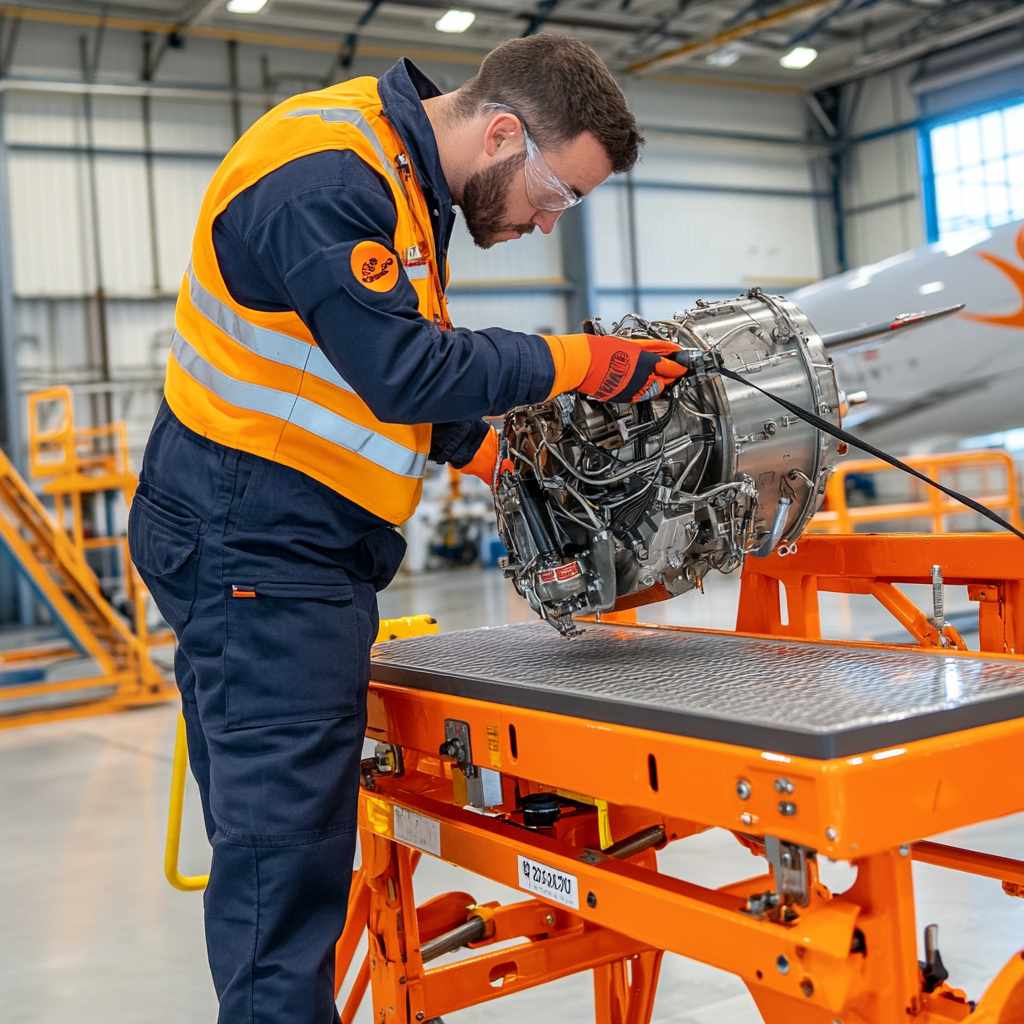
Expect physical and mental demands: stands, tight spaces, power tools, technical drawings, and constant attention to safety. As one apprentice might say, “I started by organizing tools and safety wiring; now I help troubleshoot systems with my mentor beside me.”
Career Paths and Earning Potential After Apprenticeship
Graduates of aviation technician programs enter a job market with high demand for certified technicians in various sectors. Certified aviation technicians can pursue diverse career pathways across sectors like commercial airlines, corporate aviation, and aerospace manufacturing.
Airlines and Maintenance, Repair, and Overhaul (MRO) facilities often hire entry-level Aircraft Mechanic Helpers. After completing an aviation technician apprenticeship, individuals can pursue roles such as Aircraft Mechanic, where they may be eligible for FAA certification and can expect to earn a higher salary upon certification.
Common paths include junior aircraft mechanic, amt, A&P maintenance technician, avionics technician, Quality Control Inspector, Qualified Inspector, lead mechanic, Maintenance Supervisor, and manager. Aviation technicians can specialize in roles such as Quality Control Inspector or Maintenance Supervisor with experience. Completing an aviation technician apprenticeship can lead to career advancement opportunities, such as becoming a Qualified Inspector or progressing to higher technician roles within the company.
Starting wages vary; some programs offer initial pay rates around $17 per hour, increasing as apprentices reach training milestones. According to the U.S. Bureau of Labor Statistics, aircraft and avionics equipment mechanics and technicians earn strong median wages, with higher pay possible through full license status, overtime, shift differentials, and advanced technical training that can make a difference in career progression.
Why Choose Our Apprenticeship for Your Aviation Maintenance Career
Our apprenticeship is built for people who want a great start, clear expectations, and real support from a skilled maintenance team.
- Mentors with years of line and heavy maintenance experience.
- Rotations across airframe, powerplant, and avionics.
- Paid, full-time positions with health coverage, retirement options, PTO, and other benefits.
- Support for FAA A&P exam preparation, study materials, and practical coaching.
- Transparent communication about pay progression, standards, and what is required.
- Flexible pathways for veterans and career changers where prior experience may help.
If you have questions, contact our team or review current openings before the next application period closes.
Want to Learn More About Your Registered Apprenticeship Opportunities?
BOOK A FREE CONSULTATION
Frequently Asked Questions About Aviation Technician Apprenticeships
How long does an aviation technician apprenticeship typically take?
Most take 18–36 months. A full A&P-focused program often runs about 30 months.
Do I get paid while I’m training?
Yes. Apprentices are usually paid employees and may receive benefits while training.
Do I need previous mechanical experience to be accepted?
Not always. Prior mechanical experience helps, but many programs are open to motivated beginners.
Will this program qualify me to sit for the FAA A&P exams?
A properly documented program may help you meet FAA requirements. Confirm how hours, tasks, and exam support are handled.
What tools or equipment am I expected to buy myself?
Some programs provide tools, some use tool loans, and others require a starter set. Ask before accepting an offer.
Can I work while completing community college aviation maintenance courses?
Yes, some programs combine work and school. Some may even offer credit toward an associate degree.
Conclusion: Is an Aviation Technician Apprenticeship Right for You?
An apprenticeship can be a smart way to get paid training, learn from certified mechanics, and build a direct path into aircraft maintenance. It is especially strong for people who enjoy hands-on work, problem-solving, and safety-critical environments.
With time, certification, and experience, an apprentice can become a maintenance technician, inspector, supervisor, or aviation leader. Explore current apprenticeship openings, sign up for updates, or contact usfor guidance on the next application date. Career goals may change as your experience and qualifications grow.