
The gap between classroom learning and workplace readiness has never been more scrutinized. Districts, colleges, and workforce boards are scrambling to connect students with real employers, track meaningful skills development, and prove outcomes to funders—all while juggling compliance paperwork that would make any coordinator weep.
A work based learning management platform is the centralized software solution that makes this chaos manageable. It coordinates the logistics, communication, and documentation required when students step out of the classroom and into actual workplaces—internships, apprenticeships, clinical rotations, co-ops, and job shadowing experiences that shape career readiness.
Between 2020 and 2026, demand for scalable digital coordination of work based learning programs exploded. Remote and hybrid work models disrupted traditional placement approaches, while states like California, Texas, and New York embedded WBL requirements into their CTE frameworks. The result? Manual spreadsheets and email chains became unsustainable for any district managing more than a handful of placements.
Want to Learn More About Your Registered Apprenticeship Opportunities?
BOOK A FREE CONSULTATION
Work-Based Learning management software addresses logistical, communication, and organizational challenges in managing work based learning programs, ensuring a more efficient learning experience for both students and employers. At its core, the platform handles:
- Student-employer matching based on interests, pathways, and availability
- Hour tracking and supervisor approvals for internship requirements
- Digital documentation and e-signature workflows for compliance
- Communication between students, mentors, coordinators, and families
- Analytics and reporting for grant accountability and program improvement
- Integration with existing student information systems and learning management systems
Table of Contents
- What is a Work Based Learning Management Platform?
- Key Components of a Modern WBL Management Platform
- How a Work Based Learning Management Platform Supports Each Stakeholder
- Essential Features to Look for in a WBL Platform
- Program-Level Reporting and Continuous Improvement
- Benefits of Adopting a Dedicated Work Based Learning Management Platform
- How to Choose the Right Work Based Learning Management Platform
- Why Choose Our Platform for Your Work Based Learning Programs
- Frequently Asked Questions
- Conclusion: Preparing Students for the Future of Work
What is a Work Based Learning Management Platform?
Let’s clear up a common misconception. A work based learning management platform is not just another learning management system with a different label. Traditional LMS platforms like Canvas, Moodle, or Schoology excel at course content delivery, quizzes, and discussion boards—but they were never designed to handle the multi-stakeholder coordination required when students work at actual employer sites with real supervisors.
WBL platforms are purpose-built for experience-based education. They coordinate real employers, real worksites, and real schedules while tying those experiences back to academic credit and career-technical education goals. The use of WBL management software helps educational institutions provide higher-quality, real-world learning opportunities that align with academic curricula and career goals, improving the overall quality of work based learning experiences.
Consider the programs these platforms support:
- High school internships for 11th and 12th graders requiring 60-120 hours of workplace experience
- Registered apprenticeships with industry-recognized credentials and competency tracking
- Dual-enrollment co-ops where community college students earn credit while working
- Health science clinical placements with strict safety and supervision requirements
- Job shadowing programs introducing younger students to professional skills and career exploration
The distinction matters because WBL platforms focus on competency-based growth rather than just course completion, transforming training into a continuous, measurable journey. This shift reflects what employers increasingly demand: demonstrated skills over credential checklists.

Here’s what separates a course-based LMS from an experience-based WBL management platform:
- Course-based LMS tracks that a student completed a reflective essay about their internship
- WBL platform tracks that the student logged 40 hours at a specific worksite, had those hours approved by their supervisor, received a mid-term evaluation against industry standards, and participated in weekly reflection prompts
By 2026, state-level CTE mandates have made manual coordination untenable. A coordinator managing 200 students across 75 employer partners cannot rely on spreadsheets and email threads without missing deadlines, losing paperwork, or violating compliance requirements.
The scope of a modern WBL platform includes:
- Students searching for opportunities matched to their interests and career goals
- Coordinators and teachers managing placements, approvals, and student progress
- Employers and mentors posting opportunities and evaluating student participation
- Guardians receiving placement confirmations and safety documentation
- District leaders accessing completion rates, equity data, and funding reports
- State agencies receiving standardized Perkins V and WIOA accountability data
The outcomes are measurable: more students placed in high-quality experiences, fewer dropped placements due to communication failures, and defensible compliance documentation for audits.
Key Components of a Modern WBL Management Platform
An effective WBL system is more than a database storing student records and employer contacts. It functions as a workflow engine connecting schools and employers through automated processes that reduce administrative tasks and surface problems before they derail placements.
Centralized coordination manages the logistics of diverse WBL activities like apprenticeships, internships, and job shadowing. The following components work together to create that centralized hub:
- Opportunity marketplace: A searchable catalog where employers post available positions and students browse filtered by industry, location, schedule type, and pathway alignment—similar to how platforms offer built-in authoring tools to create interactive modules, videos, and assessments quickly
- Student profile and skills inventory: Longitudinal records capturing interests, completed certifications, competencies developed, and readiness indicators that travel with learners across multiple placements and school years
- Employer and worksite management: Detailed partner profiles including site characteristics, available positions, supervisor contact information, equipment capabilities, and historical performance with student placements
- Scheduling engine: Automated alignment of school bell schedules, transportation limitations, employer operational hours, and student availability across the full 2025-26 school year—eliminating the calendar conflicts that plague manual coordination
- Documentation and e-signatures: Centralized storage for training agreements, parental consent forms, liability waivers, work permits, and accommodation plans with configurable approval chains and tamper-proof audit trails
- Assessments and reflections: Digital timesheets with supervisor approvals, skill checklists aligned to industry standards like OSHA or NECA electrical certifications, and structured reflection prompts for student learning objectives
- Messaging and notifications: In-platform communication replacing scattered emails and texts, with automated reminders for orientation dates, safety training deadlines, and evaluation submission windows
- Reporting and dashboards: Program-level analytics aggregating placement rates, completion and retention rates, total hours worked, employer satisfaction scores, and equity metrics disaggregated by demographic group. Key features include completion tracking and certification tracking, which allow for real-time monitoring of learner progress, measuring training effectiveness, ensuring compliance, and streamlining audit-ready reporting.
- Built-in tools for feedback: Integrated built-in tools facilitate the collection and analysis of feedback from stakeholders, automating the process and making it easy to gather actionable insights for continuous improvement.
Integration capabilities of Learning Management Systems with existing HR systems can streamline processes by automating user data synchronization and enrollment workflows. Modern WBL platforms extend this by interoperating with student information systems like PowerSchool, LMS platforms like Canvas or Schoology, and HR/payroll systems for paid internships. Advanced features, such as highly customizable workflows and analytics, are available for enterprise users but may require significant setup.
Cloud-based LMS platforms often provide seamless integration with other business systems, enhancing data flow and reducing manual data entry. For WBL coordinators, this means student enrollment data flows automatically rather than requiring duplicate entry across disconnected spreadsheets.
How a Work Based Learning Management Platform Supports Each Stakeholder
Work based learning involves a web of stakeholders with different needs, access levels, and communication preferences. A well-designed platform anticipates these differences rather than forcing everyone into a one-size-fits-all interface.
The multi-stakeholder nature of WBL—students, educators, employers, families, districts, and state agencies—requires role-specific experiences that reduce friction and increase engagement. The platform also supports internal teams by facilitating internal training, peer feedback, and social learning, enabling collaborative employee development and knowledge sharing within organizations. Real-time feedback and mentoring allow for immediate correction and reinforcement of skills learned during training, which only happens when the platform makes communication effortless.
Students receive a single login portal providing access to placement opportunities, digital timesheets, reflection journals, and skills documentation; they can search available opportunities with filters for industry, location, and schedule type, see clear status labels like “Applied,” “Interview Scheduled,” “Placed,” and “Completed,” and build a portfolio of verified competencies for college or employment applications. An 11th grader completing a 150-hour healthcare internship replaces manual timesheet submission with weekly digital logging that supervisors approve from their phones.
Coordinators and teachers experience time savings through automation of routine tasks such as matching, approval workflows, and reminder generation; rather than tracking hundreds of email exchanges and approval documents across spreadsheets, they gain a centralized dashboard where they can monitor placements by school or pathway, respond to issues flagged by the system, and generate compliance reports without manual compilation. Communication streamlining alone can reclaim 25-40% of coordinator time previously spent on administrative tasks.
Employers and mentors access a mobile-friendly interface where they can post opportunities, manage student mentee hours and development, submit mid-term and final evaluations, and communicate directly with school coordinators; a small business owner can complete evaluations from a smartphone during lunch breaks, reducing barriers to employer partnerships. Employees with access to continuous learning are better equipped for their roles, leading to higher productivity and increased profits for the organization—benefits that extend to employer partners who invest in student development.
School and district leaders obtain macro-level insight through program-level dashboards showing total students placed, completion and retention rates by school year, employer partner growth, and wage/industry breakdowns; equity analytics reveal participation and completion disparities by demographic group or school, informing resource allocation decisions. These leaders can justify budget requests, grant applications, and staffing by demonstrating concrete measurable outcomes.
State agencies and funders receive standardized reporting that aligns with grant program requirements such as Perkins V accountability metrics or WIOA data collection requirements, reducing the administrative burden of disaggregated reporting and enabling state-level program evaluation across districts.
Essential Features to Look for in a WBL Platform
Evaluating vendors in 2025-2026 requires a clear-eyed assessment of what your specific programs need. The global LMS market is expected to exceed $88 billion by 2032, indicating a significant growth in the demand for eLearning solutions—and WBL platforms represent a specialized segment of this expansion. Modern work based learning management platforms leverage AI-powered learning to enhance personalization, automation, and scalability, making them innovative and efficient tools for today’s training needs.
Key features of effective Learning Management Systems include mobile accessibility, integration capabilities with existing HR systems, robust reporting and analytics tools to track learner progress and training effectiveness, and all the tools needed for content creation, delivery, and management in one unified platform. For WBL-specific platforms, the checklist extends further.
Here’s what district and college decision-makers should prioritize:
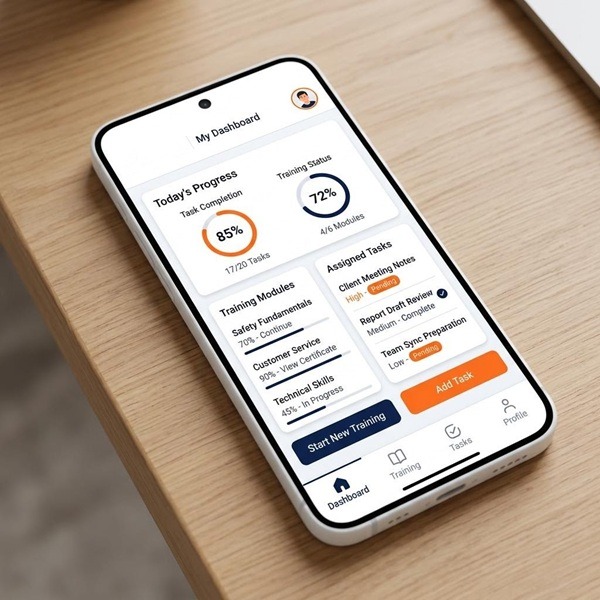
- Smart matching algorithms: Ensure the platform can match students to opportunities based on career cluster, pathway, industry certifications, transportation radius, language preferences, and schedule availability; matching and placement tools use algorithms to match participants with internships or projects based on skills and career goals
- Configurable workflows: Prioritize systems that let you customize approval chains, evaluation rubrics, and documentation requirements by program type—a registered apprenticeship has different needs than a two-week job shadowing experience
- Mobile accessibility and mobile learning: Mobile-first designs allow employees and students to access training and learning programs on any device, anytime and anywhere, supporting on-demand learning; for WBL, this means students logging hours from worksites and mentors approving timesheets without accessing desktop computers
- Integrated communication: Look for centralized in-platform messaging with automated reminders, role-based notifications, and the ability for mentors to flag issues that route directly to coordinators
- Digital forms and e-signatures: Confirm support for training agreements, parental consent, liability waivers, work permits, and ADA/IEP accommodation plans with configurable approval sequences
- Safety and risk management: Verify the platform handles OSHA training confirmations, background check integrations where required by state law, incident reporting workflows, and transportation release forms
- Robust analytics tools: Demand dashboards showing completion rates, wage and hour tracking for paid placements, employer participation growth year-over-year, and equity metrics by school or ZIP code; dashboards provide real-time data on completion rates, assessment scores, training ROI, and track progress for learners and administrators
- Secure data and compliance: FERPA compliance is non-negotiable for US education contexts; look for role-based access controls, encryption, and audit logs showing who signed which document and when; GDPR compliance matters for programs with EU employer partners
- API integrations: Cloud-based integration enables connections with your existing student information system, LMS, HR/payroll for paid placements, Microsoft Teams for syncing user data and automating enrollments, and career exploration tools already in use
- Course creation and content creation: Platforms should offer advanced, efficient tools for rapid course and content development, including AI-powered automation for scalable and collaborative course creation and customization
- Training content and online training content: The ability to upload, manage, and deliver online training content is essential, supporting SCORM and other standards for content portability and tracking learner engagement
- Training objectives: Clearly define and align training objectives with organizational needs to ensure the platform supports your business and educational goals
- Training resources: Easy access to and management of training resources is crucial for both learners and administrators, supporting efficient resource allocation and personalized learning experiences
- Deliver training efficiently and at scale: The platform should facilitate streamlined, scalable delivery of training to diverse audiences, including the ability to train employees across multiple locations
- Development programs and workforce development: Support for comprehensive development programs and workforce development initiatives, including tracking, management, and reporting of progress and outcomes
- Enterprise focused platforms and enterprise organizations: Look for robust, scalable solutions tailored for enterprise organizations, with advanced features such as compliance automation, HR system integration, and support for complex organizational structures
- Intuitive user interface: An intuitive user interface ensures ease of use for both learners and administrators, reducing friction and enhancing the overall user experience
- Reduce manual tasks: Automation and integration capabilities should minimize manual tasks, improving efficiency in delivering training and managing content
- Comprehensive learning programs: The platform should support the design, delivery, and assessment of comprehensive learning programs that align with organizational and educational objectives
AI-driven engines can recommend courses based on an employee’s job role, skill gaps, or career goals. In WBL contexts, this translates to intelligent matching that learns from historical placement outcomes to improve future recommendations.
Matching students with high-quality work based learning opportunities
Manual matching via spreadsheets and email becomes error-prone when you’re coordinating hundreds or thousands of students. A coordinator might accidentally place a student at a worksite 45 minutes from their home when a comparable opportunity exists five minutes away. Or a student interested in cybersecurity ends up in a general office administration placement because the coordinator couldn’t efficiently cross-reference interests with openings.
Effective WBL management software improves student-employer matching by providing tools that centralize available opportunities in a searchable database, making it easier for students to find relevant internships and apprenticeships. The platform should collect structured student data including:
- Interests and career aspirations documented through intake surveys
- Course history and pathway enrollment (Health Science, Information Technology, Advanced Manufacturing)
- Industry credentials already earned or in progress
- Transportation options and maximum commute tolerance
- Language preferences and accommodation needs
- Availability across fall, spring, and summer terms
Coordinators should be able to define eligibility rules—grade level prerequisites, GPA thresholds, completed safety trainings, background check requirements—and let the system suggest best-fit placements rather than manually reviewing every combination.
Consider a concrete example: in fall 2026, a large district needs to place 300 students across 120 employer partners. The platform filters by location radius and pathway alignment, generating a prioritized list of matches for coordinator review. What previously took weeks of spreadsheet manipulation happens in hours.
Many modern platforms use AI to analyze existing skill sets and identify specific gaps, further refining match quality over time.
User experience matters here. Students should see a searchable opportunity catalog with filters for industry, location, schedule type, and skill development focus. Clear status labels—“Applied,” “Interview Scheduled,” “Placed,” “Completed”—keep everyone informed without constant email check-ins.

Streamlining communication and coordination
Communication breakdowns rank among the top causes of failed or under-performing WBL experiences. A mentor forgets to submit an evaluation. A student misses orientation because the email went to spam. A parent never receives confirmation that their child’s placement is confirmed and safe.
WBL management software enhances communication between students, employers, and educators by offering centralized platforms for collaboration, tracking progress, and providing feedback, which streamlines interactions and keeps all parties informed. The platform should provide:
- Centralized in-platform messaging that replaces scattered emails and text chains with a single searchable record
- Automated reminders for key dates including orientation sessions, safety training deadlines, midpoint evaluations, and final submission windows
- Role-based notifications that alert coordinators to issues like missed timesheets or incident reports requiring immediate attention
- Push notifications to mobile devices so mentors can quickly approve hours or flag concerns without logging into a desktop portal
Concrete workflows make the difference. When a student hasn’t submitted their weekly timesheet by Friday at 5:00 PM, the system sends an automatic reminder. If submission doesn’t happen by Monday, the coordinator receives an alert. If the pattern continues, escalation to the pathway teacher triggers automatically.
Parent and guardian communication matters for minor students. The platform should automatically send placement confirmation letters, site contact information, and emergency protocols when a placement activates. Built in collaboration tools ensure families aren’t left wondering where their child is working or who to contact with concerns.
A 2025-2026 style platform supports mobile access for mentors with limited computer time. A mechanic supervising an automotive technology student can approve hours between appointments without returning to a desktop.
Tracking hours, skills, and learning outcomes
Evidence matters for credit, funding, and accountability. Under Perkins V and state CTE frameworks, districts must demonstrate that work based learning programs deliver on their promises—not just that students showed up, but that they developed documented competencies.
Effective tracking and reporting tools in learning management systems enable organizations to monitor learner progress, completion rates, and training effectiveness, providing actionable insights for improvement. For WBL, this translates to:
- Digital timesheets with supervisor approvals replacing paper forms that get lost, damaged, or submitted weeks late
- Skill checklists aligned to industry standards—OSHA safety certifications, NECA electrical competencies, healthcare clinical requirements—tracked against student progress
- Mid-point and final evaluations from supervisors captured against rubrics aligned to career pathway competencies
- Tracking requirements by program type: 40 hours for job shadowing, 60 hours for introductory internships, 120+ hours for capstone experiences
WBL management software includes tools for tracking student progress, assessing skills, and setting learning objectives, ensuring that students meet required learning outcomes during their work based learning experiences. Student reflection tools—journals, logs, weekly prompts—capture the learning happening beyond task completion. The ability to export artifacts into a portfolio that students use for college or job applications adds lasting value.
Robust reporting and analytics tools in LMS platforms allow administrators to track key metrics such as student participation, skill development, and program outcomes, facilitating data-driven decision-making. Leaders should see aggregated outcomes by program, school year comparison (2024-25 vs 2025-26), demographic group, and employer partner—through clear dashboards, not just raw CSV exports requiring manual analysis.
Managing documentation, safety, and compliance
WBL involves legal and safety obligations that become risky when paperwork is decentralized across filing cabinets, email attachments, and coordinator desk drawers. A single missing work permit can halt a placement. An unsigned liability waiver creates institutional exposure. An untracked accommodation plan violates student rights.
An LMS ensures employees stay up-to-date with mandatory training through automated reminders and provides audit-ready reporting. The same principles apply to WBL compliance: the platform should provide:
- Digital storage and e-signature workflows for training agreements, parental consent forms, liability waivers, work permits, and ADA/IEP accommodation plans
- OSHA safety training confirmations verified before students begin at worksites requiring certification
- Background check integrations for placements at healthcare facilities, schools, or other regulated environments
- District transportation waivers when students drive themselves to off-campus worksites
- Configurable approval chains (teacher → coordinator → principal → district office) before a placement is considered “active”
A robust work based learning management platform supports compliance training by automating the assignment of required training modules and tracking completion for audit readiness. This ensures that all regulatory and role-based compliance training is managed efficiently, reducing risks and supporting certification management.
Effective LMS integration can lead to improved compliance management by automatically assigning required training based on employee roles and locations, ensuring that organizations meet regulatory requirements. For WBL, this means students in healthcare pathways automatically see clinical safety requirements while manufacturing students see different prerequisite documentation.
Encryption, access controls, and audit logs demonstrate who signed which document and when—critical for defending placement decisions during compliance audits or liability disputes. Learning management systems often include features for automated reporting, which helps organizations maintain compliance by tracking certification expiration dates and ensuring that employees complete required training.
Program-Level Reporting and Continuous Improvement
District and college leaders need macro-level insight to justify budgets, secure grants, and direct employer outreach strategically. A coordinator knowing that 47 students completed internships is less valuable than knowing completion rates by pathway, demographic group, and employer sector.
Data-driven decision-making allows management to analyze the effectiveness of training programs and optimize training ROI. WBL platforms should provide dashboards showing:
- Total students placed across all programs and schools
- Total hours worked aggregated by semester and school year
- Completion and retention rates with drill-down by pathway and demographic group
- Employer satisfaction scores collected through mid-term and final evaluation responses
- Wage and industry breakdowns for paid placements
- Year-over-year growth in employer partnerships by sector
Reporting needs for grant programs in 2025-2026 are explicit. Perkins V requires disaggregated data on CTE concentrators participating in work based learning. WIOA youth programs demand outcome tracking for participants. State innovation grants often require equity metrics showing progress in reaching underserved populations.
A practical example: District X increased employer partners by 35% over two years by using analytics tools to identify gaps in healthcare and IT sectors, then directing outreach resources accordingly.
Equity analytics deserve specific attention. Participation and completion rates disaggregated by race/ethnicity, gender, school, and neighborhood reveal whether certain student populations are systematically excluded from high-quality placements. Platforms that surface this analysis enable districts to strategically recruit employers in underserved communities and target outreach to historically excluded students.
The best reporting tools allow export of standard templates aligned to funder requirements—eliminating the manual compilation that consumes coordinator time during grant reporting seasons.

Benefits of Adopting a Dedicated Work Based Learning Management Platform
The benefits of a dedicated WBL platform extend beyond administrative efficiency. They contribute directly to student career readiness, community partnerships, and institutional credibility with funders.
A centralized platform allows organizations to deliver consistent, high-quality training to thousands of employees simultaneously across different locations. For WBL, this consistency means every student—regardless of which school they attend or which coordinator manages their placement—receives the same quality of matching, tracking, and support.
Time savings for coordinators: The shift from spreadsheet chaos to automated workflows reclaims significant coordinator capacity. Organizations implementing dedicated WBL platforms report 25-40% reductions in administrative time spent on matching, approval workflows, and routine communications. Digital delivery eliminates expenses for travel, venue rentals, and printed materials, often reducing training costs by 25-60%—savings that translate to WBL contexts through reduced paper handling and manual coordination.
Improved student access and equity: When matching is systematic rather than relationship-dependent, students without personal connections to employers get fair consideration. Features like badges, leaderboards, and points motivate learners—engagement tools that keep students invested in completing their experiences and documenting their learning.
Stronger employer relationships: Employers frustrated by disorganized school coordination disengage. A professional, mobile-friendly platform that respects mentor time increases employer willingness to accept students and return year after year. Investing in employee development is a primary driver of loyalty; trained workers are significantly less likely to leave an organization—a principle that applies equally to employers who see value in developing future talent.
Better compliance posture: Audit-ready documentation with clear approval chains and e-signature trails protects institutions from liability and demonstrates due diligence to funders.
More credible outcomes data: When completion rates, hours worked, and skills developed are systematically tracked, districts can demonstrate program value to boards, funders, and community partners with confidence rather than anecdote.
The trajectory is clear: completion rate improvements of 10-20% are realistic when placements are better matched to student interests and capabilities, and when communication breakdowns are minimized through centralized platform messaging.
How to Choose the Right Work Based Learning Management Platform
There’s no one-size-fits-all solution. Selection should reflect your program size, geographic spread, funding sources, industry mix, and existing technology ecosystem.
Cloud-based LMS solutions can scale instantly as organizations add employees, with unlimited storage for training materials, making them ideal for growing businesses. The same scalability matters for WBL: a platform that serves a 5,000-student district should also serve a 50,000-student district without performance degradation.
Follow this step-by-step checklist:
Assess current pain points: Document specific problems. Are paper timesheets getting lost? Are evaluation rubrics inconsistent across coordinators? Is tracking 2024-25 vs 2025-26 cohorts impossible with current systems? Concrete pain points guide vendor evaluation.
Define success metrics: What does improvement look like? Percentage of placements completed? Days from student application to worksite start? Employer satisfaction scores? Coordinator hours spent on administrative tasks?
Map required integrations: Identify your student information system (PowerSchool, Infinite Campus, etc.), any HR/payroll systems for paid placements, and LMS or career exploration tools already in use. Vendors that support industry standards like SCORM and xAPI ensure compatibility with third-party training materials.
Assess vendor support and services: Implementation timeline expectations matter. Most vendors recommend 8-12 weeks for initial launch aligned to the school calendar. Training for coordinators, school administrators, employers, and parents should be factored into project planning.
Plan for phased rollout: Start with one or two schools or pathways before scaling district-wide. Pilots reveal configuration needs, training gaps, and integration issues before they affect the entire system.
Scalability in LMS platforms allows organizations to accommodate growing training needs without performance degradation, ensuring effective training delivery as user numbers increase. Confirm that the platform you select can grow with your program ambitions.
Why Choose Our Platform for Your Work Based Learning Programs
Our solution is purpose-built for work based learning—not a generic LMS with WBL features bolted on as an afterthought. Effective platforms are built on a foundation of usability and automation to reduce administrative overhead and increase learner engagement. That philosophy guides every aspect of our design.
We offer deep WBL workflow coverage from initial student recruitment through employer matching, placement management, hour tracking, evaluation collection, and alumni follow-up. Districts use our platform for both K-12 internship programs and postsecondary registered apprenticeships without requiring separate systems.
Key differentiators include:
- State-aligned templates for California, Texas, New York, and other states with explicit WBL documentation requirements
- Built-in support for credit-bearing and non-credit programs within the unified platform
- Specialized modules for registered apprenticeships launched in 2024-25, reflecting updated federal reporting requirements
- Employer-friendly UX that respects mentor time—mobile approvals, simple evaluation forms, and clear communication channels
- Compliance tooling with FERPA-compliant role-based access, e-signature audit trails, and configurable approval chains
- Proven implementations since 2018 across urban, suburban, and rural districts
The results speak through concrete outcomes: a 40,000-student district cut WBL administrative time by 30% in the first full school year after go-live. A regional workforce board increased employer partner retention by 25% through improved communication and evaluation processes.
Learning Management Systems are designed to deploy and track online training initiatives, making them essential for managing employee training programs at scale. Our platform extends that power specifically to work based learning—where the training happens in real workplaces with real employers.
Visit our work based learning management platform page to explore implementation timelines, request a demo, or schedule a planning workshop for your 2026-27 rollout.
Frequently Asked Questions
Traditional LMS platforms excel at course content delivery, assessments, and discussion boards for classroom or online courses. WBL platforms handle multi-stakeholder coordination when students work at actual employer sites—timesheets, worksite evaluations, safety documentation, employer communication, and skills development tracking that traditional systems weren’t designed to manage. They support industry standards like SCORM and xAPI to ensure compatibility with third-party training materials while adding WBL-specific workflows.
Yes. Paid placements—like many registered apprenticeships and co-ops—require integration with HR and payroll systems for wage tracking and tax documentation. Unpaid placements—like job shadowing and some internships—need different documentation including training agreements that clarify the educational nature of the experience. A robust platform accommodates both within one unified platform.
Most implementations take 8-12 weeks for initial launch aligned to the school calendar. This includes configuration of workflows, integration with existing systems, coordinator training, and employer onboarding. Complex multi-district implementations may extend to 16 weeks. Phased rollout—starting with pilot schools before scaling—is recommended.
FERPA compliance is embedded through role-based access controls. Teachers see their students’ data. Administrators see their school or district data. Employers see only information relevant to their mentees—not the broader student population. E-signature workflows create tamper-proof audit trails, and encryption protects data at rest and in transit.
Coordinators typically receive 4-6 hours of initial training covering platform navigation, workflow configuration, and reporting. Ongoing support includes documentation, video tutorials, and responsive help desk access. Employers receive streamlined training focused on their specific tasks: posting opportunities, approving timesheets, and completing evaluations. Mobile designs allow employees to access learning on their own devices whenever needed, reducing training barriers for busy mentors.
Pricing generally scales with student volume and feature requirements. Most vendors offer tiered pricing based on active placements per year, with options for multi-year contracts that provide cost predictability. Implementation and training fees are typically separate from annual subscription costs. Request a customized quote based on your specific program scope.
Absolutely. Smaller programs often face disproportionate administrative burden because coordinators wear multiple hats. Automation of timesheets, reminders, and compliance documentation frees time for the relationship-building that matters most. The platform also helps identify which local employers might expand their participation—analytics revealing untapped sectors in the community.
Personalized learning paths allow employees to skip mastered topics and focus on specific gaps in their skills based on AI analysis. In WBL contexts, this translates to matching students with progressively challenging placements based on documented skill gaps and career goals—creating custom learning paths that evolve with student development.
For more detailed technical documentation and implementation guides, visit our work based learning management platform page.
Conclusion: Preparing Students for the Future of Work
The shift toward skills-based hiring—where employers prioritize demonstrated competencies over credentials alone—makes systematic WBL tracking essential rather than optional. Industry credentials, verifiable work hours, and documented professional skills give students tangible evidence for college applications and job searches.

An effective work-based learning management system centralizes training activities into a digital hub to plan, deliver, and track employee development. For schools and districts, that same centralization transforms scattered coordination into measurable, improvable programs that serve students, employers, and communities.
Three takeaways matter most:
- Centralization of WBL workflows eliminates the spreadsheet chaos and communication breakdowns that undermine placements
- Better experiences for students and employers increase completion rates and deepen employer partnerships
- Data-backed program improvement—not anecdote-driven justification—builds credibility with boards, funders, and state agencies
The path forward is clear. Review your current workflows and identify where coordination breaks down. Outline goals for the 2026-27 school year—whether that’s increasing placements, improving completion rates, or expanding into new industry sectors. Then explore whether a dedicated work based learning management platform can close the gap between where you are and where your students deserve to be.