Table of Contents
- Why Related Technical Instruction Software Matters Now
- What Is Related Technical Instruction (RTI) in Apprenticeships?
- From Paper Binders to Digital Work Instructions: The Evolution of RTI Delivery
- Core Capabilities of Related Technical Instruction Software
- Immersive RTI: Virtual and Augmented Reality in Related Technical Instruction
- How Related Technical Instruction Software Supports Work-Based Learning Workflows
- Benefits of Related Technical Instruction Software for Apprenticeship Stakeholders
- Common RTI and Work Instruction Challenges (and How Software Solves Them)
- Evaluating Related Technical Instruction and Work Instruction Software
- How GoSprout Powers Related Technical Instruction for Apprenticeships
- Real-World Use Cases: RTI and Work Instruction Software in Action
- Key Metrics and KPIs for RTI and Work Instruction Software Success
- FAQs About Related Technical Instruction Software
- Why Choose GoSprout for Related Technical Instruction and Work Instructions
- Getting Started: Next Steps to Modernize Your RTI with GoSprout
Why Related Technical Instruction Software Matters Now
Related Technical Instruction has been a cornerstone of U.S. Registered Apprenticeship Programs since the 1930s, but the way organizations deliver and track RTI has changed dramatically. Post-2020, digitizing RTI shifted from a nice-to-have to a necessity. With 31% of organizations reporting a lack of learner engagement in training, the old methods of photocopied binders and manual attendance sheets simply cannot keep pace with the demands of a modern workforce.
This guide is for employers, apprenticeship sponsors, school districts, community colleges, and workforce boards running work-based learning programs who need a better way to manage the education side of apprenticeships. At its core, related technical instruction software combines work instruction software, RTI tracking tools, and knowledge management into a single platform that supports both on-the-job learning and classroom instruction. Digital work instructions replace scattered documents, continuous improvement cycles replace static curricula, and standard work becomes a living system rather than a dusty manual. GoSprout serves as an all-in-one apprenticeship management and RTI tracking platform, and throughout this guide we will show you exactly what to look for and why it matters.
What Is Related Technical Instruction (RTI) in Apprenticeships?
RTI is the structured classroom, online, or lab-based learning that complements On-the-Job Training in a Registered Apprenticeship Program. Under USDOL regulations (29 CFR §29.5), time-based apprenticeship programs are recommended to include at least 144 hours of RTI per year alongside a minimum of 2,000 hours of OJT. Many states and occupations require significantly more, especially in healthcare, precision manufacturing, and other high-skill trades where the technical skills needed run deep.
Delivery formats vary widely. Some programs hold in-person classes at community colleges, others run synchronous virtual sessions, and many blend LMS-based self-paced eLearning with hands-on simulation labs. RTI content typically covers safety, trade theory, compliance, industry-specific technologies, communication, and soft skills. The theoretical knowledge built during RTI creates the foundation that apprentices then apply in specific areas of their work during OJT. Standardized instructions reduce errors and miscommunications across both settings, and digital instructions provide instant access to expert knowledge for employees at every stage of the program.
From Paper Binders to Digital Work Instructions: The Evolution of RTI Delivery
For decades, RTI lived in three-ring binders. Printed standard work instructions were taped near workstations, photocopied manuals circulated through classrooms, and curriculum updates lagged months or even years behind actual practice. The problems were predictable: previous versions of procedures floated around job sites, version confusion led to quality issues, and paper-based attendance records went missing before audits.
By 2010–2015, many programs shifted to early digital tools like PDFs on shared drives, email attachments, and basic LMS modules. This improved distribution but did not solve the core problem of disconnection between systems. RTI hours lived in one spreadsheet, OJT logs in another, and attendance in a third.
Modern related technical instruction software changed the equation entirely. Web-based platforms now offer digital work instructions with live progress tracking, integration with OJT logs, and compliance reporting for RAPIDS, WIPS, and PIRL. Real-time updates prevent employees from using outdated information, and technical instruction software preserves institutional knowledge through digital formats rather than filing cabinets. For workforce development stakeholders who must document every RTI hour, the shift is not optional-it is operational survival.

Core Capabilities of Related Technical Instruction Software
Strongly related technical instruction software typically includes version control and collaborative editing, so your team always works from a single approved source. Here are the core functionality areas to expect:
Digital work instructions and standard work. Technical instruction software enables the creation of step-by-step guides, standard operating procedures, and competency-based task lists accessible on desktop, tablet, and mobile. Visual work instructions and multimedia work instructions-including video, images, and diagrams-replace text-heavy manuals. Some platforms even support QR code scanning so apprentices can pull up procedures directly at a workstation. Visual guides can enhance understanding in technical instruction delivery, especially for complex tasks.
RTI tracking and compliance. Logging hours, attendance, completions, grades, and competencies for USDOL and state apprenticeship agencies is table stakes. Technical instruction software can improve compliance through traceable logging, including timestamped sign-offs and a change log for every update.
Knowledge management. A central repository for curricula, syllabi, lab manuals, safety procedures, and multimedia support resources replaces scattered shared drives. Guided work instruction software centralizes training materials for easy access and ensures that every instructor and apprentice references the same materials.
Interactive tools and assessments. Quizzes, simulations, checklists, and competency sign-offs let apprentices and instructors document mastery in real time. Key features include multimedia integration and analytics on task duration, helping sponsors identify where learners struggle.
Integration with OJT logs. RTI modules map directly to OJT tasks so sponsors can demonstrate alignment between classroom instruction and work instructions on the shop floor. Revision control ensures that both RTI content and OJT work process schedules stay synchronized.
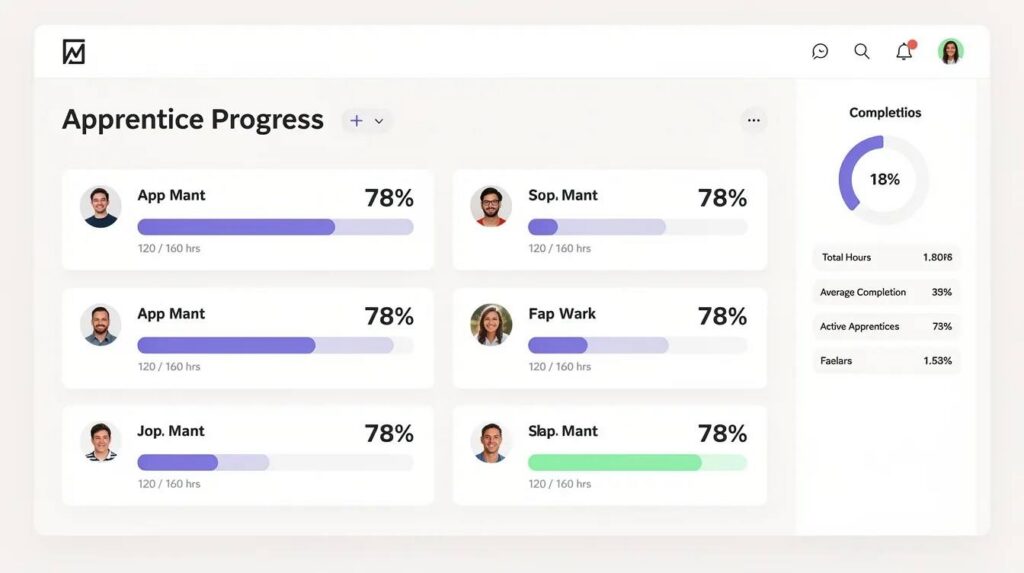
Reporting and analytics. Dashboards for completion rates, hours by apprentice, cohort comparisons, and early warning indicators for at-risk learners. Guided work instruction software enhances the clarity and accessibility of this data for every stakeholder, from frontline supervisors to state agency reviewers.
Immersive RTI: Virtual and Augmented Reality in Related Technical Instruction
Virtual and augmented reality are beginning to reshape how apprentices learn complex concepts in technical RTI. Augmented reality overlays digital information onto real-world equipment-think step-by-step maintenance instructions appearing on a technician’s smart glasses. Virtual reality places learners inside fully simulated environments for procedures like confined-space entry, lockout/tagout, or welding.
The data supports the investment: 81% of military personnel report XR improves confidence in performing trained tasks, and XR technologies activate multiple senses for deeper learning and a deeper understanding of procedures. Mixed reality allows safe simulations of complex situations where real-world mistakes could be dangerous or expensive. VR and AR provide risk-free environments for skill practice, and hands-on training technology enhances retention and mastery of skills compared to lecture-only formats.
That said, most apprenticeship programs in 2026 still blend traditional RTI with digital work instructions and occasional AR/VR modules rather than going fully immersive. Platforms like GoSprout can embed or link to these immersive experiences while still handling attendance tracking, RTI hours, and assessment data, keeping everything in one place regardless of the delivery method.
How Related Technical Instruction Software Supports Work-Based Learning Workflows
Understanding how the process works, from program design through daily delivery, makes evaluation much easier.
Program design. Staff map occupational standards and competency frameworks into RTI courses, modules, and digital work instructions inside the platform. This is where you create the alignment between what apprentices learn in a classroom and what they practice on the job. In a welding apprenticeship, for example, classroom topics like blueprint reading and safety run alongside hands-on shop time.
Enrollment and scheduling. Apprentices are assigned to cohorts, linked to specific RTI providers such as local community colleges, and scheduled through integrated calendars. Uniform instructions ensure all employees follow correct procedures from day one.
Day-to-day delivery. Instructors publish instructional materials, track attendance in real time (including hybrid and online sessions), and push updates instantly-no reprinting required. Real-time feedback enhances learning and skill refinement for employees, and standardized training reduces errors and misunderstandings across sites.
Assessment and sign-offs. Quizzes, skills checklists, and lab evaluations are documented digitally. Supervisors and journeyworkers complete quality checks and sign off on competencies, creating an auditable record.
Feedback loop and continuous improvement. Programs collect instructor and apprentice feedback, analyze completion and outcome data, and update RTI content each term. This feedback loop drives process improvements that keep curricula relevant.
Compliance and audits. Generating reports for USDOL, state apprenticeship agencies, and funders uses accurate RTI and OJT data from one central system, dramatically reducing the scramble that used to precede every audit.
Benefits of Related Technical Instruction Software for Apprenticeship Stakeholders
| Stakeholder | Key Benefits |
|---|---|
| Employers & Sponsors | Reduced admin overhead, clearer standard work, faster onboarding, better visibility into student progress, stronger ROI on training |
| Schools & RTI Providers | Streamlined attendance tracking, grade export, digital work instruction distribution, and tighter alignment between curriculum and industry needs |
| Apprentices | Mobile access to schedules and instructions, real-time feedback, more engaging hands-on experience, instant access to content |
| Workforce Boards & Nonprofits | Easier funder reporting, data for grant renewals, evidence of impact on completion and placement |
Guided work instruction software enhances operational efficiency across all these groups. Standardized training materials improve operational efficiency by eliminating duplicate effort. Digital work instructions provide real-time updates to employees, and digital work instruction software reduces on-the-job errors and improves quality. Programs should target higher completion rates, fewer safety incidents, shorter changeover times for new apprentices reaching productivity, and improved performance on certification exams. The path to operational excellence runs through consistent, trackable RTI.
Common RTI and Work Instruction Challenges (and How Software Solves Them)
Inconsistent standard work. Multiple versions of the same procedure across plants lead to errors. Digital work instructions enforce a single approved version and ensure consistency across locations. The best choice of technical instruction software depends on the material being created, but the principle of one source of truth applies universally.
RTI data is scattered in spreadsheets. Tracking hours and attendance in Excel or paper sign-in sheets creates gaps. During USDOL audits, missing data means failed compliance. Centralized instruction software eliminates this risk.
Slow curriculum updates. When safety regulations change or new equipment arrives, printed manuals lag behind. Software enables fast changes and instant rollout, keeping complex procedures current.
Limited visibility. Managers lack a real-time view of which apprentices are behind on RTI or OJT. Dashboards and alerts close this gap before small issues become audit findings.
Fragmented communication. Emails, texts, and paper notices confuse apprentices. Centralized messaging inside the platform replaces noise with clarity, especially when teams span multiple sites.
Evaluating Related Technical Instruction and Work Instruction Software
When selecting a software solution, focus on these criteria:
- Ease of use for both instructors and apprentices, including users who are not tech-savvy
- RTI and OJT tracking with robust reporting for RAPIDS, WIPS, and PIRL
- Integration with existing LMS, SIS, HRIS, payroll, or ERP systems so data does not live in isolation (look for SCORM and xAPI support as common standards for integrating training content with LMS platforms)
- Scalability to handle multiple employers, schools, and cohorts across a regional or statewide initiative
- Data security, including FERPA, SOC 2, and other standards relevant to education partners
- Purpose-built design for apprenticeship workflows rather than generic corporate training
Common mistakes include choosing a general-purpose LMS with no apprenticeship-specific ability, underestimating implementation time, and ignoring the needs of frontline supervisors who must navigate complex processes daily.
How GoSprout Powers Related Technical Instruction for Apprenticeships
GoSprout is built as a purpose-built software solution specifically for apprenticeships, pre-apprenticeships, and internships. Its RTI tracking logs hours, attendance, grades, and competencies across multiple RTI providers and class formats in one place.
On the work instructions side, GoSprout maps RTI modules directly to OJT tasks and standard work, so apprentices and supervisors see the connection between classroom learning and job-site application. Automated workflows handle compliance reporting, preparing data for RAPIDS, WIPS, and PIRL without manual re-entry. The mobile apprentice app gives on-the-go access to schedules, RTI content, assignments, and OJT logs. Employers, schools, sponsors, and apprentices share a single source of truth for RTI plans, student progress, and documentation-eliminating the fragmentation that plagues multi-stakeholder programs.

Real-World Use Cases: RTI and Work Instruction Software in Action
Manufacturing consortium, Midwest, 2023. A regional group of manufacturers launched a mechatronics Registered Apprenticeship using GoSprout to align RTI delivered by a community college with plant-floor digital work instructions. Within the first year, coordinators reported saving roughly one week per month on administrative tasks previously handled through spreadsheets.
School district, pre-apprenticeship, 2024. A large district started pre-apprenticeship programs in construction and healthcare across multiple high schools. RTI software coordinated schedules, tracked dual-credit courses, and managed standard work across campuses. The result: a 15% increase in program completion compared to the prior paper-based cohort.
Healthcare employer, 2025. A clinic network scaling medical assistant apprenticeships used GoSprout to digitally map skills checklists, RTI modules, and OJT logs. Supervisors could see skills readiness at a glance using smart tools and dashboards, reducing time-to-productivity for new hires.
Key Metrics and KPIs for RTI and Work Instruction Software Success
- RTI completion rate: Percentage of apprentices completing required hours on schedule each year
- OJT and RTI alignment: Number of competencies backed by both documented RTI modules and OJT sign-offs
- Time-to-productivity: Average months until apprentices reach target performance benchmarks
- Administrative hours saved: Reduction in time spent on manual data entry, spreadsheet maintenance, and paper tracking
- Apprentice retention and completion: Changes in retention rates before and after implementing related technical instruction software
- Audit readiness: Frequency and ease of passing USDOL or state audits without missing documentation
FAQs About Related Technical Instruction Software
What is the difference between related technical instruction software and a general learning management system?
A general LMS handles course delivery and content hosting but typically lacks apprenticeship-specific workflows like OJT hour tracking, wage progression, competency sign-offs tied to work process schedules, and compliance reporting for RAPIDS or WIPS. Related technical instruction software is purpose-built for these operations.
How does RTI software help me stay compliant with USDOL Registered Apprenticeship requirements?
It tracks the specific data elements USDOL requires: RTI hours, attendance, completion status, competency achievements, and wage progression. When audit time arrives, you generate reports directly from the system rather than reconstructing records from scattered spreadsheets.
Can related technical instruction software manage both classroom-based RTI and digital work instructions for OJT?
Yes. Modern platforms map RTI modules to OJT tasks so that classroom learning and job-site application share a connected data structure. This lets sponsors access instructions and track progress across both settings.
How does GoSprout integrate RTI tracking with OJT logs and competency management?
GoSprout links each RTI course to the corresponding OJT work process schedule as apprentices complete RTI modules and receive OJT sign-offs; the platform aggregates this data into a unified view of each learner’s readiness.
What kinds of organizations benefit most from RTI and work instruction software?
Employers, school districts, community colleges, workforce boards, and nonprofit sponsors all benefit-especially those managing multi-employer or multi-site programs where coordination across organizations is critical.
How long does it typically take to implement related technical instruction software for an existing apprenticeship program?
Most programs can pilot a single occupation within four to eight weeks, including data migration and team onboarding. Scaling to additional occupations or cohorts typically follows within the next quarter.
Does RTI software support virtual and augmented reality content?
Many platforms, including GoSprout, can embed or link to VR and AR modules while still tracking attendance, hours, and assessment data. This lets you layer immersive technology into your RTI without abandoning your central tracking system.
Why Choose GoSprout for Related Technical Instruction and Work Instructions
GoSprout focuses exclusively on apprenticeships, internships, and work-based learning-not generic corporate training. This specialization means every feature, from RTI tracking to compliance reporting, is designed around the workflows that sponsors, employers, and schools actually use.
The platform covers the entire apprenticeship lifecycle: recruitment, enrollment, RTI and OJT tracking, competency management, and completion reporting. Built-in compliance tools prepare your data for RAPIDS, WIPS, and PIRL without double entry. The mobile app keeps apprentices connected to their schedules, courses, and progress from anywhere, and multi-stakeholder collaboration ensures that every member of your team works from the same source of truth.
GoSprout supports Registered Apprenticeship Programs, pre-apprenticeships, and internships across manufacturing, construction, healthcare, IT, and other industries. And because the platform captures granular data on RTI delivery, completion, and outcomes, it fuels the continuous improvement cycle that keeps your programs relevant year after year.
Getting Started: Next Steps to Modernize Your RTI with GoSprout
Start by inventorying your existing RTI and work instructions, identifying your biggest reporting pain points, and clarifying which stakeholders need access. From there, book a demo with GoSprout to see RTI tracking, digital work instructions, and compliance dashboards tailored to your industry and program size.
We recommend beginning with one pilot occupation or cohort, then scaling across additional apprenticeship or internship programs once value is demonstrated. You can also download an RTI planning checklist, talk with GoSprout’s team about aligning with USDOL standards, or explore how to connect your RTI with OJT and standard work inside a single platform. The sooner you move beyond spreadsheets, the sooner your programs run with the clarity and confidence they deserve.


