Table of Content
- Introduction: Why Employer-School Partnerships Matter Right Now
- The Case for Employer Partnerships in Education
- Core Elements of Strong Employer-School Partnerships
- Designing Work-Based Learning That Actually Works
- Equity, Access, and Positive Outcomes for All Students
- Practical Ways Employers Can Support Schools
- Setting Up Structures, Communication, and Measurement
- Common Mistakes to Avoid in Employer Engagement
- FAQs About Employer-School Partnerships
- Why Choose a Modern Platform to Support Employer-School Partnerships
- Next Steps: Turning Interest Into Action
Introduction: Why Employer-School Partnerships Matter Right Now
Employer-school partnerships are collaborative arrangements where educational institutions and businesses align curricula, share resources, and create structured pathways that connect students to real careers. In 2026, these partnerships are no longer optional extras. They are infrastructure.
AI, automation, green energy, and healthcare expansion have reshaped which skills matter and how fast they change. Schools that operate in isolation cannot keep pace. Employer-school partnerships improve student motivation and career readiness by anchoring classroom learning to actual workforce demands. They also create a talent pipeline for future employment opportunities that benefits everyone: students get relevant preparation, employers get workers they can trust, and communities hold onto skilled talent.
This article covers practical strategies for building and sustaining these relationships, including how to design work based learning opportunities, structure governance, avoid common pitfalls, and measure real impact. Whether you lead a CTE program at a high school, coordinate workforce development at a community college, or manage talent acquisition for a mid-sized manufacturer, you will find specific guidance you can use this quarter.
The Case for Employer Partnerships in Education
Employer partnerships in education involve sustained, goal-oriented collaboration between high schools, community colleges, universities, and businesses. This goes beyond career fairs or one-time guest speaking events. It means co-designing programs, sharing resources, and tracking outcomes together.
What schools gain: Partnerships provide real-time feedback from industry leaders to educational institutions, so schools adjust classes to teach the exact tools needed by industry. Schools gain access to cutting-edge corporate equipment from industry partners, and high-profile collaborations with respected companies boost a school’s reputation. Programs with strong job-placement pipelines attract more prospective students. Schools can offer pathways from education to employment through partnerships, giving current students a clearer reason to stay engaged.
What employers gain: Employers benefit from fresh talent and perspectives in the workplace. Early access to candidates reduces hiring risk and shortens onboarding. In Indiana, over 80% of surveyed employers said they would participate more in partnerships if structural barriers like liability and staff capacity were addressed. That demand is real.
Community impact: Schools provide access to a wide range of career opportunities for students, which strengthens local economies. When talent stays local, regional workforce development improves and unemployment drops. Educators collaborate on industry research to stay updated on corporate trends, keeping the entire ecosystem current. In one example, P-TECH schools partner with employers for work-based learning experiences, creating direct pathways from high school through a college degree and into employment. The result: 65% of institutions increased employer partnerships in the past year, a clear signal that this model works.
Core Elements of Strong Employer-School Partnerships
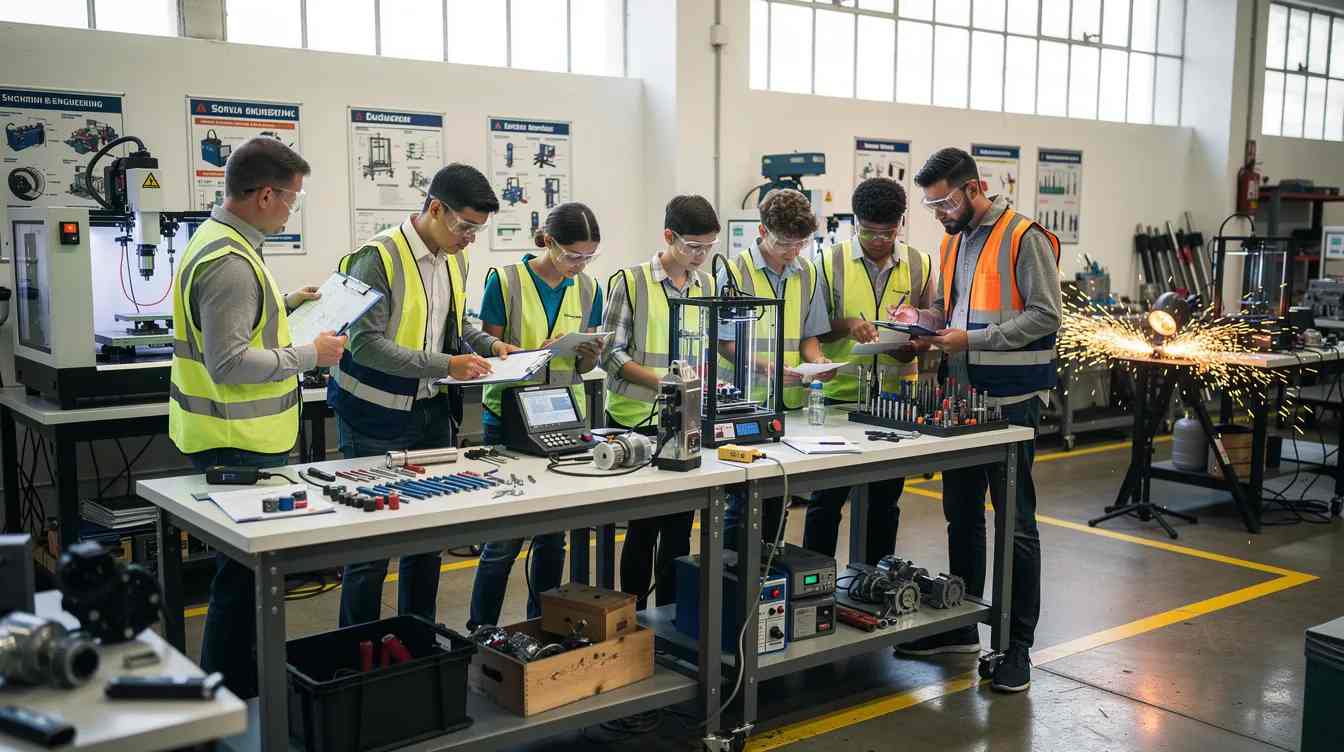
Strong relationships between schools and employers are intentional, documented, and built for the long term. One-off events are fine for exposure, but they do not build a pipeline.
Employers should establish clear goals for partnerships. A vague commitment to “work together” rarely survives the first budget cycle. Instead, define measurable targets: “Place 15 graduates per year into entry-level healthcare roles by 2028.” Shared goals keep both sides accountable.
Defined roles matter just as much. Schools, employer partners, and intermediaries like workforce boards or chambers of commerce each need to know exactly what they are responsible for. Who provides mentorship? Who handles scheduling? Who covers stipends or transportation? Simple written agreements or MOUs that outline expectations for internships, mentorship, and potential hiring pathways prevent misunderstandings before they start.
Regular communication is essential for maintaining employer-school partnerships. Standing quarterly meetings, shared dashboards tracking student progress, and agreed feedback cycles on curriculum relevance keep the partnership alive between formal reviews. Without these rhythms, even well-designed programs drift.
Designing Work-Based Learning That Actually Works
Work based learning is the backbone of most employer school partnerships. It ranges from low-commitment exposure activities to structured, credential-bearing apprenticeships. Partnerships provide structured pathways for internships and apprenticeships that give students a real on-ramp to careers.
Key types of work based learning opportunities include:
- Career talks and networking events
- Site visits and job shadowing days
- Project-based learning and capstone projects
- Internships and co op programs
- Registered apprenticeships and pre-apprenticeships
Match these experiences to student readiness. Younger students in 9th and 10th grade benefit from career exploration activities like job shadowing and site visits. Early exposure to corporate cultures helps students refine their career goals before they commit to a pathway. By 11th and 12th grade, or at the college level, students are ready for internships, co-ops, and on-the-job training where they build real competencies.
Students learn vital technical skills alongside soft skills like teamwork and communication through these experiences. Students gain practical experience through internships and co op programs, and direct connections to employers expand students’ professional network. Students establish direct connections with mentors and industry professionals who can guide their careers long after graduation.
Virtual work-based learning opportunities increased during the COVID-19 pandemic and remain part of the portfolio in 2026. Remote mentoring, virtual job shadows, and online project sprints are especially effective for rural schools connecting to urban industries or for fields like IT where remote collaboration mirrors actual work conditions.
Equity, Access, and Positive Outcomes for All Students
Equitable access is not a nice-to-have. If employer engagement only serves top performers, the partnership fails the broader community. Employers should provide equitable opportunities for all students, not just those with the highest GPAs.
Avoid limiting internships or apprenticeships to honor-roll students. Instead, use broader criteria: demonstrated interest, persistence, teacher recommendations, and willingness to learn. Many partnerships offer paid internships and scholarships to students who otherwise could not afford to participate.
Concrete strategies for expanding access include:
- Rotating cohorts so more students cycle through WBL experiences
- Reserving slots for underrepresented groups
- Offering stipends or transportation support
- Running pre-placement workshops covering workplace expectations, safety, and professional behavior
When schools prepare students properly and employers welcome a wider range of learners, the result is stronger positive outcomes for everyone. Higher credential attainment, better earnings, and a deeper local talent pipeline all follow from inclusive design.
Practical Ways Employers Can Support Schools
Not every company can launch a full apprenticeship program. But almost every employer can contribute in ways that matter.
Low-barrier engagement options:
- Guest speaking in classrooms about real job roles and industries
- Participating in mock interviews or career fairs
- Hosting small group site tours
- Serving on advisory boards that guide curriculum decisions
- Donating equipment and funding scholarships to support programs
Higher-commitment options:
- Paid internships or summer jobs for juniors and seniors
- Co-designed capstone projects tied to real business challenges
- Co-branded career academies within high schools or colleges
Working on industry-aligned projects helps students build a professional portfolio they can use in job applications. Employers who provide real data and scenarios give teachers the raw material for authentic, relevant skills instruction.
Alumni networks can help identify potential employer partners for schools. Former graduates working in local industries often become the bridge between a school and a hiring manager. Employers should also consider designating dedicated staff as an education liaison to coordinate with multiple schools and keep regular communication organized.

Setting Up Structures, Communication, and Measurement
Sustainable employer relationships rely on systems, not heroics. Ad hoc emails and informal check-ins collapse when people change roles or priorities shift.
A simple structure works: a joint steering group with school and employer leadership, an annual planning session to set priorities, and quarterly check-ins to review progress. This mirrors how successful careers in any field are built-through consistent effort and accountability.
Regular communication channels should include shared calendars of work based learning events, centralized contact lists, and quick debriefs after each activity. Collecting feedback from stakeholders improves partnership programs and keeps them responsive to changing employer priorities and student needs.
For measurement, track what matters:
| Metric | Why It Matters |
|---|---|
| Student participation | Shows reach and access |
| WBL hours completed | Confirms program delivery |
| Credential attainment | Measures skill development |
| Job placement rates | Proves workforce development impact |
| Employer satisfaction | Sustains partner engagement |
Tracking student outcomes includes internship and job placement rates, which are the clearest indicators of whether programs lead to employment opportunities. Employers can measure partnership impact using a logic model that ties inputs to activities to outcomes. Share an annual impact summary with all stakeholders to maintain buy-in.
Currently, 53% of institutions have staff dedicating over 50% of their time to employer relationships. That level of investment in dedicated staff signals how seriously higher education institutions and high schools are treating these partnerships. Institutions without that commitment often struggle to remain competitive.
Common Mistakes to Avoid in Employer Engagement
Many partnerships fail not from bad intentions but from misaligned expectations and missing structure.
Common pitfalls include:
- Only contacting employers when there is an urgent need, rather than maintaining year-round employer engagement
- Offering one-off events instead of building a sustained pathway with clear career opportunities
- Failing to share student outcomes data with partners, leaving employers guessing about their impact
- Creating overly complex programs that small and mid-sized companies cannot realistically support
The biggest risk is relying on a single champion at a company or school. When that person leaves, everything stalls. One promising IT internship pipeline collapsed entirely when a key HR leader departed because no formal agreement or documented process existed. Spread knowledge and responsibilities across at least two people on each side, and anchor the partnership in written agreements rather than personal relationships.
FAQs About Employer-School Partnerships
How do we start an employer-school partnership if we’ve never done this before?
Start with one or two local employers and a single activity like classroom talks or job shadow days. Identify where your school programs-welding, coding, healthcare-overlap with local workforce demand. Agree on a short-term goal and schedule a follow-up meeting immediately after the first activity to review what worked. Success stories from even small pilots build the credibility needed to attract more partners.
What are realistic expectations for employers in the first year?
Employers do not need to commit to full apprenticeships on day one. A reasonable first year might include two site visits, one industry panel, and a small pilot internship cohort of three to five students. Gradual expansion tied to demonstrated positive outcomes builds trust and organizational capacity on both sides.
How much time does it take schools to manage these partnerships?
Time demands vary, but 53% of institutions have staff dedicating 50% of time to partnerships. A work-based learning coordinator or CTE director is critical. Batching communication, using templates, and standardizing processes help educators spend more time on quality student experience and less on logistics.
What data should we collect to show workforce development impact?
Track participation numbers-students, employer partners, WBL experiences and hours. Measure student outcomes like credentials earned, graduation rates, and job placements. Survey employer satisfaction annually. Share results in a simple report that helps all stakeholders make informed decisions and refine programming based on real evidence.
Can small businesses be effective employer partners, or is this just for large companies?
Small and mid-sized businesses often make excellent partners because they are closely tied to local hiring and can move quickly. Right-sized activities include hosting one intern per year, offering a recurring guest lecture, or advising on curriculum once each semester. These contributions help schools provide students with a better understanding of diverse industries and job roles.
How do virtual work based learning opportunities fit into employer-school partnerships?
Virtual options expand access when transportation, geography, or safety are barriers. Rural schools can connect students to urban tech firms for remote mentoring or online project sprints. A mix of virtual and in-person WBL experiences is ideal, ensuring the next generation of employees still gains exposure to real workplaces, teams, and the right talent development environments.
Why Choose a Modern Platform to Support Employer-School Partnerships
Manual spreadsheets, scattered emails, and disconnected systems become barriers the moment partnerships grow beyond a handful of employer partners. When you are tracking OJT and RTI hours, managing compliance reporting for RAPIDS, WIPS, or PIRL, and coordinating across multiple schools and colleges, you need a purpose-built system.
A dedicated work-based learning management platform centralizes employer contacts, automates hour tracking, and generates compliance reports without manual data entry. Real-time dashboards give schools, employers, and workforce organizations instant visibility into student progress and program impact. Collaboration features like shared notes, messaging, and scheduling maintain regular communication among all partners without anyone chasing paperwork.
Automation reduces administrative load so educators and employers can focus on what actually matters: mentoring students, strengthening the talent pipeline, and building the kind of strong relationships that lead to successful careers. Higher education and K-12 programs alike benefit when technology handles the logistics and people handle the learning.
Next Steps: Turning Interest Into Action
Intentional employer school partnerships create sustainable workforce development pipelines and better student outcomes for communities that invest in them. The formula is straightforward: start small, structure deliberately, measure honestly, and scale what works.
Identify one or two concrete actions you can take this quarter. Map your current partnerships and spot gaps. Pilot a new work based learning activity with a willing employer. Reach out to regional workforce boards, chambers of commerce, or CTE consortiums for support in convening employer partners and aligning training programs with local labor market demand. The schools and companies that lead in building these pipelines now will be the ones that remain competitive for years to come.