Managing apprenticeship documentation has become one of the most time-consuming aspects of running vocational training programs, especially as apprenticeship training programs are structured pathways that combine classroom-based learning with on-the-job training. With regulatory scrutiny increasing and cohorts from 2024–2026 facing stricter evidence requirements, training providers need a systematic approach to handling learner records, employer agreements, and compliance evidence, as effective document management directly supports business success and improved operational outcomes.
This guide provides a practical blueprint for modernizing your apprenticeship document management processes over the next 6–12 months.
Table of Contents
Introduction to Apprenticeship Document Management
Apprenticeship document management is the systematic process of capturing, storing, and tracking the critical records required to run a vocational training program. This includes training plans, off-the-job logs, ILR evidence, funding applications, progress assessments, employer commitment statements, and certificates for apprentices starting between 2024 and 2026.
Documentation complexity has increased dramatically since UK post-2017 levy reforms introduced 100+ rigid apprenticeship standards, while US state and federal programs tied billions in infrastructure funding to verifiable training hours. ESFA audits now require providers to retain records for six years post-completion, with non-compliance risking funding clawbacks of 10-20% for larger employers.
Traditional methods—ring binders, email attachments, scattered file shares—simply cannot meet these demands. Modern apprenticeship management software is designed to manage the entire apprenticeship training lifecycle, including onboarding, tracking hours, organizing training sessions, and documenting outcomes for regulatory reporting. These tools help manage apprenticeship programs by streamlining workflows and making it easy to coordinate resources such as learning materials, instructors, and other assets needed for effective apprentice training. The same applies earlier in the pipeline: pre apprenticeship management software keeps participant records organized before they move into a registered program.
Why Traditional Approaches Break Down
Pen and paper, generic spreadsheets, and ad-hoc tools create risk, delay, and audit failures in apprenticeship programs. Once providers manage more than 30–50 apprentices across multiple employers, manual document control becomes unmanageable. Disconnected systems force staff to spend excessive time on repetitive data entry, increasing administrative costs and reducing overall efficiency.
Pen & Paper and Email Attachments
Pen and paper is still the most common method for managing apprenticeships, particularly in trade industries, due to its low cost and accessibility. However, typical issues include:
- Apprentices misplacing logbooks (15-20% misplacement rates reported)
- Mentors using outdated templates printed in 2022
- Reviewers merging dozens of PDF attachments before every progress review
- Documents left on desks or in unlocked cabinets, conflicting with GDPR regulations
Using pen and paper for apprenticeship management makes it difficult to track evidence of competencies, as it relies on self-evaluation without verifiable proof.
Spreadsheets and Generic File Shares
Many apprenticeship teams run programs from shared Excel or Google Sheets combined with SharePoint or Dropbox. Key risks include:
- Broken formulae affecting 30% of sheets per user reports
- Staff editing offline copies creating 5-10 duplicate versions
- No single source of truth for final document versions
- Lack of apprenticeship-specific metadata (standard codes, EPAO references, funding rules)
Spreadsheets are often considered an inadequate tool for apprenticeship management because they can become overwhelming with the amount of information that needs to be displayed for each apprentice.
Trying to Repurpose Project or CRM Tools
Project tools like Trello, Asana, or Monday and customer relationship management systems are built for tasks and sales pipelines—not assessed work, ILR evidence, or signed commitment statements. Problems include attachment limits, no structured version control, and difficulty reporting on completion rates by employer or standard.
These tools do not natively understand apprenticeship entities like cohorts, standards, OTJ hours, or EPA documentation, forcing teams into awkward workarounds that double admin time.
Core Requirements of Effective Apprenticeship Document Management
Whether delivering 25 apprenticeships in a single region or 2,500 across multiple employers, these capabilities are non-negotiable. Managing multiple clients’ needs—including custom program requirements, billing, compliance, and communication—is essential for scalable apprenticeship document management.
- Centralized document storage and retrieval
- Secure access controls for apprentices, employers, and administrators
- Compliance tracking and audit readiness
- Ability to assign and manage instructors for in-person, group, or one-on-one training sessions
- Automated training scheduling and communication tasks to reduce manual follow-ups and improve efficiency
Single Source of Truth Linking Learners, Employers, and Standards
Core documentation includes maintaining a secure file for each apprentice that contains their signed apprenticeship agreement, wage progression schedules, and training plans. A comprehensive apprenticeship management system can maintain accurate training records for every apprentice, linking registration details, session attendance, and feedback in one profile.
Essential metadata includes:
- Apprentice ID and employer site
- Standard code and level
- EPAO and intake date

Robust Version Control and Audit Trails
Auditors expect providers to demonstrate which version of a learning plan was in place at specific dates. The management system should automatically capture who uploaded or edited a file, when it changed, and include optional change notes. Audit logs should be exportable to CSV or PDF for regulators and internal quality assurance teams.
Secure, Role-Based Access and Data Protection
Different roles require different access levels:
| Role | Access Level |
|---|---|
| Apprentice | Read-only to personal OTJ logs |
| Tutor | Full access with approval rights |
| Employer mentor | Review notes without sensitive data |
| Funding officer | Compliance documents only |
Best practices include encryption at rest, geo-redundant backups, and periodic access reviews aligned with GDPR requirements.
Structured Workflows for Upload, Review, and Approval
Simply storing files isn’t enough. Teams need workflows with automated prompts to upload evidence after reviews, tutor checklists before portfolio sign-off, and timeline-based triggers (reminders 4 weeks before planned EPA if evidence is missing). Status labels like “Pending upload,” “Submitted,” “In review,” and “Approved” provide visibility across cohorts.
How Digital Apprenticeship Document Management Supports Compliance
Discover the benefits of digital apprenticeship document management, including improved compliance and real-time development tracking for apprentices.
Compliance and funding risk are primary drivers for improving document management. Proactive documentation helps identify issues early and prepares organizations for audits. A key benefit of apprenticeship management software is the ability to track apprentice development and maintain accurate training records for every apprentice, including session attendance, trainer feedback, and compliance documentation.
Meeting Funding and Regulatory Evidence Requirements
Regulators typically request:
- Enrolment and eligibility checks
- Learning agreements and OTJ logs
- Progress review notes
- Gateway and EPA records
Managing compliance paperwork includes the Standards of Apprenticeship, individual apprenticeship agreements, and Equal Employment Opportunity data. Effective document management creates a centralized digital repository to ensure compliance with Department of Labor standards and streamline program administration.
Proving Off-the-Job Training and Progress
On-the-Job Training logs digitally track hours worked on specific tasks to ensure apprentices gain the required hands-on experience. Related Technical Instruction involves documenting classroom hours, course completions, and grades. Competency tracking involves recording specific skill attainments and performance evaluations through journeyworker or supervisor assessments. The system also helps apprentices assess and develop their English and Maths skills using diagnostic tools, supporting foundational learning and personalized skill growth.
Effective progress tracking in apprenticeship programs is essential for ensuring compliance with regulatory requirements and funding obligations, as it provides evidence of apprentice competencies and learning outcomes. Apprentices who can view their progress in real time are empowered to take ownership of their learning.
Standardised Documentation for Quality Assurance and Inspection
Audit readiness involves generating regular compliance reports covering EEO data and wage increases to meet Department of Labor audit requirements. Wage progression records track milestones that trigger scheduled pay increases based on program progress.
Utilizing a structured apprenticeship management system can streamline the tracking of learner progress, ensuring that all stakeholders have visibility into the apprentice’s training history and compliance status.

Implementing a Digital Apprenticeship Document Management Strategy
Moving away from paper-based tracking reduces administrative errors and enhances data security. A digital platform consolidates course materials, curriculum, and assessments, making access and management easier for all users. The system also supports employees’ workplace training and compliance programs, improving employee development and reducing risk. Here’s a practical roadmap for the next 6–12 months.
Audit Current Processes and Risks
Map where documents currently live: filing cabinets, personal drives, LMS, email accounts. Categorise by type (enrolment, learning plans, OTJ evidence, assessments) and rate each by risk. Define concrete goals: reduce average evidence-gathering time per audit from 10 days to 2 days by end of 2026.
Select the Right Platform
Effective apprenticeship management software should provide features for tracking learners, sessions, and client interactions without relying on spreadsheets. Key evaluation criteria include:
Companies of all sizes can benefit from tailored solutions that streamline administrative tasks for managing apprenticeship programs. Effective document management creates a centralized digital repository to ensure compliance with Department of Labor (DOL) standards and streamline program administration.
- Apprenticeship-specific data model
- Integration with learning management system and MIS
- Configurable workflows
- Strong reporting capabilities
For US-based programs, verify compatibility with the Registered Apprenticeship Partners Information Data System for managing digital registration and demographic data.
Plan Migration and Standardise Templates
Prioritise active learners and high-risk evidence. Create standardised templates before migration to avoid carrying forward inconsistent formats from 2020–2023. Apply consistent naming conventions, tag with metadata, and archive duplicates.
Train Staff, Employers, and Apprentices
Effective apprenticeship management software can automate training scheduling and communication tasks, reducing the need for manual follow-ups and improving efficiency in managing apprenticeship programs. Create role-specific training sessions and quick-reference guides. The platform enables all stakeholders to track progress through training modules and compliance milestones. Set clear cutover dates—all new apprentices from August 2025 onwards use the digital system.
Monitor, Optimise, and Scale
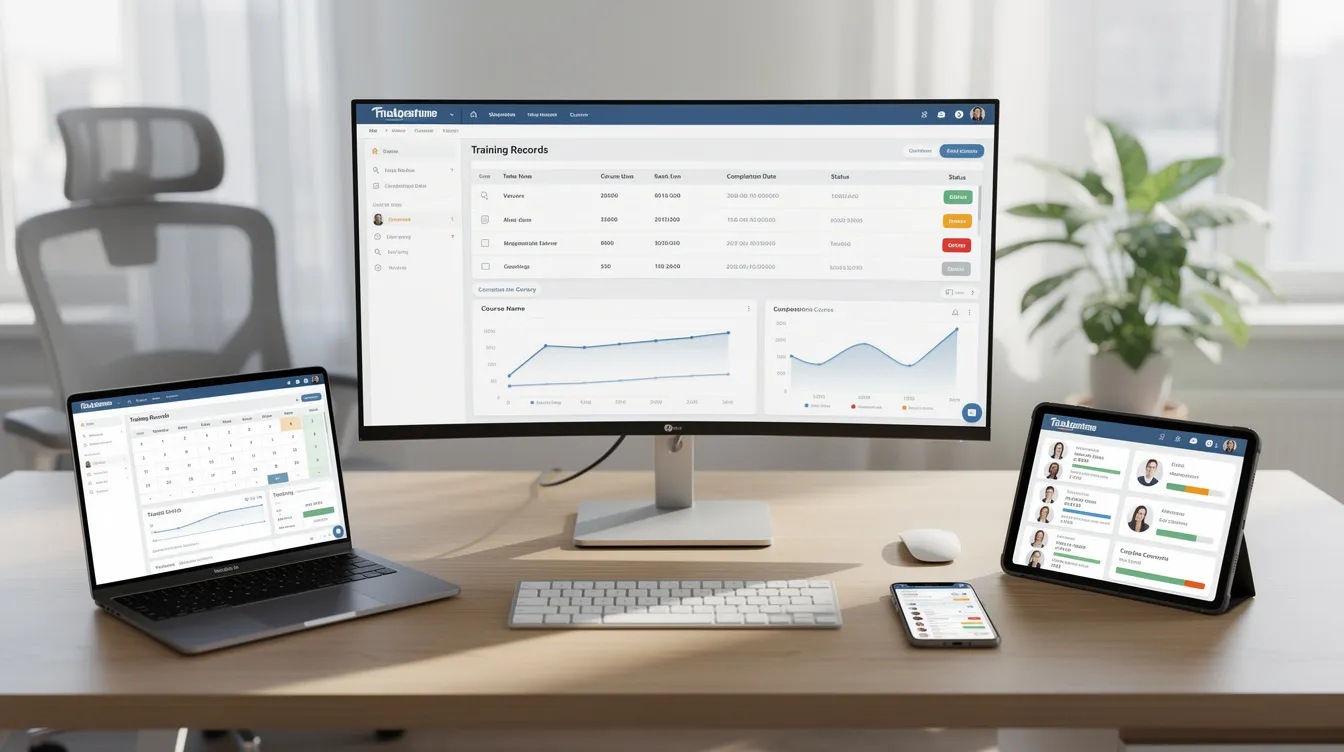
Data-driven insights from dashboards allow managers to monitor completion rates, identify at-risk apprentices, and measure the program’s Return on Investment. Track adoption metrics and schedule quarterly reviews to refine workflows based on inspection feedback.
Why Choose Our Platform for Apprenticeship Document Management
Our unified platform specialises in apprenticeship operations, delivering end-to-end learner records, employer portals, workflow automation, and compliance-ready reporting.
Want to Learn More About Your Registered Apprenticeship Opportunities?
BOOK A FREE CONSULTATION
End-to-End Visibility Across the Apprenticeship Journey
Staff can open any apprentice record and immediately see all documents, status indicators, and outstanding actions. Managers can filter by employer, standard, intake date, or region. Transparency in apprenticeship processes provides a clear documented record of the apprentice’s professional journey.
Employer and Apprentice Self-Service Portals
Employers view learning plans, review notes, and certificates without email requests. Apprentices who can view their progress in real time are empowered to take ownership of their learning. All portal actions are logged for complete audit trails.
Automation, Integrations, and Reporting
Automated reminders reduce manual chasing of missing documents at key milestones. Integrate with external systems like HR tools or funding portals. Effective management streamlines operations and mitigates significant risks associated with incomplete records, which can lead to penalties, program suspension, or loss of funding.
Apprenticeship management systems should maintain accurate training records for every apprentice, including session attendance, trainer feedback, and compliance documentation, to facilitate audits and regulatory reporting.
Frequently Asked Questions About Apprenticeship Document Management
Retention policies for apprenticeship records typically require preservation according to legal requirements, which may involve at least one year for general employment records or up to three years for specific training compliance in some jurisdictions. UK providers must retain records for six academic years after completion.
Yes. OCR tools achieve 95% accuracy for legible documents. ESFA accepts scanned evidence provided clear audit trails exist.
E-signatures via platforms like DocuSign are compliant. All signatures are logged with timestamps and linked to apprentice records.
Self-service portals allow employers to access and download relevant documents without admin intervention—all actions logged automatically.
Yes, provided documents are legible and stored with proper metadata and audit trails demonstrating authenticity.
Digital apprenticeship document management isn’t about going paperless—it’s about building audit-ready, compliant programs that scale with your organisations. Start with your September 2025 intake and experience better outcomes within weeks.
Ready to see how our platform handles your specific compliance challenges? Book a demonstration with your current cohort data and discover how much time your team can reclaim.


