
Building a skilled workforce through registered apprenticeships has never been more urgent—or more complex. With federal investments surging and employers scrambling to fill talent gaps, the right technology can mean the difference between a successful program and one buried in paperwork. This guide breaks down how a registered apprenticeship platform works and why it matters for your 2024-2026 initiatives.
Table of Contents
- What Is a Registered Apprenticeship Platform?
- Why Organizations Are Adopting Registered Apprenticeship Platforms Now
- How a Platform Supports Registered Apprenticeship Design & Registration
- Core Features of a Modern Registered Apprenticeship Platform
- Who Benefits from a Registered Apprenticeship Platform?
- Implementation: Timeline, Change Management & Best Practices (2024–2026)
- Why Choose a Dedicated Registered Apprenticeship Platform Over Generic Tools
- Frequently Asked Questions About Registered Apprenticeship Platforms
- Next Steps: Evaluating and Selecting Your Registered Apprenticeship Platform
What Is a Registered Apprenticeship Platform?
A registered apprenticeship platform is cloud-based software that helps employers, intermediaries, and schools design, register, deliver, and report on U.S. Department of Labor or State Apprenticeship Agency programs. The platform supports a structured process for creating, developing, and managing apprenticeship programs, ensuring each stage is organized to attract and retain suitable candidates. Unlike a generic LMS or HR tool, these platforms are built specifically around apprenticeship standards, OJL hours, RTI scheduling, wage progression, and compliance reporting.
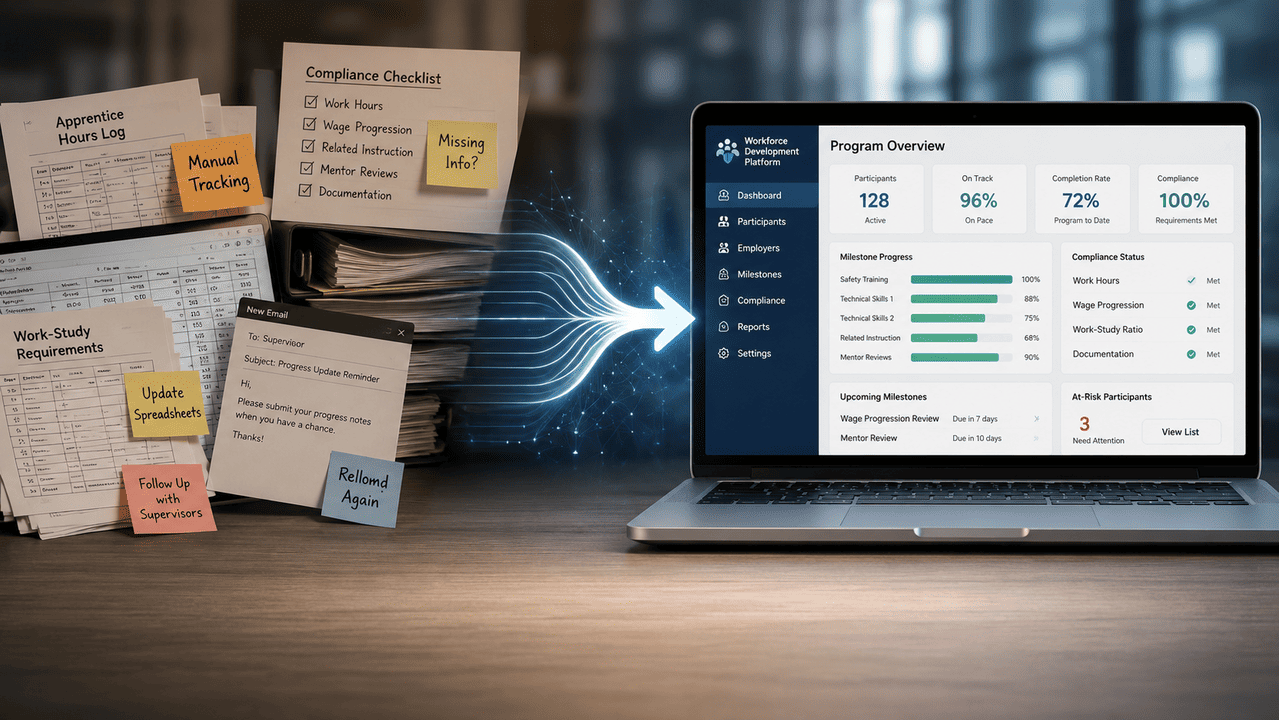
Registered apprenticeship programs are validated by the U.S. Department of Labor or a State Apprenticeship Agency, ensuring high-quality standards and industry relevance. The platform is designed to be accessible, supporting wide participation and inclusivity for all individuals. It acts as a single system of record for sponsors and education partners—replacing scattered spreadsheets and email chains. The platform also provides resources, including tools and guidance, to support employers, sponsors, and apprentices throughout the program lifecycle. Apprentices are hired as W-2 employees and receive a paycheck from their first day of training, with the platform tracking their paid work experience, progressive wage increases, classroom instruction, and path toward a nationally-recognized credential.
Why Organizations Are Adopting Registered Apprenticeship Platforms Now
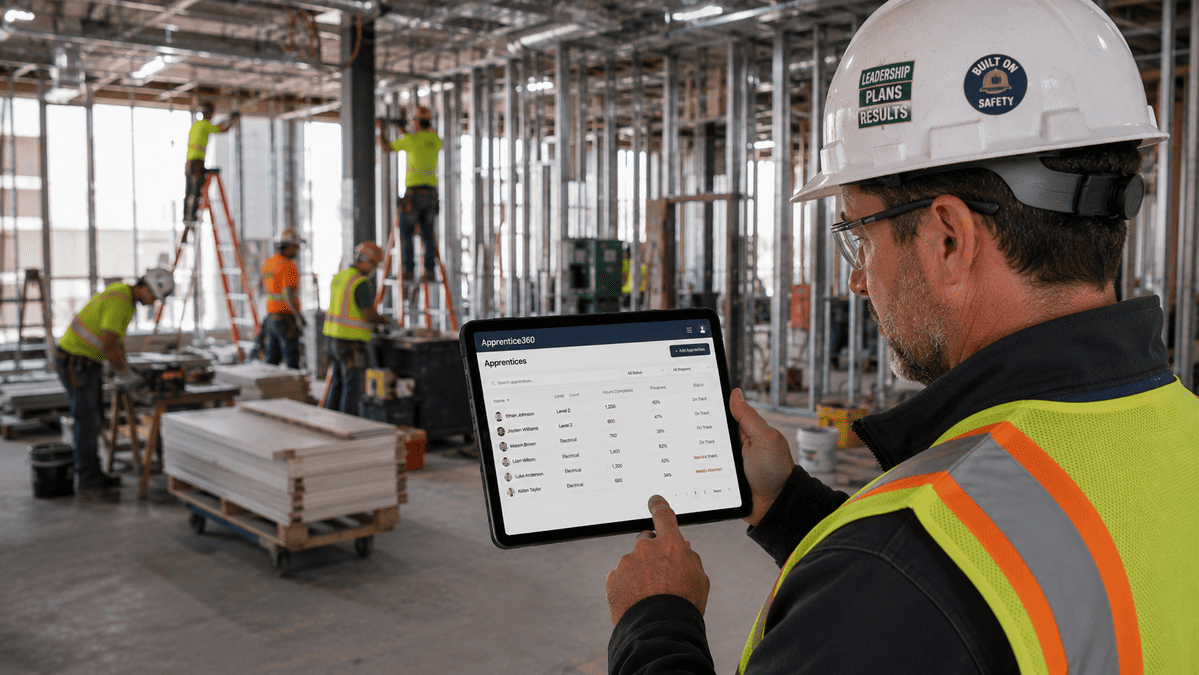
Infrastructure spending from IIJA and CHIPS Act incentives has created unprecedented demand for apprenticeship opportunities across industries. The national push to double apprenticeship participation means workforce boards and employers need scalable data collection systems. Adopting a registered apprenticeship platform gives organizations the advantage of accessing funding, grants, and technical assistance to enhance their work-based learning programs.
Key drivers include:
- Meeting DOL documentation standards and WIOA compliance requirements
- Scaling cohorts across multiple locations while maintaining quality
- Tracking outcomes for federal and state grants
- Addressing talent shortages in healthcare, advanced manufacturing, IT/cybersecurity, and clean energy
- Creating sustainable jobs and filling skilled labor vacancies
Equity gaps persist in apprenticeship programs, indicating a need for improved access and support for diverse populations. Registered apprenticeship platforms help make programs more accessible and inclusive for underrepresented populations. Over the next 5 years, JFF will work to provide apprenticeship opportunities in manufacturing to nearly 2,000 women and people of color. By 2026, JFF aims to prepare 1,000 young people for entry into pre-apprenticeship and registered apprenticeship programs, focusing on underrepresented populations.
How a Platform Supports Registered Apprenticeship Design & Registration
There are five core building blocks involved in creating and operating a Registered Apprenticeship Program: Explore, Build, Partner, Register, and Launch. A registered apprenticeship platform streamlines the process of moving through each building block, organizing every step and storing versioned program standards, work processes, RTI outlines, and wage schedules. By handling administrative details, the platform allows sponsors and employers to focus on developing high-quality programs. Design typically takes 4-8 weeks, with registration often requiring 60-120 days depending on state agencies.
Explore: Clarifying Apprenticeship Use Cases
Employers can start their registered apprenticeship program by first exploring how apprenticeship is used across different industries and geographies. During this exploration phase, employers are encouraged to learn about best practices and industry-specific apprenticeship models to make informed decisions. The platform offers templates, sample standards, and example occupations—Electrician, Medical Assistant, IT Support Specialist—to guide early decisions. Discovery tools include needs assessments, skills-gap checklists, and downloadable occupation outlines aligned with 2024 National Occupational Frameworks.
Build: Structuring the Program
The platform helps define OJL hours, RTI hours, related competencies, and wage progression schedules through configurable templates for time-based, competency-based, and hybrid programs. Each task or competency maps to specific courses, simulations, or on-the-job activities. Successful programs are structured so apprentices love what they’re doing, which leads to better engagement and outcomes for both apprentices and employers. As apprentices master new skills and hit predefined benchmarks, they receive guaranteed pay raises. The system supports multiple locations, shifts, and mentors for scale.
Partner: Aligning Employers, Schools & Intermediaries
Modern registered apprenticeships require multi-party partnerships. The platform provides role-based access for sponsors, employers, instructors, and mentors with shared dashboards and secure document sharing, helping businesses streamline apprenticeship operations and seamlessly integrate these programs with core business functions. Partners can co-manage RTI schedules aligned to community college semester calendars while maintaining a unified learner record. Stored templates simplify MOUs and articulation agreements with education partners.
Register: Submitting to DOL or State Apprenticeship Agency
The platform organizes materials required for official registration: standards, OJL schedules, RTI outlines, wage schedules, and equal employment opportunity plans. Exportable PDFs are formatted to align with common state and federal registration forms, making the submission process easier and ensuring all required form fields are included. The system tracks status for each occupation (“Submitted March 15, 2025; Approved June 10, 2025”) with automated reminders for renewal dates.
Launch: Recruiting, Enrolling & Managing Cohorts
To successfully launch a Registered Apprenticeship Program, it is essential to streamline the process of recruiting, enrolling, and managing apprentices. The platform guides you through each structured stage—from attracting prospective apprentices and measuring program outcomes to sharing successes. Features include online applications, eligibility screening, integration with job boards, and connections to local workforce agencies for job seekers. Enrollment workflows assign mentors, generate individual training plans, and schedule RTI courses. Upon completion, apprentices receive a portable, industry-recognized certificate of completion valid across the United States.
Core Features of a Modern Registered Apprenticeship Platform
Beyond basic data storage, these tools are designed to support high-quality, equitable work based learning programs through practical capabilities that solve daily pain points. The platform also provides resources to assist sponsors, employers, and apprentices in developing, implementing, and expanding apprenticeship programs.
Compliance, Documentation & Audit-Ready Reporting
Apprenticeship management tools can help reduce administrative burdens and ensure compliance with regulations such as WIOA. Effective platforms streamline administrative work related to compliance and reporting by providing automated alerts, tracking on-the-job training, and monitoring related training attendance to ensure apprentices meet graduation and funding requirements. Real-time alerts and automated workflows can reduce the manual labor required for program maintenance. Role-based permissions meet FERPA and HIPAA-adjacent expectations.
Apprentice & Mentor Portals
Participants receive hands-on training under the guidance of an experienced mentor for a set period, typically at least one year. Integrated systems facilitate communication between apprentices and their mentors, ensuring they receive necessary guidance and support. Platforms show apprentices exactly what skills they need to master to advance within the company, addressing the lack of direction sometimes found in early-career roles. Mobile-friendly logbooks, progress tracking, and SMS notifications keep learners engaged.
Curriculum & RTI Management
Apprentices complete specialized classroom or online coursework that teaches the theoretical “why” behind their practical tasks. The platform maps approved DOL courses, college classes, and vendor content into coherent RTI plans with calendar integration. Different delivery modes—classroom, online, hybrid, VR/simulation—are logged consistently for compliance.
Data, Analytics & Equity Insights
Coordinators view completion, retention, and wage outcomes by cohort, employer, and site. Outcomes disaggregate by demographics to meet equity commitments and grant reporting. Early-warning alerts flag apprentices at risk of dropping out, enabling targeted support and improving completion rates.
Who Benefits from a Registered Apprenticeship Platform?
Value extends across the full apprenticeship ecosystem—from employers to students to workforce boards, providing each group with a distinct advantage through streamlined access to funding, expert guidance, and enhanced work-based learning opportunities.
Employers & Sponsors
Employers benefit from registered apprenticeship programs by developing a skilled workforce tailored to their specific business needs, leading to increased productivity and reduced turnover. The registered apprenticeship platform helps businesses focus on developing their workforce and growing their business by streamlining program management. By tracking precise training data, employers can better calculate their Return on Investment, averaging $1.47 to $1.50 for every dollar spent. Approximately 90-94% of apprentices stay with the company after completing their program, significantly reducing turnover costs. By reducing administrative tasks, employers can focus on core business operations and training, while the administrative burden drops dramatically when replacing manual spreadsheets.
Schools, Colleges & Training Providers
Community colleges and CTE centers align RTI with employer-defined competencies. Educators gain visibility into each apprentice’s on-the-job progress—not just classroom performance. Schools can craft stackable credentials and clear pathways from pre-apprenticeship to degree programs using shared data.
Workforce Development Boards & State Agencies
Boards gain real-time insight into enrollments, completions, and wages for regional plans. The platform provides resources to help boards and agencies implement and expand apprenticeship programs, ensuring effective support across various industries. The platform surfaces performance metrics for state plans and federal grants, supporting stronger funding requests. State agencies use aggregated data to refine policy, target equity gaps, and prioritize high-demand sectors.
Apprentices & Job Seekers
Apprentices often earn an average starting salary of $50,000-$60,000 upon graduation with transparent wage progression throughout. Registered apprenticeship programs help fill jobs and create sustainable employment opportunities for workers by connecting them directly with employers seeking skilled labor. Mobile check-ins, class reminders, and easy access to program documents reduce confusion—especially for first-generation college students and career changers. A well-designed platform improves completion rates and long-term earnings by keeping learners engaged.

Implementation: Timeline, Change Management & Best Practices (2024–2026)
A realistic implementation is a structured process spanning 60-180 days, moving through defined phases from discovery to full multi-cohort use.
Phase 1: Planning & Stakeholder Alignment
In the first 30-45 days, define goals, map current processes, and identify all stakeholders. Hold a cross-functional workshop to document pain points. Plan data migration from legacy spreadsheets dating to earlier cohorts. Choose 2-3 occupations for a focused pilot rather than system-wide rollout.
Phase 2: Configuration, Integration & Training
Configure programs, upload standards, and set permissions. Many apprenticeship management tools integrate with existing software systems, including learning management systems and payroll systems, to streamline operations. Develop concise training sessions for coordinators and mentors. This phase typically spans 4-8 weeks, timed for fall 2025 or spring 2026 cohort starts.
Phase 3: Pilot Cohort & Continuous Improvement
Launch with defined success metrics: log completion rates, on-time wage increases, admin time reduction. Schedule feedback checkpoints at 30, 60, and 90 days. Capture lessons learned and update documentation. Use early analytics to demonstrate value to leadership and funders.
Why Choose a Dedicated Registered Apprenticeship Platform Over Generic Tools
Apprenticeship-specific workflows—OJL/RTI tracking, wage progression, DOL documentation—are cumbersome and error-prone in generic project management or HR tools. Staying on spreadsheets risks losing historical data and failing to prove outcomes to state agencies and funders. The advantage of using a dedicated registered apprenticeship platform is streamlined compliance, easier access to funding and grants, and expert guidance tailored to work-based learning programs.
Evaluate vendors on apprenticeship expertise, implementation support, and commitment to equity. The cost of non-compliance or program deregistration far exceeds platform investment. Connect with us to discuss how our tools create successful programs for your industry.
Frequently Asked Questions About Registered Apprenticeship Platforms
An LMS focuses on course delivery. A registered apprenticeship platform embeds OJL/RTI tracking, wage progression automation, and DOL-compliant reporting that generic tools lack.
No, but it accelerates approval by approximately 30% and organizes required documentation and registration forms from the start.
Most small sponsors go live in 60-90 days. Mid-sized programs with flexible training options typically need 120 days.
Yes. Templates accommodate learners 16+ with appropriate waivers alongside adult incumbent workers.
Leading platforms maintain SOC2 compliance, role-based encryption, and FERPA-aligned access controls.
Demographic dashboards track outcomes for underrepresented populations, and accessible features meet WCAG 2.1 standards to ensure the platform is inclusive and available to all users.
Most platforms integrate via APIs with state systems like Texas TWC data feeds.
Reach out for a tailored conversation about your specific timeline, industry, and state requirements.
Want to Learn More About Your Registered Apprenticeship Opportunities?
BOOK A FREE CONSULTATION
Next Steps: Evaluating and Selecting Your Registered Apprenticeship Platform
The future of talent development runs through registered apprenticeships. To move forward:
- Clarify your program goals and track outcomes you need
- Map stakeholders across employers, schools, and workforce boards
- Inventory current data and identify 2-3 occupations for initial rollout
- Schedule a structured demo simulating your real workflows
Contact our team to discuss your registered apprenticeship plans, book a live platform demonstration, or learn more about how a registered apprenticeship platform can support your goals. Building resilient, equitable talent pipelines requires the right infrastructure—and a strong registered apprenticeship platform is now a core piece of that foundation for industries across the world.


