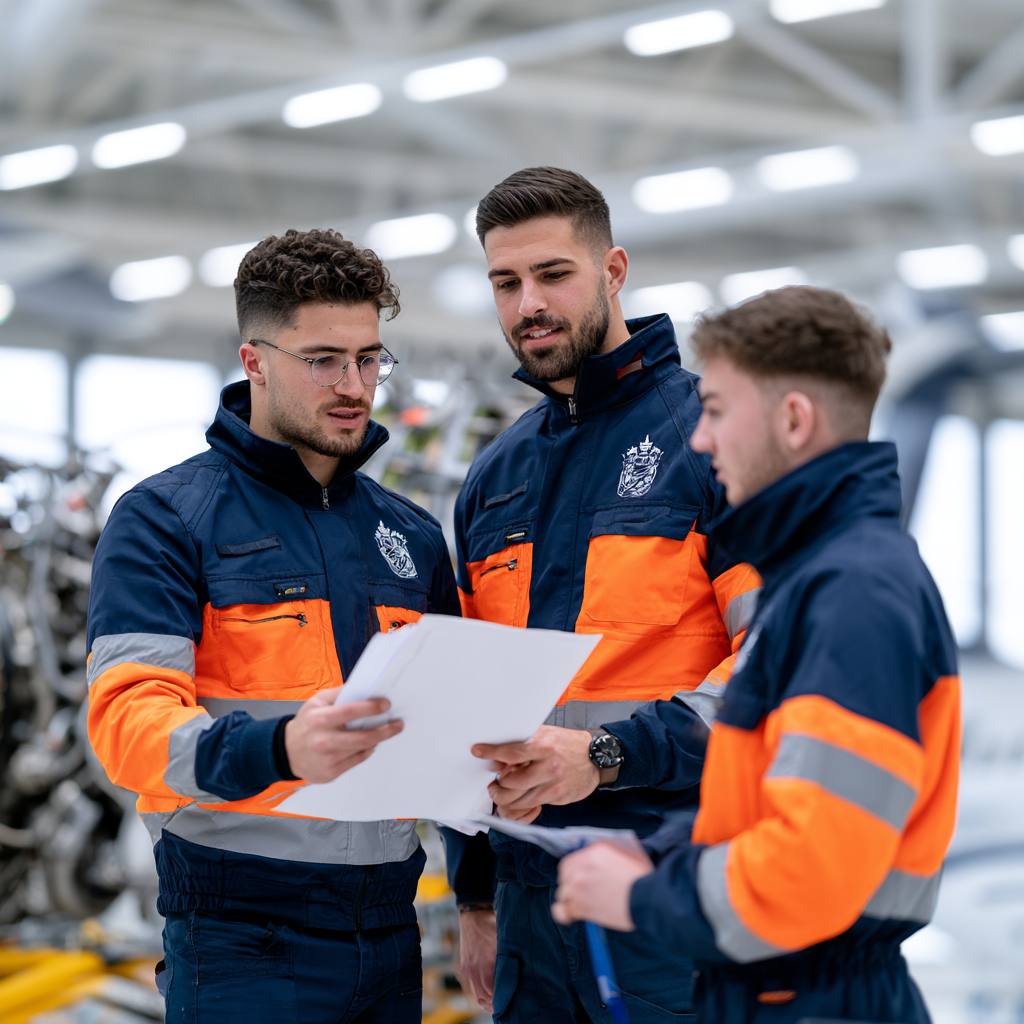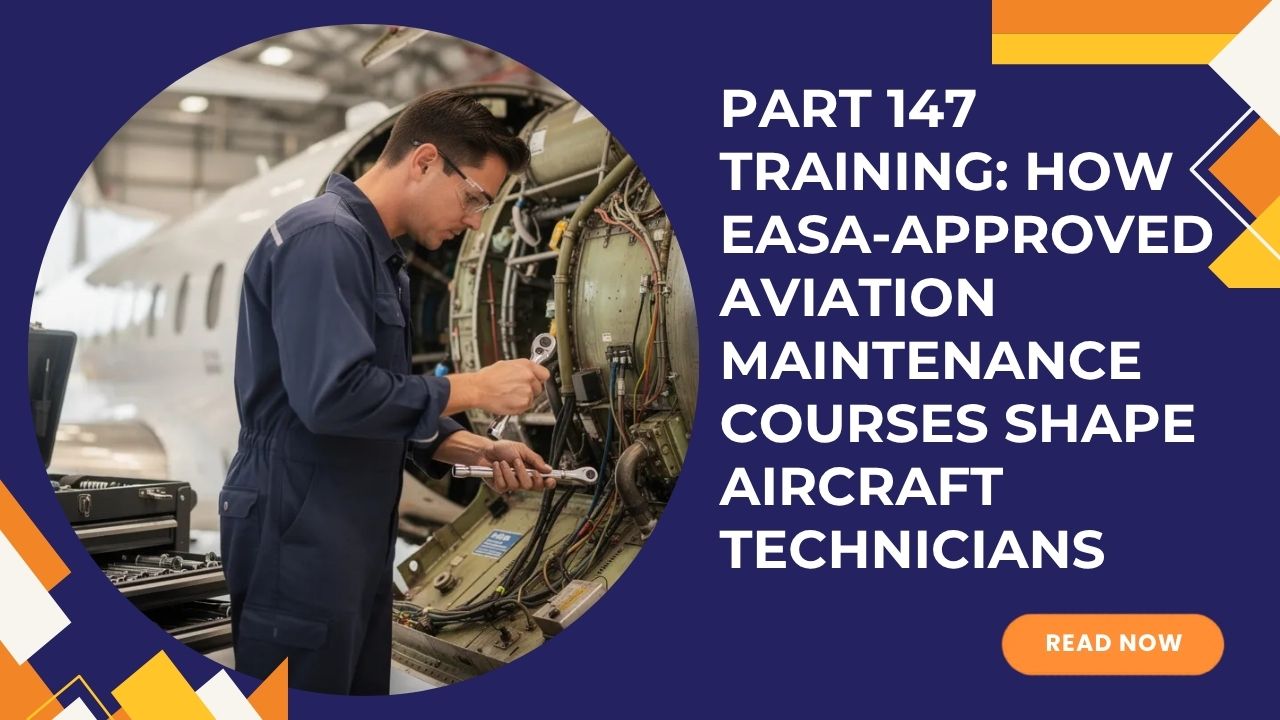
If your goal is to work on aircraft safely, legally, and internationally, Part 147 training is one of the most important terms to understand. It connects classroom learning, hangar practice, exams, approvals, and real maintenance experience into a regulated pathway for future aviation maintenance professionals.
Table of Contents
- What Is part 147 training and Why It Matters in 2026
- How EASA Part 147 Training Is Structured
- Requirements to Join a Part 147 Approved Course
- Inside an EASA Part 147 Basic Training Program
- Aircraft Type Training: From Classroom to Hangar
- What Makes an Organisation “Part 147 Approved”
- From Part 147 Course to Licensed Aviation Maintenance Engineer
- Online and Blended Part 147 Training Options
- Choosing the Right Part 147 Training Provider
- FAQ: Part 147 Training and Aviation Maintenance Careers
What Is Part 147 Training and Why It Matters in 2026
EASA Part 147 is the European regulation for approved maintenance training organisations, or MTOs, within Regulation (EU) No 1321/2014. In place since the early 2000s and updated through AMC/GM material, EASA Part 147defines how maintenance training must be delivered, assessed, recorded, and audited.
It works with EASA Part 66, which defines licence categories such as B1, B2, B2L, and B3, and with Part 145 organisations, where much aircraft maintenance experience is gained. In simple terms, Part 66 defines the licence, Part 145 supports real operations, and Part 147 provides approved training and examinations.
The timing matters. Boeing forecasts 710,000 new technicians globally by 2044, while Europe faces retirements and shortages across aviation maintenance. Standardised training helps ensure that growth does not come at the expense of safety or compliance.
How EASA Part 147 Training Is Structured
Part 147 training is usually split into basic training and type training. The structure is based on EASA learning objectives, minimum hours, practical tasks, and examination standards for each licence category.
- Basic Training: modules covering maths, physics, aerodynamics, aviation legislation, airframe, powerplant, avionics, human factors, maintenance practices, and related basic knowledge.
- Type Training: aircraft type rating courses, such as Airbus A320 family, Boeing 737 NG/MAX, ATR 42/72, or Embraer E-Jet, combining theory and practical tasks.
Training can take place in classrooms, workshops, hangars, or approved virtual classrooms for theory. Since 2020, online delivery has grown, but exams, identity checks, contact hours, and practical control still have to meet EASA standards.
Requirements to Join a Part 147 Approved Course
Entry requirements vary by state and organisation, but students should prepare for common expectations.
For basic training, applicants usually need:
- Minimum age, often 18 years by course completion.
- Secondary education, especially maths and science.
- English ability, often similar to ICAO level 3–4 for technical comprehension.
- Physical fitness for hangars, heights, confined spaces, tools, and visually detailed work.
For type training, applicants usually need:
- A valid or pending EASA Part 66 licence in the right category, such as b1 b2, B2L, or B3.
- Relevant aircraft maintenance experience.
- Employer or Part 145 support for on-the-job elements where required.
By comparison, FAA Part 147 is different. Students must be at least 18 years old, hold a high school diploma or GED, and be able to communicate in English to enroll in a Part 147 program in the United States.
Inside an EASA Part 147 Basic Training Program
A basic course often takes 2–3 years full time, with around 2,400 hours for some B1.1 or B2 routes and shorter paths for light aircraft categories.
Typical study focus includes:
- B1.1/B1.3: turbine aeroplanes or helicopters, structures, engines, mechanical systems, and electrical basics.
- B2: avionics, instruments, navigation, communication, digital techniques, and electrical systems.
- B3: piston aeroplanes below 2,000 kg, focused on light aircraft maintenance.
Students complete classroom theory, workshop practice, hangar tasks, human factors, and safety management system content. Exams are commonly module-based, with 75% pass marks used by many authorities. Practical assessments and task books show that skills have been completed, not just discussed.
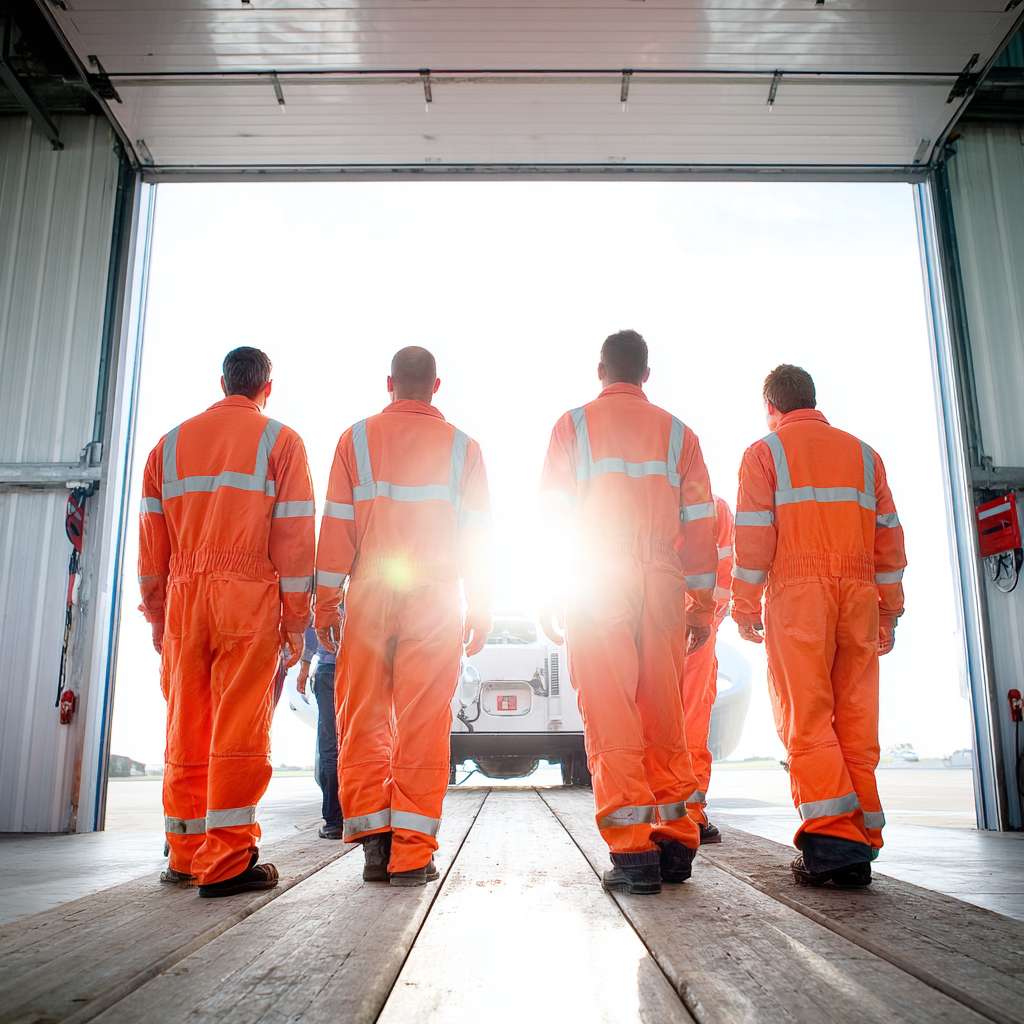
Part 147 training includes a structured, hands-on curriculum that covers essential skills necessary for aircraft maintenance.
Aircraft Type Training: From Classroom to Hangar
Aircraft type training is needed when a Part 66 licence holder wants a specific type rating added, allowing release to service on that aircraft family.
Modern schools commonly cover:
- Airbus A320/A330/A350 families.
- Boeing 737 NG/MAX and 787.
- ATR 42/72 and Embraer E170/E190.
- Business jets and helicopters where relevant.
The theoretical phase follows ATA chapters, covering systems, limitations, maintenance practices, and troubleshooting. The practical phase includes inspection, removal and installation, functional checks, and system access on live aircraft or representative training devices. Depending on aircraft complexity and category, courses may involve 10–20 days of theory plus 5–15 days of practical work.
What Makes an Organisation “Part 147 Approved”
A Part 147 approved organisation is authorised by its national aviation authority, such as DGAC France, ENAC Italy, or the UK CAA for UK-specific approvals.
Check these details before booking:
- Approval certificate number, such as FR.147.xxxx or IT.147.00xx, and current revision status.
- Approved scope: basic, type, category, and exact aircraft type.
- Training and Examination Manuals covering delivery, assessment, security, and records.
- Regular authority audits, often every 12–24 months.
- Current compliance with EASA Part 147 and AMC/GM updates.
To be issued a certificate or rating under Part 147, an applicant must demonstrate compliance with specific requirements, including a description of facilities and curriculum that ensures students acquire necessary knowledge and skills. To be issued a certificate or rating under Part 147, an applicant must also demonstrate compliance with specific requirements, including a description of facilities, curriculum, and qualified instructors.
A Part-147 approval can only be granted to an organization that plans to conduct training on all modules related to a subcategory of an aircraft maintenance license, ensuring a full understanding of training needs and interfaces.
FAA Part 147 School Requirements
In the FAA system, Part 147 prescribes the requirements for issuing aviation maintenance technician school certificates and associated ratings, as well as the general operating rules for the holders of those certificates and ratings. To operate under 14 CFR Part 147, schools must adhere to strict requirements monitored by the FAA across four fundamental categories: curriculum, instructors, facilities and equipment, and quality control.
Each certificated aviation maintenance technician school must establish and maintain a quality control system that meets specified requirements, including recordkeeping and assessment procedures. The program requires schools to have documented quality control systems and may defer to accreditors for grading and attendance policies.
Schools must provide and maintain facilities, aircraft components, specialized tooling, and materials for the ratings they offer in proportion to enrollment numbers. Part 147 schools must maintain a 25:1 student-to-instructor ratio during hands-on instruction for safety and skill evaluation.
From Part 147 Course to Licensed Aviation Maintenance Engineer
The route is structured but not instant:
- Complete the basic Part 147 course and exams for the chosen Part 66 category.
- Gain required practical experience, often 2–5 years depending on the route, recorded in a logbook.
- Apply to the national aviation authority for the Part 66 licence.
- Complete Part 147 aircraft type training.
- Add the type endorsement, then work toward certifying privileges in line or base maintenance.
Licensed personnel often work within Part 145 organisations, MROs, airline operations, component shops, or base maintenance facilities.

Online and Blended Part 147 Training Options
COVID-19 accelerated remote theory, and by 2026 blended learning is common. Providers may offer fully on-site courses, virtual classrooms with controlled exams, or hybrid programs where theory is online and practical training is completed in approved hangars.
The benefits are real: lower travel costs, easier shift planning, and one training group spread across several bases without excessive travel requirements. The limits are just as important: secure exams, identity checks, controlled question banks, minimum contact hours, and approved practical facilities still apply.
Choosing the Right Part 147 Training Provider
Not every provider offers the same depth or industry connection. Before you commit, check:
- Is the organisation officially part 147 approved for the exact course, category, and aircraft type you need?
- Do instructors have real line or base maintenance experience, ideally 10–20+ years?
- Are class sizes suitable for hands-on learning?
- Is there enough hangar access, tooling, CBT, simulation, or virtual reality support?
- Are exam dates, course duration, documentation, and logbook support clearly explained?
- Is the approval revision recent enough to reflect 2023–2026 EASA changes?
If you are comparing options, start with our part 147 training information and contact a training advisor to match the course to your long-term aviation goals.
Want to Learn More About Your Registered Apprenticeship Opportunities?
BOOK A FREE CONSULTATION
FAQ: Part 147 Training and Aviation Maintenance Careers
FAQ: Part 147 Training and Aviation Maintenance Careers
- How long does EASA Part 147 basic training usually take? Most full-time B1 or B2 programs take about 24–36 months, depending on category and delivery model.
- Is Part 147 training recognised outside Europe? EASA credentials are respected globally, but local authority validation or extra exams may be needed.
- Can I do Part 147 training while working full time in a Part 145 organisation? Often yes, through modular, evening, or online theory, though practical attendance is still required.
- What is the difference between EASA Part 147 and FAA Part 147? EASA Part 147 governs MTOs linked to Part 66 licences; FAA Part 147 governs US Aviation Maintenance Technician Schools.
- Do I need EASA Part 147 training if I already have experience on aircraft? Not always, because experience-only routes exist, but approved training can reduce experience requirements and improve documentation.
More FAQs About FAA Part 147 Training
- What does FAA Part 147 provide? Graduating from a Part 147 school allows students to bypass years of field apprenticeships and take the FAA exams immediately.
- What exams follow FAA Part 147? Part 147 training grants eligibility to take FAA written, oral, and practical exams upon graduation, typically in 18 to 24 months.
- What certificate does FAA training support? Completing a Part 147 program prepares students with the essential knowledge and skills needed to earn an FAA Mechanic Certificate with Airframe and/or Powerplant ratings.
- Is FAA Part 147 efficient? Part 147 training is recognized as the most effective way to achieve FAA Airframe and Powerplant certification.
FAA Part 147 School Standards and Requirements
- What does FAA Part 147 provide? Graduating from a Part 147 school allows students to bypass years of field apprenticeships and take the FAA exams immediately.
- What exams follow FAA Part 147? Part 147 training grants eligibility to take FAA written, oral, and practical exams upon graduation, typically in 18 to 24 months.
- What certificate does FAA training support? Completing a Part 147 program prepares students with the essential knowledge and skills needed to earn an FAA Mechanic Certificate with Airframe and/or Powerplant ratings.
- Is FAA Part 147 efficient? Many aviation professionals recognize Part 147 training as the most effective way to achieve FAA Airframe and Powerplant certification.
Conclusion: Planning Your Next Step in Part 147 Training
EASA Part 147 training underpins safe, standardised aircraft maintenance across Europe and supports aviation careers worldwide. It gives students a regulated path from basic knowledge to practical competence, then onward to type ratings and licensed responsibility.
The provider you choose matters. Look for current approval, strong instructors, real aircraft access, clear records, and a culture of quality rather than shortcuts.
Map your route now: basic, type, recurrent, or conversion training. Then speak with a training advisor, review course options, and build a realistic plan for your next years in aviation maintenance.