
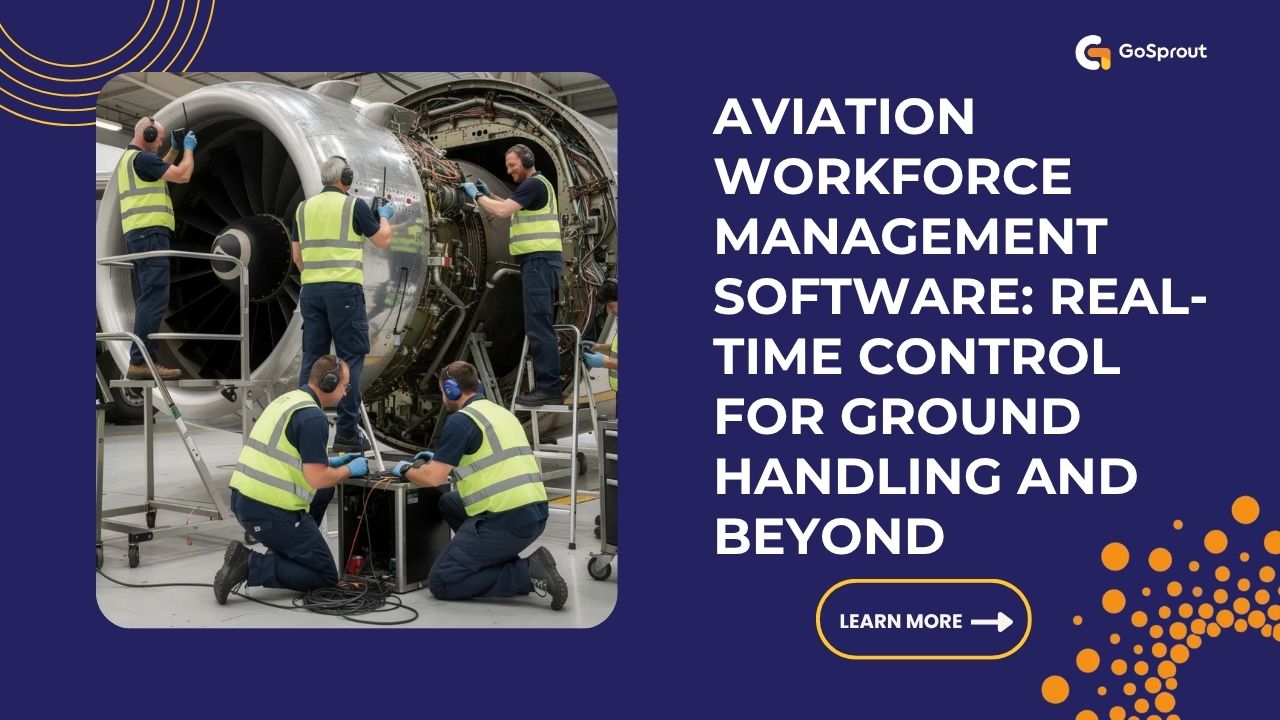
Airlines, airports, and handlers are being asked to run more flights with tighter labor pools, stricter regulations, and less room for error. The old mix of spreadsheets, radio calls, and disconnected planning tools cannot keep up with today’s operational complexity.
That is why aviation workforce management software has become a critical system for modern aviation operations. It automates complex scheduling, enforces safety compliance, and provides real-time mobile updates to crews, supervisors, and dispatchers.
Table of Contents
Jump straight to the question you need answered, especially the early sections on what the software is and how it helps ground handling.
- Why Aviation Workforce Management Software Matters Now
- What Is Aviation Workforce Management Software?
- Key Capabilities for Ground Handling and Ground Staff Operations
- Real-Time Visibility and Day-of-Ops Control
- Workforce Planning, Rostering, and Scenario Modeling
- Compliance, Safety, and Qualification Management
- Improving Employee Experience
- Data, Analytics, and Continuous Improvement
- Why Choose Our Aviation Workforce Management Solution
- Implementation Roadmap
- FAQ
- Conclusion and Next Steps
Why Aviation Workforce Management Software Matters Now (Post‑2024 Reality)
The aviation industry has moved from recovery mode into schedule growth. Passenger demand is high, seasonal peaks are sharper, and many airport teams are still rebuilding after the 2022–2025 labor squeeze.
The airline industry is currently facing a significant labor shortage, particularly in specialized roles such as pilots and maintenance technicians, which threatens operational integrity and growth. Pilot shortages have reached crisis levels due to factors such as mandatory retirements, reduced military pilot output, and increased qualification requirements, which have extended training timelines and costs.
Ground operations roles, including baggage handling and aircraft servicing, often experience high turnover rates due to the physical demands of the job and competition from other industries offering better working conditions. The global supply of certified aircraft maintenance technicians is also dwindling, creating serious succession gaps as aircraft complexity increases and fewer new technicians enter the workforce.
Without a unified system, teams deal with:
- Fragmented spreadsheets for staff, shifts, and qualifications
- Manual scheduling that misses fatigue, rest, or union rules
- Poor real time visibility across flight activity and ground staff
- Overtime spikes when planners discover shortages too late
- Missed SLAs and delays during irregular operations
According to EUROCONTROL’s 2025 aviation overview, average departure delay in Europe fell to 14.6 minutes per flight in 2025, yet turnaround and ground handling delays remained a meaningful part of the problem. Labor costs represent a substantial portion of an airline’s operating expenses, and shortages can escalate compensation as airlines compete for limited talent, impacting overall financial sustainability.
Aviation workforce management brings planning, scheduling, allocation, compliance, and analytics into one platform. That gives operations control teams the information they need to manage staffing needs before they become passenger-facing problems.
What Is Aviation Workforce Management Software?
Aviation workforce management software is a specialized workforce management platform for crew, ground handling, cargo, passenger service, maintenance, and airport staff. It is not just a generic time management tool with aviation labels added.
The difference is context. The system understands flight schedules, aircraft type, gates, stands, baggage belts, check-in counters, pushback tractors, security lanes, and operational changes across the airport. This enables more accurate planning and resource allocation.
Core modules usually include:
- Long-term workforce planning for 12–24-month demand
- Shift and roster creation based on labor rules and flight activity
- Task allocation for ramp, terminal, cargo, and crew operations
- Time and attendance tracking for actual working hours
- Training and qualifications management for regulated roles
- Analytics dashboards for performance, cost, delays, and compliance
- Mobile access for frontline staff, dispatchers, and supervisors

Effective workforce management in aviation requires precise task allocation based on flight schedules, employee data, and qualifications to ensure the right staff is assigned to each task. Real-time data and analytics are essential for effective workforce management in aviation, allowing airlines to respond quickly to operational changes, such as flight delays or staff absences, and adjust staffing levels accordingly.
Optimized Assignments use algorithms to match crew qualifications, aircraft type, and crew preferences to maximize productivity. That is especially important when one late inbound flight can disrupt the next departure, the next gate plan, and the next shift handover.
Key Capabilities for Ground Handling and Ground Staff Operations
Ground handling is where workforce complexity becomes visible. If the right team, equipment, and qualifications are not available at the aircraft, even a good flight plan can turn into a delay.
A strong solution helps ground staff perform better on the apron, ramp, and in the terminal by supporting:
- Turnaround-based staffing that aligns staff with arrival and departure banks
- Task chains for deboarding, cleaning, fueling, catering, baggage loading, and boarding
- Equipment allocation for GSE such as belt loaders, tugs, de-icers, and pushback tractors
- Handover management so no critical task is lost between shifts
- Role coverage for ramp agents, baggage handlers, passenger service agents, pushback drivers, loadmasters, and security teams
- Demand forecasting based on historical flight data, seasonal demand, passenger volume, and airline SLAs
- Automatic license checks for airside driving, dangerous goods, de-icing, and load control
- Links between workforce performance, OTP, ground damage, customer satisfaction, and SLA reporting
Effective ground handling resource management is crucial for maximizing resource utilization, which directly impacts on-time flight departures and customer satisfaction, thereby improving operational efficiency in the aviation sector.
Efficient workforce deployment in aviation can improve operational efficiency by up to 20% through precise task allocation and integration of flight schedules, employee data, and qualifications. That improvement does not come from pushing people harder. It comes from reducing idle time, preventing under-coverage, and giving planners a clearer view of what is actually needed.
Real-Time Visibility and Day-of-Ops Control
Aviation operations change fast. Weather, ATC restrictions, aircraft-on-ground events, gate swaps, absenteeism, and late inbound aircraft can all break a published roster.
A real-time control center view brings live flight status, staff availability, task progress, and equipment usage into one dashboard. Instant notifications eliminate silos, keeping flying crews and dispatchers aligned for better situational awareness.
Practical use cases include:
- Rapid Disruption Management automatically finds and reassigns available reserve crews during flight delays or cancellations.
- Supervisors can move ground staff from a delayed departure to a higher-priority arrival.
- A pushback tractor breakdown can trigger a new resource allocation before the departure window closes.
- Team leaders receive mobile updates, accept tasks, swap shifts with approval, and confirm task completion in real time.
- Control teams can see under-staffed flights, upcoming duty limits, missed tasks, and over-allocated gates before problems escalate.
Advanced software solutions in workforce planning allow for real-time adjustments to staffing based on unforeseen events, ensuring that the right personnel are available when needed. Integration with A-CDM, AODB, HR, payroll, LMS, weather feeds, and airport operational systems keeps data synchronized across teams instead of trapped in separate processes.
Workforce Planning, Rostering, and Scenario Modeling
Aviation workforce planning works across three horizons: strategic planning for 12–24 months, tactical planning for 3–6 months, and operational day-of-ops control.
Airlines must adapt their workforce management strategies to respond to seasonal fluctuations and peak travel times, ensuring sufficient staffing levels during high-demand periods while avoiding overstaffing during slower times. Summer 2026 holidays, Hajj travel, major sporting events, and new airline contracts can all change staffing curves.
The best systems help planners model questions such as:
- What if an airline adds a new long-haul route in March 2026?
- What if a second night bank opens at a hub airport?
- What if absence rates rise during flu season?
- What if passenger numbers grow faster than the current workforce can support?
AI-powered technologies can significantly optimize staff planning in the aviation industry by automatically considering various factors such as work volume and passenger numbers in the scheduling process. The integration of AI in workforce planning helps predict staffing needs based on expected flight operations and passenger volume, which can reduce understaffing and overtime.
AI-powered technologies can optimize staff planning in the aviation industry by accurately calculating the required number of employees based on factors like work volume and passenger numbers, thus enhancing operational efficiency.
Scenario modeling lets planners compare cost, service level, overtime, idle time, flexibility, and regulatory risk before committing. The goal is not only a cheaper roster. It is an efficient, safe, and flexible plan that can survive real-world changes.
Compliance, Safety, and Qualification Management
The airline industry operates within one of the most tightly regulated environments, with authorities like the FAA, EASA, and ICAO imposing strict standards that directly impact passenger safety and operational continuity.
Compliance in aviation is dynamic, with regulations evolving frequently in response to new technologies, safety incidents, and emerging risks, requiring airlines to adapt quickly to avoid operational delays or regulatory breaches.
A workforce management system supports compliance by tracking:
- Licenses and certifications
- Medical clearances
- Training recertification intervals
- Safety briefings
- Airside permits
- Dangerous goods qualifications
- De-icing approvals
- Load control and security screening requirements
Airlines must maintain real-time tracking of various certifications, training recertification intervals, medical clearances, and safety briefings to ensure compliance and avoid operational delays. Pairing it with a workforce training tracking solution keeps certifications and recurrent training current for every employee on the roster.
Dynamic Duty Tracking software evaluates flight time, rest requirements, and duty limits based on guidelines like FAA or EASA. Fatigue Risk Management algorithms prevent scheduling violations that lead to crew fatigue, ensuring regulatory adherence and safety.
Automatic checks stop planners from assigning an employee to a task when a mandatory qualification is missing, expired, or no longer current. The platform also provides audit-ready logs showing who worked where, when, and under which qualifications, including Apprenticeship Tracking Software data, which is valuable during inspections or incident investigations.
Improving Employee Experience for Ground Staff and Airport Teams
Workforce management is not only about control. It also affects whether people stay.
Below-wing and above-wing roles have seen high turnover and burnout, especially during the recovery years. A better employee experience can help reduce absence, improve trust, and make standby coverage easier to manage.
Useful features include:
- Centralized Crew Portals allow crews to check rosters, request leave, and view hotel bookings via companion apps.
- Mobile apps let ground staff view shifts, bid for overtime, request time off, and trade shifts with manager approval.
- Preference-based scheduling improves work-life balance while still meeting operational requirements.
- Transparent records show hours worked, overtime earned and leave balances.
- Multi-lingual interfaces support large airport teams with diverse workforces.
- Accessible mobile design helps staff using different devices on the ramp, in terminals, or away from desks.
When staff have better access to information, they spend less time chasing supervisors and more time focusing on service, safety, and passenger needs.
Data, Analytics, and Continuous Improvement
Aviation teams cannot improve what they cannot measure. The right platform turns operational data into better decisions.
Key dashboards should track:
- On-time performance by station, terminal, airline, or flight
- Delay minutes linked to staffing or handling
- Overtime hours and cost by shift
- Absence rates and roster deviations
- Training compliance and qualification expiry
- Task productivity, such as baggage handling rates or cleaning turnaround time
- Seasonal demand compared with actual staffing levels
Predictive Modeling in Workforce Analytics helps airlines anticipate turnover, minimize overtime, and reduce delays. Trend analysis can show that a specific flight bank is always short of qualified pushback drivers, or that Q3 2025 required more baggage staff than Q3 2024 because passenger demand changed.
Data-Driven Quoting platforms analyze flight times and fuel usage to generate accurate quotes. For handlers and airline service providers, that can improve bid accuracy and protect margins. These insights provide a powerful foundation for operational decision-making.
APIs and exports also help finance, HR, and operations teams run deeper studies across payroll, resource planning, compliance, and customer performance.
Why Choose Our Aviation Workforce Management Solution
Our aviation workforce management solution is built for aviation, not adapted from a generic business scheduling product. It is designed to support complex airport operations, ground handling teams, crew planning, and real time disruption management.
We focus on practical value:
- Support for complex shifts, rest rules, qualifications, and local requirements
- Strong real time visibility for planners, dispatchers, supervisors, and mobile users
- Implementation support from discovery through rollout
- Customer care that helps teams improve processes, not just install software
- Continuous product updates based on industry changes and operational feedback
- Integration with existing airline, airport, HR, payroll, and training systems
If you are evaluating aviation workforce management software, the right partner should help you reduce disruption during rollout while improving control, compliance, efficiency, and workforce flexibility. Our team is committed to delivering top levels of service and support throughout the process.

Implementation Roadmap: From Pilot Station to Network-Wide Rollout
A typical first-station implementation may take 3–6 months, with network-wide expansion phased over 12–18 months depending on complexity, integrations, and local rules.
The process usually starts with discovery and design. This includes process mapping, requirements gathering, staff list imports, flight schedule imports, qualification data cleanup, and agreement on success metrics such as overtime reduction, OTP improvement, or fewer unassigned tasks.
A sensible rollout approach is:
- Choose one pilot airport, station, or business unit
- Define baseline KPIs before go-live
- Train planners, supervisors, and staff with e-learning and on-site support
- Run the system against live operations
- Review results and adjust configuration
- Expand to more stations, airlines, or operational teams once local users are confident
Before kickoff, customers should prepare current rosters, labor rules, qualification records, HR data, flight schedules, equipment lists, and examples of common exceptions. Good preparation shortens the project and reduces change management risk.
FAQ: Aviation Workforce Management and Ground Handling Optimization
Can aviation workforce management software integrate with HR and payroll?
Yes. A modern platform should integrate with HRIS, payroll, training systems, finance tools, and airport operations databases. That prevents duplicate entry and helps ensure that working time, leave, overtime, qualifications, and employee records stay consistent.
How does the system support 24/7 airport operations?
The software supports rolling shifts, night work, standby pools, split duties, fatigue rules, and handovers. It gives supervisors continuous control across early morning banks, overnight cargo activity, and late-night passenger flights.
Can it handle union rules and local labor regulations?
Yes, if the rules engine is configurable. The system should reflect union agreements, shift premiums, rest periods, maximum hours, local regulations, and airport-specific practices without forcing every station into one rigid model.
How does real time workforce management help during disruptions like storms or ATC strikes?
During storms, ATC restrictions, cancellations, or diversions, real time workforce management shows which staff are available, qualified, and close to the affected work area. Supervisors can reassign reserve crews, delay non-critical tasks, and update mobile users instantly.
Does the software help ground handling teams specifically?
Yes. Ground handling teams use it to plan turnarounds, allocate ramp and baggage staff, assign equipment, enforce qualifications, and track task completion. This improves resource control, reduces delays, and supports better customer service for airlines.
Is mobile usage practical on the ramp?
Yes, provided the user interface is simple and reliable. Mobile access lets staff receive task changes, confirm completion, view rosters, and communicate availability without returning to an office or waiting for radio updates.
What ROI should aviation businesses expect?
ROI varies by size and operational complexity, but payback often comes from reduced overtime, fewer manual planning hours, better punctuality, and lower disruption cost. Larger stations usually see the strongest returns because small percentage gains across many shifts and flights add up quickly.
Can one platform support ground, crew, cargo, and maintenance workforce needs?
Yes. A well-designed aviation platform can support the overall aviation workforce across ground, crew, cargo, passenger service, and maintenance teams, while still respecting each group’s specific rules, qualifications, and operational processes.
Conclusion and Next Steps
Modern workforce management is now essential infrastructure for airports, airlines, and ground handlers competing in 2025–2026 and beyond. It improves punctuality, cost control, compliance, employee experience, and operational resilience.
The strongest results come when planning, scheduling, task allocation, qualifications, mobile updates, and analytics work together in one system. That is how aviation teams move from reactive firefighting to confident operational control.
If you are ready to reduce delays, improve workforce efficiency, and prepare for future schedule growth, schedule a demo, request a tailored ROI analysis, or talk to an aviation workforce specialist about the best rollout path for your operation.
Want to Learn More About Your Registered Apprenticeship Opportunities?
BOOK A FREE CONSULTATION