Table of Contents
- Introduction: Why Work-Based Learning Matters in 2026
- What Is Work-Based Learning?
- Types of Work-Based Learning
- Benefits of Work-Based Learning
- How to Build a Successful Work-Based Learning Program
- Technology That Supports Work-Based Learning
- Common Challenges (and How to Solve Them)
- Real-World Examples of Work-Based Learning in Action
- Work-Based Learning Trends to Watch
- Frequently Asked Questions About Work-Based Learning
- Why Choose GoSprout for Managing Work-Based Learning Programs
Introduction: Why Work-Based Learning Matters in 2026
Work based learning (WBL) is structured, supervised learning that happens in real workplaces rather than only in classrooms. It connects education with real-world experiences through internships, youth and registered apprenticeships, job shadowing, school based enterprises, cooperative education, and other work based learning experiences aligned to career and technical education pathways.
The labor market context makes this urgent. Nearly 69% of organizations still report difficulty recruiting for full-time roles, especially middle-skill technical positions. Workers aged 55 and older now represent roughly 24% of the workforce, creating pipeline pressure. Meanwhile, skills-first hiring is accelerating and AI adoption is reshaping what employers need from new talent.
This guide is for school and district WBL coordinators, CTE directors, apprenticeship sponsors, workforce boards, and employers standing up or expanding WBL opportunities. You will find actionable guidance on program types, benefits, implementation steps, technology, common challenges, trends, and frequently asked questions. While the focus is on U.S.-based programs, the principles apply broadly.

What Is Work-Based Learning?
Work based learning is a continuum of experiences that connect education with gainful employment, ranging from early career awareness activities to intensive, paid work experience. Unlike a part-time job, WBL is intentionally structured with clear learning objectives, employer supervision, and reflection. It is a core pillar of modern career and technical education, dual enrollment, and youth apprenticeship systems across U.S. states, and can be credit-bearing or lead directly into a Registered Apprenticeship.
Definition
Work based learning WBL refers to structured learning experiences that occur at a workplace, integrate academic and technical education, and lead to measurable learning outcomes and employability skills. Learners apply knowledge by completing authentic tasks in workplace settings, and their performance is assessed against industry standards rather than only tests or essays.
Work-based learning differs from traditional education in that it focuses on practical skills and real-world applications. While classroom instruction builds foundational knowledge and skills, WBL puts that knowledge to work through authentic job tasks, projects, and mentorship.
The WBL continuum typically moves through four stages: career awareness (exposure to different careers), career exploration (deeper investigation of career clusters), career preparation (skill development through hands-on practice), and career training (intensive, credential-bearing employment). WBL overlaps with related concepts like experiential learning, cooperative education, and apprenticeship opportunities, but it always centers on intentional learning in real or simulated work environments.
Why It Matters
Work-based learning programs reduce the gap between education and workplace expectations. According to SHRM’s 2025 Talent Trends research, approximately 69% of organizations report difficulty filling full-time positions, with applicants frequently lacking both technical competency and soft skill requirements. WBL directly addresses this by aligning student learning with real job requirements.
Work-based learning connects education and employment for students, improving career readiness through stronger employability skills like communication, problem-solving, and teamwork. It also enhances career readiness and professional networking opportunities, giving young people the relationships and occupational identity that smooth their transition to postsecondary education or full-time employment.
For employers, WBL builds predictable talent pipelines and reduces onboarding time. Hiring decisions based on real performance during an internship or apprenticeship are more accurate than decisions based on resumes alone. Regions with thriving work based learning communities in healthcare, manufacturing, and IT are using these programs to attract and retain employers and to strengthen economic development efforts.
Types of Work-Based Learning
Effective WBL systems combine multiple types of work based learning activities along a progression, from low-intensity awareness to high-intensity, paid work experience. WBL activities include internships, apprenticeships, and service-learning, among others.
Job shadowing is a short-term experience where students observe professionals in their work environment. Lasting a half-day to two days, it carries low risk for employers and is most common in grades 7–10 and among adult career changers exploring different careers.
Informational interviews and guest speakers complement job shadowing as early career awareness WBL. Structured Q&A sessions with industry professionals give students a chance to observe work routines and ask questions, while guest speakers bring the workplace into the classroom.
Internships provide real-world experience for students. High school internships typically run 60–120 hours; college-level placements average 8–12 weeks. Both involve employer supervision, project work, and a strong shift toward paid work experience to support equity.
Youth apprenticeships blend high school academics, technical education, and paid on the job training over one to three years, often transitioning into Registered Apprenticeship or direct employment after graduation.
Registered apprenticeships combine paid employment with related classroom instruction. These U.S. DOL-registered programs are multi-year, include a formal training plan with OJT and related technical instruction, and are common in construction, advanced manufacturing, IT, and healthcare. Apprenticeships involve formal job training with a master of the trade, producing industry-recognized credentials.
Clinical experiences and practicums serve healthcare and education sectors. Nursing clinical rotations and student teaching require close coordination with technical education providers and often carry licensing or accreditation requirements.
Cooperative education and school based enterprises offer longer-term models. Co-op alternates school and work terms, while school-based enterprises teach business skills through production and sales, giving students responsibility for budgeting, marketing, and customer service in student-run shops or cafés.
Service learning combines community service with structured opportunities for reflection, emphasizing civic engagement and soft-skill development as a form of work based learning.
Benefits of Work-Based Learning
High-quality WBL must deliver value to both learners and employers to be sustainable. Recent evaluations from state CTE systems and federal workforce programs consistently show higher graduation rates, stronger employment outcomes, and better employer retention for WBL participants.
Benefits for Employers
Employers provide structured learning experiences for students, and in return gain a predictable hiring pipeline. A manufacturer that moves 40% of entry-level hiring from open job postings to former apprentices and interns can significantly reduce time-to-fill and recruiter fees. Under the DOL’s Scaling Apprenticeship grants, grantees engaged 8,343 employers across sectors, demonstrating that support structures and incentives make participation attractive even for small and mid-sized organizations.
Retention rates for former interns and apprentices consistently run 20–30% higher than for external hires in the first year. When staff serve as mentors and supervisors, employee engagement and culture improve. Community partnerships through WBL also support corporate social responsibility goals and can unlock state grants or tax incentives.
Benefits for Learners
Work-based learning should connect to students’ interests, helping them explore career paths before committing to expensive degrees or training opportunities. This career exploration reduces costly program changes and mismatched pathways.
WBL helps students develop transferable skills for the workplace, including communication, time management, problem-solving, and digital tools that are difficult to teach through classroom instruction alone. WBL enhances students’ occupational identity and career readiness, and it enhances workforce readiness and employability for students across sectors.
Networking with supervisors, mentors, and peers provides references, future job offers, and ongoing career development support. In CTE programs where 75% of seniors with WBL placements enter related employment or postsecondary training within six months, the return on effort is clear.
How to Build a Successful Work-Based Learning Program
Whether you are a district, college, workforce board, or employer, building a WBL initiative follows a practical sequence. Effective work-based learning programs require collaboration between education and industry at every step.
- Define program goals. Set clear, measurable targets such as “place 200 juniors in healthcare internships by Spring 2027” or “launch a cybersecurity Registered Apprenticeship with 30 apprentices in year one.” Successful work-based learning programs align educational objectives with industry needs from the start.
- Identify partners. Engage employers, chambers of commerce, CTE programs, community colleges, workforce agencies, and apprenticeship sponsors. Start with a small, committed advisory group.
- Develop learning objectives and structure. Align WBL roles with academic standards, industry-recognized credentials, and O*NET competency frameworks. Specify hours, schedules, supervision, and reflection activities. Students must complete a minimum of 80 hours of WBL experiences, and high-quality WBL experiences require at least 80 hours of participation to be rigorous and meaningful.
- Address legal and safety requirements. Educators must understand labor laws for minor workers, including child labor regulations, workers’ compensation, FERPA, ADA, and OSHA considerations.
- Recruit and prepare participants. Use career fairs, classroom visits, and informational interviews. Pre-placement workshops should cover workplace expectations, dress codes, and communication. Providing students with clear guidance on what to expect sets the stage for success.
- Train supervisors and mentors. Simple training modules for on-site supervisors on coaching youth, giving feedback, and documenting OJT hours make a significant difference. Meaningful work-based learning experiences include regular feedback and performance assessment.
- Track progress and competencies. Use daily or weekly logs, skill checklists, and evaluations aligned with OJT and RTI requirements. A centralized platform beats spreadsheets every time.
- Measure outcomes and improve annually. Key metrics include placement rate, completion, credential attainment, wage gains, and employer satisfaction. WBL experiences should be rigorous and tied to measurable outcomes. Run annual reviews with partners and refine based on data.
Technology That Supports Work-Based Learning
Scaling WBL beyond a handful of placements requires technology. Multiple sites, hundreds of learners, compliance reporting, and real-time data make manual processes unsustainable.
- RTI delivery: Schools and sponsors can deliver related technical instruction online or hybrid, integrate curriculum with workplace projects, and track course completion through a learning management system.
- Progress tracking: Programs need to capture OJT hours, competency sign-offs, mentor evaluations, and reflections in one centralized system accessible to schools, employers, and learners.
- Communication: Messaging, notifications, and mobile apps keep apprentices, interns, and supervisors aligned on schedules, tasks, and required documentation.
- Compliance reporting: Registered Apprenticeship and federally funded programs require RAPIDS, WIPS, and PIRL reporting. Manual spreadsheets create risk and administrative burden, especially as the DOL’s 2026 guidance circulars tighten transparency requirements.
GoSprout is an all-in-one work-based learning management platform that helps employers, schools, and sponsors launch, track, and scale internships, youth and Registered Apprenticeships, and pre-apprenticeships. It provides OJT and RTI tracking, real-time dashboards, automated RAPIDS/WIPS/PIRL reporting, a mobile apprentice app, multi-stakeholder collaboration tools, and integrations with SIS, HRIS, and LMS systems. A district moving from paper timesheets and emails to GoSprout can cut administrative hours dramatically while improving data accuracy.
Common Challenges (and How to Solve Them)
Even highly motivated teams struggle with the logistics of strong work based learning programs. Here are the most common barriers and practical solutions.
- Finding employer partners: Perceived risk and time commitments deter employers. Offer turnkey support, clear role descriptions, and share success metrics. Industry projects address real-world questions with industry guidance and give employers a low-commitment entry point.
- Scheduling and transportation: Aligning school timetables with work shifts is hard. Block scheduling, virtual WBL components, and regional partnerships to pool transportation resources help.
- Tracking hours and documentation: Fragmented spreadsheets lead to compliance issues. Centralized digital tools like GoSprout standardize forms and automate reporting across all partners.
- Ensuring quality: Without written learning plans and regular check-ins, learners risk being assigned only low-level tasks. Supervisor training and structured learning plans prevent this.
- Measuring ROI: Quantify benefits for schools (graduation rates, credential attainment) and employers (retention, reduced overtime) and present these metrics to leadership. Start small, build quick wins, and let the data make the case.
Real-World Examples of Work-Based Learning in Action
Healthcare: A regional hospital system partners with a community college to offer CNA apprenticeships with 2,000 OJT hours and 144 RTI hours over one year, achieving 80% conversion to full-time roles.
Advanced manufacturing: A mid-sized manufacturer builds a mechatronics youth apprenticeship for 11th–12th graders that transitions into a 3-year Registered Apprenticeship with wage progression and NIMS-aligned competencies.
IT and cybersecurity: A city IT department offers paid summer internships for high school and community college students focused on help desk, networking, and security tasks, with mentorship and industry certifications.
Construction: A nonprofit-led pre-apprenticeship program in construction includes OSHA-10, basic tool skills, and short term work based learning experiences on partner job sites. Under the American Apprenticeship Initiative, pre-apprenticeship programs enrolled 10,811 participants, with 35% women and 34% Black participants.
Education and school based enterprise: A high school CTE program runs a student-led print shop, giving students responsibility for budgeting, marketing, scheduling, and customer service.

Work-Based Learning Trends to Watch
WBL is evolving rapidly as employers shift to skills-first hiring and AI reshapes both jobs and training needs.
- Skills-first hiring and microcredentials: SHRM’s 2025 research shows 34% of organizations now often or almost always use skills-first hiring practices. Employers increasingly value demonstrated competencies and stackable credentials over degrees alone. Digital badges earned through WBL can document career related skills in ways resumes cannot.
- AI and digital tools: AI is being used for skills assessment, adaptive learning in RTI, scheduling optimization, and labor market analytics. Teaching AI literacy within WBL programs is becoming a priority for educators and professionals alike.
- Expansion into nontraditional sectors: WBL is growing in cybersecurity, green energy, logistics, and remote work roles, not just traditional trades.
- Equity and access: Federal and state efforts focus on expanding paid work experience and reducing barriers like transportation, childcare, and digital access for learners from underserved communities.
- Integration with career pathways: States are embedding minimum WBL hour requirements into graduation pathways and CTE programs of study, connecting them with postsecondary and apprenticeship options.
Design flexible, data-informed WBL systems now so they can adapt to evolving occupations and technologies over the next decade.
Frequently Asked Questions About Work-Based Learning
These FAQs address practical questions from employers, educators, students, and families. Use them as a quick-reference resource or repurpose them into orientation materials for WBL participants.
What is work-based learning?
Work based learning is a structured approach where students gain knowledge and skills through supervised experiences in real or simulated workplaces. It includes internships, apprenticeships, job shadowing, and other activities connected to education programs. The key feature is intentional learning with supervision and reflection, not just having a job.
Is work-based learning paid?
Some forms are paid work experience, including Registered Apprenticeships and many internships. Others, like short term job shadowing or service learning, are typically unpaid. Many states and districts are pushing toward more paid models to improve equity and access for all job seekers.
Is work-based learning the same as an internship?
An internship is one type of WBL, usually a mid-intensity, time-bound experience with defined projects. The broader WBL continuum includes job shadowing, youth apprenticeships, school based enterprises, cooperative education, and more. Each offers different levels of depth and commitment.
What industries use work-based learning?
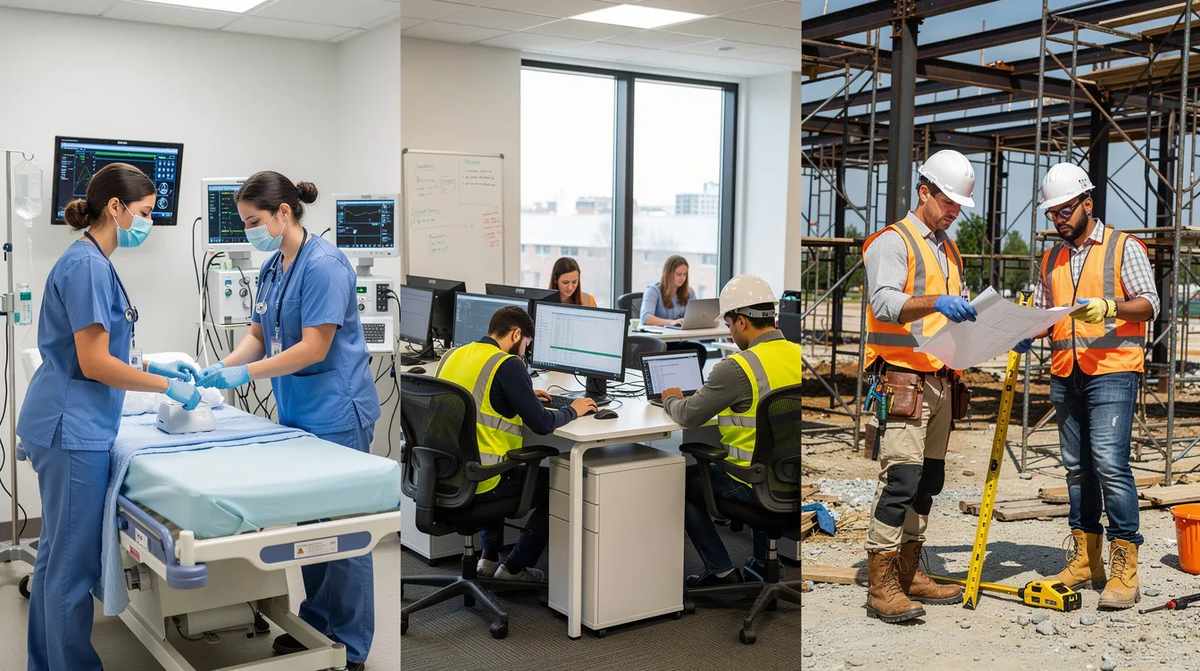
Major sectors include healthcare, manufacturing, construction, IT, transportation and logistics, hospitality, education, and public service. There is rapid growth of WBL in digital and green economy roles such as cybersecurity, data support, and solar or EV-related occupations.
Who qualifies for work-based learning programs?
Eligibility depends on the program. Many serve high school and college students, while others focus on adult learners, career changers, veterans, or specific populations. Age, grade level, prerequisites, academic standing, and legal work authorization can all affect participation.
How long do work-based learning experiences usually last?
Typical ranges vary: job shadowing lasts hours to days, internships run weeks to a semester, youth apprenticeships span one to three years, and Registered Apprenticeships last one to five years depending on the occupation. Duration should match the depth of skills and credentials the program aims to deliver.
How can employers get started with work-based learning?
Contact local school districts, CTE programs, community colleges, or workforce boards to discuss your talent needs and possible WBL roles. Start with a small pilot of two to five interns and use a platform like GoSprout to simplify onboarding, tracking, and evaluation. You can pursue training opportunities that connect you with ready-to-work learners.
Can small businesses offer work-based learning?
Absolutely. Small and mid-sized businesses are critical WBL partners and can provide highly personalized experiences. Join an industry association, partner with other small firms, and use shared resources from workforce boards to manage paperwork and training. The value you offer learners in mentorship and hands-on exposure is significant.
How do schools and districts measure success in WBL?
Key metrics include student participation rates, completion, hours earned, industry-recognized credentials, postsecondary enrollment, employment outcomes, and employer satisfaction. Many organizations also use qualitative data such as student reflections and supervisor feedback. Career Coordinators are designated for WBL opportunities in schools to manage this process.
What is the difference between youth apprenticeship and Registered Apprenticeship?
Youth apprenticeship typically starts in high school, combining school, technical education, and paid work. Registered Apprenticeship is formally registered with a state or federal department and may continue after high school. Well-designed programs create seamless career paths where youth apprentices transition into Registered Apprenticeships with advanced standing. Learn more about how these programs connect in a day in the life of an apprentice.
How does work-based learning support career and technical education (CTE)?
WBL is the real-world application arm of CTE programs, allowing students to apply knowledge and technical skills learned in the lab or classroom to authentic work tasks. Many CTE programs now require a minimum number of WBL hours and encourage industry-validated projects that develop career readiness.
What support do students need to succeed in WBL?
Students need pre-placement orientation, transportation solutions, access to technology, ongoing mentoring, and clear communication among school staff, families, and employers. A dedicated WBL or career coordinator plays a critical role in managing logistics and troubleshooting issues. Work-based learning should also connect to students’ interest areas to keep them engaged.
How does technology like GoSprout help manage work-based learning?
GoSprout centralizes placements, OJT and RTI tracking, evaluations, and compliance reporting in one platform accessible to employers, schools, sponsors, and apprentices. Practical benefits include less manual data entry, fewer missed forms, real-time dashboards for administrators, and a mobile app that makes it easy for learners to log hours and view progress. For more resources on tracking, see apprenticeship tracking software explained.
Why Choose GoSprout for Managing Work-Based Learning Programs
Scaling work based learning and Registered Apprenticeship requires reliable, flexible infrastructure, not just goodwill and spreadsheets. GoSprout was purpose-built for WBL, apprenticeship, internship, and pre-apprenticeship programs, serving employers, school systems, sponsors, and workforce organizations.
Want to Learn More About Your Registered Apprenticeship Opportunities?
BOOK A FREE CONSULTATION
GoSprout provides end-to-end support from program design to launch, with robust OJT and RTI tracking, automated RAPIDS/WIPS/PIRL reporting, competency management, and collaboration tools for multi-stakeholder partnerships. The mobile apprentice app lets learners log hours, view tasks, and communicate with their mentor, improving engagement and data accuracy.
Districts and regional consortiums use GoSprout to manage hundreds of placements across dozens of employers with clear visibility and reduced administrative workload. The platform integrates with existing SIS, LMS, and HR systems and can support both small pilots and statewide WBL initiatives.
Ready to launch or scale your work-based learning program? Schedule a demo with GoSprout or explore our Work-Based Learning Employer Toolkit to take the next step.