
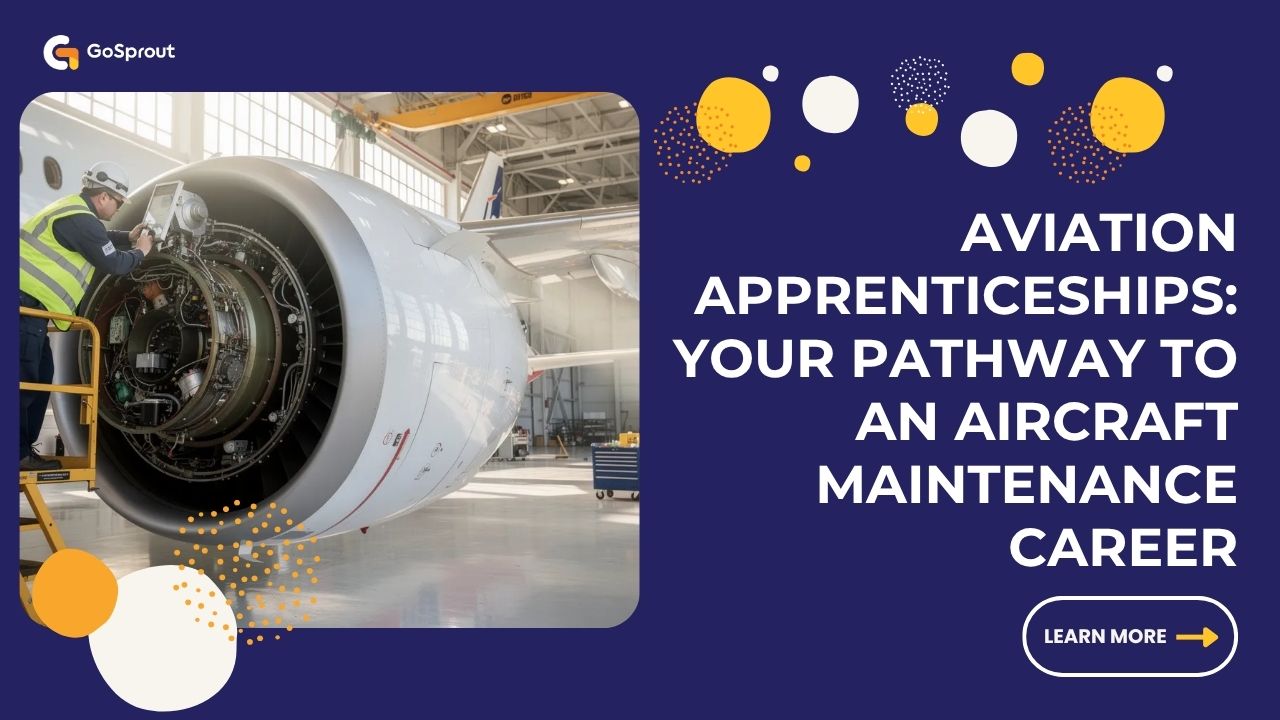
Aviation apprenticeships give motivated people a paid, structured way to enter aircraft maintenance, avionics, and aerospace manufacturing without taking on heavy school debt first.
Table of Contents
- Introduction to Aviation Apprenticeships
- How Aviation Apprenticeships Work
- Types of Aviation Apprenticeship Programs
- Program Length, Structure & Daily Schedule
- Eligibility Requirements
- Application & Selection Process
- Hands-On Experience & On-the-Job Training
- Classroom Learning & Certifications
- Pay, Schedule & Benefits
- Career Paths After Your Apprenticeship
- Why Choose Our Aviation Apprenticeship Programs
- Frequently Asked Questions
- Conclusion & Next Steps
Scroll to each section to compare structure, requirements, benefits like health benefits and paid time off, and future career outcomes.
Introduction to Aviation Apprenticeships
Aviation apprenticeships are structured, paid training programs that combine hands-on work experience with classroom instruction. They help high school graduates, veterans, career changers, and early technicians become an aviation maintenance technician, avionics specialist, manufacturing technician, or mechanic.
These programs combine full-time paid work, hands-on training, mentorship, and hands-on experience on real aircraft, aerospace systems, and cutting-edge technology. Industry demand remains strong through 2035 as fleets grow and senior employees retire. Our aviation apprenticeships page lists current openings, start dates, and resources for those looking to join the industry.
How Aviation Apprenticeships Work
Most aviation apprenticeships are registered through a department of labor or state agency and last 24–36 months. A common structure includes a pre-employment phase, then on the job training with classroom learning, often through a technical college.
Apprentices are employees from the beginning, earn while they learn, and progress through pay steps as skills improve. A maintenance technician may log inspection, troubleshooting, repair, component replacement, documentation, and aircraft maintenance hours under licensed A&P mentors.
Assessment usually includes task signoffs, written tests, practical demonstrations, reviews, and the ability to meet FAA and company standards. Many employers use apprenticeship competency tracking to monitor skill progression, verify completed tasks, and ensure apprentices meet program requirements before advancing to the next stage of training. The FAA explains A&P pathways on its mechanic certification page.
Types of Aviation Apprenticeship Programs
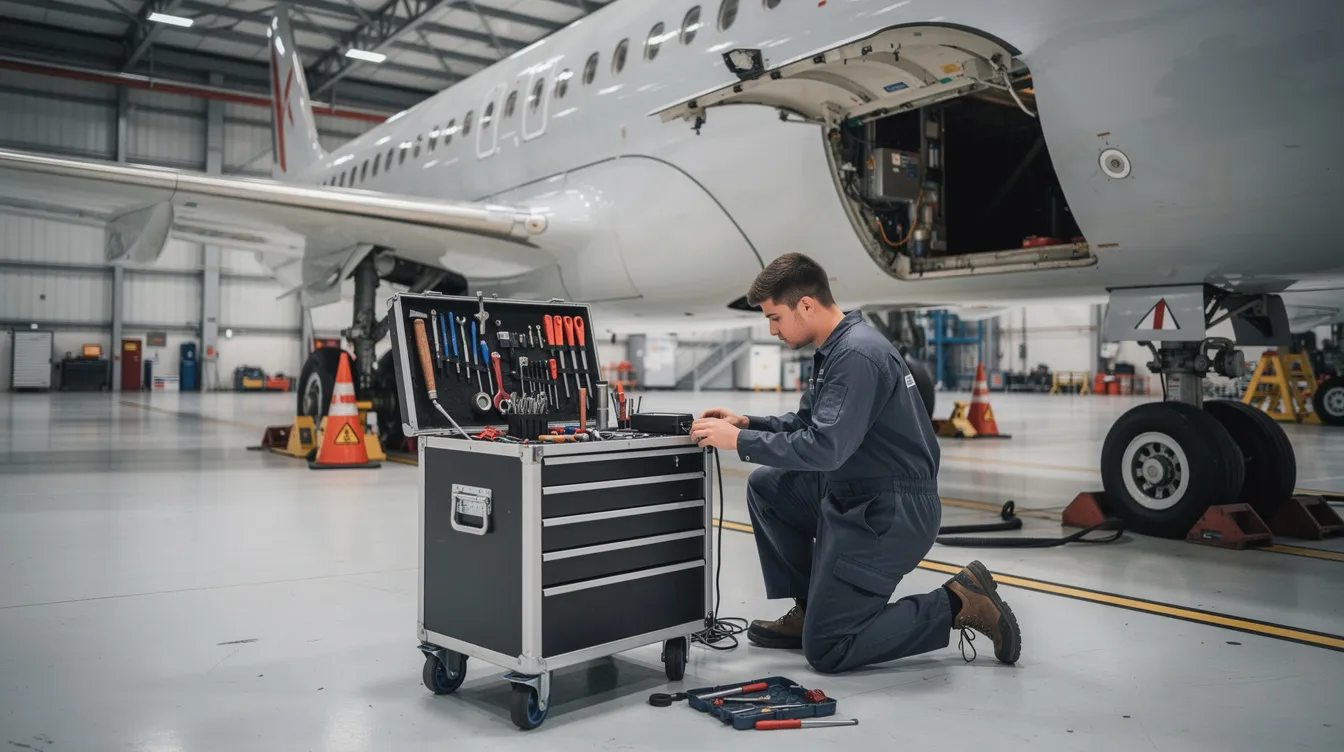
Aviation apprenticeship programs vary by position, company, and location.
- A&P Aircraft Maintenance Technician Apprenticeship Program: trains participants in repair, maintenance, and troubleshooting of airframe, powerplant, engine systems, parts, and components, preparing them for a vital role in aviation.
- Avionics Apprenticeship Program: focuses on electrical theory, electronic testing devices, digital concepts, wiring, and avionics systems, leading to a state-registered license upon completion.
- CNC Machining Apprenticeship: teaches lathes, milling machines, surface grinders, safety procedures, and blueprint interpretation, culminating in a state-registered license.
- Specialized technician apprenticeship tracks: paint, interiors, composites, assembly mechanic, tooling, structures, and maintenance-numerical control.
Several major airlines, manufacturers, and service hubs offer nationally recognized aviation apprenticeship programs.
Program Length, Structure & Daily Schedule
Aviation apprenticeship programs typically last between 30 to 36 months, depending on the specific program and its structure. Many aviation apprenticeship programs last between 30 to 36 months, providing a structured pathway for individuals to gain necessary skills and certifications for a career in aviation maintenance.
Some manufacturing programs run 18–30 months. A typical schedule is Monday–Friday, 7:00 a.m. to mid-afternoon, with possible overtime. Apprentices rotate through airframe, engine, avionics, sheet metal, inspection, and final assembly before selecting a long-term path. Completing the program may provide a certificate, college credit, or A&P exam eligibility after as little as one year in certain introductory pathways.
Eligibility Requirements
To qualify for most aviation apprenticeship programs, candidates must be at least 18 years old, hold a high school diploma or GED, and demonstrate mechanical aptitude. Requirements may include work authorization, background checks, drug screening, and safe physical work around noise, heights, chemicals, and confined spaces.
Prior experience is helpful but often not required. Employers value persistence, reliability, technical curiosity, and comfort with own tools, manuals, and documentation. Some programs connect with school partners, workforce agencies, community groups, or military transition programs for veterans.
Application & Selection Process
Application windows may open once or twice a year, so submit early. Expect an online application, resume, questionnaire, interview, and sometimes mechanical reasoning or hands-on assessment.
Accepted apprentices receive an offer covering paid starting wage, schedule, program length, milestones, and employment expectations. Prepare by studying the company’s aircraft, flight operations, safety culture, and maintenance work.
Hands-On Experience & On-the-Job Training
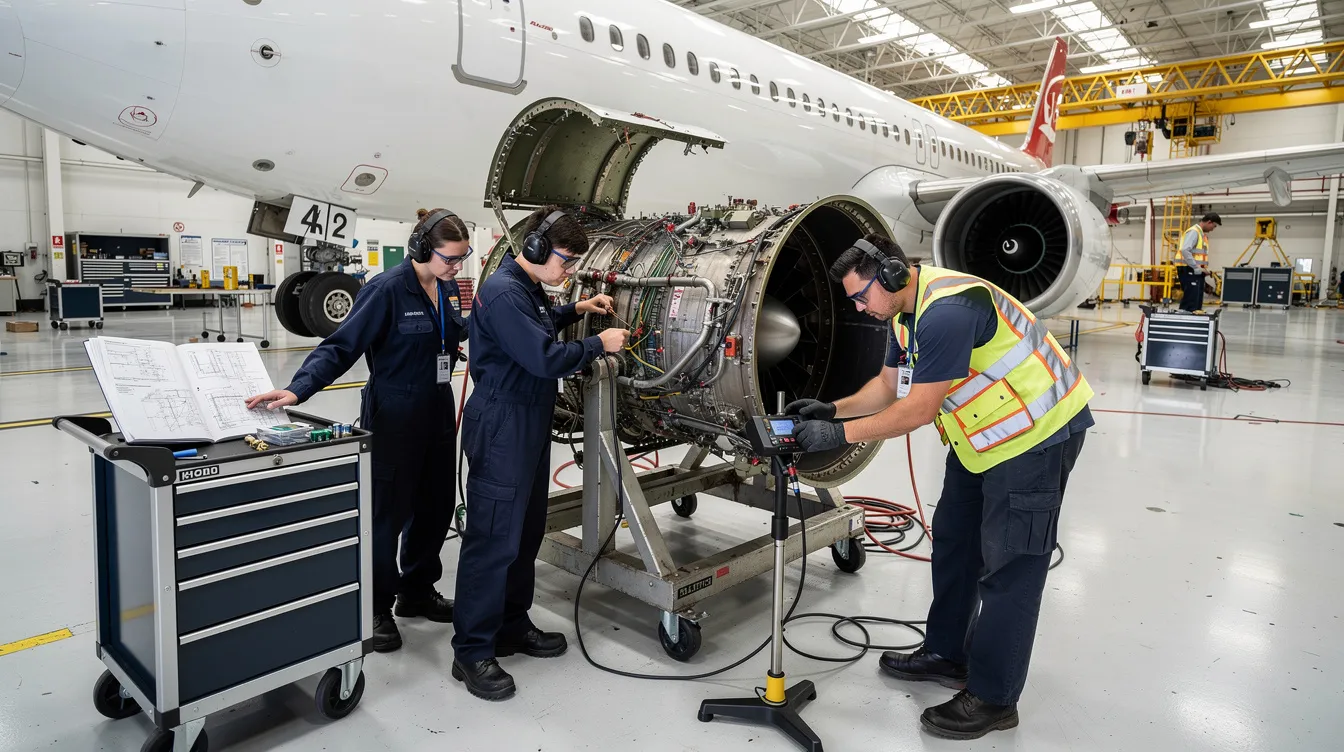
The core value of an apprenticeship is job training in live hangars, shops, and production areas. Apprentices assist with inspections, remove and install components, clean systems, use calibrated tools, read wiring diagrams, follow service bulletins, and document work.
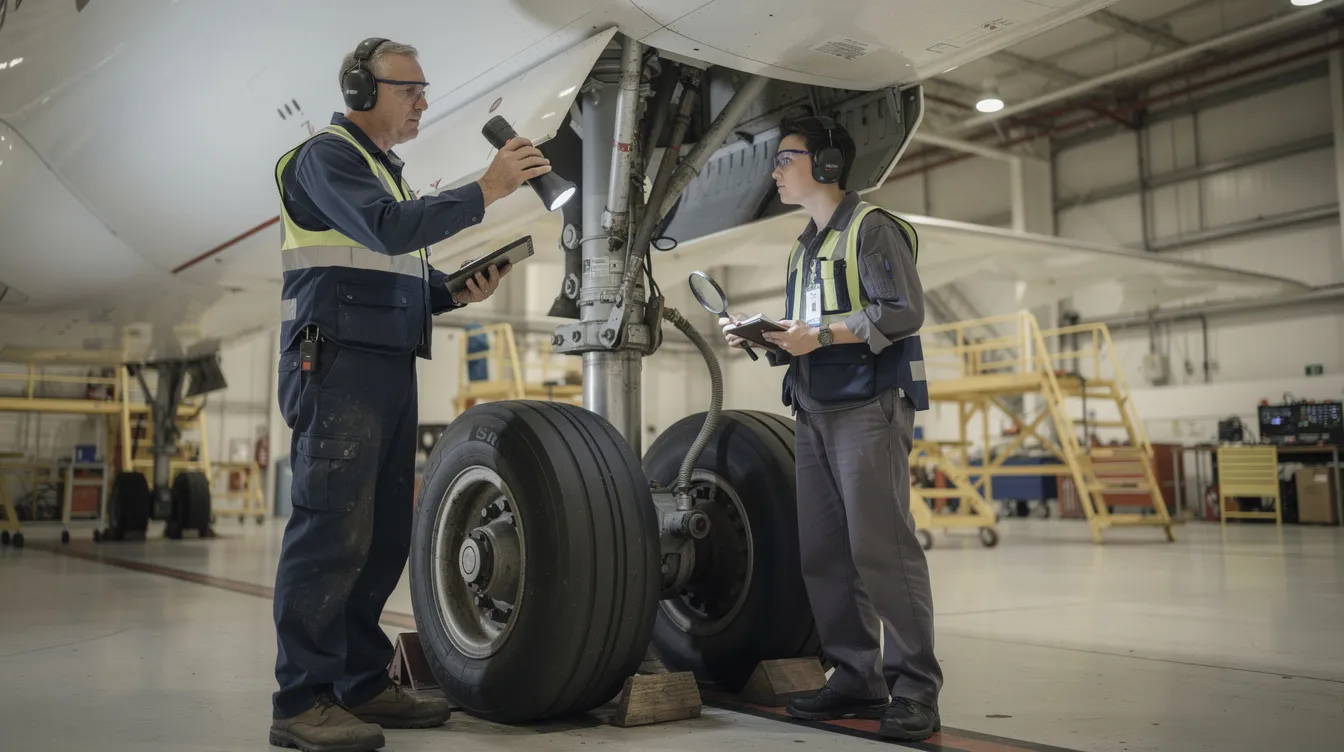
Apprentices shadow experienced professionals, crew leads, and inspectors. Mentorship helps the next generation gain confidence, practice FOD prevention, follow torque procedures, and understand return-to-service quality while building relationships with colleagues and making new friends.
Classroom Learning & Certifications
Many aviation apprenticeship programs combine classroom learning with hands-on training, often requiring participants to attend a technical college while also gaining practical experience on the job. Subjects include aerodynamics, hydraulics, pneumatics, electrical systems, propulsion, human factors, recordkeeping, and airworthiness.
Participants in apprenticeship programs can earn industry-recognised certifications, enhancing their qualifications and employability in the aviation sector. Aviation apprenticeships provide documented hours required by the FAA to take licensing exams for Airframe and Powerplant certification. Many employers and training providers use apprenticeship hours tracking software to record on-the-job training, monitor progress toward program requirements, and maintain accurate records for audits and certification purposes. Participants often complete hands-on training, mentorship, and classroom education, culminating in certifications such as the Airframe & Powerplant certification.
Pay, Schedule & Benefits
Compensation and benefits are provided during aviation apprenticeships, allowing participants to earn while they learn. Pay usually starts as a training wage with step raises.
Benefits may include health insurance, dental, retirement options, health support, paid time, holidays, and tuition or exam support. Many apprenticeship programs cover costs for tools, study materials, and practical testing fees related to aviation maintenance, though offerings vary by employer.
Career Paths After Your Apprenticeship
Completing an apprenticeship can launch a successful career as a junior aviation maintenance technician, line mechanic, avionics technician, structures mechanic, assembly mechanic, inspector, planner, trainer, or supervisor.
Many aviation apprenticeships guarantee or prioritize full-time employment as a technician or mechanic after certification and training completion. Apprenticeships provide hands-on experience on real-world projects and technology, preparing participants for successful careers in aviation and other technical fields.
Why Choose Our Aviation Apprenticeship Programs
Our apprenticeship program is built around safety, mentorship, clear development, and real maintenance experience. Participants gain support from an experienced team, modern facilities, defined milestones, and internal development programs.
We help apprentices achieve a dream career through transparent expectations, practical training, certification support, and pathways from apprentice to full-time technician employment. Our goal is to create opportunities for long-term success at every stage of the apprenticeship journey.
Frequently Asked Questions (FAQ)
How long does an aviation maintenance apprenticeship take? Most take 30–36 months; some manufacturing paths are shorter.
Do I get paid and receive benefits while I train? Yes. Apprentices are generally paid employees and may receive health insurance, dental, holidays, and other benefits.
Do I need prior aircraft maintenance experience to apply? No. Prior experience helps, but aptitude and reliability matter most.
Do I need to buy my own tools as an apprentice? Some employers provide starter tools; others ask apprentices to build their own tools gradually.
What hours do aviation apprentices usually work? Many work weekday day shifts, with overtime or weekend work when aircraft schedules require it.
Will this apprenticeship help me qualify for my A&P license? Yes, many programs document FAA-required experience for obtaining Airframe and Powerplant exam eligibility.
How do I get started? Explore openings, confirm qualifications, gather transcripts and resumes, then submit an application.
Conclusion & Next Steps
Aviation apprenticeships provide a debt-free pathway to enter the industry, allowing practical skills development under mentorship. They blend education, paid work, certification preparation, and real aircraft experience.
If your goal is a stable future in the aviation world, choose the apprenticeship program that fits your mechanical, electrical, or manufacturing interests. Visit our aviation apprenticeship information page, review current timelines, and take the first step toward your career today.
Want to Learn More About Your Registered Apprenticeship Opportunities?
BOOK A FREE CONSULTATION