
Modern aviation maintenance technician schools face a harder job in 2026: satisfy federal aviation administration oversight, align with airman certification standards, and graduate students who can work safely on current aircraft technology.
Table of Contents
Introduction: Why Part 147 Curriculum Management Matters in 2026
Part 147 curriculum management refers to the structured oversight, development, and ongoing modification of instructional programs at FAA-certificated Aviation Maintenance Technician Schools (AMTS). In simple terms, it is how schools keep a mechanic training program legal, teachable, measurable, and relevant.
The new part 147 environment is performance focused. After the 2022 rule update and 2023 ACS test transition, effective part 147 curriculum management became a strategic function, not just a binder on a shelf.
The challenge is balance: compliance, student outcomes, employer expectations, equipment access, instructor availability, and fast updates when FAA guidance, OEM information, or technology changes. This article covers requirements, curriculum design, delivery, ACS alignment, quality control, and practical next steps.
Understanding Part 147: Regulatory Framework for AMT Curricula
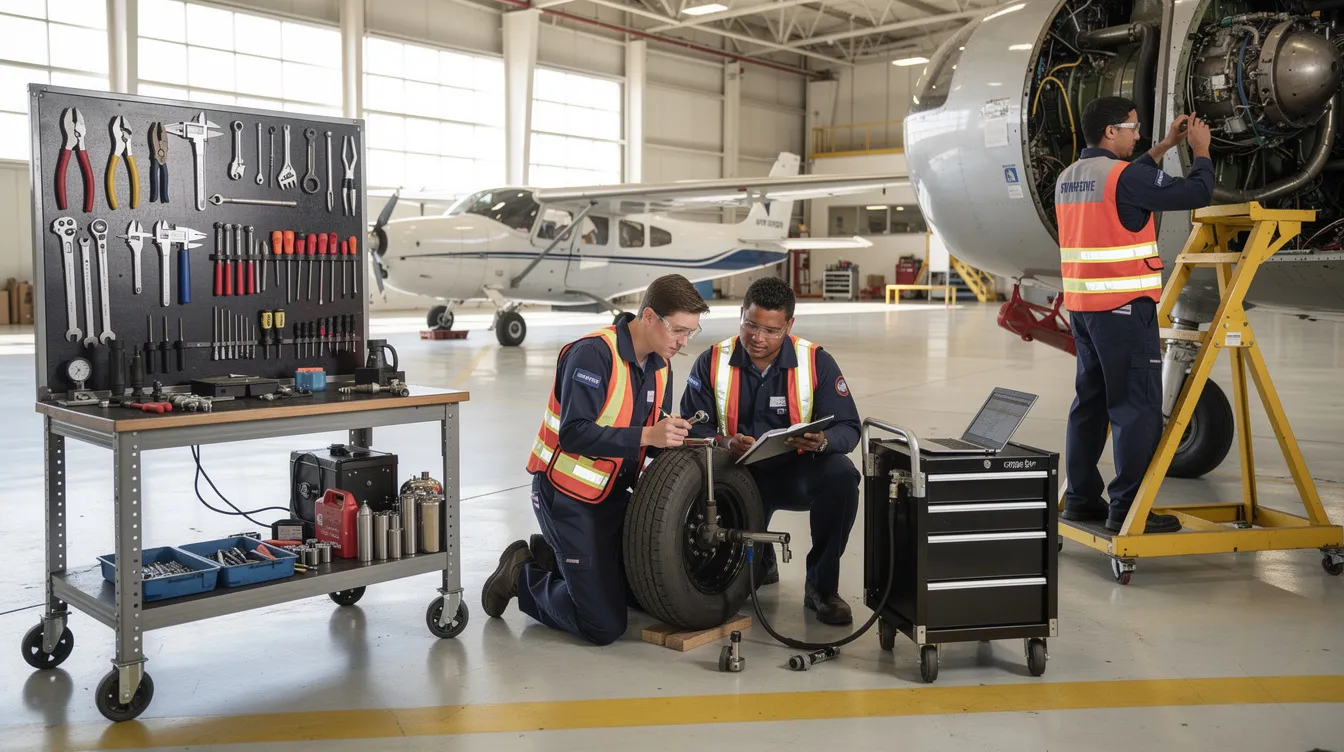
An aviation maintenance technician school is an FAA-certificated facility under 14 CFR part 147 that prepares students for airframe and powerplant mechanic certification. The management process oversees three fundamental curriculum segments required for an Airframe and/or Powerplant (A&P) rating: General, Airframe, and Powerplant.
Key areas include certification requirements, curriculum requirements, Appendix B for general, Appendix C for Airframe, Appendix D for Powerplant, and related additional rating rules. Instruction is traditionally divided into three core units covering foundational topics like basic physics, fluid lines, aircraft drawings, sheet metal, and turbine engines.
The certification process for aviation maintenance technician schools involves an interaction between the applicant and the FAA, ensuring compliance with curriculum, policies, procedures, facilities, equipment, materials, and personnel regulatory requirements. To be issued a certificate or rating, an applicant must demonstrate compliance with the requirements outlined in Part 147, which includes providing a description of facilities, curriculum, and qualified instructors. Advisory Circular 147-3C describes five phases, from pre-application through issuance of the Air Agency Certificate and operations specifications.
FAA Part 147 standards legally take precedence over local or state educational mandates if a conflict arises, preventing institutions from lowering course content or technical teaching levels below the federal baseline. Graduation from an approved Part 147 curriculum serves as an official document of eligibility, granting students the legal authorization to take FAA exams without needing years of external military or civilian field experience.
Designing a Compliant and Industry‑Relevant Part 147 Curriculum
A certificated aviation maintenance technician school must establish and maintain a curriculum that continually aligns with the mechanic airman certification standards as appropriate for the ratings held. Each aviation maintenance technician school must provide a description of how its curriculum ensures that students acquire the necessary knowledge and skills to attain a mechanic certificate and associated ratings.
Start by mapping every course to general airframe and powerplant content, then track required coverage, hours if applicable, lab tasks, and assessment evidence. The new Part 147 curriculum requirements are designed to align with the Mechanic Airman Certification Standards (ACS), which outline the knowledge and skills necessary for aviation maintenance technicians.
Good sequencing matters. Teach math, physics, basic electricity, records, and regulations first; then move into structures, systems, and powerplant theory. Include human factors, corrosion control, safety culture, documentation, and regulatory compliance across several modules. Use employer feedback from repair stations, airlines, and local industry partners to keep lab projects current.
Integrating Digital and Blended Learning for AMT Students
Blended learning may combine classroom teaching, hangar labs, and digital modules. Video micro-lessons, 3D airframe and powerplant simulations, wiring diagrams, and digital maintenance record exercises can improve preparation before hands-on work.
An LMS can organize modules, track attendance, provide reports, and support FAA inspection files. For example, a sheet metal course can use online pre-work before students take measurements and complete rivet inspections in the lab. Major delivery changes must stay consistent with the approved Training Course Outline and may require FAA coordination.

Operational Curriculum Management: Scheduling, Delivery, and Records
Educational institutions running FAA-approved mechanic training programs must manage specific operational and instructional components to remain compliant with regulations. That means scheduling lectures and labs, assigning each instructor, monitoring attendance, and ensuring every cohort meets required subject coverage before graduation.
A master schedule should map each week to part 147 subject codes and practical projects. This helps administrators prove coverage during surveillance, internal audits, and periodic evaluations mandated by the FAA. Proper oversight of the curriculum ensures the institution maintains its AMTS certificate and adherence to student passage rates and periodic evaluations mandated by the FAA.
Records must show hours attended, projects completed, credit granted, grades, and competencies demonstrated. Build contingency plans for weather, illness, or equipment downtime so required training is rescheduled, not skipped.
Assessment Strategy: Written, Oral, and Practical Alignment
Assessments must confirm knowledge and hands-on skills. Written quizzes and unit exams should prepare students for the FAA written test without simply copying question-bank patterns.
Practical checklists for safety wiring, logbook entries, inspection tasks, and NDT demonstrations help instructors grade consistently. Oral questions during labs build confidence for Designated Mechanic Examiner events. Track pass rates, item analysis, and re-work rate data so one weak lesson becomes an improvement opportunity.
Aligning Curriculum with Airman Certification Standards (ACS)
The ACS describe knowledge, risk management, and skill elements students must demonstrate for certification. The curriculum must dynamically update whenever the FAA revises the Airman Certification Standards (ACS).
Build a crosswalk from each course, lesson, and lab project to relevant ACS tasks. Then identify gaps, especially in risk management, maintenance decision-making, and documentation accuracy. Add ACS-style scenarios, such as troubleshooting an aircraft log discrepancy or evaluating whether maintenance supports return to service.
Review ACS updates, FAA Safety Team materials, and policy notices at least once per academic year. Brief instructors and document every change.
Preparing Students for FAA Exams and Real‑World Maintenance
Timed practice exams are useful, but they should be followed by instructor debriefs that reteach the concept behind missed answers. Capstone projects-structured inspections, mock return-to-service decisions, and multi-system troubleshooting-connect the test with real work.
Use service bulletins, airworthiness directives, and maintenance records so students understand federal aviation context before their first job.
Quality Assurance and Continuous Improvement in Part 147 Programs
Each certificated aviation maintenance technician school must establish and maintain a quality control system that meets specific requirements and is approved by the Administrator. The quality control system must provide procedures for recordkeeping, assessment, issuing credit, issuing final course grades, attendance, ensuring sufficient instructors, granting graduation documentation, and corrective actions for deficiencies.
A strong QA rhythm includes annual or semi-annual review with administrators, lead instructors, and advisory board members. Aviation maintenance technician schools must maintain a minimum passage rate of at least 70 percent for students taking FAA mechanic tests within 60 days after graduation.
Maintaining a Part 147 certification requires formal institutional accreditation, elevating the school’s reputation and qualifying it for specific federal education funding. Keep an email trail, change log, and evidence file for curriculum updates, FAA coordination, and corrective action.
Managing Change: Technology, Regulations, and Industry Needs
Curriculum change may be triggered by new advisory circulars, OEM service bulletins, fleet-wide ADs, composites, avionics, or data-driven diagnostics. Use a simple process: propose, map to ACS and part 147, assess transition risk, approve, implement, and document.
Modular content helps schools update one turbine engine unit or avionics lab without rewriting the entire program, supporting long-term curriculum flexibility.
Frequently Asked Questions about Part 147 Curriculum Management
How many hours are required under part 147?
Under FAA guidance, an hours-based program commonly uses 400 general hours, 750 Airframe hours, and 750 Powerplant hours, or 1,900 hours for combined A&P. Schools may exceed the minimum and may use approved credit-hour or competency-based models when available.
How closely must an AMTS follow the ACS?
Part 147 defines curriculum baseline content, while airman certification standards define the knowledge, risk management, and skills tested for certification. Schools must align to both, and ACS revisions should trigger curriculum review.
What curriculum changes require FAA approval?
Changes affecting ratings, locations, facilities, major delivery methods, or the approved course outline may require FAA review. Timing varies, so contact the local FSDO or CHDO early and provide clear information.
Can part 147 courses be online or hybrid?
Online or hybrid delivery may be acceptable when learning objectives, assessment, attendance, and records remain controlled. Hands-on practical skills still require reliable demonstration with appropriate tools, materials, equipment, and instructor oversight.
Conclusion and Next Steps for Stronger Part 147 Curriculum Management
Strong curriculum control starts with the federal requirements, then connects them to course design, ACS alignment, assessment, records, and quality assurance. Done well, it improves compliance, student test performance, and employer confidence in new aviation maintenance technicians.
Before the next term, review your curriculum map and identify one gap to fix: a weak ACS task, outdated lab, missing record, or inconsistent grading checklist. Partner with instructors, advisory boards, and industry stakeholders to keep your part 147 program current through 2026 and beyond.
Want to Learn More About Your Registered Apprenticeship Opportunities?
BOOK A FREE CONSULTATION
As FAA requirements, ACS standards, and industry expectations continue to evolve, effective Part 147 Curriculum Management becomes essential for maintaining compliance and preparing students for real-world aviation maintenance careers. If you’re looking to strengthen curriculum oversight, improve assessment alignment, streamline recordkeeping, or modernize your AMTS program, explore our website to learn how our solutions can support every stage of curriculum development and continuous improvement. Our team helps aviation maintenance schools build compliant, industry-ready programs that support student success and long-term operational excellence.