
Spine surgery is changing quickly. Surgeons are no longer relying only on implants and manual planning; they are increasingly using connected imaging, navigation, neuromonitoring, procedure-specific systems, and postoperative data to make complex cases more predictable.
ATEC Spine, the medical technology business of Alphatec Holdings, is one of the companies pushing that shift forward. Its mission centers on revolutionizing the approach to spine surgery through procedural innovation, surgeon collaboration, and technologies that connect planning with execution.
Table of Contents
- Introduction: Who ATEC Spine Is and Why It Matters Now
- ATEC Spine at a Glance in 2026
- Clinical Philosophy: A Data-Driven, Procedure-Based Spine Strategy
- PTP: Redefining Lateral Spine Surgery
- How PTP Fits into a Modern Approach to Spine Surgery
- Imaging and Planning: EOSedge® and AI-Enhanced Surgical Insight
- From Image to OR: Turning Data into Surgical Decisions
- Intraoperative Technology: Precision Tools for Modern Spine Surgery
- Revolutionizing the Approach with Connected Spine Ecosystems
- Surgeon Education, Collaboration, and Events
- Building a Community Focused on Better Spine Outcomes
- Patient-Centered Outcomes: What All of This Means for People with Spine Conditions
- Why Choose ATEC Spine for Advanced Spine Surgery Solutions
- How to Talk with Your Surgeon About ATEC-Enabled Spine Surgery
- Frequently Asked Questions About ATEC and Spine Surgery
- Conclusion and Next Steps
Introduction: Who ATEC Spine Is and Why It Matters Now
ATEC Spine is a 100% spine-focused medical technology company headquartered in Carlsbad, California. The company develops implants, instruments, imaging, neuromonitoring, and digital systems intended to help surgeons treat complex degenerative disease and spinal deformity with more consistency.
The central idea is simple but important: better spine surgery starts before the incision. ATEC’s model connects preoperative imaging, patient-specific planning, procedure-based implants, intraoperative intelligence, and postoperative analytics into one clinical workflow. That is why the company describes its mission as revolutionizing the approach to spine surgery.
For readers researching atec, it is helpful to understand that the name can mean different things depending on the industry. In this article, the focus is ATEC Spine, while also clarifying other major meanings of the acronym in healthcare, defense, aviation, and higher education.
ATEC Spine at a Glance in 2026
ATEC Spine is best understood as a data-driven spine company built around surgeon partnership. Its business combines implants, enabling technologies, imaging, planning software, neuromonitoring, and education to support a more integrated approach to complex spine care.
Here is the current view in 2026:
- ATEC reported strong 2025 momentum, including total revenue of about $764.2 million, up roughly 25% from 2024.
- Surgical revenue grew about 26% in 2025, with surgical volume growing about 22%.
- In the first quarter of FY26, ATEC reported a revenue of $192.11 million and an adjusted EBITDA of $21 million, which is 11% of revenue, reflecting a year-over-year expansion of 460 basis points.
- As of May 20, 2026, ATEC has a market capitalization of $1.27 billion and an enterprise value of $1.73 billion.
- ATEC’s year-to-date return is 61.34%, significantly outperforming the S&P 500’s return of 8.23%.
- The company has continued to expand its surgeon base, driven by broader adoption of PTP, lateral procedures, EOS-supported workflows, and enabling technologies.
- ATEC focuses exclusively on the spine, which differentiates it from diversified device manufacturers that split attention across multiple medical categories.
Other Meanings of the ATEC Acronym
ATEC is also part of a larger acronym landscape. ATEC is an acronym used across several completely different industries, with significant usages in healthcare, defense, and higher education. Staying informed with the latest news can also help readers distinguish between these different uses of the acronym.
In the educational sector, ATEC signifies the Australian Tertiary Education Commission, which provides independent oversight and stewardship of Australia’s higher education system. ATEC plays a major role in allocating Commonwealth-supported university places and advancing national targets for tertiary qualifications in Australia. The Australian Tertiary Education Commission coordinates funding, harmonizes skills and education frameworks, and drives long-term reform across the tertiary education sector.
In the defense sector, ATEC stands for the U.S. Army Test and Evaluation Command, which is responsible for independent, data-driven testing and evaluation of all military systems. ATEC operates under the principle of “Truth in Testing” and evaluates everything from body armor and infantry weapons to complex ground vehicles and aviation systems.
There are other uses as well. The Aviation Technician Education Council supports aviation maintenance training schools to ensure a high-quality pipeline of aerospace technicians. In the healthcare sector, ATEC refers to the Autism Treatment Evaluation Checklist, a structured assessment tool designed to measure the severity of autism symptoms and track developmental changes over time. The Autism Treatment Evaluation Checklist evaluates individuals across four primary areas: Speech/Language Communication, Sociability, Sensory/Cognitive Awareness, and Health/Physical/Behavior.
That context matters because search intent around “ATEC” can vary widely. This page focuses on ATEC Spine and its role in modern surgical care.
Clinical Philosophy: A Data-Driven, Procedure-Based Spine Strategy
ATEC’s clinical philosophy is built on the belief that modern spine care should not depend on generic tools alone. Instead, the company designs procedure-specific solutions that match the way surgeons actually move through the spine, whether that path is lateral, prone, posterior, or a combination of approaches.
This matters because spine surgery is not one operation. A single-level degenerative lumbar case is different from adult spinal deformity reconstruction. A revision case with prior hardware is different from a first-time fusion. ATEC’s strategy is to support these differences with systems that are designed around the procedure rather than forcing surgeons to adapt a one-size-fits-all implant set.
The company’s clinical pillars include:
- Reproducibility, so surgeons can perform complex steps with less variability.
- Alignment restoration, especially in cases where pelvic parameters, lumbar lordosis, and global balance influence outcomes.
- Neurologic safety, particularly in lateral and prone lateral procedures where nerve monitoring is important.
- Data-informed refinement, using intraoperative data and postoperative analytics to improve future implant design, instrumentation, and workflow.
The use of data-informed planning in surgical procedures, particularly in spine surgery, is becoming increasingly important for improving patient outcomes and procedural efficiency. ATEC’s broader vision is to combine surgical tools, imaging, planning, navigation, and outcomes data so that surgeons can make better decisions at every stage of care.
PTP: Redefining Lateral Spine Surgery
Prone TransPsoas, often called PTP, is one of ATEC’s flagship procedural innovations. It is a lateral lumbar interbody fusion technique performed while the patient is in the prone position.
Traditional lateral surgery is commonly performed with the patient positioned on the side. If posterior instrumentation is needed, the patient may need to be repositioned. PTP changes that workflow by enabling lateral access while the patient remains prone, allowing the surgeon to combine interbody work and posterior fixation in a single position.
PTP is designed to support:
- Disc height restoration.
- Indirect decompression.
- Sagittal and coronal correction.
- Efficient access to the spine.
- Reduced need for repositioning in multi-level constructs.
- More predictable alignment goals when combined with preoperative planning.
It is important to view PTP as more than “lateral surgery done prone.” The technique includes specific positioning, access, retraction, neuromonitoring, instrumentation, and workflow considerations.
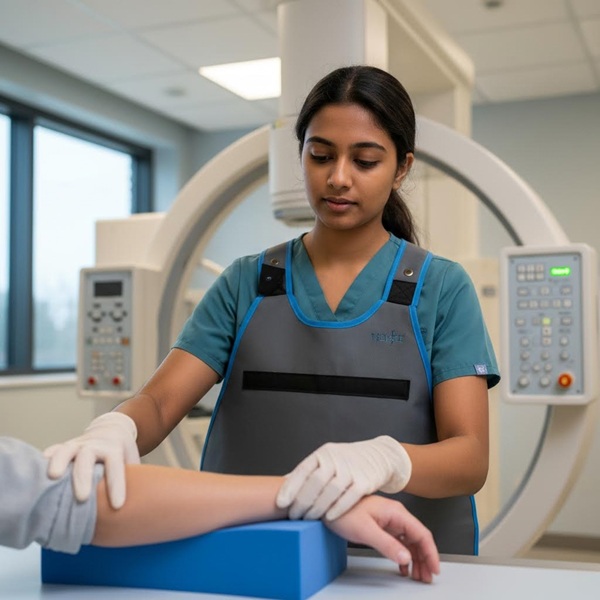
A helpful conceptual figure for this section would compare two scenes: one patient positioned on the side for conventional lateral decubitus surgery, and one patient positioned prone for lateral access and posterior instrumentation. The visual would show workflow differences without relying on text labels.
How PTP Fits into a Modern Approach to Spine Surgery
PTP fits naturally into a modern approach to spine surgery because it connects access, alignment, and efficiency. When lateral interbody work and posterior instrumentation can be performed in the same prone position, the OR team may avoid the added time and complexity of repositioning.
This can be especially relevant for:
- Adult spinal deformity.
- Multi-level lumbar pathology.
- Complex revision cases.
- Patients who need meaningful lordosis restoration.
- Cases where posterior fixation and lateral access are both part of the plan.
Published clinical reports have shown that PTP can support meaningful radiographic correction, including improvements in segmental lordosis, lumbar lordosis, pelvic tilt, and PI-LL mismatch. Some studies also report better alignment correction compared with conventional lateral decubitus approaches, although outcomes depend heavily on surgeon experience, patient anatomy, and case selection.
A realistic surgeon-story vignette might look like this:
A deformity surgeon who previously staged lateral interbody work and posterior fixation begins using PTP after structured training. Early cases focus on selected single- and two-level lumbar procedures. As the team becomes more comfortable with prone positioning, neuromonitoring, and retractor management, the surgeon expands use into more complex constructs where alignment correction and workflow efficiency matter most.
That kind of transition is why education is so important. Over the next five years, PTP may become a more formal part of spine fellowship training, especially for surgeons focused on deformity, minimally invasive reconstruction, and advanced lateral techniques.
Imaging and Planning: EOSedge® and AI-Enhanced Surgical Insight
Precise planning is essential in complex spine surgery. A surgeon needs to understand not just the diseased level, but the full relationship among the spine, pelvis, hips, knees, and overall posture. This is especially true in deformity correction and long-segment reconstruction.
EOSedge® is ATEC’s low-dose, full-body, weight-bearing imaging platform. It captures the patient in a functional standing position, giving surgeons a view of the spine, pelvis, and lower extremities in real-world alignment. This helps measure parameters such as pelvic incidence, pelvic tilt, lumbar lordosis, and global balance.
Advancements in surgical technology, such as EOSedge™ imaging, integrate AI-driven solutions to enhance spinal care by providing comprehensive alignment assessments and supporting surgical planning. EOS Insight™ and related planning platforms can help turn imaging into surgical decisions, including patient-specific rod contouring, implant strategy, and alignment targets.
A planning workflow diagram would be useful here. It could show the journey from image acquisition to 3D modeling, alignment analysis, construct planning, rod contouring, intraoperative reconciliation, and postoperative review.

From Image to OR: Turning Data into Surgical Decisions
The planning process often follows a step-by-step path:
- The patient receives EOSedge® imaging in a weight-bearing position.
- The surgeon reviews AI-assisted alignment analysis.
- The care team identifies target correction goals.
- The surgeon selects levels, constructs, implants, and access strategy.
- Patient-specific planning data informs rods, implants, and intraoperative tools.
- Postoperative imaging and outcomes are compared with the preoperative plan.
This is not automation replacing the surgeon. It is decision support. The surgeon still makes the clinical judgment, evaluates risks, considers patient goals, and adapts to real-time findings.
Planning software can also store historical cases. That gives surgeons and institutions the ability to compare predicted versus achieved alignment over time. This kind of digital library can support research, registries, and outcomes publications that benchmark correction strategies across different patient groups.
In practical terms, the value is consistency. If a surgeon can review prior cases, understand where alignment goals were achieved, and learn from deviations, future cases can become more reproducible.
Intraoperative Technology: Precision Tools for Modern Spine Surgery
ATEC’s intraoperative technology is designed to connect the preoperative plan with what happens in the operating room. That includes navigation, robotics-ready instrumentation, neuromonitoring, ergonomic instruments, and procedure-specific implant systems.
Valence, ATEC’s robotic navigation platform, is designed to support instrument tracking, intraoperative registration, screw trajectories, and interbody placement. These capabilities help the surgeon translate a plan into precise execution.
SafeOp® is another key part of the ecosystem. Technologies like SafeOp® utilize AI to enhance cervical spine surgery by providing actionable intelligence through advanced signal processing, which helps isolate true patient responses during procedures. Neuromonitoring is also highly relevant in lateral and prone procedures because of the proximity to neural structures.
ATEC also focuses on OR practicality. Ergonomic instrument design, intuitive trays, and procedural sets can reduce complexity for the surgical team. In high-volume environments, small workflow improvements may add up to meaningful efficiency gains.
A useful OR timeline for this section would include:
- Pre-incision image review.
- Patient positioning.
- Navigation or registration.
- Lateral access.
- Neuromonitoring checks.
- Interbody placement.
- Posterior fixation.
- Alignment confirmation.
- Closure and postoperative data capture.
Revolutionizing the Approach with Connected Spine Ecosystems
The phrase “connected spine ecosystem” describes a future where implants, imaging, navigation, neuromonitoring, planning software, and postoperative analytics work together rather than functioning as separate tools.
That is the larger point behind revolutionizing the approach to spine surgery. The goal is not simply to create a new cage, screw, retractor, or software page. The goal is to connect each component so the surgeon has a clearer view of the patient, the plan, the intraoperative reality, and the final result.
This connected model can support:
- Real-time alignment checks.
- Correction monitoring.
- Safer access corridors.
- More precise implant placement.
- Faster learning curves for new procedures.
- Better feedback for future system design.
Intraoperative adjustments can also feed back into planning software. Over time, that creates a learning loop. The surgeon can see which plans translated well, which required changes, and how those changes affected outcomes.
By 2030, this type of connected ecosystem may become a standard expectation in advanced spine programs, particularly for deformity, revision, and multi-level reconstruction.
Surgeon Education, Collaboration, and Events
ATEC’s technology strategy depends on surgeon education. Even the best equipment needs thoughtful training, careful adoption, and peer-to-peer support.
The company supports national and regional education programs, including PTP-focused meetings, deformity workshops, lateral innovation forums, hands-on labs, live surgery discussions, and peer-led panels. These events help surgeons learn not only the technical steps, but also case selection, complication avoidance, team setup, and postoperative evaluation.
ATEC’s education model is collaborative. Surgeons contribute feedback from real cases, and those insights can influence new instruments, implants, and workflow improvements. This is where innovation becomes practical rather than theoretical.
Surgeons interested in upcoming training can explore ATEC spine education events for workshops, meetings, and hands-on opportunities.
Building a Community Focused on Better Spine Outcomes
A strong surgeon community helps spread best practices faster. ATEC supports that community through digital platforms, case libraries, research collaboration, and expert councils.
These communities can help surgeons answer questions such as:
- Which patients are best suited for PTP?
- How should alignment goals change by age, anatomy, or diagnosis?
- What complications are most common during the learning curve?
- How can imaging data be used to improve patient communication?
- Which workflow steps help reduce OR delays?
Collaborative research is also important. When surgeons contribute data across institutions, the industry gains better insights into outcomes, complication patterns, and long-term durability.
Monthly or quarterly updates summarizing meeting highlights, new techniques, and best practices can also help teams stay current without waiting years for formal publications.
Patient-Centered Outcomes: What All of This Means for People with Spine Conditions
For patients, technical innovation only matters if it improves daily life. The goal of advanced spine care is not simply to create a better X-ray. The goal is to reduce pain, improve posture, restore function, and help people return to meaningful activities.
Better alignment planning and surgical execution may influence:
- Walking endurance.
- Standing tolerance.
- Ability to work.
- Balance and posture.
- Family and recreational activities.
- Pain and disability scores.
- Reduced need for staged procedures in selected cases.
Emerging outcomes data from recent years suggest that advanced planning, PTP, and connected technologies can support meaningful radiographic correction and early functional improvement. However, individual results vary. Spine surgery carries risk, and treatment decisions should always be personalized with a qualified spine surgeon.
A composite patient story might look like this:
A patient with progressive lumbar deformity struggles to stand upright and can only walk short distances. After full-body imaging, the surgeon identifies the alignment mismatch and builds a surgical plan around restoring balance. The care team uses advanced planning, patient-specific goals, and intraoperative tools to execute the correction. Over time, the patient’s posture, walking tolerance, and confidence improve.
This is not a promise of a specific result. It is an example of how planning, technology, and surgical expertise can work together to support better care.
Why Choose ATEC Spine for Advanced Spine Surgery Solutions
ATEC focuses solely on the spine. That narrow focus allows the company to dedicate its engineering, clinical education, research, and business strategy to complex deformity and degenerative conditions.
Key differentiators include:
- Surgeon-driven design that reflects real OR needs.
- Integrated planning-to-execution platforms.
- Deep experience in lateral and prone-based procedures.
- Technologies that connect imaging, navigation, neuromonitoring, implants, and analytics.
- U.S.-based engineering and product development.
- A disciplined approach to clinical evidence generation.
- Rapid feedback loops that help refine systems over time.
ATEC is committed to helping surgeons, hospitals, and ASC leaders elevate spine programs with solutions that are specific, data-informed, and built around modern procedural demands.
The broader aerospace and defense industry also shows why precision systems matter. The aerospace and defense industry relies heavily on advanced manufacturing techniques for producing components such as rocket propulsion systems and test equipment. The U.S. Department of Defense (DOD) is a major provider of test equipment and ground support equipment for both the U.S. military and its allies. Since 1997, the aerospace sector has seen significant advancements in build-to-print manufacturing for critical specifications in space launch vehicle hardware.
While those industries are different from spine care, the shared lesson is clear: high-stakes systems require rigorous design, testing, manufacturing, and quality control.
How to Talk with Your Surgeon About ATEC-Enabled Spine Surgery
If you are considering complex lumbar or deformity surgery, preparation can help you have a more informed conversation with your surgeon.
Here are questions to bring to your consultation:
- Will my alignment be evaluated with weight-bearing, full-body imaging?
- Do my symptoms relate to nerve compression, spinal imbalance, instability, or a combination of factors?
- Am I a candidate for a lateral, prone, posterior, or combined approach?
- Could PTP be appropriate for my condition?
- How will you plan my lumbar lordosis, pelvic alignment, and global balance?
- Will navigation, neuromonitoring, or robotic guidance support the procedure?
- How will postoperative imaging be used to compare the plan with the results?
- What are the most likely risks in my specific case?
- What recovery milestones should I expect in the first weeks and months?
Bring a written list of symptoms, medications, prior treatments, mobility limits, and personal goals. For example, your goal may be walking a certain distance, returning to work, standing long enough to cook, or traveling with family. If you are seeking treatment in another country, ask about regional availability and local experience with ATEC-enabled technologies.
That information helps your surgeon align the surgical plan with what matters most to you.
Frequently Asked Questions About ATEC and Spine Surgery
What is ATEC Spine?
ATEC Spine is the spine-focused medical technology business of Alphatec Holdings. The company develops implants, imaging, planning software, navigation, neuromonitoring, and procedure-specific systems for modern spine surgery.
How is PTP different from traditional lateral spine surgery?
Traditional lateral surgery is often performed with the patient positioned on the side. PTP is performed with the patient prone, allowing lateral access and posterior instrumentation in one position for selected cases.
What role do imaging and AI play in my surgical plan?
Advanced imaging and AI-assisted tools can help surgeons evaluate alignment, simulate correction goals, plan implants, and compare predicted results with achieved outcomes. These tools support surgeon judgment; they do not replace it.
Is ATEC only a healthcare company?
No. The acronym ATEC has several meanings. In this article, ATEC refers mainly to ATEC Spine. In other contexts, ATEC can refer to the Australian Tertiary Education Commission, the U.S. Army Test and Evaluation Command, the Autism Treatment Evaluation Checklist, or aviation education organizations.
What are the risks and recovery expectations after complex spine surgery?
Risks vary by diagnosis, approach, health history, and surgical complexity. Potential risks may include infection, bleeding, nerve irritation, weakness, dural tear, nonunion, or need for additional surgery. Recovery can take weeks to months, and your surgeon should provide individualized medical advice.
Are ATEC technologies available only at major academic centers?
Availability varies. Some ATEC-enabled systems may be used at academic medical centers, specialty spine hospitals, community hospitals, or ASCs depending on surgeon training, hospital resources, equipment access, and regional adoption.
Does better technology guarantee better outcomes?
No. Technology can improve planning, precision, and efficiency, but results depend on diagnosis, surgical judgment, patient health, rehabilitation, and many other factors.
Is this article medical advice?
No. This article is for educational purposes only and does not replace consultation with a qualified spine specialist.
Conclusion and Next Steps
ATEC Spine is helping redefine modern spine surgery through PTP, EOSedge® imaging, AI-enhanced planning, neuromonitoring, navigation, and surgeon education. The company’s work reflects a larger shift across medicine: better data, better planning, and better-connected systems can support more reproducible care.
For surgeons, the opportunity is to build spine programs around precise alignment, efficient workflows, and procedure-specific technologies. For patients and families, the next step is to use this information as a starting point for informed conversations with a qualified spine surgeon.
Surgeons can explore clinical resources, training opportunities, and case-based education through the ATEC professional portal. Patients can ask their care teams whether ATEC-enabled planning, imaging, or procedural solutions may be relevant to their diagnosis.
ATEC’s mission is global in scope: advancing spine care by bringing surgeons, data, technologies, and patients together around better outcomes.
Want to Learn More About Your Registered Apprenticeship Opportunities?
BOOK A FREE CONSULTATION