
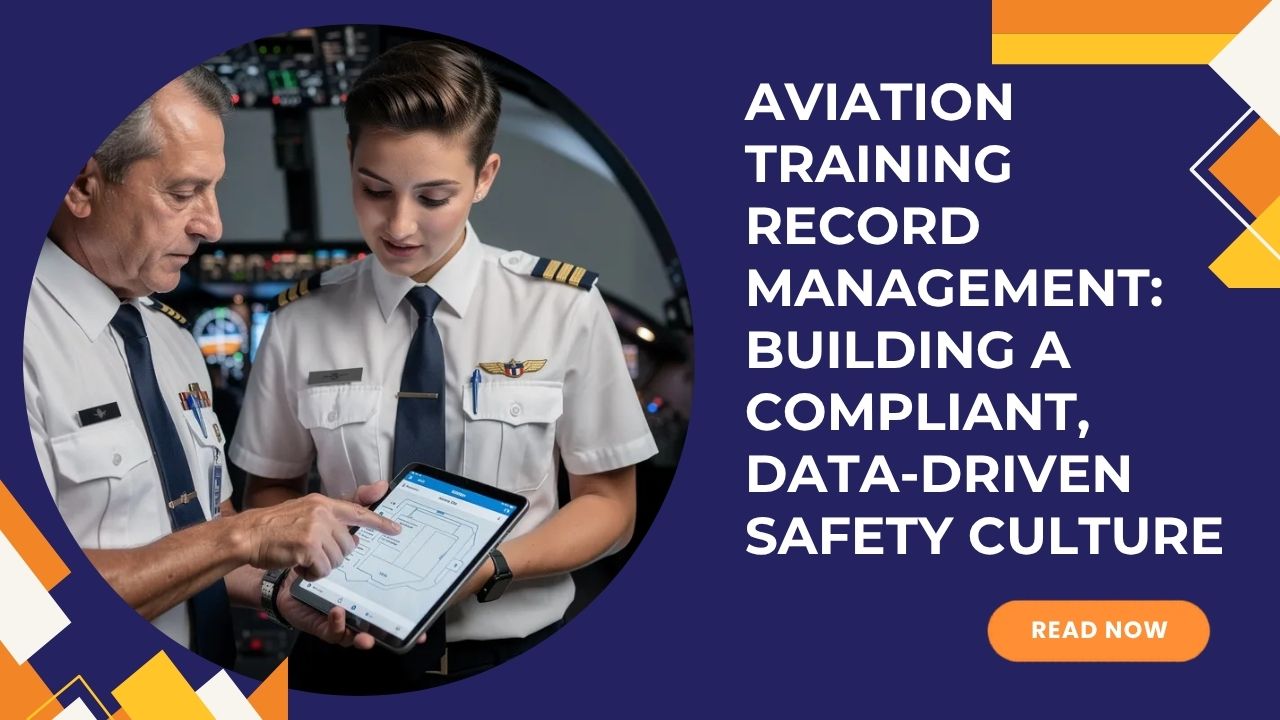
Training records are not admin leftovers. They are proof that people are qualified, current, and ready to perform safety-critical tasks. When records are scattered across paper files, spreadsheets, and base-level folders, operators lose visibility at the exact moment they need it most: before a flight, during inspections, or in an audit.
Table of Contents
- Introduction: Why Training Records Matter as Much as Flight Logs
- What Is Aviation Training Record Management?
- Regulatory Requirements and Compliance Drivers
- Core Components of an Effective Training Records Management System
- Best Practices for Aviation Training Record Keeping
- How Digital Training Records Improve Aviation Safety and Efficiency
- Implementing or Upgrading a Training Records Management System
- Why Choose Our Team for Aviation Training Record Management Support
- Frequently Asked Questions About Aviation Training Records
- Conclusion: Turning Training Records into a Strategic Safety Asset
Introduction: Why Training Records Matter as Much as Flight Logs
A flight log shows what happened in the air. A training record shows whether the person assigned to the task was qualified to be there. That makes training documentation critical to aviation safety, regulatory compliance, and day-to-day operations.
The FAA mandates that aviation organizations implement a Safety Management System (SMS) under 14 CFR Part 5, which includes record-keeping as a core component to ensure compliance and support continuous improvement. FAA Parts 61, 91, 121, and 135, EASA Part-ORO, and ICAO Annex 6 all reinforce the need for robust personnel training records.
The problem is practical. Many aviation organizations still manage records through disconnected spreadsheets, paper binders, local folders, and inconsistent records management across bases. That creates risk, slows audits, and makes it harder to prove that staff meet requirements.
A training records management system is therefore part of the operator’s wider management system, not just a filing cabinet. Safety management integration links training data to Safety Management Systems to track hazards and mitigate risks.
What Is Aviation Training Record Management?
Aviation training record management is the systematic collection, storage, review, and use of training records for pilots, aircraft maintenance technicians, cabin crew, dispatchers, ground staff, instructors, and other personnel.
Typical records include initial training, recurrent training, type ratings, line checks, OPC/LPC events, CRM, SMS, dangerous goods, RVSM, ETOPS, human factors, fatigue risk management, emergency drills, and security activities. Data collection includes gathering all credentials, ground school certifications, simulator evaluations, and flight hours.
Training record keeping differs from HR files because it proves operational competence, currency, and authorization. It also differs from aircraft technical records, although both must connect. Effective aircraft records management encompasses the systematic collection, organisation, and maintenance of aircraft-related documents, including maintenance records, logbooks, flight records, and compliance certificates.
For example, in 2026, a captain transitioning to a new aircraft type should have a file showing licence and medical status, type rating, recent sim sessions, line check results, CRM, human factors, syllabus version, instructor identity, pass/fail outcome, and next due date. Without that complete record, operations should not assign the captain.

Regulatory Requirements and Compliance Drivers
Regulators treat incomplete training records as a safety and compliance risk because missing documentation can hide expired qualifications or unverified competence. FAA rules, including Parts 61, 121.401–121.433, and 135 subpart K, require approved training, recurrent checks, and documented qualification. From 2024–2026, FAA Pilot Records Database expectations also increased the importance of standardized pilot history.
EASA and ICAO expectations focus on currency, retention, instructor and examiner traceability, and audit trails. EASA Part-ORO and continuing airworthiness rules require records to be accessible within a reasonable time, while ICAO Annex 6 expects operators to demonstrate competence for international operations.
Retention periods vary by regulation and operation. Pilot training and check records may be retained for employment plus a defined period, school records for at least a defined year after completion or termination, and maintenance-related personnel records for multiple years. The FAA requires that aircraft maintenance records be retained for specific periods, such as two years for major repairs and at least one year for routine inspections, necessitating a clear record retention policy.
A digital records management system simplifies compliance reporting. Compliance reporting compiles training data into standardized formats to demonstrate regulatory adherence during audits. Seamless auditing generates real-time reports which facilitate compliance during FAA or EASA audits.
Key Training Records Regulators Expect to See
Regulators normally expect records to include:
- Employee ID, licence, certificate, and medical copies
- Ratings, aircraft type, and role-specific qualifications
- Course date, training type, instructor, examiner, device, and facility
- Syllabus reference, regulatory reference, pass/fail result, validity period, and next due date
- SMS training, fatigue training, emergency drills, security drills, and dangerous goods recurrent certifications
Each document should link to the approved program, competency checklist, and syllabus version. It ensures that all staff meet stringent regulatory requirements, maintains operational safety, and organizes documents to pass compliance audits.
Core Components of an Effective Training Records Management System
An effective management system replaces siloed paper logbooks and spreadsheets with one controlled source of truth. A centralised database is a core component of an effective aircraft records management system, serving as a repository for all aircraft-related documents and ensuring easy organisation and retrieval of records.
For training, the same principle applies. A centralized training hub consolidates flight hours, lesson plans, syllabus management, and competency evaluations. Each person should have a unique ID, with role-based access control so training managers, chiefs of flight operations, QA, HR, and auditors see only the information they need.
Strict access controls safeguard data privacy by allowing only authorized personnel to view or modify training records. Configurable workflows should manage approvals, sign-offs, recurrent triggers, and exception handling. In words, the process diagram is simple: scheduling → training → assessment → record update → reporting → corrective action.
Data Structure, Fields, and Standardization
Standardized documentation templates ensure uniform capture of essential training data such as employee ID, training type, and instructor. Other key fields include licence number, aircraft type, course code, validity period, regulatory reference, date, result, and next due date.
Standard naming conventions make reports easier to trust. For example, an A320 recurrent training course in 2026 might use: A320_REC_2026_Q2_CRM_DG_HF_v3. This code shows fleet, recurrent status, date window, modules, and syllabus version.
Establishing standardized processes for record-keeping across an organization ensures consistency and accuracy in aircraft records management. The same discipline improves scalable training records management across fleets, bases, and regions.
Integration with HR, Scheduling, and LMS Platforms
Training systems should connect with HR, rostering, maintenance, LMS, accounting, and flight school platforms. Qualification tracking involves monitoring currency requirements to ensure no staff member operates past their expiration dates. Automated expiry tracking flags expiring medicals, flight reviews, and certifications to prevent unsafe operations.
Optimized scheduling integrates training hubs with real-time notifications for instructors, students, and maintenance crews. If a mechanic completes human factors training online, the LMS should instantly update the central training file. For flight schools, automated billing syncs logged flight hours and simulator sessions instantly with accounting and billing software.
API-based integration and real-time sync are now expected in 2024–2026 operations. Centralizing data can prevent costly errors and optimize overall training operations in flight schools.
Best Practices for Aviation Training Record Keeping
Disciplined record keeping is a cornerstone of safety assurance. Compliance with aviation regulations is crucial for safety, and having well-organized and readily accessible records can save time and mitigate potential penalties during audits or inspections.
Start with written procedures for record creation, approval, storage, update, retention, and archive. Use instructor checklists so line checks, simulator sessions, and classroom courses are recorded within 24 hours. Periodic audits review training records for completeness, accuracy, and compliance with regulations.
Regular audits and reviews of aircraft records management help identify and correct discrepancies, ensuring compliance with regulatory requirements and maintaining accuracy. Reconcile actual rosters, maintenance shifts, and flight activity against currency reports to identify gaps before regulators do.
Timeliness, Accuracy, and Version Control
Immediate documentation reduces memory gaps and transcription errors. Automated checks should validate licence numbers, date ranges, instructor authorization, and expired resources.
Version control matters. If a training date is entered as 10 June instead of 10 July, the software should retain the original value, the corrected value, who made the update, when, and why. That audit trail protects accuracy during reviews and inspections.
Automated alerts can notify employees and management of upcoming training expirations or recurrent check dates. Accurate, timely alerts reduce last-minute disruption and help managers control risk.
Data Security, Privacy, and Backup
Training files contain personal, medical, and performance information. Use encryption, multi-factor authentication, segmented access, and clear privacy procedures aligned with GDPR or applicable regional regulations.
Cloud-based aircraft records management platforms offer a secure and scalable environment for storing and managing records, providing anytime, anywhere access and ensuring data backup and disaster recovery. Automated daily backups and tested restore processes protect against system failures, hangar fires, office flooding, and lost paper files.
How Digital Training Records Improve Aviation Safety and Efficiency
Digital solutions for aircraft records management provide real-time access to critical information, such as maintenance histories and compliance certificates, allowing stakeholders to make informed decisions swiftly. Training records software provides the same benefit for competence, recency, and staffing decisions.
Dashboards can show training currency by fleet, base, role, and instructor. Maintaining accurate and up-to-date aircraft records is essential for monitoring the performance and reliability of the aircraft fleet, allowing operators to identify trends and proactively address potential issues. Likewise, training data helps safety managers identify weak areas before they become events.
Data-driven training allows instructors to identify individual pilot weaknesses and personalize training to reduce total training hours. Automated reminders reduce cancellations caused by expired checks, medicals, or certifications. The adoption of digital records management systems in aviation could help airlines collectively avoid spending up to $2 billion on lease return costs by reducing the risk of overlooking redelivery conditions and processes.

Supporting SMS, Risk Management, and Continuous Improvement
Training records feed SMS safety assurance. If ramp damage increased at one base in 2025, the operator could review ramp training completion, human factors results, and staff recency, then assign targeted retraining.
A strong annual review compares 2024–2026 data: overdue training, incident trends, failed checks, recurrent training effectiveness, and instructor notes. Low-value modules can be revised, while high-risk areas such as runway incursions, fatigue, and security can receive more focused training.
Implementing or Upgrading a Training Records Management System
Most operators start with spreadsheets, legacy databases, or paper-based systems. Implementing a centralized records management system facilitates efficient organization and retrieval of aircraft records, improving data management and compliance.
A practical rollout includes requirements gathering, vendor evaluation or internal build, pilot rollout, fleet-wide deployment, and optimization. Involve training, flight ops, maintenance, HR, IT, QA, and safety from the outset. Define KPIs such as fewer expired qualifications, faster audit reports, fewer findings, and improved completion rates within 12 months.
Change Management and Staff Training
Regular training sessions should cover the importance of accurate record-keeping, regulatory requirements, and the use of record management systems to ensure that all personnel involved are adequately trained and competent.
Training programs tailored to aircraft records management can help personnel understand the importance of accurate record-keeping and familiarize them with the features and functionalities of the chosen system. Use role-specific scenarios: logging a sim session, approving a check, pulling reports, and correcting an error.
Investing in training and resources for aircraft records management is essential for ensuring that employees are equipped with the necessary skills and knowledge to effectively manage aircraft records, enhancing compliance and operational efficiency.
Migrating Legacy and Historical Records
Prioritize records based on regulatory retention, operational value, and risk. Clean duplicates, correct missing fields, standardize formats, and scan certificates or log sheets with searchable metadata.
Maintain chain-of-custody notes for converted paper and PDF records. Document who scanned, checked, and approved each migrated file so historical records remain defensible during audits.
Why Choose Our Team for Aviation Training Record Management Support
Our team helps airlines, business jet operators, MROs, flight schools, and training organizations modernize their records management without losing operational reality. We understand FAA, EASA, ICAO, airworthiness, maintenance, and training requirements.
We support workflow design, system selection, data migration, standardized templates, compliance reports, and ongoing optimization. Our service is designed to help staff manage records efficiently, improve control, and build practical knowledge across the organization.
If you want a clear improvement roadmap, contact us for a review of your current training records management system.

Want to Learn More About Your Registered Apprenticeship Opportunities?
BOOK A FREE CONSULTATION
Frequently Asked Questions About Aviation Training Records
How long must we keep pilot training records?
It depends on the operation and jurisdiction. FAA, EASA, ICAO, and local authority requirements differ, but operators should maintain records for the required retention period and often longer for audits, insurance, and internal SMS review.
Can we go fully paperless?
Yes, if the system preserves authenticity, access, audit trail, storage, signatures, and retention. Electronic records must be accurate, readable, secure, and available during regulatory audits.
Who is responsible for approving training records?
Usually the training manager, chief instructor, check pilot, examiner, or authorized department approver. The organization remains accountable for ensuring approvals are valid and documented.
What is the difference between training records and HR files?
HR files cover employment information. Training records prove operational competence, currency, checks, ratings, syllabus completion, and safety-critical qualifications.
How often should operators audit training records?
At least annually, and after major regulatory updates, syllabus changes, incidents, or system migrations. More frequent internal audits are useful for high-risk operations.
How do records improve aviation safety?
Robust records management prevents unqualified assignments, identifies expired training, supports SMS trend analysis, and helps leaders use accurate data to reduce risk.
Conclusion: Turning Training Records into a Strategic Safety Asset
Comprehensive aviation training record management supports safety, compliance, efficiency, and operational resilience. Modern digital systems turn record keeping from a compliance burden into a decision-making tool.
Assess your current processes against the best practices above. Then decide what needs improvement: data accuracy, access, reporting, integrations, retention, or staff training. If you need help, schedule a consultation or request a system review to build a practical roadmap.