

This guide answers what a CNC apprenticeship is, how long it takes (from around four months to three or four years), the skills you gain, and how employers, schools, and sponsors can manage programs efficiently. It is written for both future CNC apprentices and organizations running or launching apprenticeship programs in advanced manufacturing.
Table of Contents
- Introduction to CNC Apprenticeships
- What a CNC Machinist Apprentice Actually Does
- Program Lengths, Hours, and Certifications in CNC Apprenticeships
- How a CNC Apprenticeship Program Works Day-to-Day
- Requirements and How to Get Accepted as a CNC Apprentice
- Career Paths After Completing a CNC Apprenticeship
- Why Choose a Managed Platform to Run CNC Apprenticeships
- Next Steps: Moving Forward with a CNC Apprenticeship
- FAQs About CNC Apprenticeships
Introduction to CNC Apprenticeships
A CNC apprenticeship is a paid, structured training program that combines classroom instruction with hands on experience operating CNC machines in real manufacturing environments. Apprentices earn while they learn in CNC programs, building skills progressively under the guidance of experienced machinists and a dedicated mentor rather than sitting in a lecture hall full-time.
Program durations vary significantly. Accelerated models – similar to NIMS-based bootcamp formats – can be completed in about four months, focusing on CNC operator fundamentals. Traditional registered apprenticeship programs commonly last an average of three years and require 6,000 hours of on-the-job training, plus college-level coursework. Organizations like AJAC partner with over 300 advanced manufacturers for training, giving apprentices exposure to real production demands across the industry.
What separates a CNC apprenticeship from trade school alone is the dual earn-and-learn structure. Apprentices collect a paycheck from day one, log OJT hours toward a journey-level credential, and often stack college credit along the way. The result is a strong foundation for an in-demand career – no four-year degree required – with clear progression from CNC apprentice to journey-level CNC machinist and eventually to programmer or supervisor positions.
What a CNC Machinist Apprentice Actually Does
A CNC machinist operates and monitors CNC machinery during production, setting up mills, lathes, and multi-axis machines to produce precision components. These parts serve aerospace, automotive, medical device, and electronics manufacturers, which means CNC machining skills are transferable across multiple industries such as aerospace, automotive, and medical devices.
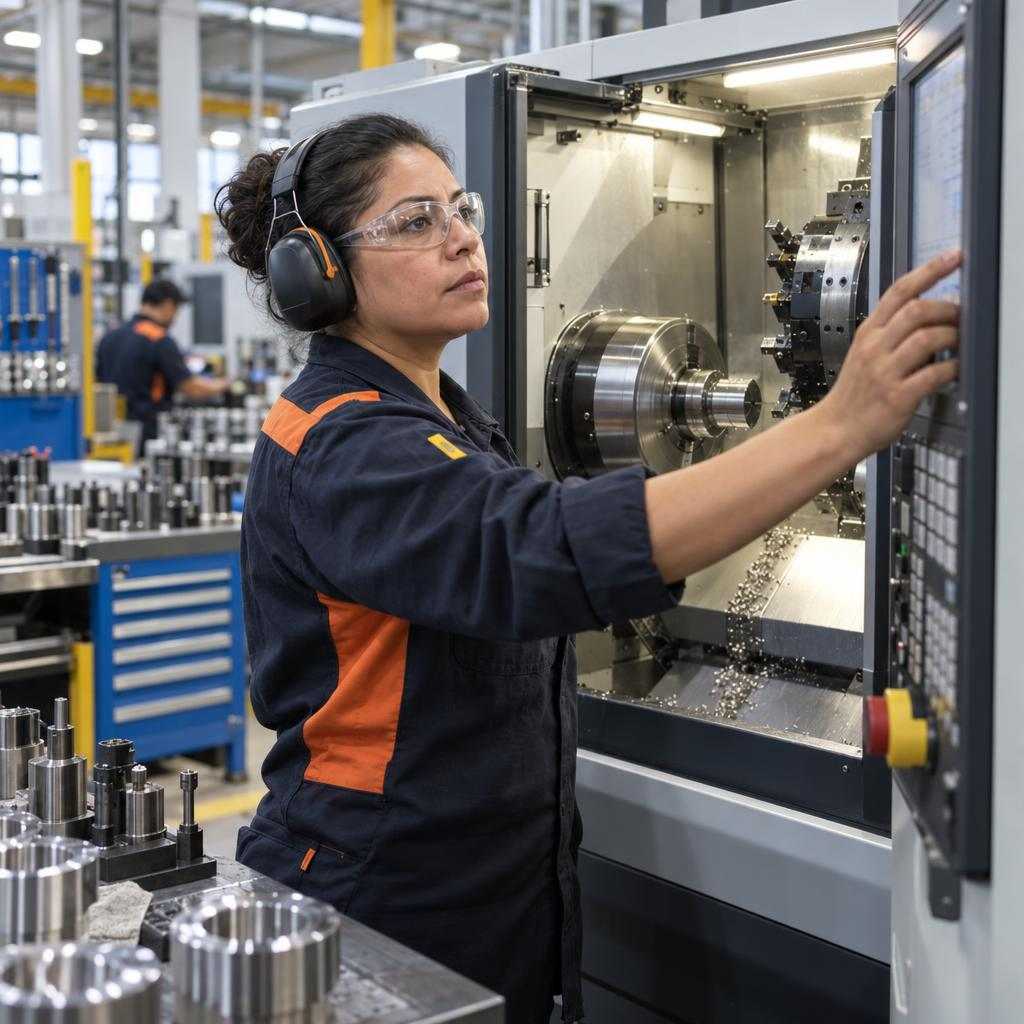
At the entry level, a CNC apprentice typically handles tasks like:
- Loading raw materials into machines and executing existing G-code programs
- Measuring finished parts with calipers, micrometers, and other precision instruments
- Deburring components, performing basic quality checks, and documenting results
- Maintaining machine cleanliness and following safety protocols
As the apprenticeship advances, responsibilities grow. Apprentices begin reading blueprints and interpreting geometric dimensioning and tolerancing symbols, performing tool offsets, adjusting feeds and speeds, and assisting with editing CNC code generated through computer aided design and CAM software. Working with tight tolerances – sometimes ±0.0005″ – becomes routine rather than intimidating.
Beyond the technical drawings and tooling, apprentices develop essential soft skills: communicating clearly with engineers and quality teams, following lean manufacturing practices, and applying consistent safety discipline. These capabilities matter as much as operating the machines themselves.
Program Lengths, Hours, and Certifications in CNC Apprenticeships
CNC apprenticeship structures fall into two broad categories. Accelerated programs averaging four months cover CNC machining fundamentals – measurement, job planning, basic milling and drilling operations – and prepare apprentices for entry-level operator or setup positions. Most CNC apprenticeship programs, however, last between two to four years.
In a standard multi-year track, apprentices complete an average of 6,000 hours of on-the-job training alongside several hundred hours of related technical instruction. The program includes six college-level classes for apprentices, covering blueprint reading, CAD basics, tooling, and CNC programming. CNC programmer apprentices also complete about 6,000 hours of training, and completion leads to a journey-level certificate in CNC programming.
By the end of a full registered apprenticeship, apprentices can earn four industry-standard certifications. CNC machinist apprentices earn four NIMS certifications spanning measurement, material and safety, CNC mill operations, and CNC lathe operations. These nationally recognized credentials make skills portable between employers and regions. Some sponsors also offer shorter 4,000-hour tracks for candidates who enter with prior machining knowledge or relevant certificate coursework – an efficient path for career changers.
How a CNC Apprenticeship Program Works Day-to-Day
The program includes both classroom and hands-on training, structured around a dual model. A typical week involves 32 to 40 hours on the shop floor plus 4 to 8 hours of related technical instruction delivered by a college or training center – often in evening classes or weekly lab blocks.
On-the-job training accounts for approximately 90 to 95% of a CNC apprenticeship program. Classroom instruction typically represents 5 to 10% of apprenticeship programs. That ratio is intentional: the practical application of machining techniques under real production pressure is where lasting knowledge develops.
Progress follows structured competency checklists. In the first month, an apprentice might focus on machine safety, basic measurements, and operating a single CNC mill under close supervision. By month twelve, they are reading blueprints independently, performing setups across multiple machines, and beginning to troubleshoot issues like chatter or tool wear. A mentor or journey worker signs off each milestone.
Many apprenticeship programs emphasize workplace safety and quality control procedures throughout, with inspecting parts against specifications becoming second nature. Modern programs use digital logging of OJT and RTI hours, dashboards for employers and schools, and automated reminders to keep progress on track – essential when managing multiple apprentices across worksites.
Requirements and How to Get Accepted as a CNC Apprentice
Entry requirements vary by employer and region, but employers looking for CNC apprentices may prioritize mechanical aptitude and reliability over prior experience. The demand for skilled CNC operators and programmers is driven by a manufacturing skills gap, so many sponsors are eager to develop talent from scratch.
Common prerequisites include:
- A high school diploma or GED is commonly required for CNC apprenticeships
- Common prerequisites include basic proficiency in math and safety awareness – algebra, basic trigonometry, and comfort reading technical documents
- Willingness to work shift schedules typical in manufacturing
- Physical ability to stand for extended periods and lift moderate weight
The application process usually involves submitting a resume, completing a math or aptitude assessment, and interviewing with a training coordinator or department supervisor. Some companies run a “working interview” on the shop floor where candidates demonstrate measurement skills or mechanical reasoning.
To stand out, aspiring CNC apprentices are encouraged to take pre-apprenticeship courses, participate in high school CTE manufacturing classes, or complete short CNC fundamentals programs. Even hands-on hobbies – woodworking, 3D printing, engine work – signal the kind of curiosity and initiative that sponsors value in candidates. Employers and schools should prepare clear selection criteria, standardized interview questions focusing on problem-solving and teamwork, and transparent descriptions of pay progression and attendance expectations. An equal opportunity employer commitment in hiring documentation also broadens the pipeline of qualified candidates.
Career Paths After Completing a CNC Apprenticeship
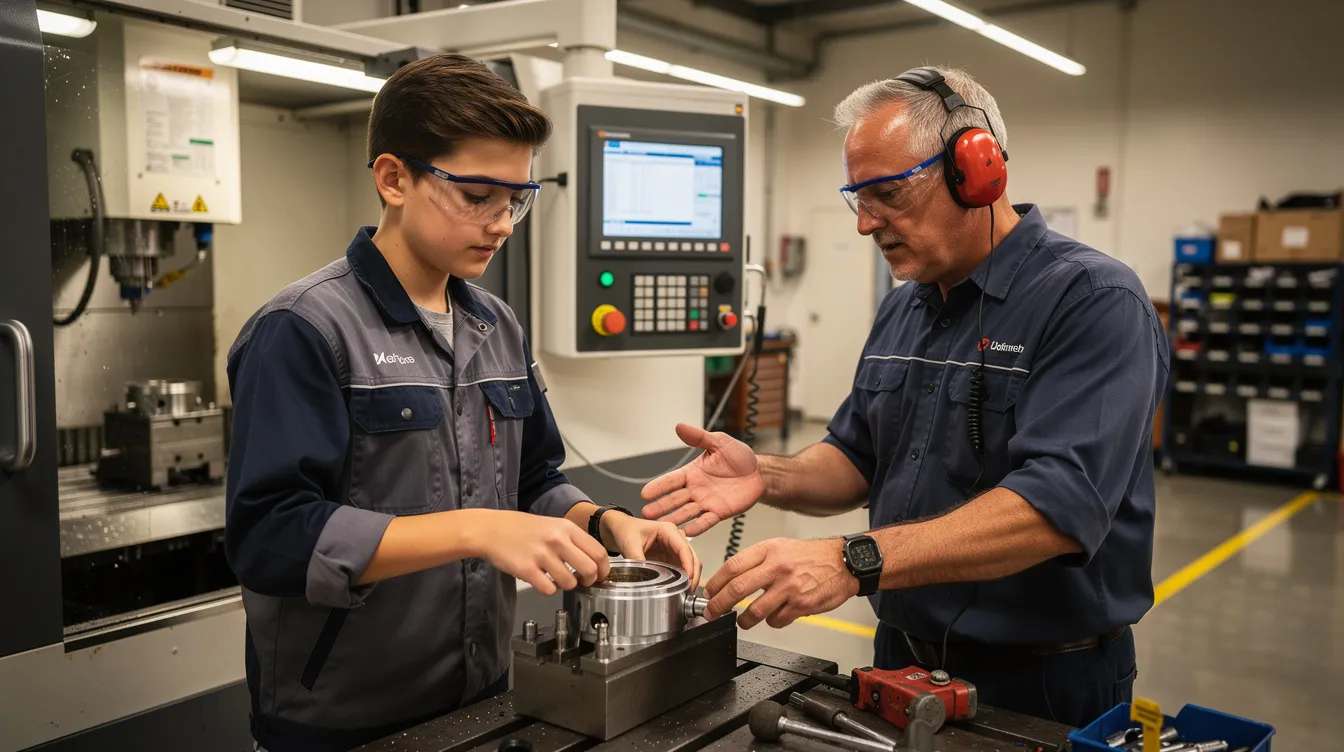
Completing a CNC apprenticeship is the beginning of a career in advanced manufacturing, not the ceiling. Apprentices often graduate with nationally recognized credentials or certifications, and apprenticeship completion often leads to higher responsibility and pay within manufacturing environments.
Immediate next steps include journey-level CNC machinist roles with greater independence – running complex setups, performing first-article inspections, and mentoring incoming apprentices. From there, the occupation branches:
- CNC programmer roles require proficiency in CAD/CAM software and G-code writing, creating and optimizing toolpaths for multi-axis machines
- Tooling and fixture design positions, often in aerospace or medical device sectors
- Leadership tracks: shift lead, production supervisor, maintenance manager, quality technician, or manufacturing engineer
- Training and development roles, where experienced machinists become the next generation’s mentors
Apprentices earn an average of $20.17 per hour, and those who advance into programming, five-axis machining, or supervisory positions in high-tolerance sectors can push well beyond that. The growth potential is concrete and tied directly to the skills developed during the apprenticeship.
Why Choose a Managed Platform to Run CNC Apprenticeships
Running a high-quality CNC apprenticeship program means coordinating employers, apprentices, schools, and regulatory entities – all while maintaining production schedules and safety standards. A work-based learning management platform built for this purpose automates the administrative burden: tracking OJT and RTI hours, recording CNC-specific competencies through structured checklists, and generating compliance reports without manual data entry.
For CNC apprenticeship sponsors, the practical benefits are clear. Real-time dashboards show each apprentice’s progress through machining tasks and coursework. Mobile access lets apprentices log hands on experience directly from the shop floor. Shared portals let mentors and instructors coordinate on training plans without endless email chains. Employers gain visibility into their future machinist pipeline, schools can align curriculum with real shop needs, and apprentices receive clearer guidance and feedback as they develop.
Next Steps: Moving Forward with a CNC Apprenticeship
A CNC apprenticeship offers a direct, paid pathway into one of manufacturing’s most essential and in-demand trades. Whether you complete an accelerated four-month program or a full three-year registered apprenticeship, the skills you build – from operating lathes and milling machines to reading blueprints and working with efficient, modern CNC technology – create a career with real growth.
If you are ready to begin as a CNC apprentice, research local advanced manufacturing employers, talk to community colleges about CNC machining programs linked to apprenticeships, and prepare a resume that highlights math proficiency, technical classes, or hands-on hobbies. Join a pre-apprenticeship if one is available in your area.
If you are an employer, school, or sponsor looking to create or scale a CNC apprenticeship program, start by mapping out required competencies and hours, then explore a dedicated platform to handle tracking, reporting, and collaboration. Reach out to your regional apprenticeship agency, local training providers, or a work-based learning management provider to design a program that fits your workforce and community needs – and get your future machinists on the shop floor faster.
Want to Learn More About Your Registered Apprenticeship Opportunities?
BOOK A FREE CONSULTATION
FAQs About CNC Apprenticeships
These frequently asked questions address concerns from both prospective apprentices and organizations planning a CNC apprenticeship program.
How long does a CNC apprenticeship usually take?
The CNC machinist apprenticeship averages four months in duration for accelerated operator-focused tracks. Traditional registered programs commonly last two to four years, with three years and 6,000 hours of hands-on training being the average. Duration depends on prior experience, the program design, and whether the track targets CNC operator skills, full machinist competencies, or CNC programming responsibilities.
Do CNC apprentices get paid while they learn?
Yes. CNC machinist apprentices can earn while they learn, receiving an hourly wage from day one that increases as they reach milestones and demonstrate higher skill levels. Pay varies by state, employer, and sector – aerospace and medical device manufacturers often pay more – but the model is always earn-while-you-learn rather than paying tuition for every training hour.
What’s the difference between a CNC machinist and a CNC programmer?
A CNC machinist focuses on setting up machines, selecting tools, loading programs, running parts, and inspecting workpieces. A CNC programmer converts CAD drawings into CNC code using CAM software, optimizing toolpaths, cutting parameters, and cycle times. Many apprenticeships begin with machinist skills and later offer pathways into programming once a strong process understanding is in place.
Do I need previous machining experience to start a CNC apprenticeship?
Most programs are designed for beginners with no professional machining background. Demonstrating basic math skills, mechanical interest, and reliability is typically enough. Taking a short manufacturing or CNC intro course, or completing a pre-apprenticeship, helps candidates show commitment and readiness to learn.
Can a CNC apprenticeship lead to college credit or certifications?
Many programs partner with community or technical colleges so that related instruction counts toward a certificate or equivalent credential. Apprentices can earn four NIMS certifications, and in some states, structured programs lead to an associate degree in CNC machining technology or advanced manufacturing.
How do employers and schools keep track of all the hours and competencies?
Historically, sponsors relied on paper timesheets and spreadsheets – a process that breaks down as the number of apprentices and worksites grows. Registered apprenticeship programs often include skill competency management and administrative compliance tools for employers. Many organizations now use centralized apprenticeship management software to log OJT and RTI hours in real time, document competency sign-offs, and generate required reports for systems like RAPIDS and WIPS.